







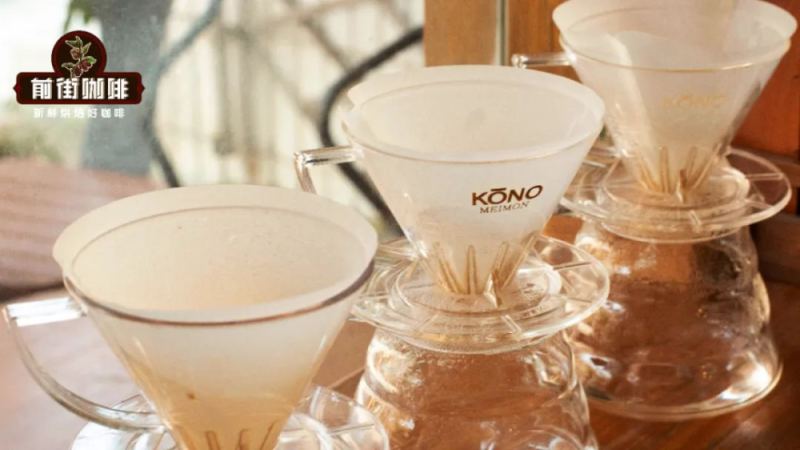
For most people, wetting the filter paper is the default first step before brewing coffee. It serves two main purposes: one is to keep the filter paper snug against the dripper, and the other is to rinse off the dust trapped on the paper. If hot water is used, it can also preheat the equipment along the way.In the vast majority of tutorials, besides guiding us on how to make the filter paper cling tightly to the dripper, they also more or less emphasize the importance of filter paper fit for coffee extraction. However, they rarely mention just how much the degree of filter paper fit actually affects the final taste of the coffee.
Today Front Street Coffee will conduct two rounds of experiments, brewing coffee with filter papers at different degrees of fit, then comparing and tasting them one by one to see how the final flavor performance turns out.
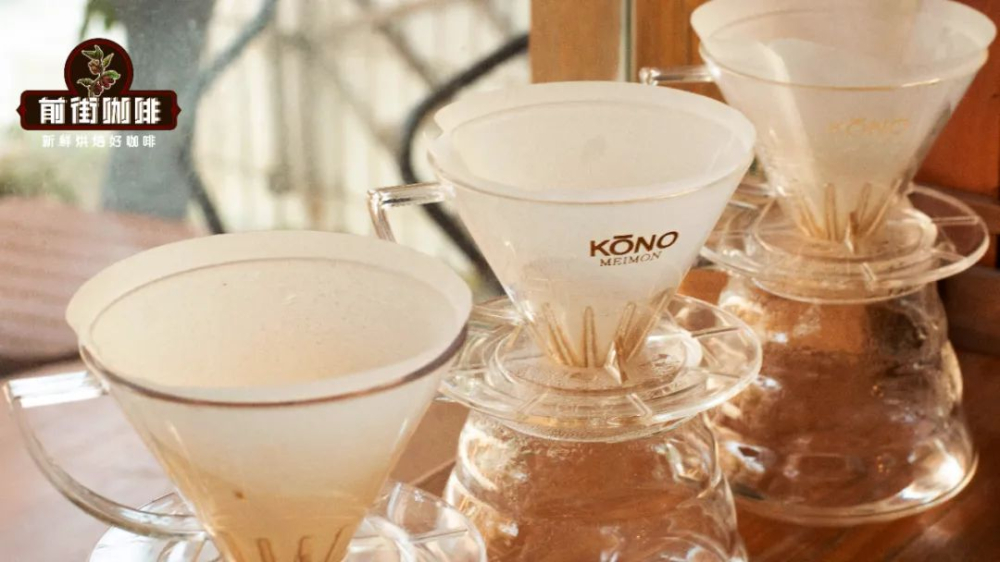
| V60 Group | KONO Group | |
| Coffee Beans | Guatemala · Flor del Café | Brazil · Red Bourbon |
| Dose | 15g | 15g |
| Coffee-to-Water Ratio | 1:15 | 1:15 |
| Grind Setting | EK43s setting 10 | EK43s setting 10.5 |
| Water Temperature | 90°C | 87°C |
| Pouring Technique | Three-Pour Method | Three-Pour Method |
As the focus of this round of experiments, Front Street Coffee divided the degree of filter paper fit into three groups. The first group is when the filter paper fits the dripper perfectly, with no air bubbles in between; the second group is when the filter paper is not placed centered, resulting in half fitting and half being hollow; the third group is when it does not fit the dripper at all, with hollow gaps or large air bubbles on both sides.

V60 Group Comparison
Flavor performance: The three pots of washed Flor del Café brewed with the V60 were basically consistent in flavor, all showing notes of light floral aroma, citric acid, yellow stone fruit, almond, and green tea. If the first pot of coffee is taken as the reference, the latter two pots, where the filter paper did not fit well, had higher body, with both acidity and bitterness leaning heavier. In particular, the third pot, where the filter paper did not fit at all, even had a slight astringency in the aftertaste.

KONO Group Comparison
Flavor performance: Compared with the fruity-acid coffee in the previous group, the three pots of Brazil Cerrado brewed with the KONO showed obvious differences from the very first sip. The first pot of pour-over had aromas of creamy chocolate, caramel biscuit, and pu'er tea, with an overall balanced mouthfeel and a relatively strong sweet aftertaste. By comparison, the second pot had only a faint chocolate note, with weaker roasted flavors and a slight watery feel. The last pot had almost not much aroma at all, a rough mouthfeel, and mostly a scorched bitter taste. Front Street Coffee suspects that the coffee was under-extracted.

Many people know that the design of the V60's multiple spiral ribs can help coffee grounds absorb water and expand, while also allowing the water flow to press against the coffee bed, creating a richer sense of layering. In the first group of experiments above, Front Street Coffee observed that if the filter paper does not fit the dripper, the coffee grounds will be in a "leaning to one side" state, that is, one side is pressed tightly against the edge of the dripper, while the other side is "exposed" to the air.

Compared with the V60, the KONO dripper has a smooth inner curved wall. This design is intended to ensure that the filter paper clings tightly to the edge of the dripper after being wet with water. At the same time, the entire dripper has only guiding ribs at the bottom quarter of its height, thus limiting airflow from going upward, so water can only flow down to the server through the bottom. This design not only allows the coffee and water to have sufficient contact time, but also creates a better immersion effect for extraction. When brewing dark-roasted coffee, it can better express a round and full-bodied mouthfeel.

So when we use KONO to brew coffee, we should try to make sure the filter paper stays snug before adding coffee grounds and pouring water. Otherwise, during extraction, a certain spot inside the dripper will quietly form a "channel," allowing the water flow to run straight off along the hollow gap, thereby causing under-extraction, and the coffee's mouthfeel will become thin and rough.
The above content is compiled by CoffeeHunters, a coffee news website.


