







Walking into a specialty coffee shop, you'll often hear the barista ask if you'd like to try an SOE. What exactly does this term, which has popped up so frequently in recent years, actually mean? How does it differ from the common blended coffee, and why is it slightly more expensive with richer flavor descriptions? This article will systematically sort out the definition and origins of SOE, compare its differences from blended beans in terms of bean selection logic and flavor direction, and share several of Front Street Coffee's SOE bean offerings along with the complete brewing parameters for a Brazilian SOE Dirty, helping you go from understanding to hands-on, easily grasping this cup of single-origin espresso.
For more specialty coffee knowledge, welcome to follow our WeChat official account: Front Street Coffee (FrontStreet Coffee)
Regular coffee drinkers are no strangers to espresso or single-origin coffee, but the term SOE seems to have only appeared frequently in recent years. Have you ever had this experience: you walk into a coffee shop, the barista casually asks "Would you like to try an SOE?", and you freeze on the spot, having no idea what these three letters stand for. After asking around a bit, you discover that SOE is not only priced a bit higher than regular options, but its flavor descriptions also tend to be more elaborate, making you want to order a cup and try it. Today, Front Street will focus on this industry term, explaining clearly what it actually refers to and whether SOE coffee is actually good.
SOE is the abbreviation of "Single Origin Espresso," which translates to: espresso extracted from single-origin coffee beans. It can be used to make lattes, Americanos, and can also extend to other espresso-based categories. For example, if you use Front Street Golden Mandheling coffee beans to make an Americano, it can be called a "Golden Mandheling SOE Americano"; if you use Front Street Brazil Queen's Farm coffee beans to make a latte, it's a "Brazil SOE Latte"; similarly, using Front Street Sun-Dried Huakui coffee beans to make a Dirty is naturally a "Huakui SOE Dirty." With this explanation, isn't it immediately clear?
The reason coffee shops specifically label SOE is because there is another, more common category—blended coffee. Blended beans are artificially mixed from two or more origins (usually by producing country) for reasons of cost, consistency, or flavor. Blends also come in espresso-use and pour-over-use types, but the mainstream is for espresso machines. Here are a few blends suitable for espresso and moka pots: the rich and aromatic espresso moka pot coffee beans—Front Street Classic Blend Coffee Beans, Front Street Specialty Blend Espresso Coffee, and the espresso moka pot coffee beans recommended by many baristas—Front Street Dark Cocoa Blend Coffee Beans. They all work with common coffee machines and moka pots, easily extracting thick crema and rich aroma.
Back to SOE itself. In Front Street's view, the rise of single-origin coffee must be traced back to the concept of specialty coffee. To put it simply, a group of industry pioneers tried to solve the problem of inconsistent coffee quality from the root, by setting standards, guiding farmers in scientific cultivation, and purchasing high-quality coffee at high prices, incentivizing origin farmers to cultivate meticulously. Once bean quality improves, the brewed flavor is naturally better.
In the past, our impression of espresso was often balanced, bitter, black coffee that only went down smoothly with milk. This wasn't a problem with the extraction method, but with the coffee beans used. Espresso couldn't be sold at high prices and used large quantities, so when selecting beans, cost came first, consistency second, and flavor could only come last.
Blending was the safest approach. Blended base beans had to have large yields and stable supply, so they could basically only be chosen from the top ten coffee-producing countries. Flavors were mostly locked within caramel, nuts, cream, and cocoa, because to accommodate the compatibility of various beans' mouthfeels, roasting everything dark was the easiest solution (of course, market demand was also a leading factor). In that era, traceability information was weak, and consumers could only rely on which roaster or coffee shop made good-tasting coffee.
Single-origin coffee, on the other hand, emphasizes origin flavor and traceability stories. After achieving success in pour-over, siphon, and other extraction methods, it was gradually introduced into the espresso field, and thus "SOE" was born.
The prerequisite for a good cup of coffee is quality beans, and SOE should also use higher-quality single-origin coffee beans. Front Street's roasting philosophy is "Freshly Roasted Good Coffee," hoping every customer can enjoy fresh and aromatic coffee at home. All coffee beans we ship are freshly roasted within 5 days.
Besides freshness, making a delicious SOE also depends on the beans' own flavor profile. In other words, you should choose SOE coffee beans according to your own taste preferences. If divided by taste, coffee beans can be roughly categorized into two directions: "bitter" and "acidic."
If you prefer an SOE with fruity acidity and floral notes, you can prioritize Front Street Huakui SOE Coffee Beans, Front Street Red Cherry SOE Coffee Beans, and Front Street Gesha Village Chaka SOE Coffee Beans;
If you dislike acidity and prefer a rich, full-bodied coffee, then we recommend purchasing Front Street Queen's Farm Coffee Beans, Front Street Golden Mandheling Coffee Beans, and Front Street Huilan Coffee Beans—these three single-origin coffees for extraction.
SOE Dirty Preparation Method
SOE Coffee Extraction Parameters
Coffee Beans: Front Street Cerrado Coffee Beans
Coffee Powder Dose: 20g
Coffee Liquid Yield: 40g
Powder-to-Liquid Ratio: 1:2
Extraction Time: 26–33 seconds
Grind Setting: Galileo 2.0
Front Street uses a double basket with a capacity of about 18–20 grams, and takes 20 grams of coffee powder when preparing.
Typically, the ratio of coffee powder to coffee liquid is between 1:1.5 and 1:2.5. Front Street uses 1:2, meaning 20 grams of powder extracts 40 grams of liquid. Time is related to flow rate; a single extraction is generally controlled within 20–35 seconds, because within 20 seconds the flavor tends to be thin, and beyond 35 seconds it's prone to over-extraction and burnt bitterness. Front Street's espresso mostly falls in the 28–30 second range.
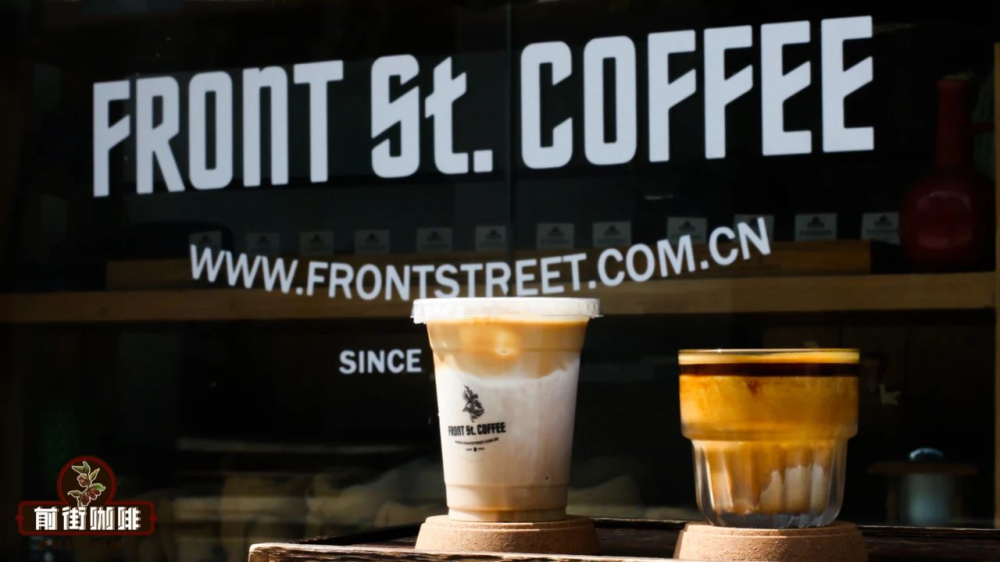
Before preparation, first prepare a 200ml transparent glass and pour in 160ml fresh milk.
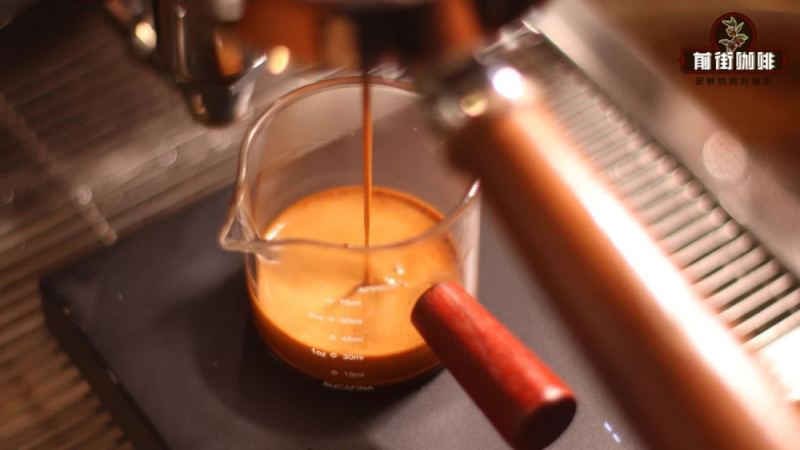
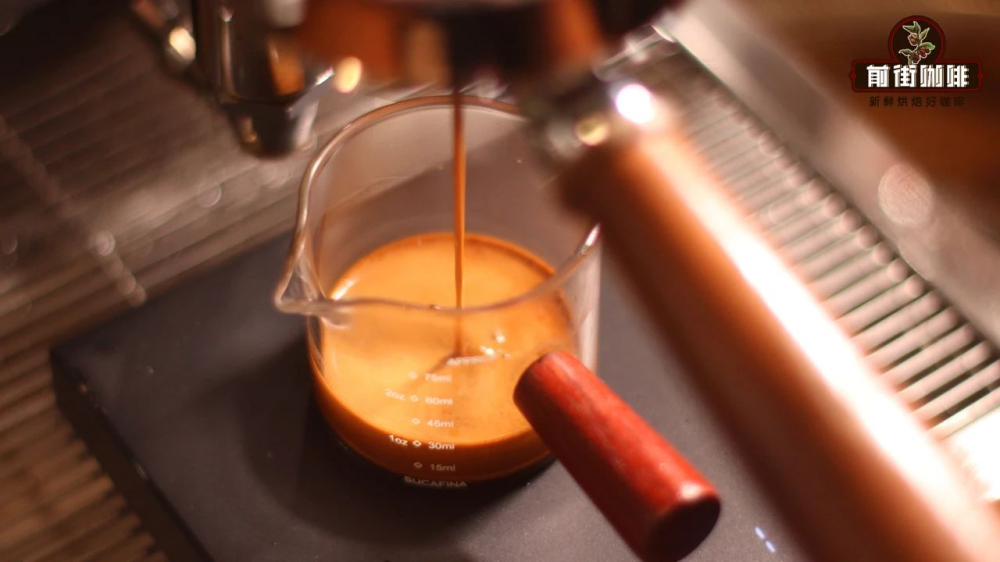
Front Street first wipes the basket dry, turns on the grinder, grinds a double shot's worth of coffee powder, and places it on the electronic scale to adjust to 20 grams. Then use a tool to distribute the grounds evenly, tamp the puck firmly to ensure stable extraction. Then turn on the extraction switch to release water, wetting the brew head while flushing away residual coffee grounds, gently lock the portafilter onto the brew head, place the prepared fresh milk beneath the portafilter, and flip the switch to begin extraction.
When the electronic scale shows the coffee liquid has reached 40 grams, at about 28–33 seconds, you can flip the switch down, and a Brazilian SOE Dirty is complete.
The Brazilian SOE Dirty made this way greets you at first sip with the nutty aroma of almond and caramel peanut, smooth as cream. The top layer is warm espresso, the bottom layer is ice-cold fresh milk—one bitter, one sweet—a very unique mouthfeel, and exceptionally satisfying to finish.
The above content is compiled by CoffeeHunters, a coffee news website.


