







For more coffee origin information and coffee knowledge, please followCoffeeHuntersToutiao account
EspressoIts biggest characteristic is—strong! Mostespressohas a concentration ranging from 7% to 12%, meaning a water content of 88%-93%. Drip coffee generally has a concentration of 1.2%-1.8%, meaning a water content of 98.2%-98.8%.
Front Street Coffee (FrontStreet Coffee) believes that a good cup of espresso usually has a strong and mellow taste, a smooth mouthfeel without grittiness, and a perfect sweet aftertaste at the end, with obvious sweetness on the throat and tongue.

The impact of coffee concentration on coffee expression
Although strong, not burnt or bitter is the basic standard for evaluating a good espresso. Coffee concentration plays two main roles in our taste experience. The first is the intensity of flavor. The second is the mouthfeel, texture, or viscosity of the coffee.
Concentration also affects our taste perception. As coffee concentration increases, our ability to distinguish various flavors in coffee noticeably weakens. At higher concentrations, the perceived intensity of coffee flavors also rapidly increases. Although the same coffee at different concentrations contains the same flavor compounds, your taste buds will experience it very differently.
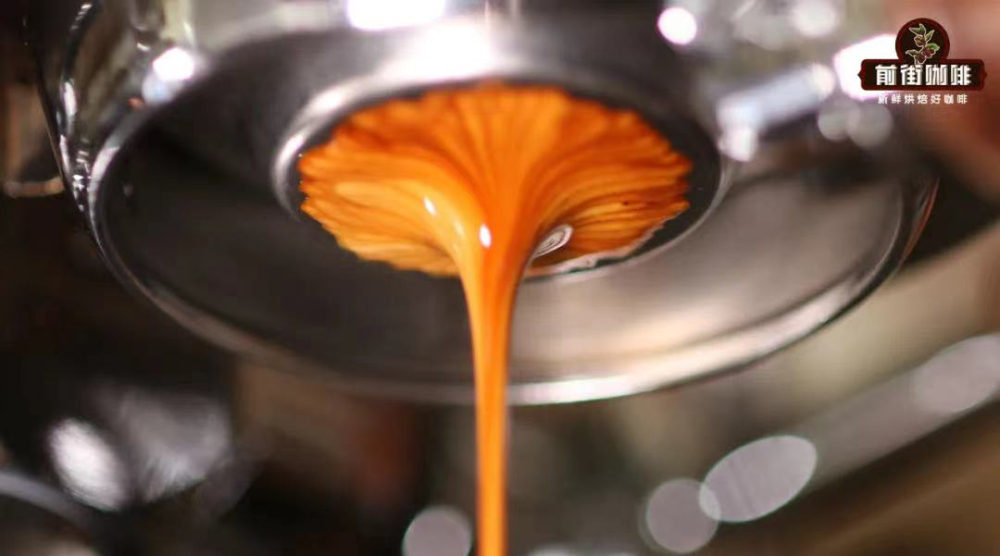
Low-concentration coffee does not necessarily mean tasteless or bland. Sometimes, a lower concentration allows us to enjoy more subtle flavors that would be masked at higher concentrations. A lighter, more subtle espresso may have lower flavor intensity, but compared to a strongly flavored one, it can sometimes be more pleasant to drink.
Mouthfeel elements are the most important part of a good cup of coffee. When tasting a coffee, everyone expects a certain degree of mouthfeel, texture, or viscosity. There are also regional and cultural preference differences, but fairly speaking, espresso should generally be thick enough for the taster to feel richness and body. Drip coffee should also have a certain mouthfeel and texture, so it doesn't taste like bland water.
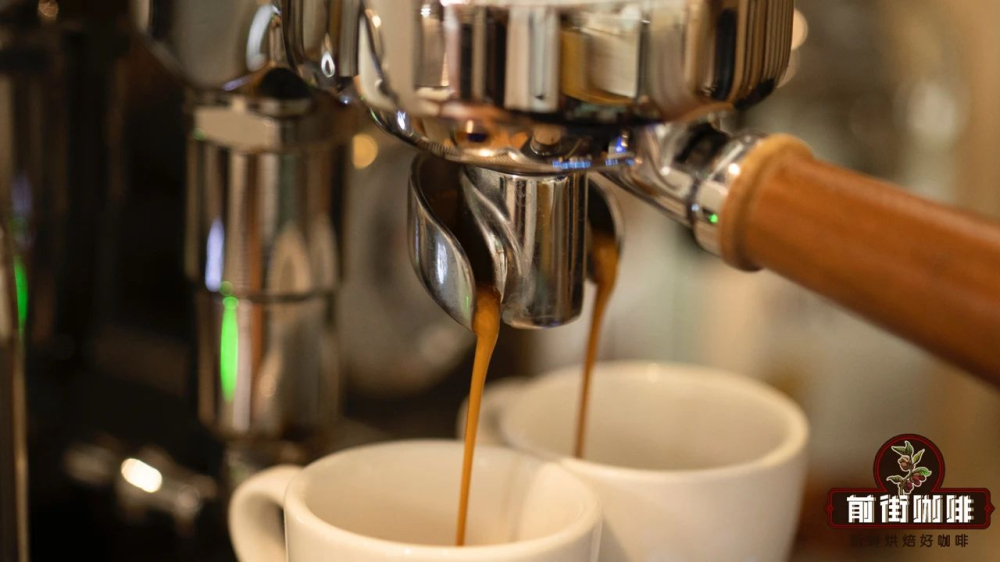
EspressoThe key to good taste—freshly roasted coffee beans
To extract a good cup of espresso, the most important thing is to use freshly roasted coffee beans and grind and extract them on the spot. After coffee beans are roasted, they contain a large amount of carbon dioxide, mainly used to preserve coffee flavors. After roasting is completed, carbon dioxide is continuously released over time, carrying flavor molecules from the coffee with it, so the longer the coffee beans are stored, the weaker the aroma.

A bag of freshly roasted medium-dark roast coffee beans has its best flavor period within 40 days after roasting is completed, while light-to-medium roast coffee beans have a best flavor period within 30-35 days. The 4 espresso blend coffee beans sold by Front Street Coffee (FrontStreet Coffee) all use medium-dark roasting and are guaranteed to be shipped within 5 days after roasting is completed.
"Warm Sun Blend Coffee Beans": Ethiopian natural red cherry coffee beans (30%) + Honduras sherry barrel coffee beans (70%), with rich wine aroma, vanilla cream, berry sweetness and acidity, and roasted nut flavors.
"Front Street Specialty Blend Coffee Beans": Colombian washed coffee beans (30%) + Brazilian semi-washed coffee beans (70%), with nut, dark chocolate, and caramel flavors.
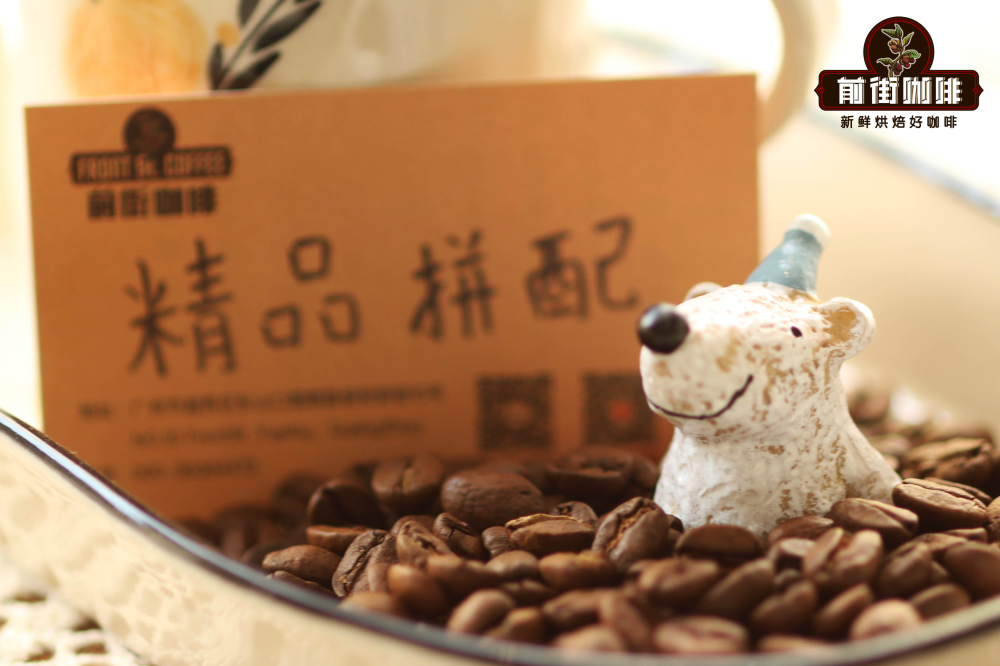
"Front Street Commercial Blend Coffee Beans": Robusta washed coffee beans (10%) + Colombian washed coffee beans (30%) + Brazilian semi-washed coffee (60%), with nut, cocoa, and caramel flavors.
"Front Street Dark Cocoa Blend Coffee Beans": Yunnan washed small-bean coffee beans (30%) + Brazilian semi-washed coffee beans (70%), with soft fruit acidity, caramel, and nut flavors.
Carbon dioxide is not only the key to locking in flavor, but also the key to the formation of espresso crema. After extraction is completed, the surface of the espresso is covered with a layer of delicate golden coffee crema, which is an oily foam produced by carbon dioxide in the coffee particles combining with coffee oils and emulsifying under a vacuum environment, which is also why it must be freshly ground.
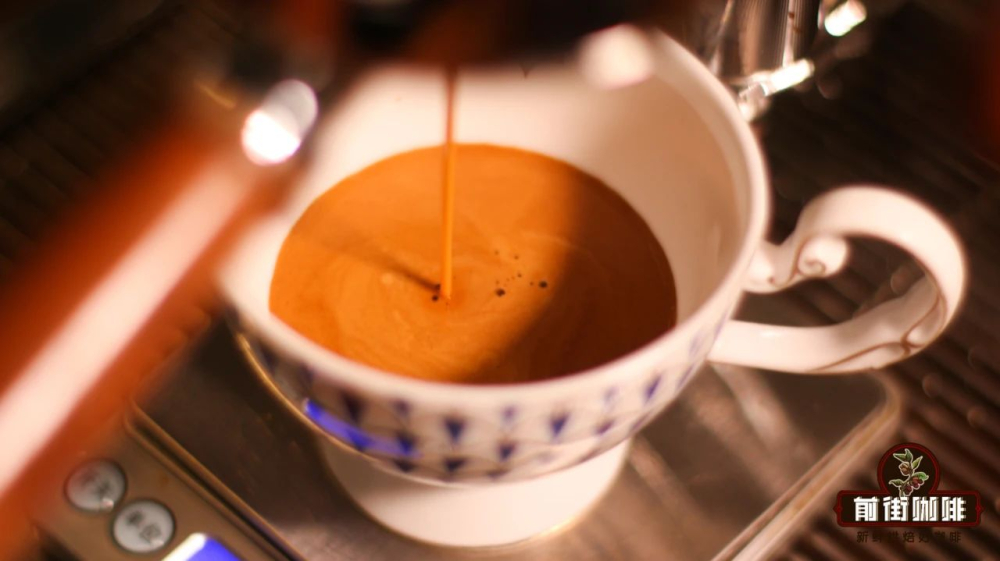
Ground coffee powder quickly releases carbon dioxide, so if it is not used promptly after grinding, after a large amount of carbon dioxide is released, the espresso cannot extract attractive crema, and at the same time the flavor will be weak and the mouthfeel thin.
EspressoHow to make it?
According to the Specialty Coffee Association SCA standards, use 7-9 grams (double: 14-18 grams) of coffee powder to extract 25-35g of coffee liquid in 20-30 seconds, with an extraction pressure of 9-10 bar and a water temperature of 90-96°C. Each coffee shop adjusts up or down according to the coffee beans and equipment used.
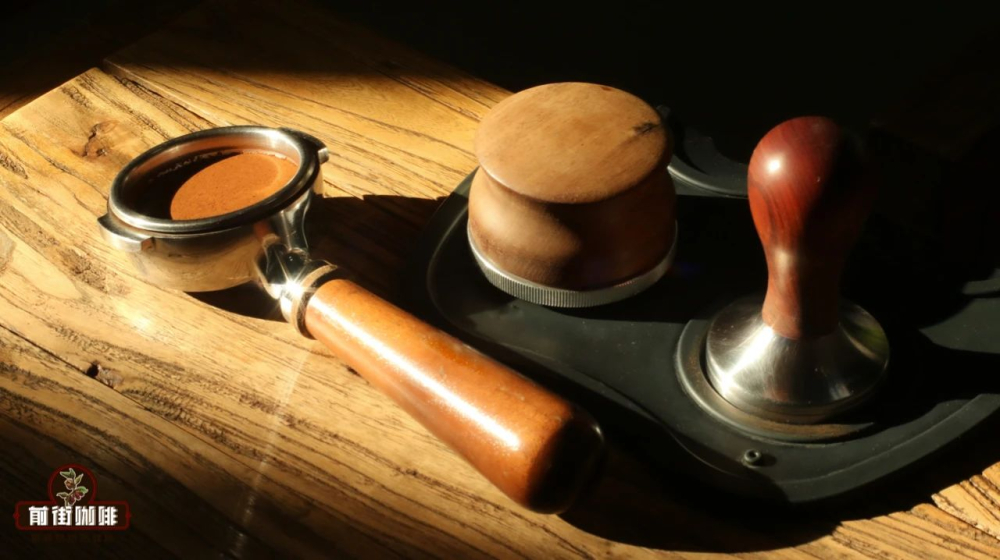
Front Street Coffee (FrontStreet Coffee) stores use "Sunflower Warm Sun Blend Coffee Beans", extracting 38g of coffee liquid from 19.8g of extremely fine ground coffee powder under increased pressure, with an extraction time of about 28-32 seconds. The espresso shows a vanilla cream-like smoothness, slight berry sweetness and acidity, fermented wine aroma, and hazelnut caramel sweetness.
EspressoHow to drink it?
Before tasting, we first take a sip of ice water to clean the mouth and cause the tongue muscles to contract slightly.

After the barista serves the espresso, you can stir the coffee with a spoon to make it more uniform overall. Then taste it in three sips. The first sip is to taste the flavors, the second sip is to feel the richness, and the third sip is to feel the sweet aftertaste and lingering finish of the coffee.
The above content is compiled by CoffeeHunters, a coffee news website.


