





How does the honey roasting process shape coffee flavor?
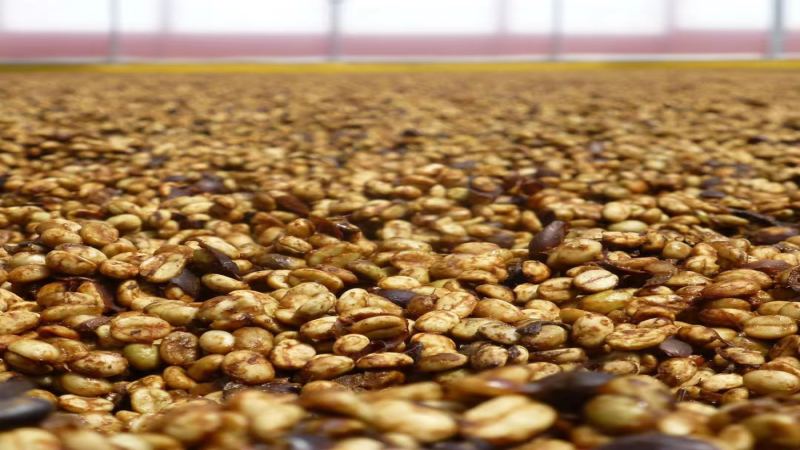
Honey processing keeps all or part of the mucilage layer on the bean during drying, which builds a balance of sweetness and fruit acidity. The name comes from Spanish Miel, honey, describing the sticky mucilage texture, not any added honey. It originated in Costa Rica, with a technical prototype in Brazil's pulped natural method.
The three styles differ by how much mucilage stays on the bean: yellow, red, and black honey each dry at a different pace and intensity. After the roasting process, the retained mucilage shows up as the sweetness and fruit notes in the cup, which is why the method has become common in specialty coffee and shapes how roasters plan their curves.
Honey processing is a green bean processing method that has been highly sought after in the specialty coffee field in recent years. It originated in Costa Rica in Central America. By retaining the mucilage layer around the coffee beans for drying, it gives the coffee a unique balance of sweetness and fruit acidity. This article will analyze, one by one, the origin of the name honey processing, why it is favored by coffee farmers, the specific operational steps, and the differences and pros and cons of the three processing methods: yellow honey, red honey, and black honey. At the same time, we will also share Front Street Coffee's roasting curve, cupping flavors, and pour-over parameter recommendations to help coffee lovers fully understand the essence and commercial considerations of this processing method.
Where did the name honey processing come from?
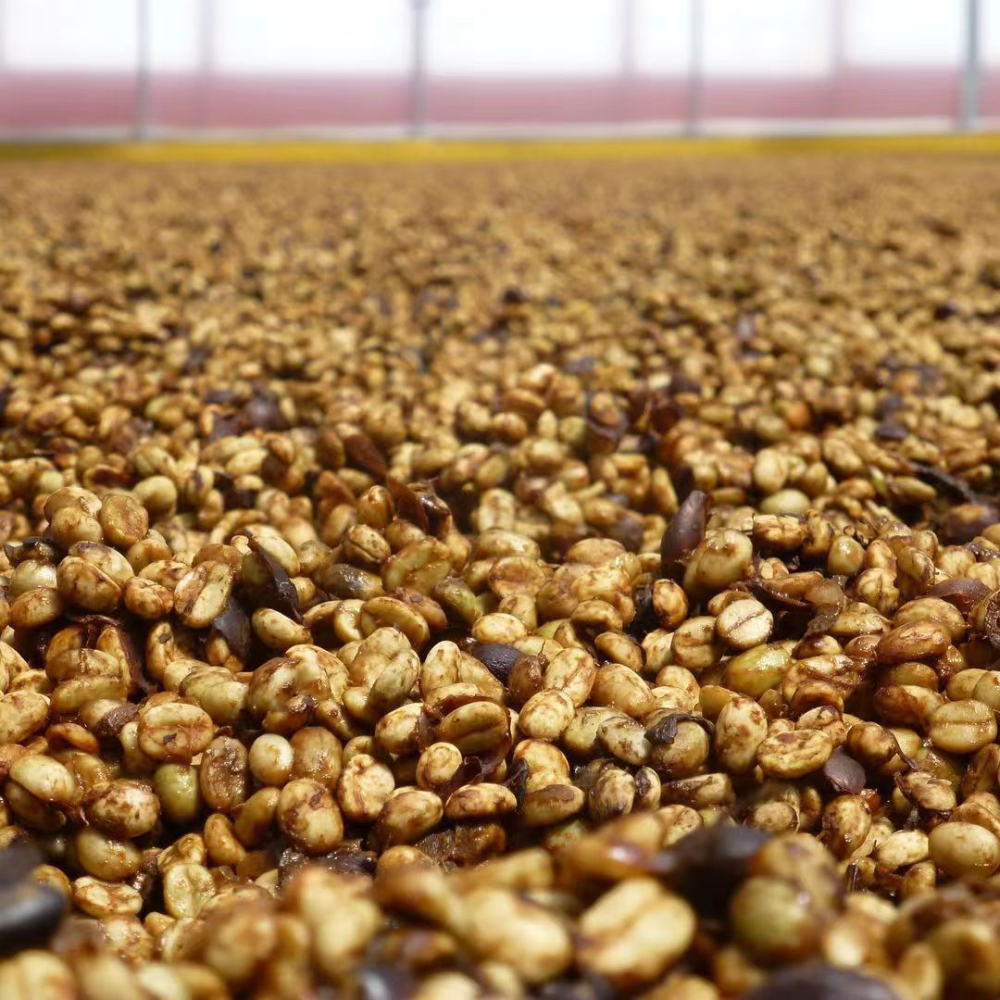
Honey processing corresponds to "Honey Process" or "Miel Process" in English, among which the word "honey" is taken directly from the Spanish word Miel, whose original meaning is honey. This term first originated in Costa Rica in Central America, where local coffee workers called the sticky mucilage substance on the surface of coffee beans "Miel." In short, honey processing means selectively retaining all or part of the mucilage layer during green bean processing, then sun-drying it. Its technical prototype can be traced back to Brazil's pulped natural method.
So what exactly does "honey" refer to?
When many people first encounter honey processing, they mistakenly think that honey is used in the processing, or that the finished coffee must be as sweet as honey. In fact, neither understanding is accurate. Honey processing gets its name from the sticky texture of the mucilage layer on the surface of coffee beans before drying—it feels like honey to the touch. After the coffee pulp and bean are separated, the mucilage wrapped around the outside of the bean continuously absorbs moisture from the air during sun drying, becoming more and more viscous.
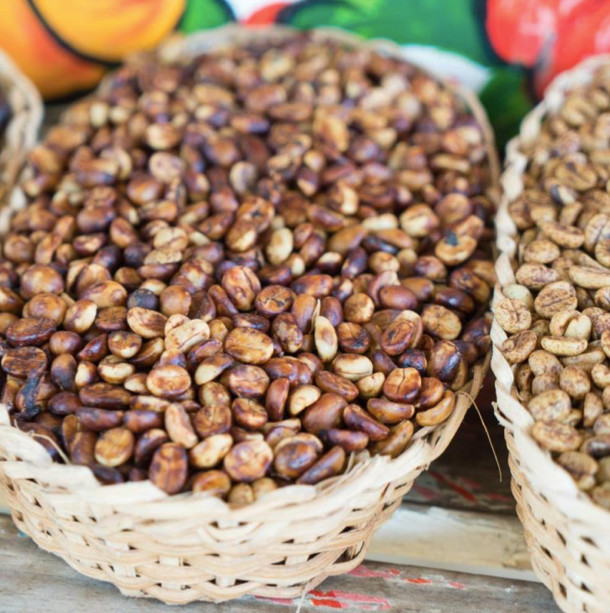
After the coffee fruit is pulped, a mucilage layer still remains around the bean. The figure below shows the appearance identification characteristics of washed, white honey, yellow honey, red honey, black honey, and natural processing methods when the green beans have not yet had their parchment removed.
Why is honey processing popular among coffee farmers?
Honey processing originally originated in Costa Rica because someone discovered that using this processing method could continuously improve the quality of coffee beans, and today this method is receiving widespread attention.
Why did Costa Rican coffee farmers initially choose honey processing? When growers want to improve coffee quality or selling price, they usually face three paths: changing the coffee variety, adjusting the growing altitude, or changing the processing method. This is like how most people, when brewing coffee, first try simple adjustments such as grind size and dose, and only afterward adjust the coffee machine's water volume, pressure, and temperature; similarly, most coffee farmers also tend to change the processing method first, rather than rashly investing time and money to introduce new varieties or relocate their farms.
Honey processing is not simple to carry out. It is time-consuming and requires meticulous control. So what specific steps does honey processing include?
The first step is that coffee farmers need to pick ripe coffee cherries from the trees, then remove the outer pulp and, as described above, retain the mucilage layer on the outside of the beans. The mucilage layer contains a high proportion of sugars and acids, and these sweet and sour notes are the core source of honey-processed flavor.
The next stage is the most complex and demanding part of honey processing: drying. Timing is crucial, and drying duration is a key variable—if the time is too short, the substances in the mucilage layer cannot be fully transformed into the coffee beans; if the time is too long, quick action is necessary to avoid internal fermentation of the beans and the production of moldy beans.
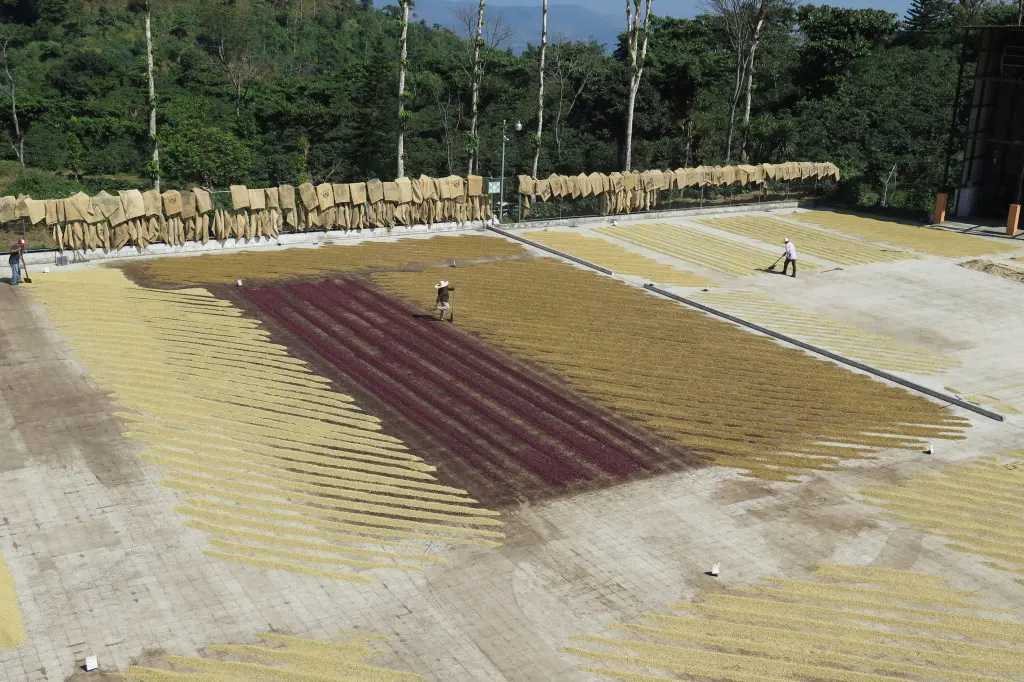
How can balance be achieved? Spread the beans on raised drying beds or concrete ground. For the first few days, the beans need to be turned several times per hour until the target moisture content is reached. This stage usually lasts 6 to 10 hours. Over the following 6 to 8 days, turn them at least once a day. The whole process is quite time-consuming—the reason honey-processed sun drying is so labor-intensive is that at night the beans absorb moisture from the air, causing more time to be needed the next day to dry them again. Once drying is complete, the subsequent drying and roasting processes are basically the same as those of other processing methods.
Why is honey processing so fascinating?
Since honey processing is both difficult to do well and time-consuming, you may question whether all this is worth it. The answer is undoubtedly yes.
Honey-processed coffee usually shows an excellent balance of sweetness and fruit acidity. Its flavor is generally not as intense as that of natural beans, but it is fresher and fuller. Why not? The key to this flavor difference lies in the sugars and acids in the mucilage layer—during drying, the sugars in the mucilage layer gradually concentrate and penetrate into the interior of the coffee beans.
What are the differences among yellow honey, red honey, and black honey processing?
When buying honey-processed coffee, you will usually see options such as yellow honey, red honey, and black honey, and you may also have heard that these processing methods correspond to different proportions of retained mucilage layer. What exactly do these mean?
Coffee farmers grade the coffee: some retain less mucilage layer to speed up drying; others retain more mucilage layer, requiring a longer drying cycle. Yellow honey (retaining about 25% of the mucilage layer) must be dried in an environment with minimal shade (few clouds, few shade trees) in order to shorten drying time, thus obtaining a yellowish appearance. Red honey (retaining about 50% of the mucilage layer) takes longer and requires a certain amount of shade for drying. Black honey (retaining about 100% of the mucilage layer) usually needs to be covered during drying to extend the drying time.
Which is better: yellow honey, red honey, or black honey?
Black honey may be superior. The flavor of honey processing is subtly and deeply influenced by the residual sugars in the mucilage layer; the more residue remains, the richer the flavor. Black honey-processed coffee often presents intense fruity sweetness and a full-bodied texture, sometimes with a mouthfeel similar to red wine.
However, for coffee producers, commercial factors must also be weighed. Although black honey processing can bring higher-quality coffee and a better price, the risks and costs also rise significantly, which may affect farmers' willingness to adopt black honey processing. The longer the drying time, the easier it is for bacteria to grow during fermentation, leading to defective moldy beans. At the same time, the beans need to be turned more frequently, occupying more drying space, up to twice that of yellow honey processing. It is not only about producing high-quality coffee, but also about allowing coffee farmers to obtain the best returns.
Front Street Coffee Roasting Analysis
Yangjia 800N, 550g green beans charged, specific operation:
Raise the drum temperature to 200°C and charge. Set the damper to 3. After 1 minute of soaking, adjust the heat to 160°C, keep the damper unchanged. When the drum temperature reaches 160°C, adjust the heat again, lowering it to 135°C. Roast until 5 minutes 40 seconds, at a temperature of 154.9°C. The bean surface turns yellow, the grassy smell completely disappears, dehydration is complete, and the damper remains unchanged;
At the 9th minute, rough wrinkles and dark streaks appear on the bean surface, and the toast aroma clearly changes into coffee aroma, which can be judged as the prelude to first crack. At this time, it is necessary to listen carefully for the sound of first crack. At 9 minutes 21 seconds, first crack begins. Reduce the heat to 80°C, open the damper fully to 5 (heat adjustment must be very careful, and it must not be so low that there is no cracking sound), 50°C, and drop at 193.4°C.
Front Street Coffee Cupping
Flavor: preserved plum, honey, brown sugar, orange blossom, white chocolate
Mouthfeel: good sweetness, soft fruit acidity, round and full, long finish
Front Street Coffee Pour-over Recommendations
Dripper: V60
Water temperature: 90°C
Grind size: 80% passing a No. 20 standard sieve
Coffee-to-water ratio: 1:15
Dose: 15 grams
Pulse pouring:
First use 30g of water to evenly wet the coffee bed and bloom for 30 seconds. For the second pour, use 95g of water and pour in a steady circular motion from the center outward. Once the water level drops to 2/3 of the coffee bed in the dripper, begin the third pour of 100g. Be careful to maintain a slow flow throughout. After dripping is completed at about 2 minutes 10 seconds, remove the dripper.
The above content is compiled by CoffeeHunters, a coffee news website.


