







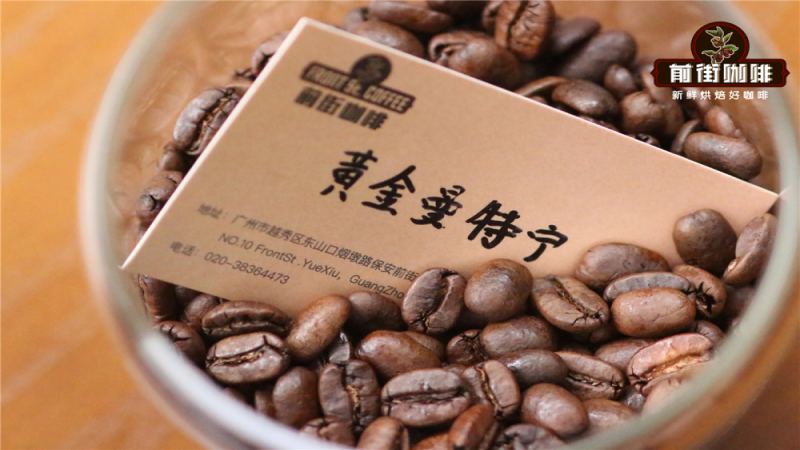
Golden Mandheling is a highly representative specialty coffee from the Sumatra region of Indonesia, renowned for its herbal notes, caramel sweetness, and rich spicy flavors. Drawing on Front Street's brewing practices, this article systematically breaks down the differences between Golden Mandheling and regular Mandheling, how the wet-hulled process shapes flavor, and PWN's strict G1 grade screening standards, while detailing the coffee-to-water ratio, grind size, water temperature, dripper selection, and three-pour technique in the pour-over process. Whether you want to consistently reproduce a rich, clean cup of Golden Mandheling or fine-tune parameters to suit your own taste, this parameter guide offers clear reference points.
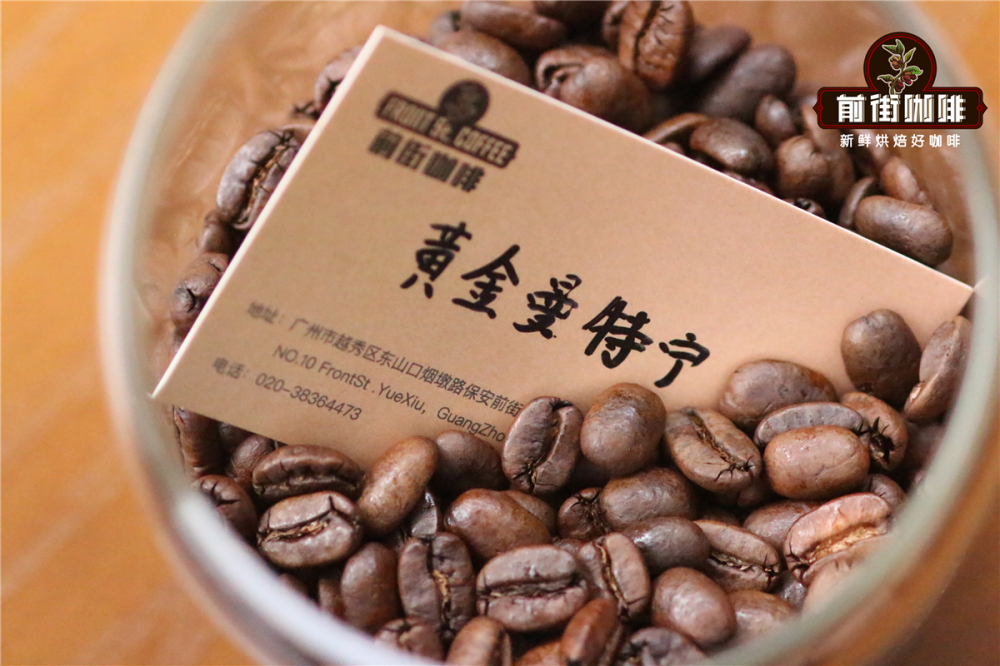
This Golden Mandheling coffee gives off a delicate herbal aroma mixed with caramel-like sweetness, with low yet elegant acidity, a full-bodied sweetness, and an overall style that is rich and laced with wild spice notes. If you want to brew Golden Mandheling with a distinctive character, you can refer to Front Street's brewing approach and adjust the parameters to your own situation.
The Differences Between Golden Mandheling and Regular Mandheling
Mandheling coffee refers to Arabica coffee grown around Lake Toba and Lake Tawar in northern Sumatra, Indonesia, covering the two well-known producing regions of Lintong and Aceh, and represents a relatively small share of the area's high-quality coffee beans.
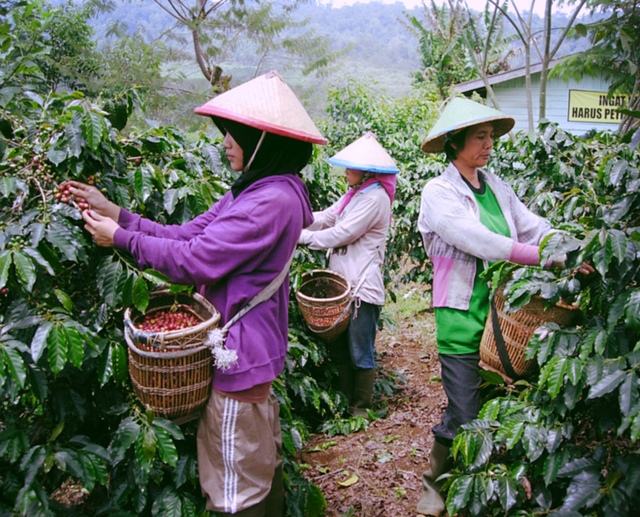
Sumatra lies in a tropical rainforest climate zone, with frequent rainfall year-round, humid air, and scarce freshwater resources. Locals cannot use the traditional washed method to process green beans, nor can they rely on sun-drying to complete drying. So coffee farmers developed the wet-hulled method, which can be completed in just four days, greatly compressing fermentation and sun-drying time, saving a great deal of labor, and giving Sumatra Mandheling its distinctive herbal and earthy notes.
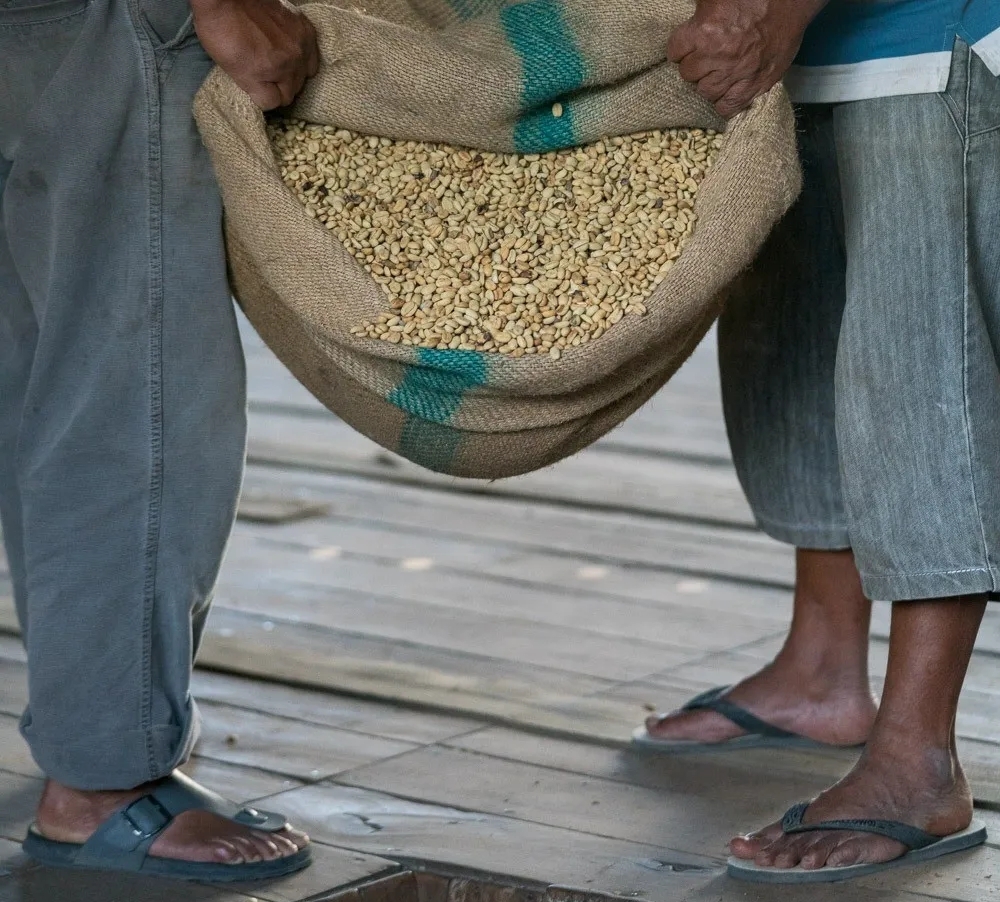
To improve the quality of Mandheling coffee beans, after purchasing green beans, PWN first runs a machine screening, then carries out three rounds of manual hand-sorting to remove defective beans and keep only complete, uniform beans, reaching the local highest G1 grade and significantly reducing Mandheling's defect rate. The G1 specification requires beans to be 18 mesh or above, with no more than 3 defective beans in a 300-gram green bean sample. Front Street believes that once the defect rate is lowered, the coffee's flavor becomes cleaner and its sweetness more pronounced.
How Should Golden Mandheling Be Brewed to Taste Good?
Before brewing, if you want to fully experience Golden Mandheling's rich, full aroma, Front Street believes that the freshness of the coffee beans is crucial. Once the optimal flavor period is missed, aromatic compounds dissipate more quickly, and an unpleasant woody taste can appear. Front Street is well aware of how freshness affects flavor, so all beans shipped are freshly roasted within 5 days, ensuring that when you receive them they are right in their optimal flavor period.
Once you have chosen a bag of well-rested coffee beans (4–7 days after the roast date), you can start setting the various brewing parameters.
Coffee-to-Water Ratio
Following its standard output for brewing a single serving, Front Street uses 15 grams of coffee grounds with a 1:15 coffee-to-water ratio. At this ratio, Golden Mandheling can show layered flavors while retaining a rich, full-bodied mouthfeel.
Grind Size
Golden Mandheling is dark-roasted, and the internal structure of the beans has already become quite porous, so once ground it easily absorbs water and releases more compounds. To avoid over-extracting bitter compounds, Front Street chooses a medium grind, with a coarseness of 70% passing a No. 20 sieve. Grinding too fine easily brings out bitterness, while too coarse makes the flavor thin and bland.
Brewing Temperature
As for water temperature, Front Street has learned that much of the burnt bitterness comes from water that is too hot, so here it uses hot water at 87–88°C; below this temperature may lead to insufficient extraction of Golden Mandheling's aroma.
Choosing a Dripper
FrontStreet Coffee baristas suggest that for brewing this kind of rich-bodied coffee, a KONO dripper can be used. Compared with the V60, the KONO dripper has a smooth curved surface and weaker airflow, with straight ribs occupying only one quarter of the dripper, allowing the coffee bed and hot water to form an immersion-style extraction, making the taste rounder and fuller. The KONO dripper is also suitable for beans such as Brazil Queen's Estate coffee and Jamaica Blue Mountain No. 1 coffee.
Extraction Technique
When brewing, Front Street uses its usual three-pour technique to better bring out Golden Mandheling's full body and sweetness.
In the first pour, add 30 grams of water, twice the weight of the coffee grounds, and bloom for 30 seconds, pouring steadily and gently from the center, with the aim of wetting the entire coffee bed. At this point you can see a clear dome-shaped rise as the coffee grounds are degassing. In the second pour, add 100 grams of hot water in a circular motion, raising the coffee bed as much as possible so that the grounds form a wall along the edge of the dripper, extracting more aromatic compounds. In the final pour, add 95 grams of hot water in a small circle, with the aim of enhancing the sweetness in the latter part of the cup.
The flavor and mouthfeel of pour-over Golden Mandheling: as the temperature drops, the layers change richly, full-bodied and clean, highly balanced, with intense nut and caramel aromas, chocolate notes, and a lasting finish.
For professional coffee knowledge exchange and more coffee bean information, please follow Coffee Workshop (WeChat public account cafe_style)
For more specialty coffee beans, please add the private WeChat of FrontStreet Coffee, WeChat ID: qjcoffeex
The above content is compiled by CoffeeHunters, a coffee news website.


