







Mandheling is one of Indonesia's most iconic coffees, but the market is flooded with so many varieties of Mandheling—Lintong, Tiger, Aged, Golden... what exactly are the differences between them? And how can you tell authentic Golden Mandheling from fake? This article, from the perspective of Front Street Coffee, systematically sorts out the origin of the name Mandheling, its producing regions, and the characteristics of its main varieties, with a focus on explaining the screening standards and brand ownership of Golden Mandheling. It also includes Front Street's brewing and roasting suggestions for PWN Golden Mandheling, helping coffee lovers build a clear framework of understanding.
For more specialty coffee knowledge, please follow the WeChat public account: Front Street Coffee
Indonesia is an important coffee-producing country in the world, and the local coffee's heavy, uniquely distinctive flavor is very hard to replicate elsewhere. When it comes to Indonesian coffee, the most famous is undoubtedly Mandheling. However, many friends are often bewildered when faced with the various names of Mandheling on the market. Today, Front Street Coffee will sort out the relevant knowledge about Mandheling coffee.
The Origin of the Name Mandheling
"Mandheling" was originally the name of an Indonesian ethnic group. How it later became synonymous with coffee beans is related to a widely circulated anecdote: when the Japanese army ended its colonial rule in Indonesia and returned to Japan, they kept thinking about that good cup of coffee. They asked local people through trading partners to purchase high-quality coffee beans on their behalf. The Japanese loved these beans very much, but there was a pronunciation deviation—what the locals called "Mandailing" was pronounced by them as "Mandheling." And just like that, by a twist of fate, Mandheling became the name of a coffee bean variety.
Mandheling coffee is also called "Sumatra coffee." Most of what is produced in North Sumatra is Gayo, mainly the Ateng variety; the northernmost Lake Tawar producing area can be called Aceh coffee or Tawar Lake coffee; Lintong in South Sumatra and the area around Lake Toba are customarily called Mandheling coffee. Mandheling comes from the mountainous area around Lake Toba, a highland freshwater lake located north of Medan, the capital of Sumatra Province, with an average elevation of about 900 meters. What is usually called Mandheling refers to Typica or its variants grown in the mountainous areas around Lake Toba.
[Lintong Mandheling]
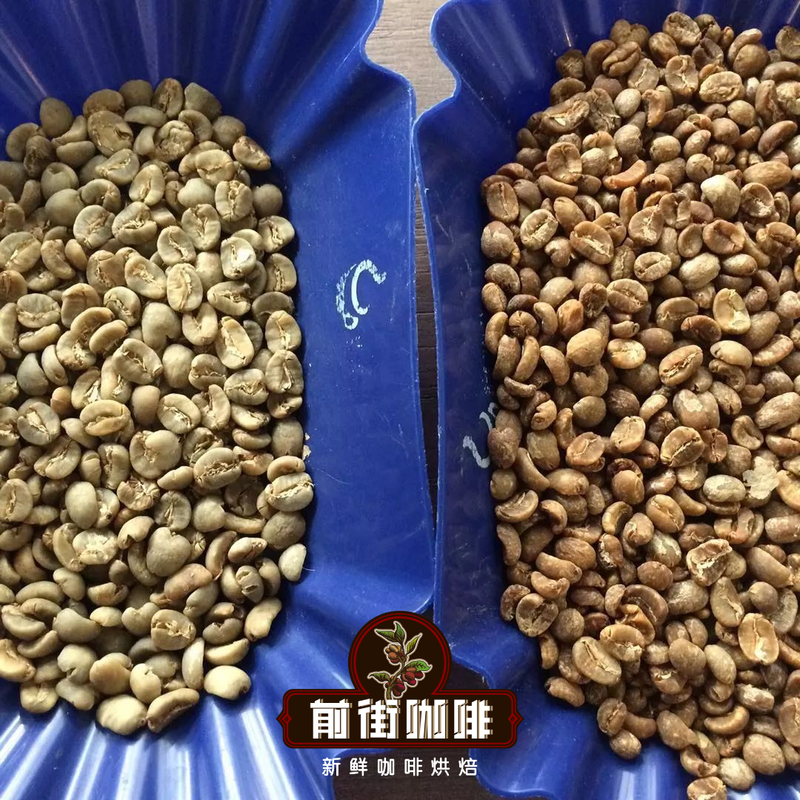
Lintong Mandheling comes from the Lintong mountainous area in north-central Sumatra, not far from Lake Toba, and can be understood as the regular version of Mandheling. It is also processed using the wet-hulling method, thus exhibiting low acidity and high body. However, wet-hulling also brings about a phenomenon: semi-dry, semi-wet raw beans have uneven hardness when the parchment layer is removed, making them prone to being crushed, cracking open like a goat's hoof, commonly known as goat hoof beans. This is not a defective bean; rather, it can be seen as a signature characteristic of Mandheling.
[Tiger Mandheling]
In Aceh, coffee is the region's second-largest export cash crop. There are about 60,000 small-scale coffee growers locally, each with a planting area of about 1 to 2 hectares. Indonesia's traditional coffee trade adopts a multi-link serial approach, starting from farmers and passing through layers of middlemen before gradually gathering into large export shipments. In Indonesia's coffee trade system, direct trade where a single window purchases from farmers and then arranges exports is quite rare.
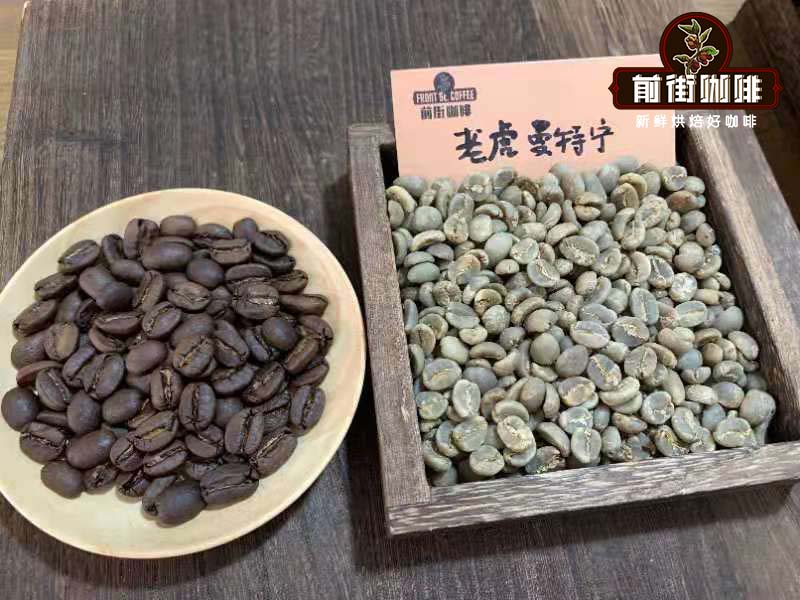
The requirements for Tiger Mandheling are: the taste must carry an aroma like traditional Chinese herbal medicine, and only Mandheling that is above 17 screen size with a defect rate below 4% qualifies to be called "Tiger."
[Aged Mandheling]
Raw beans are naturally aged by extending storage time (usually requiring 2 to 3 years), during which changes occur such as decreased acidity, color change, and increased bean density. The storage environment must be cool and ventilated. Because the storage environment is dark and the time is long, aged coffee often inevitably carries musty notes, or what is commonly called burlap bag flavor, leather flavor, and other complex aromas. This special processing method gives Aged Mandheling a more rounded and profound flavor, as intoxicating as Pu'er tea.
[Golden Mandheling]
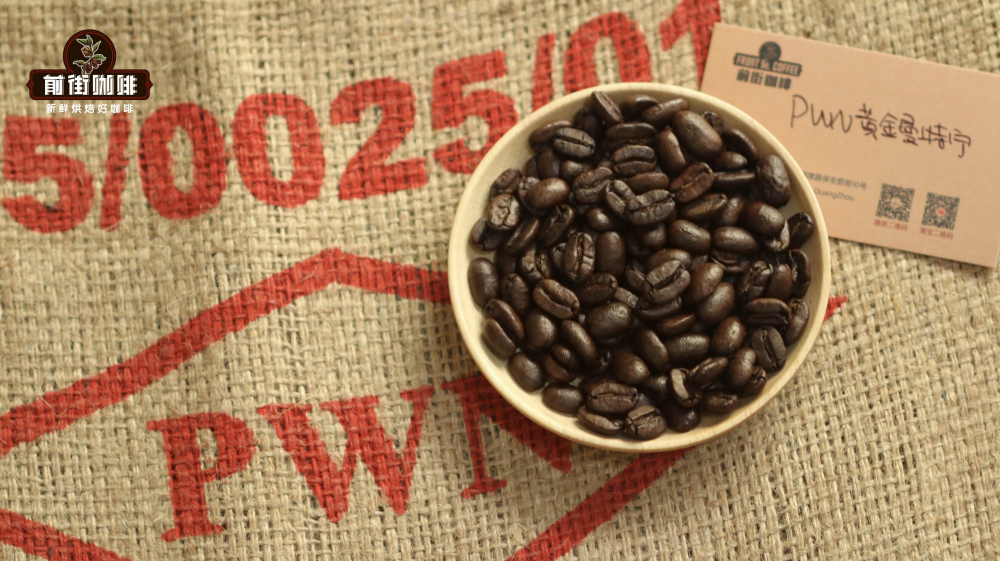
Since the Japanese discovered Mandheling, they have always been especially attentive to this bean. In the process of cooperating with local green bean merchants, they established strict screening standards: after processing, the raw beans first undergo density and color sorting, then are manually picked multiple times, ultimately yielding Mandheling with uniform color and even bean shape. It is said that during processing, Mandheling glows with a golden luster in the sunlight, and this is how the name Golden Mandheling came about.
The specifications for Golden Mandheling are 18 screen size or above, with fewer than 3 defective beans (based on a 300-gram raw bean sample), belonging to the highest grade G1, with a darker green color and a neat flat bean shape. Strictly screened Golden Mandheling not only removes the earthy, miscellaneous flavors common in regular Mandheling but also tastes cleaner and more transparent, with more prominent sweet aromas.
However, it was not a Japanese company that registered Golden Mandheling as a trademark, but rather PWN (Pwani Coffee Company), an Indonesian local enterprise that cooperated with Japanese companies to export Mandheling in the early days. What the Japanese company registered was "Gold Top Mandheling." The two are actually not very different in flavor performance, but because of different brands and different merchant marketing strategies, it is possible that public opinion diverges. So which of the two Golden Mandhelings is better is simply a matter of personal opinion.
Affected by the pandemic, shipping space resources from Indonesia to China in 2020 were much tighter than in previous years. The new-crop Front Street PWN Golden Mandheling, originally scheduled to arrive at port in October, arrived a full month late.
The difference between Golden Mandheling and regular Mandheling is: Golden Mandheling has a stronger sweet aftertaste, with a sugarcane-like aroma. Although everyone knows that only PWN's Mandheling can be called Golden Mandheling, PWN's annual output is actually limited, so a large portion of the large-bean selected Golden Mandheling on the market does not come from PWN. If you are unsure, you can ask the seller to show the PWN raw bean burlap sack or the certificate accompanying the beans to confirm whether it is what we call Front Street PWN Golden Mandheling.
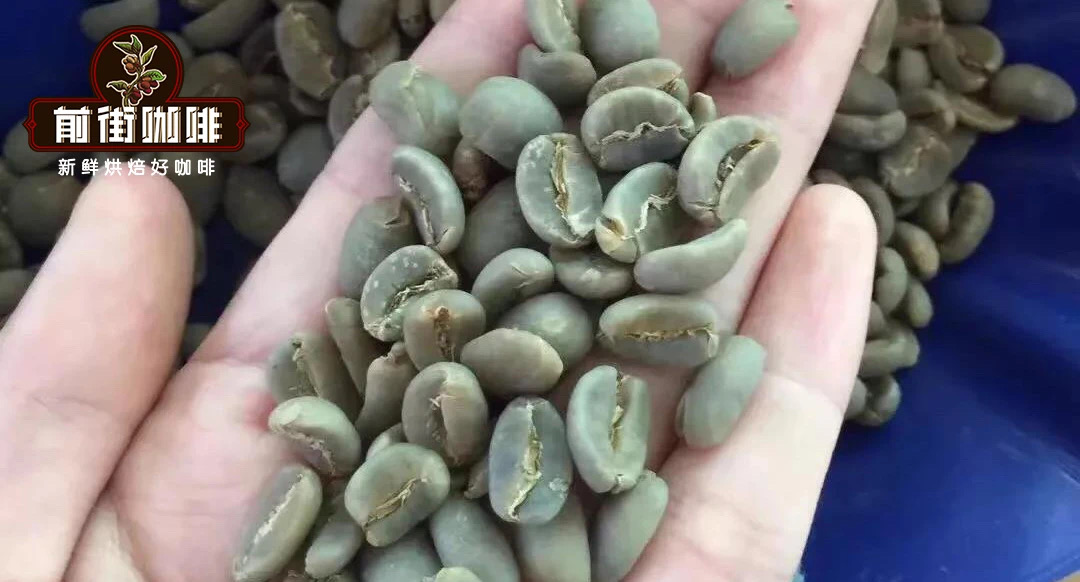
Front Street Coffee Indonesia Front Street PWN Golden Mandheling Region: Gayo Mountain, Aceh, Sumatra Altitude: 1100-1600 meters Variety: Ateng Grade: G1, 3 times hand-sorted Processing method: Wet-hulled
Processing Method
Mandheling mostly uses Sumatra's unique wet-hulling method. The local area has a lot of rain and frequent typhoons, making it difficult to meet the good weather conditions required for sun-drying; combined with limited local economic conditions, they cannot afford the higher cost of the washed method, so the highly localized wet-hulling method was developed. Today, Indonesia's coffee development is no longer the impoverished picture of the past, and many estates and companies with the means use the washed method. But why has wet-hulling not been abandoned? Front Street Coffee believes that wet-hulling is precisely the key to Mandheling coffee's rise to world fame. The mention of Mandheling brings to mind wet-hulling—the two have long been mutually complementary.
The wet-hulling method can be specifically divided into two stages:
In the first stage, a wooden depulper is used to remove the skin and pulp, followed by 3 hours of fermentation and then drying, bringing the moisture content down to a semi-dry, semi-wet 30% to 50%.
In the second stage, the mucilage and parchment layer are removed, and drying continues. The drying process takes 2 to 4 days, bringing the moisture content down to 12% to 13%.
Front Street Coffee Roasting Analysis
In order to roast out the rich, sweet, and clean flavor of Golden Mandheling, Front Street Coffee's roaster used a medium-dark roast.
When the drum temperature rises to 200°C, charge the beans, with the damper at 3; after 1 minute, adjust the heat to 160°C with the damper unchanged; when roasting reaches 5 minutes 40 seconds at 148°C, the bean surface turns yellow, the grassy smell completely disappears, dehydration is complete, adjust the heat to 140°C and change the damper to 4;
At 9 minutes 40 seconds, wrinkles and dark streaks appear on the bean surface, and the toast aroma clearly transitions to coffee aroma, which can be regarded as the prelude to first crack—at this point, listen carefully for the first crack sounds; first crack begins at 9 minutes 54 seconds, reduce the heat to 60°C, open the damper fully (adjusting the heat requires great care—it must not be so low that the crack sounds cannot be heard), and drop the beans at 204.5°C.
Front Street Coffee Brewing Suggestions
This brewing aims to highlight the rich, clean, and aromatic characteristics of Golden Mandheling, using a KONO dripper (this dripper is designed to mimic the thick coffee produced by flannel). For medium-dark roasted coffee, choose a medium-coarse grind. Use a 1:15 coffee-to-water ratio, 15 grams of coffee, and 88°C water temperature. A friendly reminder: lowering the coffee-to-water ratio makes the coffee more intense.
Brewing process: Slowly add the coffee grounds, keeping them as level as possible during pouring, and avoid shaking the dripper (shaking reduces the spacing between coffee grounds, which is not conducive to degassing during blooming). For the first pour, spiraling from the center in a small circle, pour 40 grams of water and bloom for 30 seconds; the coffee bed will slowly expand and puff up into a "hamburger" shape.
For the second pour, spiral from the center outward, pouring 120 grams of water, keeping the pour height as close to the coffee bed as possible, moving slowly to avoid over-agitation. For the final pour, add 100 grams, and end extraction once all the coffee liquid in the dripper has flowed into the server. The total extraction time is about 2 minutes.
Flavor characteristics of Mandheling coffee: [Lintong Mandheling] Herbal, chocolate, caramel, overall relatively balanced; [Tiger Mandheling] Nuts, cream, dark chocolate, caramel, traditional Chinese herbal medicine, with obvious sweetness and a clean, clear flavor; [Aged Mandheling] Ripe Pu'er, caramel, herbs, chocolate, with lower acidity; [Golden Mandheling] Nuts, spices, herbs, licorice, chocolate, caramel, with a clean and gentle flavor.
The above content is compiled by CoffeeHunters, a coffee news website.


