







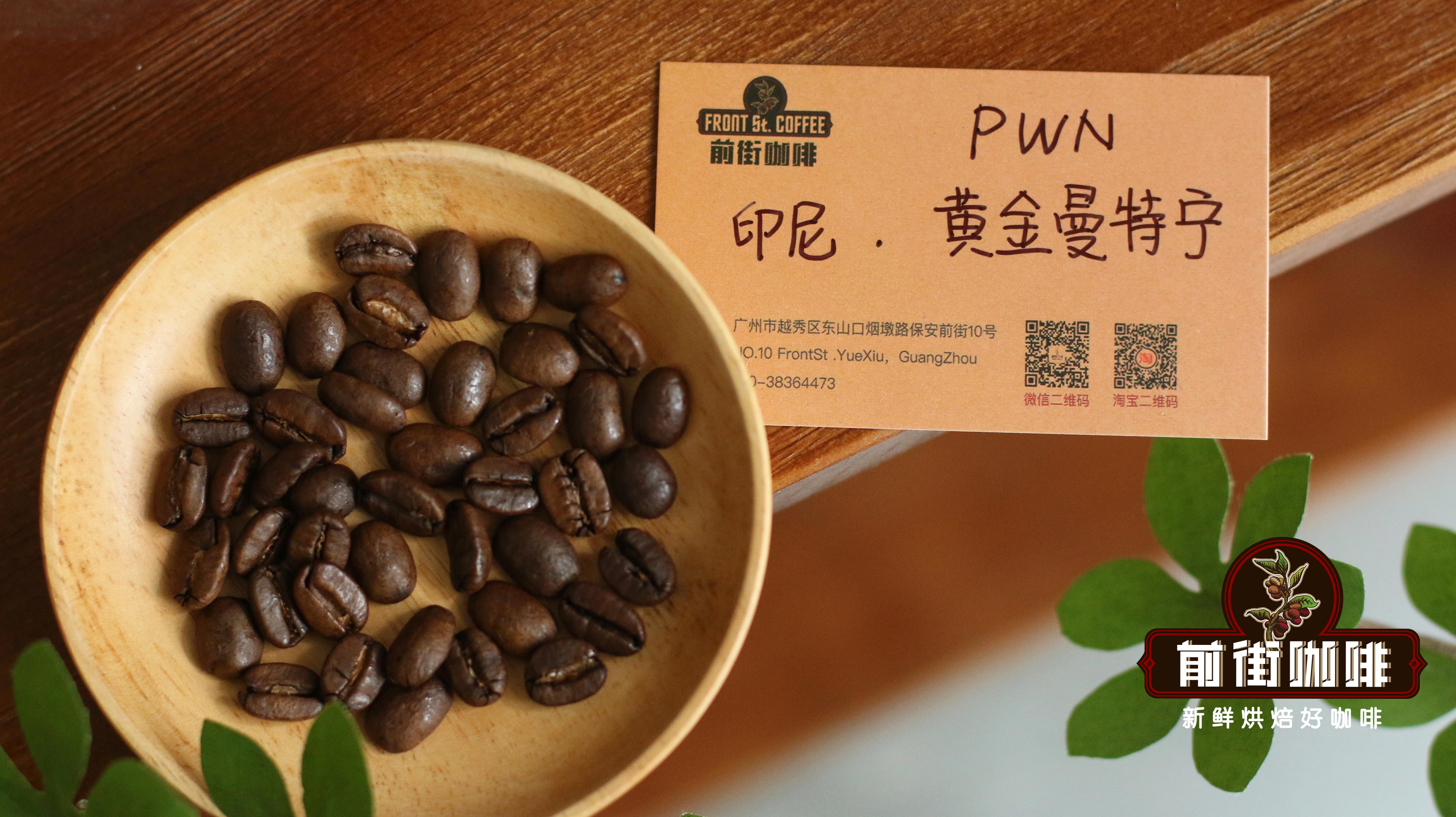
Mandheling is favored by coffee lovers for its mellow and substantial mouthfeel, and the Golden Mandheling produced by Indonesia's PWN company is the benchmark among them. This article will start with the cause of Mandheling's unique flavor—the wet-hulling process—then analyze the grading standards and quality characteristics of Golden Mandheling, and, using Front Street Golden Mandheling as an example, share in detail the pour-over key points for medium-dark roasted Mandheling, including grind size calibration, water temperature setting, dripper selection, and staged pouring techniques, so you can brew a clean, mellow, and long-sweet-finish Golden Mandheling at home.
Friends who prefer mellow and intense coffee flavors should be no strangers to the name Mandheling. On Front Street's pour-over coffee menu, the bean with the highest body and the darkest roast level is exactly Front Street Golden Mandheling, and it is also the first choice recommended by Front Street Coffee (FrontStreet Coffee) baristas when facing customers who like strong flavors. However, if you want Front Street Golden Mandheling to show its unique spice and herbal notes without becoming so bitter that it is hard to swallow, some details in the operation still need attention. Next, let's talk about practical tips for brewing Mandheling by pour-over.
Where does Mandheling's flavor come from?
Since Dutch colonists introduced coffee to Indonesia for cultivation in 1699, coffee has gradually become an important source of income for local farmers. If the traditional natural processing method were used, it would take too long, making it difficult to sell to collectors in time for income, because sun-drying or washing both require at least 2–3 weeks of drying. What is even more troublesome is that the Indonesian islands have frequent wind and rain all year round, and the air humidity is relatively high, so green coffee beans often become moldy before they are completely dried.
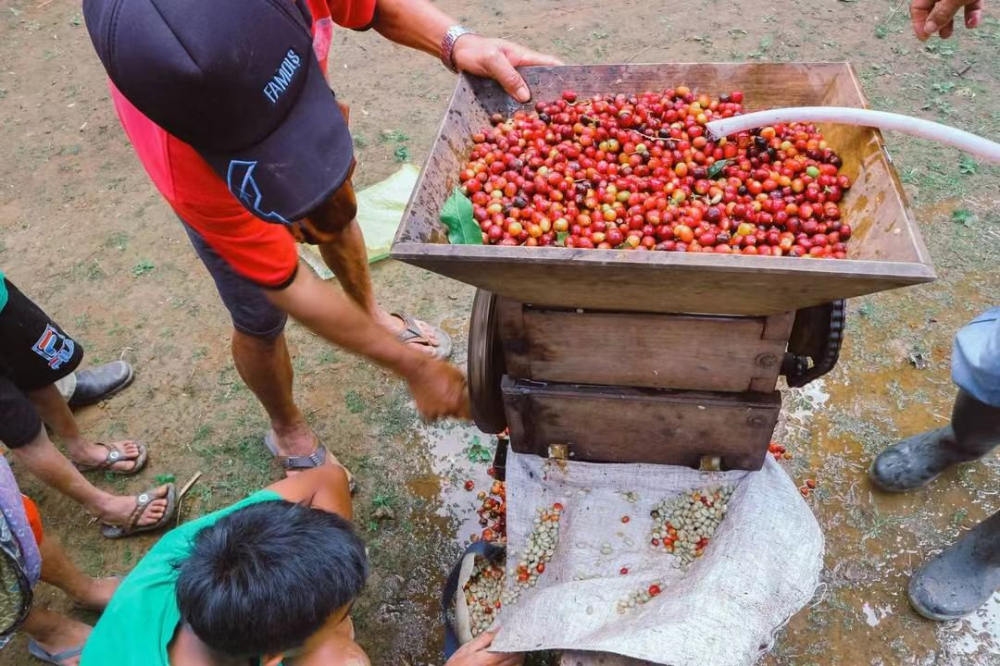
The early stages of the wet-hulling method are basically the same as the washed method: Indonesians first remove the outer skin and pulp of the coffee fruit, soak it in water to ferment for about 3 hours, rinse off the mucilage, and then the green coffee beans with parchment are first dried for a short time of 2 to 3 days. When the moisture content drops to 20%–24% and the beans are in a semi-soft, semi-hard state, the parchment is hulled off, and then the subsequent drying is completed until the moisture content drops to about 13%, at which point they can be bagged.
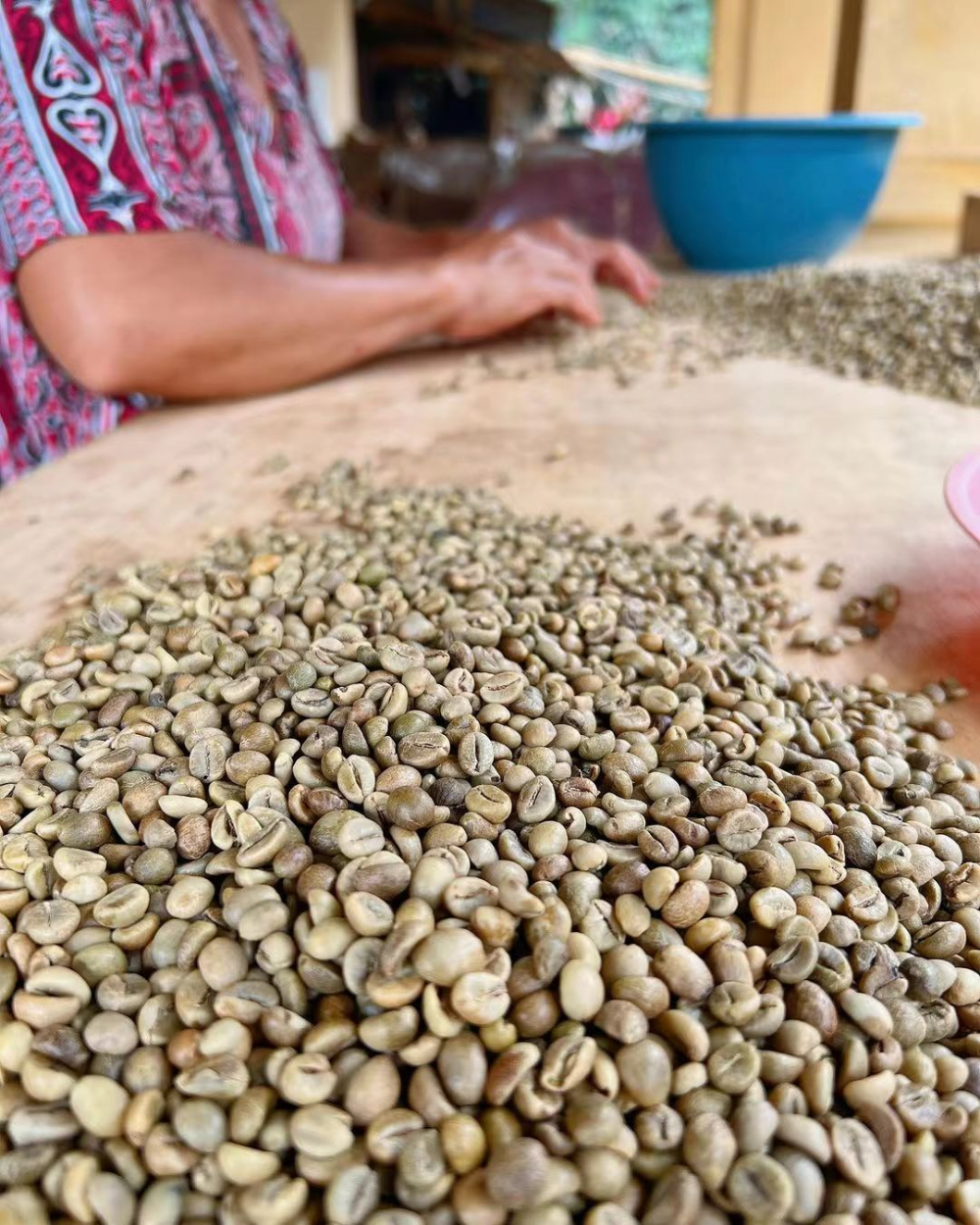
Because the hulling equipment applies relatively strong friction, the parchment layer tightly attached to the surface of the green beans is torn open. During the friction and stirring process, the green beans are also easily cracked or crushed, especially with small gaps often appearing at both ends, forming so-called horse-hoof beans. After the parchment layer is removed, the naked beans dry extremely quickly, but at the same time they are directly exposed to humid air and are prone to breeding specific bacteria, which gives Indonesian coffee its signature woody, spicy, and herbal character—what everyone commonly calls the Mandheling taste.
What exactly is Golden Mandheling?
Golden Mandheling is a signature product exclusively produced by PWN. Because the company registered the Golden Mandheling trademark early on, only Mandheling produced by PWN can bear the name Golden Mandheling. What makes this bean special is that the green beans undergo layer upon layer of screening, and the overall quality is quite outstanding, so the brewed coffee also has very good cleanliness. PWN selects Mandheling green beans of 18 screen size and above, with no more than 3 defective beans in a 300-gram sample, reaching G1 grade, the highest standard for Indonesian green beans. After that, it also strictly follows standards by carrying out 1 machine screening plus 3 manual sorting passes to ensure that the Mandheling coffee beans remain uniform and consistent in color, shape, and size.
After Front Street received PWN's Golden Mandheling, it adopted a medium-dark roast, striving to present Mandheling's classic caramelized aroma and taste. For the freshly roasted Front Street Golden Mandheling, Front Street first conducted a cupping evaluation. In the dry aroma stage, notes of cedar wood, nuts, spices, and herbs can be detected. After hot water is poured in, the sweet aromas of licorice and caramel emerge. On the palate, there are flavors of dark chocolate, cocoa, nuts, and spices. Overall cleanliness is high, the sweet finish is clear, and the body is outstanding. Faced with such a rich flavor spectrum, Front Street naturally had to extract and taste it by pour-over. Below, Front Street will explain the pour-over details of this high-quality bean one by one according to several key parameters.
How coarse should Mandheling be ground for pour-over?
Grind size is one of the key variables affecting coffee flavor. After coffee beans are ground into powder and come into contact with hot water, a large amount of soluble flavor substances is released. Within the same contact time, the finer the particles, the more substances are extracted; the coarser the particles, the fewer substances are released. Simply put, the coarser the grind, the weaker the coffee taste; the finer the grind, the stronger the coffee taste.
When calibrating the grind size, Front Street uses a tool—the Chinese No. 20 0.85mm standard sieve. For medium-light roasted beans, Front Street usually controls the passing rate at 75%–80%; for medium-dark roasted beans, it is set at 70%–75%. Compared with light-roasted coffee, medium-dark roasted Mandheling beans have a looser internal structure, stronger water absorption, and are more likely to release large-molecule bitter substances. To avoid over-extraction, Front Street chooses a grind size with a 75% passing rate on the No. 20 standard sieve.
In actual operation, Front Street first weighs 10 grams of coffee beans, grinds them according to the estimated setting, then puts the ground coffee into the upper sieve and shakes it vigorously. Particles finer than 0.85mm will fall into the lower layer. Finally, weigh the coffee powder received in the lower layer and divide it by 10 grams to get the passing rate. If the passing rate is lower than the target value, it means the grind is too coarse and needs to be adjusted finer; if it is higher than the target value, it means the grind is too fine and needs to be adjusted coarser.
What should the brewing water temperature be?
The effect of water temperature is similar to that of grind size: the higher the water temperature, the higher the extraction efficiency, the easier it is for various substances to be released, and the higher the concentration becomes. If nearly boiling hot water is used for brewing, it is very easy to extract unpleasant bitter components. Therefore, when brewing medium-dark roasted beans, Front Street uses different parameters from those for light-roasted beans. Medium-dark roasted beans have undergone a more complete Maillard reaction and caramelization, and are more likely to release bitter large-molecule substances. To avoid extracting too many off-flavors, Front Street appropriately lowers the water temperature—the brewing water temperature for light-roasted coffee is 91–93°C, while for medium-dark roasted coffee beans Front Street recommends 87–88°C.
How to choose a dripper?
Friends who often follow Front Street's brewing suggestions should know that when brewing beans that emphasize body, Front Street gives priority to the KONO dripper. From its shape, it can be seen that the KONO dripper has ribs only in the middle and lower parts, while the upper part is a smooth curved surface. In this way, after the dripper is rinsed, the filter paper can fit tightly against the wall of the dripper, restricting the exhaust during coffee extraction. The residence time of hot water in the dripper is therefore extended, the extraction rate increases, the concentration also rises, and the coffee tastes richer and more mellow. The KONO dripper is also suitable for mellow-flavor beans such as Front Street Brazil Queen Estate coffee.
Staged pouring
If you are a beginner and your water control ability is not yet strong enough, and the flow is not stable enough, then staged pouring is the simplest and most compatible pouring method. For example, assuming the total brewing time is 2 minutes, if the first stage of pouring takes longer than planned, then the subsequent pouring needs to use a stronger flow; conversely, if the first stage flow is too fast, you can switch to a slower, smaller flow for pouring.
Front Street usually uses three-stage pouring, with a coffee-to-water ratio of 1:15. For 1–2 servings, use 15 grams of coffee, so the total brewing water is 225 grams.
In the first stage, gently pour 30 grams of water for blooming, with a blooming time of 30 seconds; in the second stage, pour until about 125 grams, circling outward evenly and steadily. Then wait for the coffee liquid level to drop. When it has dropped by half, pour the final stage of water until 225 grams. After all the coffee liquid has finished dripping, the total extraction time is about 2 minutes.
The finished pour-over Front Street PWN Golden Mandheling has a solid, full, and mellow texture on the palate, and after swallowing, you can feel a caramel-like sweetness and finish. As the temperature drops slightly, the notes of fir wood, spices, dark chocolate, and hazelnut become more intense, the sweet finish is clear and sweet, and the layering is very rich.
The above content is compiled by CoffeeHunters, a coffee news website.


