







Yirgacheffe is a highly representative specialty coffee region in Ethiopia, famous for its citrus acidity, berry sweetness, and tea-like aftertaste. The Yirgacheffe daily drip bag launched by Front Street Coffee balances convenience and flavor, making it suitable for everyday office or home enjoyment. This article will systematically outline the flavor characteristics and extraction key points of Yirgacheffe, from the region's background and washed processing method to the drip bag brewing steps, helping coffee lovers easily brew a clean and bright floral-fruity cup.
Friends who have just entered the world of specialty coffee often look for affordable everyday beans suitable for daily drinking. If they also need something convenient to take to the office for brewing, drip bags are an ideal choice. Front Street Coffee's Yirgacheffe daily drip bag is exactly one that many coffee lovers repurchase again and again.
What exactly is Yirgacheffe ?
"Yirgacheffe" was originally the name of a small town in Ethiopia, often translated into Chinese as "耶加雪菲", and also written as "耶加雪啡". The area sits at an altitude of about 1,700 to 2,100 meters and can be called a calling card of Ethiopian specialty coffee. It is said that in ancient times this place was a wetland: "yirga" means "to settle down", and "cheffe" means "wetland", so together they carry the meaning of "settling in the wetland".
In the early days, Yirgacheffe was only a sub-region under Sidamo Province, located to the northwest of Sidamo, and was one of the highest coffee-growing areas in Ethiopia. Because the local production methods and flavor performance were so outstanding, coffee farmers took pride in their coffee having Yirgacheffe flavor, and later it became independent from Sidamo, becoming one of the most famous regions in Africa. This flavor-oriented phenomenon of regional independence will only become more common in the future.
Around 1995, Ethiopia adjusted its administrative divisions. The biggest change in the coffee sector was that the former Sidamo Province was redivided: a small part remained as the new Sidamo, while most was placed under Oromia Region; Yirgacheffe, which originally belonged to Sidamo, is now included in the new Gedeo Zone.
Ethiopian coffee currently circulating on the market often shows mixed use of old and new region names. This article explains according to the new administrative divisions.
The cultivation of Front Street Coffee's Yirgacheffe mostly adopts the garden coffee model, in which coffee farmers plant coffee trees near their homes, and after harvest send them to a processing plant near a water source for unified processing, or sell them in bulk to intermediaries. Apart from a few strong estates that can independently complete planting, picking, and processing, many coffee beans from different areas and different varieties are processed together by processing plants and then sent to auction houses for official grading. This is also why Front Street Coffee's Yirgacheffe coffee beans are often named and distinguished by processing plant or cooperative.
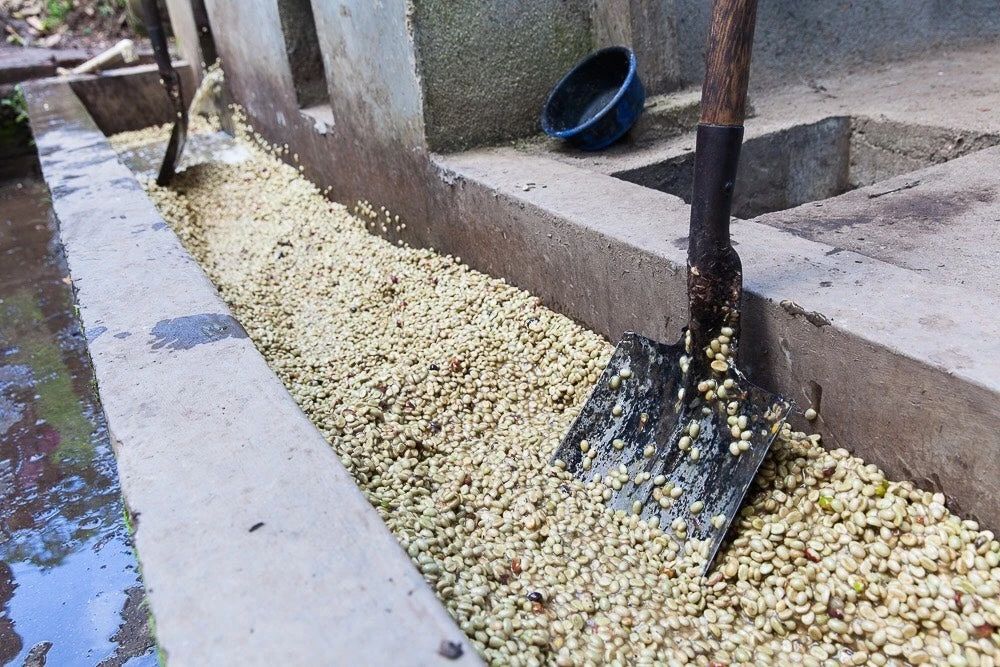
The washed processing flow of Yirgacheffe is not complicated. First, use a depulper to remove the skin and pulp, then soak the coffee beans in a fermentation tank for about 24 hours, afterward channel water to wash off the mucilage attached to the bean surface, and finally dry them until dry. The whole process takes about 2 to 3 weeks.
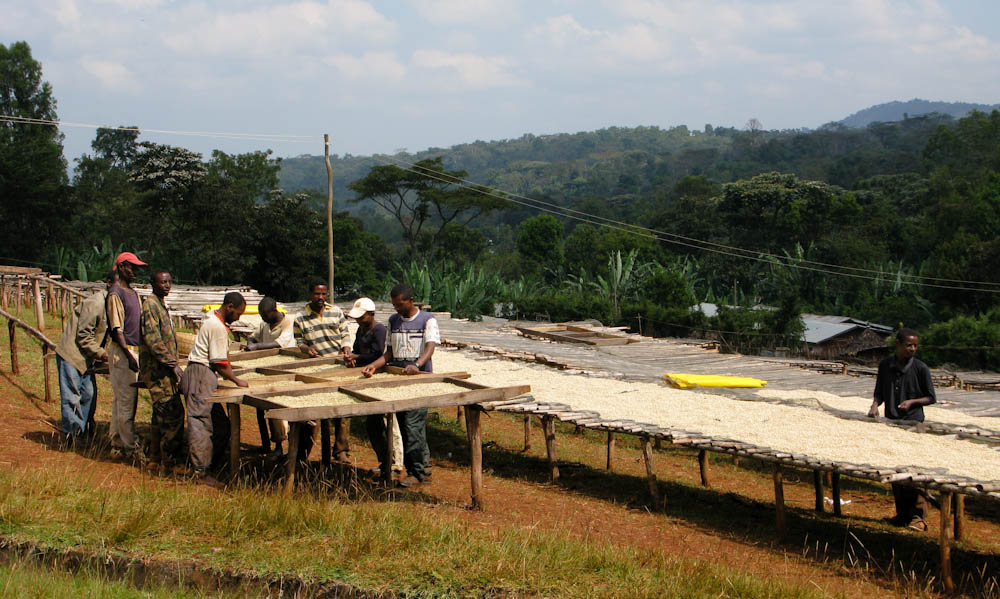
Multiple stages in the washed process can remove defective beans, so Yirgacheffe presents a cleaner and more stable taste in flavor.
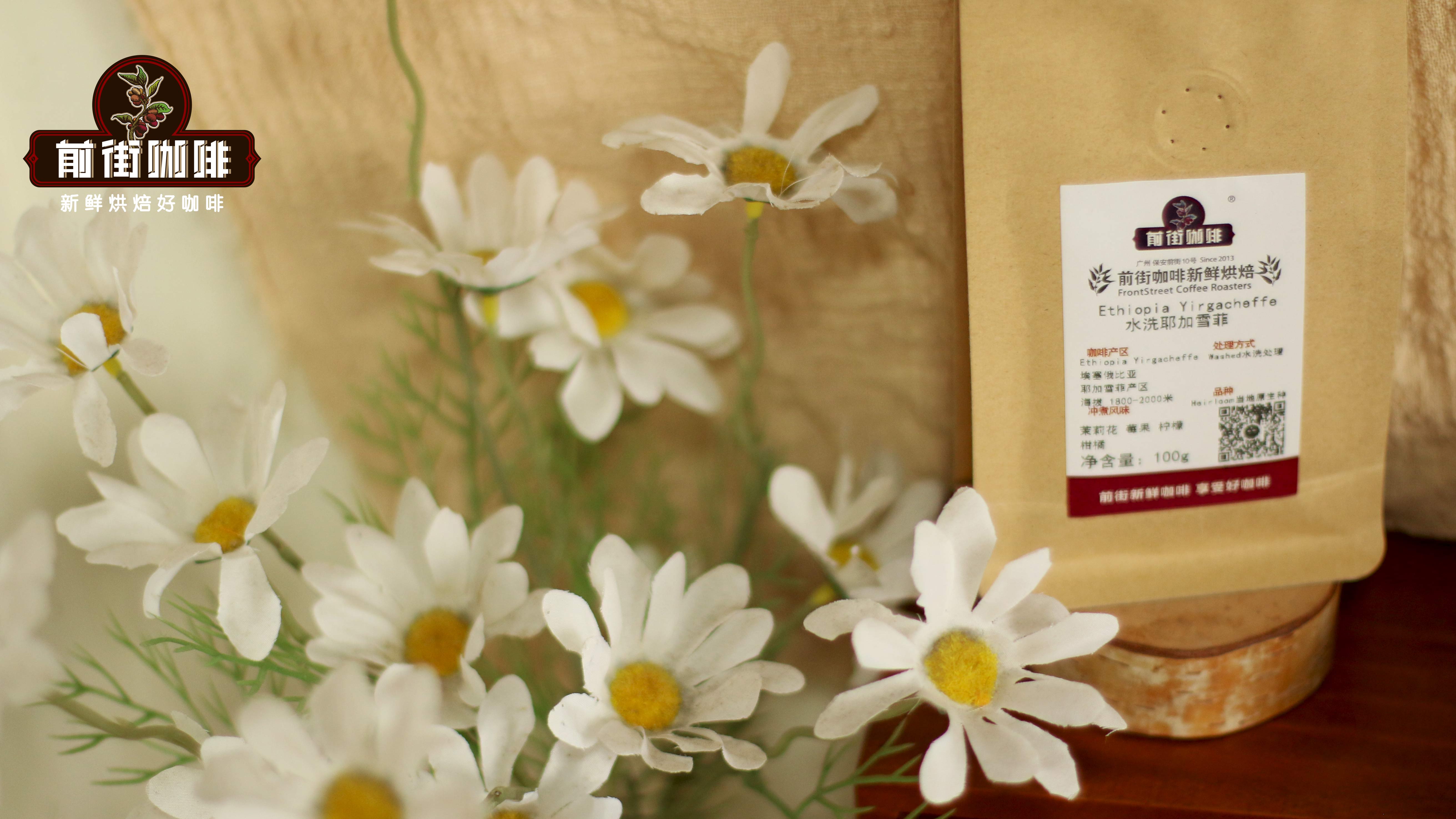
Front Street Coffee's Yirgacheffe drip bag coffee also uses washed processing, showing citrus acidity, berry sweetness, almond, tea-like notes, and an aftertaste with honey sweetness. It has low body, bright acidity, and is clean and refreshing, making it very suitable for friends who do not like bitter coffee.
How do you brew Yirgacheffe drip bag coffee?
1. First, we need to prepare a container to hold the coffee, either a sharing pot or a drinking cup, and a kettle for pouring water.
2. First tear open the sealed packaging, take out the coffee drip bag, and tear open the non-woven bag along the dotted line on top.
3. Pull open the two ears, open the entire drip bag, and then hang them on the edge of the cup or sharing pot.
4. First, in the first stage, moisten all the coffee grounds and let them bloom for about 10 to 20 seconds. In the second stage, pour in a steady small stream until the liquid level is nearly full, then wait for the coffee liquid to drop until it has finished flowing.
Pour in the final stage of water until full, wait for all the coffee liquid to finish dripping, remove the drip bag, gently shake the coffee to even it out, and then you can start enjoying it.
The above content is compiled by CoffeeHunters, a coffee news website.


