







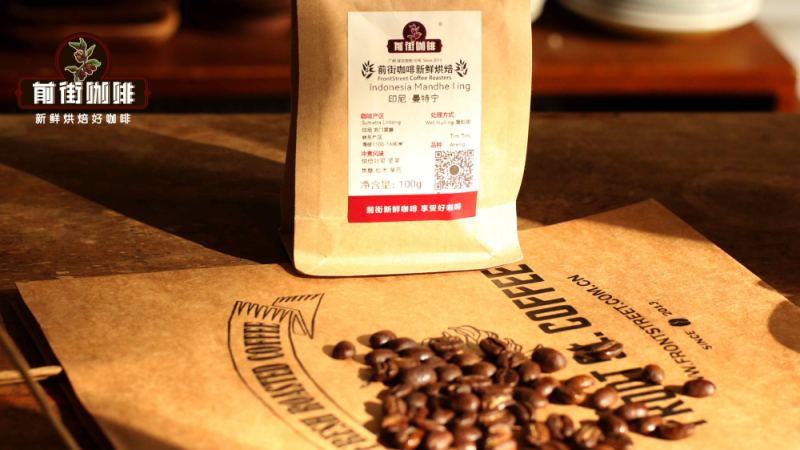
Golden Mandheling is one of the most representative specialty coffees from the Sumatra region of Indonesia, renowned for its full, solid body and flavors of pine, spice, and dark chocolate. Starting from the historical origins and growing background of Mandheling, this article systematically introduces PWN's grading standards and quality control process for Golden Mandheling, and shares in detail the grind size, water temperature, coffee-to-water ratio, and three-stage pouring technique recommended by Front Street Coffee, helping coffee enthusiasts fully release the herbal, caramel, and nutty aromas of these beans and brew a rich, layered pour-over with a long, lingering finish.
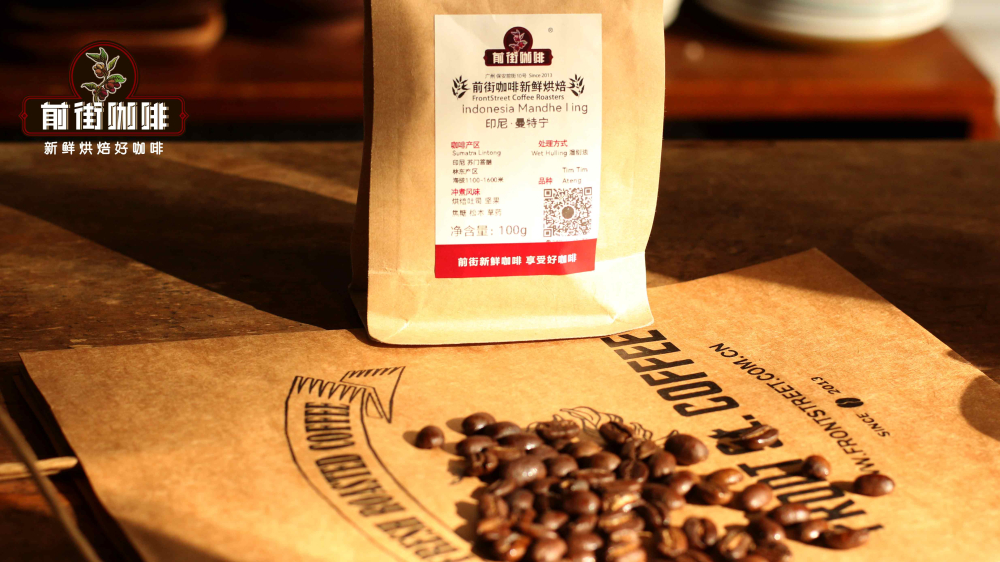
Front Street Mandheling is a coffee with a distinctive style; a medium-dark roast brings out its signature pine and spice notes, with an extremely full body and a rugged, rustic character. It is suitable both for beginners looking to train their flavor-recognition skills and as one of the daily go-to choices for those who prefer strong, bitter black coffee.
What exactly is Mandheling?
Indonesia has long been known as the "Country of a Thousand Islands," and its coffee-growing history dates back to 1696. After more than three centuries of evolution, production there is still organized around smallholder farmers, with organic cultivation widely practiced and everything from picking to sorting done by hand—which, to a large extent, safeguards coffee quality. Coffee is grown on islands throughout Indonesia, and differences in geographical conditions give each region its own distinctive flavor profile.
The delicate-flavored Arabica variety is mainly distributed in the high-altitude areas of northern Sumatra, Sulawesi, and Java. Although Arabica accounts for only about one-tenth of Indonesia's total coffee output, beans such as Mandheling, Golden Mandheling, Sulawesi coffee, and Aged Mandheling have earned Indonesia a reputation in the specialty coffee world that has lasted for decades.
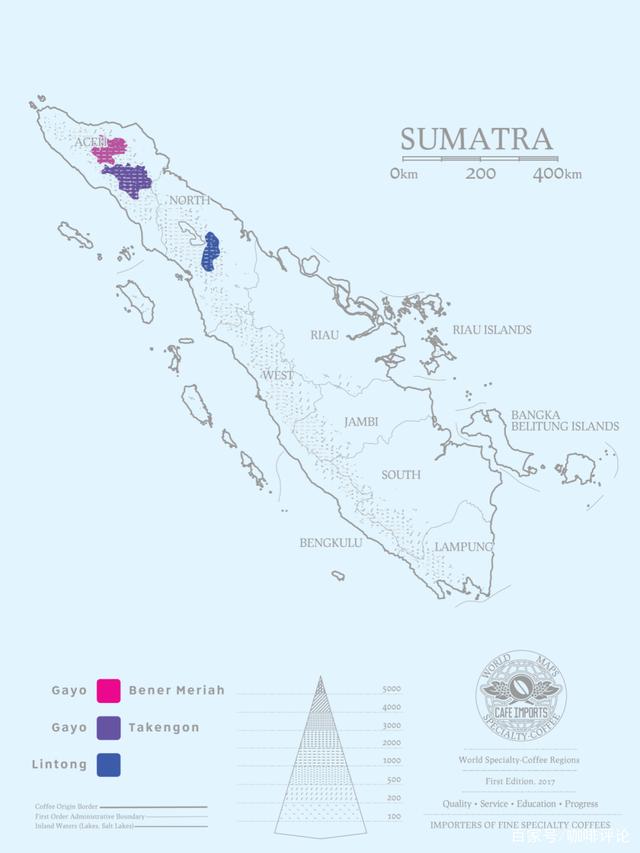
Indonesian coffee originated on the island of Java, but today the focus of cultivation has shifted to other islands, with Sumatra, Bali, and Sulawesi all being important coffee-producing regions. Sumatran coffee is nothing short of a legend in the industry and is one of the earliest regions in the world to develop large-scale cultivation; the vast majority of its output comes from Aceh Province in the north and North Sumatra Province (known as "North Sumatra") south of Aceh. These two major origins surround the region's well-known volcanic lakes—Lake Toba and Lake Tawar—and are traditionally divided into the Lintong and Aceh producing regions. The volcanoes have given Sumatra nutrient-rich soil, and the coffee produced there often displays creamy, chocolatey, and earthy aromas—a trait the Japanese discovered many years ago.
It is said that during World War II, when Japanese troops occupied Indonesia, a soldier drank an extremely aromatic cup of coffee in a certain café and asked the owner what kind of coffee it was. The owner mistook the question as asking where he was from and replied, "Mandailing." After the war ended, the soldier recalled the "Mandheling" he had drunk in Indonesia and commissioned locals to ship 15 tons to Japan, where it proved hugely popular on the market—and the name Mandheling spread from there. To this day, Mandheling is not only a classic symbol in the history of specialty coffee but also represents the high-quality Arabica coffee of Sumatra, and it continues to be sought after by coffee lovers around the world.
If you already have some grounding in brewing theory, understand the flavors of different producing regions, and want to get your hands on a high-grade, premium Mandheling, we would recommend Front Street PWN Golden Mandheling.
Why choose Front Street P.W.N Golden Mandheling?
Indonesian green beans are graded according to the number of defective beans and bean size—in short, the fewer the defects and the larger the beans, the higher the grade. Indonesia's requirements for standard quality include: no live insects, no moldy or rotten-smelling beans, a maximum moisture content of 12.5%, and an impurity rate below 0.5%. When graded by defect rate (based on 300 grams), the grades are mainly divided into six levels, G1 through G6.
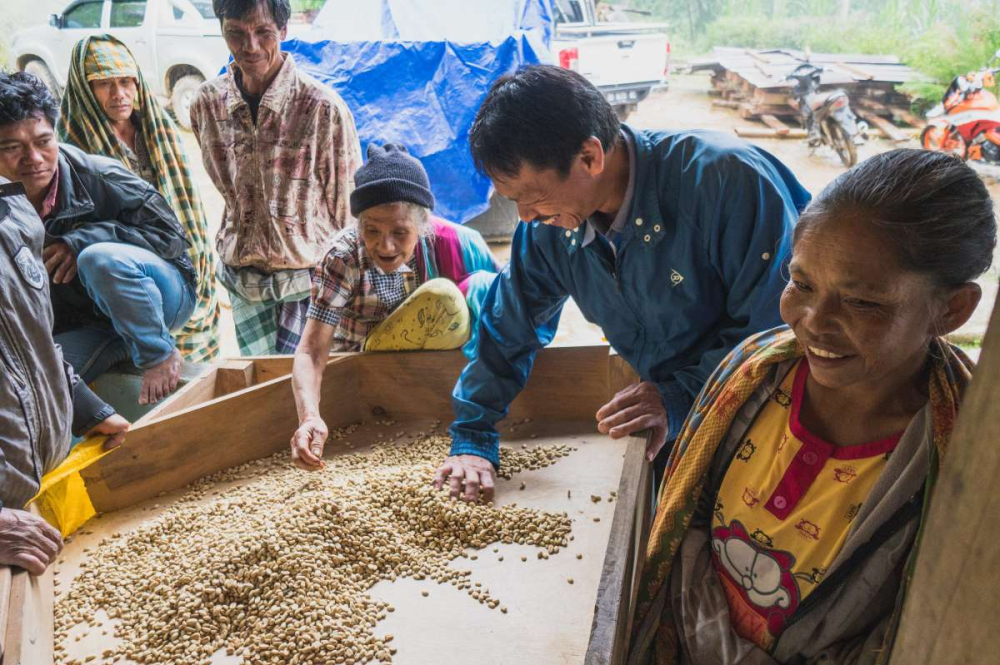
PWN is extremely rigorous in its sorting process, subjecting G1-grade Mandheling to one round of mechanical sorting plus three rounds of manual hand-sorting to ensure defective beans are completely removed and the defect rate is greatly reduced. In addition, before packaging, PWN also sends the green beans through machines for density and color-difference sorting, giving Golden Mandheling a uniform, translucent appearance.
Mandheling coffee's rise to fame stems from Pawani Coffee Company (PWN) successfully introducing it to the Japanese market. Unlike many local Indonesian green bean traders, PWN is the exclusive supplier of high-grade Golden Mandheling, having contracted the finest Mandheling-producing regions in Indonesia, and all the Mandheling beans it produces are of premium quality. After Front Street brought in this excellent Golden Mandheling, it was cupped for evaluation immediately after roasting: the cup was exceptionally clean, with every aroma clearly defined, outstanding sweetness, and a full, solid body.
The best pour-over recipe for Front Street Golden Mandheling
The aroma of Front Street Golden Mandheling is complex and layered. To taste it at its ideal flavor peak, Front Street recommends brewing with freshly roasted coffee beans. Coffee beans enter their best-tasting window on days 4 to 7 after roasting; beyond that period (roughly a month and a half), the aroma gradually fades and a woody, defective flavor appears. Front Street believes freshness is especially critical, so all beans shipped are freshly roasted within 5 days; factoring in shipping time, they are ready to drink as soon as you receive them.
Front Street's brewing approach for each coffee is based on the flavor characteristics shown during cupping. Take Golden Mandheling, for example: its flavors include herbs, dark chocolate, caramel, nuts, and pine. For full-bodied beans like these—aside from Front Street Golden Mandheling, there are also Front Street Jamaica Blue Mountain and Front Street Brazil Queen's Estate—the baristas at Front Street Coffee (FrontStreet Coffee) all choose the Kono dripper for brewing.
The ribs of the Kono dripper are less than half the height of the cone. This design is intended to let the filter paper cling tightly to the wall after wetting, thereby restricting airflow, extending the water-absorption time of the coffee grounds, making the final extraction more uniform overall, and enhancing the full-bodied mouthfeel. In addition, the grooved skeleton at the bottom of the Kono dripper is specially designed to create a siphon effect during brewing.
Dark-roasted coffee beans have a looser texture and strong water absorption, making them prone to over-extraction from absorbing too much water, which can make the brewed Mandheling both bitter and astringent. Front Street therefore coarsens the grind slightly and brews with lower-temperature water.
Recommended brewing parameters: water temperature 87–88°C, 15 grams of coffee grounds, coffee-to-water ratio 1:15, grind size medium (70% passing a Chinese standard No. 20 sieve).
Use a three-stage pouring method when brewing; pouring in three stages better showcases the full body and caramel sweetness of Front Street Golden Mandheling. For the first stage, the bloom, pour 30 ml to wet all the coffee grounds and let them degas, laying the foundation for extracting flavor compounds later; for the second stage, pour 100 ml, mainly to wash out Golden Mandheling's golden foam and raise the coffee bed; for the final stage, pour 95 ml with a gentle, centered stream. Once the coffee has fully drained, remove the dripper and gently swirl the carafe to even out the coffee.
The finished pour-over of Front Street PWN Golden Mandheling has a rich spice and herbal aroma on entry, with an overall full-bodied, bittersweet taste accompanied by caramel notes and aromas of chocolate, cedar, and roasted nuts, and a finish reminiscent of ripe pu'er—remarkably layered and complex.
The above content is compiled by CoffeeHunters, a coffee news website.


