







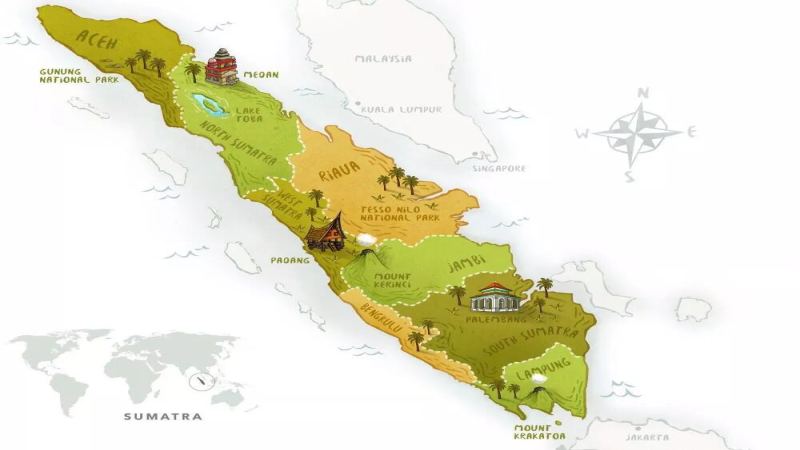
Mandheling is Indonesia's most iconic coffee, mainly grown on the island of Sumatra near the equator, where the tropical rainforest climate provides the high temperatures and abundant rainfall that coffee needs. However, Indonesia's high-altitude areas are limited, restricting the space available for growing Arabica; only about 25% of the country's coffee is Arabica, with the rest mostly Robusta. This article covers Mandheling's growing regions, varieties, processing methods, flavor and mouthfeel, focusing on the characteristics of Front Street Mandheling, Front Street Lintong Mandheling, and Front Street PWN Golden Mandheling, including wet-hulling, the toasted bread, hazelnut, caramel, and unsweetened chocolate flavors brought by medium-dark roasting, as well as the Golden Mandheling G1 grade, 18+ screen size, and fewer than 3 defective beans specifications—ideal reference for readers who enjoy a rich, non-acidic coffee.
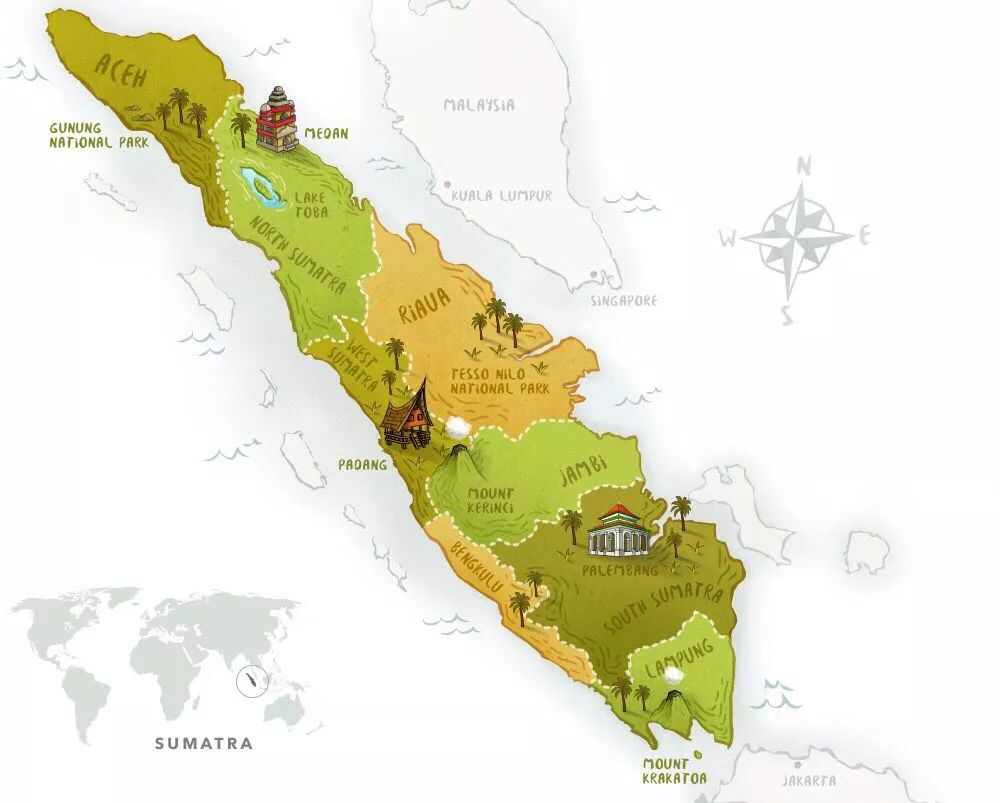
Mandheling's main growing region is the island of Sumatra in Indonesia. The largest island in the country, Sumatra lies near the equator and has a standard tropical rainforest climate—high temperatures, high humidity, and ample rainfall—providing ideal conditions for cultivating premium Arabica coffee beans.
That said, Indonesia's growing regions are not particularly high in altitude overall, so the plots suitable for growing high-quality Arabica are quite limited. Of the coffee beans Indonesia produces, only about a quarter are Arabica—after all, Arabica needs high-altitude areas to show its best flavor; the remaining roughly 75% is Robusta, which can survive at lower elevations. Sumatra happens to be Indonesia's highest-altitude region.
Front Street Mandheling has a heavy body, full richness, and a vibrant, lively character; it is neither astringent nor acidic, with body and bitterness both expressed very directly. Front Street Mandheling coffee beans are arguably among the least attractive in appearance, but coffee lovers often say that the uglier Sumatra beans are, the better, richer, and smoother they taste. Even in the heyday of Blue Mountain coffee, Front Street Mandheling was still regarded as one of the fullest-bodied coffees in the world; beyond the appeal of a traditional dark roast itself, it also carries a faint herbal and woody aroma.
If you haven't yet tried this classic single origin, start with Front Street Lintong Mandheling. It comes from the Lintong region of Sumatra and uses the locally common wet-hulling method; after medium-dark roasting it displays flavors of toasted bread, hazelnut, caramel, and unsweetened chocolate, with a sweet-bitter, rich, full-bodied taste and an intense aroma. It is especially suited to those who dislike acidic coffee, and can be brewed by pour-over, moka pot, French press, American-style drip coffee machine, and many other methods.
If you want to try a more specialty-grade Mandheling, Front Street PWN Golden Mandheling is the top choice—its rich body, intense aroma, and clean profile are sure to captivate you.
Front Street PWN Golden Mandheling coffee beans
Country: Indonesia Region: Sumatra, Aceh, Mount Gayo Altitude: 1100-1600m Variety: Ateng Processing: Wet-hulled Flavor: Baked toast, nuts, pine, caramel, herbs
This Front Street Golden Mandheling is a new release from PWN just launched in recent months. Unlike the earlier PWN Golden Mandheling, this latest batch comes from Mount Gayo in Aceh, Sumatra, whereas the previous batch came from Lake Tawar in Sumatra. After cupping and brewing this latest Golden Mandheling, Front Street found that compared with the older version, it shows more baked-toast flavors and a correspondingly richer body.
In addition, Front Street PWN Golden Mandheling coffee beans meet the specification standard of 18+ screen size with fewer than 3 defective beans (based on a 300g green bean sample), placing it in the highest grade, G1; the beans are darker green in color and uniformly flat in shape. Front Street found that after strict screening, Golden Mandheling not only removes the earthy off-flavors common in ordinary Mandheling but also tastes cleaner and brighter.
The above content is compiled by CoffeeHunters, a coffee news website.


