







As the world's second-largest Arabica coffee producer, Colombia's unique low-latitude, high-altitude geography provides ideal conditions for coffee cultivation. However, many people misunderstand Colombia's coffee grading system—does the highest grade, Supremo, really represent the best-tasting coffee? This article provides a comprehensive analysis of Colombia's coffee-growing regions, cultivated varieties, processing methods, and grading system, and introduces the Colombian specialty coffee beans sold by Front Street Coffee along with roasting and brewing recommendations, taking you deeper into the true face of this major South American coffee country.
For more specialty coffee knowledge, please follow our WeChat public account: Front Street Coffee (FrontStreet Coffee)
Many people's first encounter with Colombian coffee often begins with espresso blends. Colombia enjoys exceptionally favorable geographical conditions—low latitude combined with high altitude—creating an extremely ideal growing environment for coffee trees, especially suitable for cultivating Arabica varieties, which has also made it the world's second-largest producer of Arabica coffee beans.
In the early days, Colombia tended to focus more on the commercial coffee bean market, placing relatively little emphasis on flavor expression and quality consistency. As a result, coffee shops usually used dark roasting to process Colombian beans, then blended them with coffees from other regions to complement each other's strengths, ultimately presenting an espresso that was mellow yet gentle, with a slight fruity acidity.
It was not until the late 1990s that the specialty coffee market gradually took shape. At that time, Colombia did not promptly follow this trend and did not push for the specialty transformation of coffee beans early on, only formally entering the specialty coffee field in 2001. Due to its earlier "indifferent attitude" toward the specialty coffee market, when specialty coffee gradually heated up, Colombian coffee beans instead seemed somewhat "marginalized," still mostly used for blending and finding it hard to stand on their own.
However, Colombia's climate conditions, natural environment, and coffee-growing altitudes—mostly concentrated between 1,200 and 1,900 meters—fully meet the standards for specialty coffee cultivation. Therefore, as demand for specialty coffee continues to grow, Colombian coffee is also increasingly favored by the specialty market.
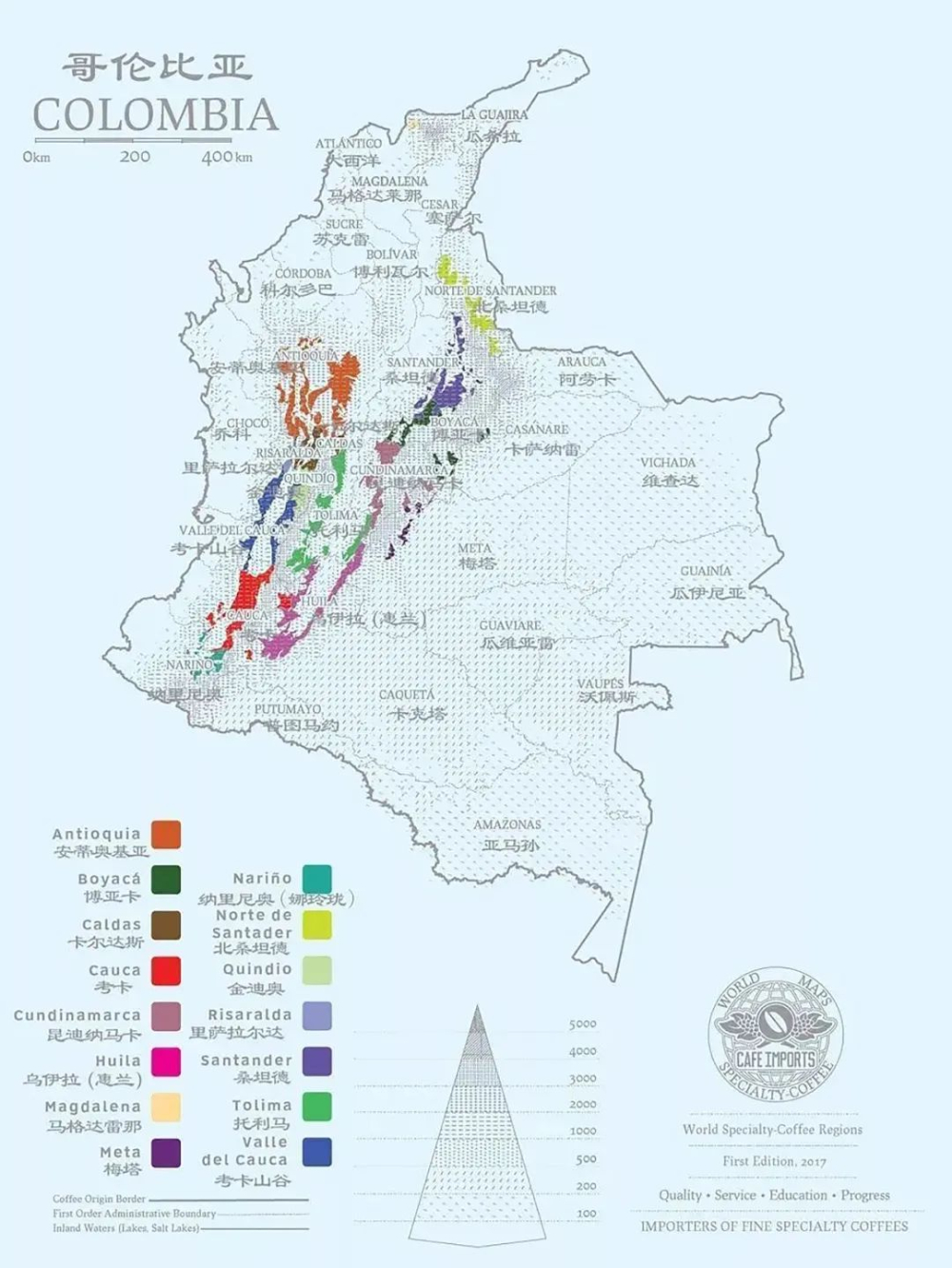
Colombia's Coffee-Growing Regions
Colombia lies between 3 and 8 degrees north latitude, belonging to the low-latitude coffee-growing belt. The most notable advantage of low-latitude regions is abundant rainfall year-round, with virtually no drought, and average monthly temperatures maintained between 25 and 28 degrees Celsius. In such an environment, coffee trees can grow year-round and have a high fruiting rate. Therefore, Colombia can harvest Arabica coffee beans twice a year.
In order to better meet the needs of the coffee market, Colombia divides its producing regions into two parts: specialty coffee bean regions and commercial coffee bean regions.
Specialty coffee beans are mainly distributed in southern Colombia at altitudes above 1,500 meters, covering Cauca, Huila, Meta, Tolima, and Nariño. Coffee beans from these regions have delicate berry aromas and acidity, as well as caramel-like sweetness. Most of the Colombian coffee beans currently sold by Front Street Coffee come from southern areas between 1,500 and 1,800 meters.
Commercial coffee beans are mainly grown in central and northern Colombia, including Medellín, Armenia, and Manizales. Coffee beans from these areas exhibit typical Central American flavor characteristics, with soft fruity acidity and nutty and caramel aromas.
Colombia's Coffee Varieties
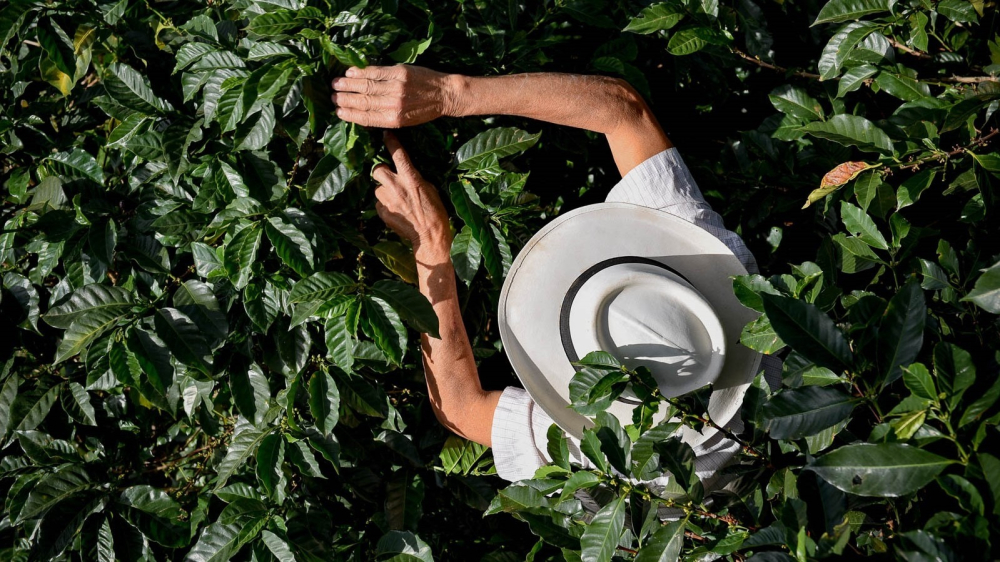
Caturra and Catuai are the most common coffee varieties in Colombia. In addition, some well-known coffee estates also grow Geisha coffee and some emerging varieties, such as Colombia (yes, this is the name of a coffee variety), Castillo, and others.
Caturra is a natural mutation of the Arabica Bourbon variety, discovered in Brazil in 1937. Its tree is shorter than Bourbon. Although it inherits Bourbon lineage, its disease resistance is relatively weak, but its yield is higher than Bourbon. Despite being discovered in Brazil, Caturra is not suited to Brazil's growing conditions, so it was not widely planted there; instead, it became widespread in Central and South America, with large-scale cultivation in countries such as Colombia, Costa Rica, and Nicaragua.
Catuai (Caturra) is a coffee variety developed through artificial hybridization between Caturra and Mondu Novo. Catuai has strong resistance to natural disasters, especially outstanding resistance to wind and rain. The tree is relatively short, and its fruit grows more firmly than that of other coffee trees, making it less likely to fall off during picking. The fruit comes in both red and yellow colors. To date, no evidence has been found that yellow fruit has better flavor than red fruit. On the contrary, some cupping results show that although coffee processed from yellow fruit has decent acidity, its cleanliness in the mouth is inferior to that of red fruit.
Castillo Starting in 1961, CENICAFE began researching the Timor variety, which carries Robusta lineage. Since then, CENICAFE continued its research and development, launching its second disease-resistant variety, Tabi (a hybrid of Typica, Bourbon, and Timor), in 2002, and releasing Castillo in 2005, the most successful disease-resistant variety at the time. After the large-scale outbreak of leaf rust in 2008, Colombia began vigorously promoting the cultivation of Castillo.
Colombia (Colombla) This new variety [Colombia], named after the country, was successfully bred in 2008. It is a hybrid variety with Caturra and Timor lineage, essentially belonging to the Catimor group. However, [FNC] insists that although Colombia is a direct descendant of Catimor, its flavor is far more elegant than ordinary Catimor, because after multiple generations of "backcrossing" with Arabica, it has washed away the musty, fishy taste of Robusta beans, bringing the flavor closer to Arabica while also possessing Robusta's disease resistance and high-yield advantages, making it an important tool for increasing Colombia's production.
Colombian Coffee Bean Processing Methods
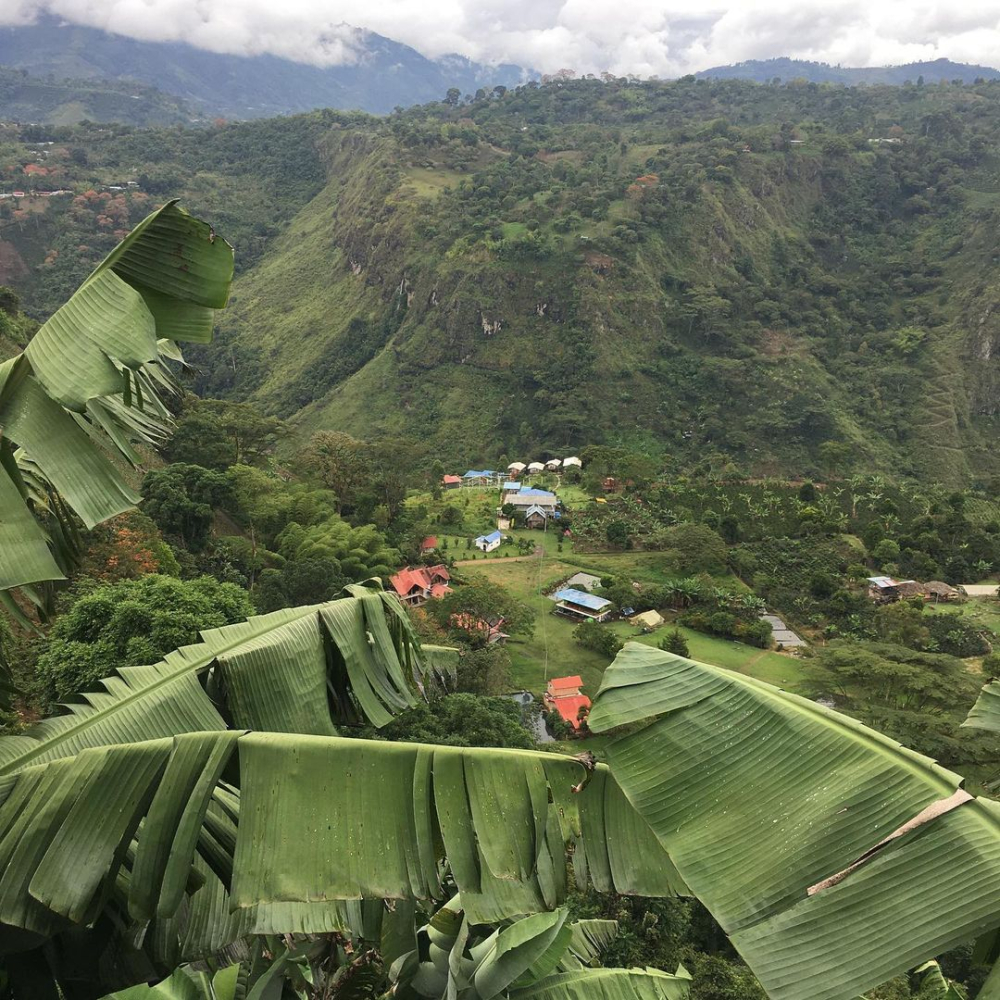
Colombian coffee mostly uses the washed processing method, and most specialty coffee comes from small and medium-sized privately owned farms. Compared with Brazil's large-scale planting model, the coffee quality from small farms is usually better.
After picking, coffee cherries are first poured into a large water tank. Underdeveloped, inferior beans float to the surface, while ripe, plump fruits sink to the bottom. At this point, the defective beans (fruits) floating on the surface are scooped out and discarded.
Next, a pulping machine is used to remove the outer skin and pulp of the coffee fruit. At this stage, a slippery mucilage layer still clings to the surface of the coffee beans. The beans with mucilage are placed into a fermentation tank for 16 to 36 hours, during which microorganisms break down the mucilage.
After fermentation is complete, the remaining mucilage on the coffee beans is rinsed off thoroughly with plenty of clean water. Finally, the washed coffee beans are spread out to dry.
Front Street Coffee believes that only the washed processing method can better showcase a coffee's quality, directly reflecting the cleanliness of the cup and its pure flavor. Therefore, Front Street Coffee selected a Caturra coffee from the Huila region as an entry-level selection and everyday staple bean, allowing every enthusiast to taste the regional flavor of Colombia at a highly cost-effective price.
In addition, the Federacion Nacional de Cafeteros de Colombia (FNC) has specifically promoted specialty coffee projects, requiring coffee beans to pass strict quality control before export. In recent years, many special processing methods have also originated in Colombia, such as barrel aging and anaerobic fermentation. Colombian coffee continues to create new ideas in the specialty coffee field and keeps making progress.
Colombia's Coffee Grading System
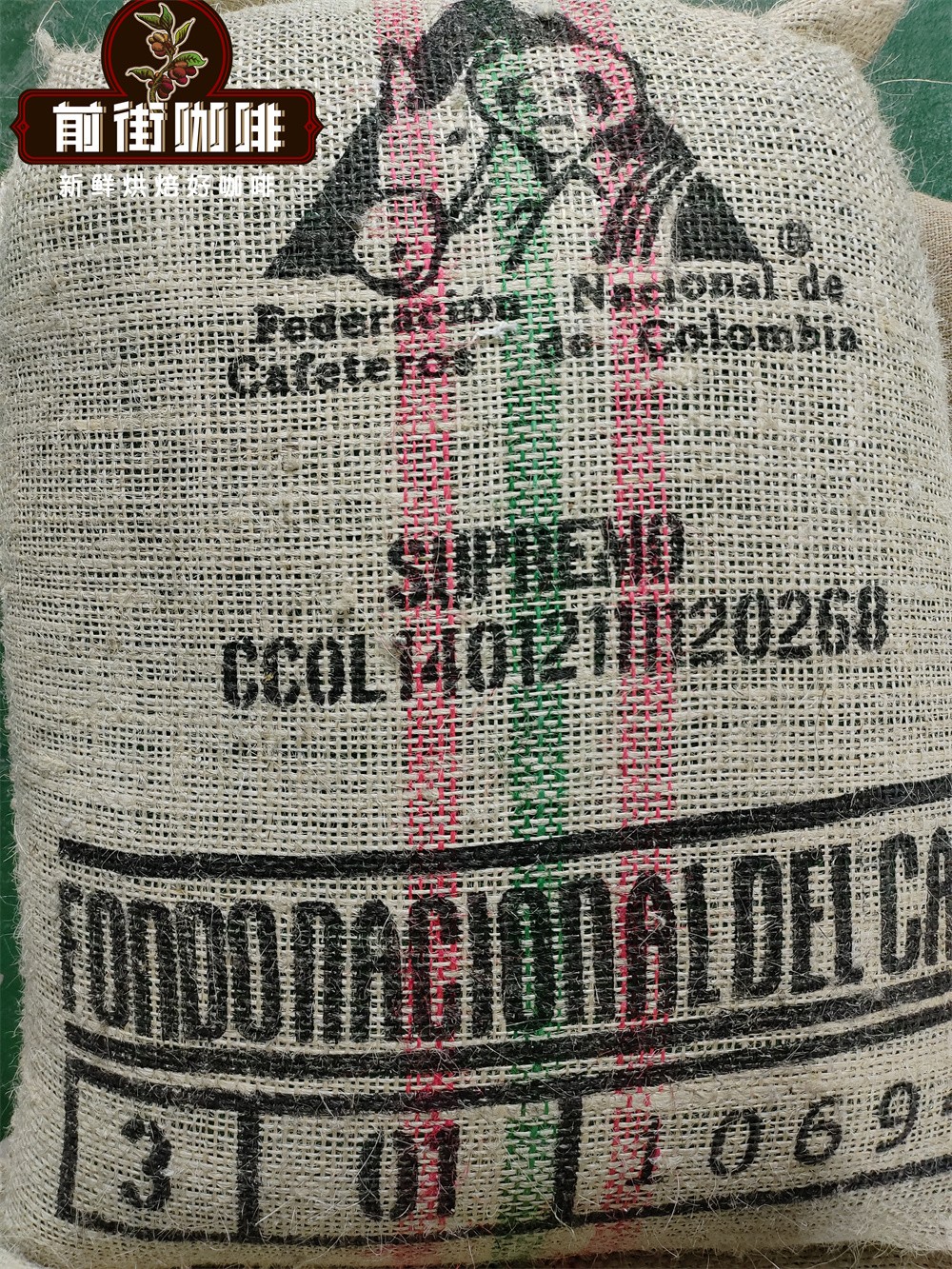
Colombian coffee grading focuses on bean size rather than flavor. Therefore, if you see the top-level "Supremo" label, do not assume it necessarily means it tastes good.
This grade only indicates that 80% of the coffee beans are 17 screen size or above, and has nothing to do with flavor. Therefore, be sure to pay special attention to which producing region it comes from. Southern specialty producing regions will mark the province and place of origin. If there is no such marking, then it is most likely commercial-use coffee beans.
How to Roast Colombian Coffee Beans?
The Colombian coffee beans currently sold by Front Street Coffee are as follows:
"Front Street - Huila Region Washed Staple Coffee Beans" Flavor profile: nuts, dark chocolate, caramel, soft fruity acidity
"Front Street - Rose Valley Coffee Beans" Flavor profile: roses, peach, liqueur chocolate
"Front Street - Flower Moon Night Coffee Beans" Flavor profile: strawberry jam, fermented aroma, chocolate
"Front Street - San Jose Coffee Beans" Flavor profile: rum, tropical fruit, liqueur chocolate, maple syrup
"Front Street - Sakura Coffee Beans" Flavor profile: basil leaves, strawberry jam, berries, vanilla-like spices
"Front Street - Hanami Coffee Beans" Flavor profile: pink pepper, chamomile, mandarin orange, honey, almond
In order to preserve the soft acidity of Colombian coffee beans and the sweetness after caramelization, Front Street Coffee uses a medium roast while extending the time from the yellowing point to before first crack, allowing the coffee beans to develop better sweetness.
So that every friend can enjoy the aroma of freshly roasted coffee, Front Street Coffee guarantees that coffee beans are shipped within 5 days after roasting is completed ~!!!
How to Brew Colombian Coffee Beans?
Front Street Coffee uses a V60 dripper to brew Colombian coffee beans. The 60 conical dripper has a larger hole, and combined with its unique spiral curved rib design, it allows air to escape more easily, thereby improving extraction quality.
Water temperature: 90-91 degrees
Grind size: fine sugar size / 80% passing a Chinese standard No. 20 sieve
Coffee-to-water ratio: 1:15
Coffee dose: 15 grams
Three-stage pouring: In the first stage, pour 30 grams of water for a 30-second bloom, then pour 95 grams (the electronic scale shows about 125 grams), completing the pour in about 1 minute. When the water level drops to 2/3 of the coffee bed, pour the remaining 100 grams (the electronic scale shows about 225 grams), completing the pour in about 1 minute 40 seconds. At 2'00", dripping is complete; remove the dripper and finish extraction.
The above content is compiled by CoffeeHunters, a coffee news website.


