








For more specialty coffee knowledge, please follow: Front Street Coffee (Frontsteet Coffee)
Front Street has noticed that on the path of self-learning coffee, what sometimes troubles people is not those complex techniques or parameters, but that whenever you search for a professional term, a whole bunch of related words pop up that look similar but have different meanings in Chinese, which is confusing. For example, the iced coffee that dominated the entire summer—cold brew—as soon as you search it on the internet, several "aliases" are bound to pop up, including ice drip, ice brewed, cold brew, Dutch coffee, Kyoto coffee... For a moment, it's really hard to tell who is who.
Among them, ice brewed coffee is undoubtedly the most vaguely defined concept. Some people think ice brewed is cold brew, some believe ice brewed should refer to ice drip, and others understand it as the method of soaking coffee grounds in a mixture of ice and water. Don't worry, let's start with the big category of cold brew coffee~

We all know that the term "cold brew coffee" is a direct translation of "Cold brew coffee," and its popularity is thanks to Starbucks' expansion and marketing. If you appropriately expand this name, you'll find that actually all black coffees made by cold (water) extraction (brewing) can be classified as "cold brew coffee." In other words, whether immersed, drip-filtered, or poured, as long as it is a liquid obtained by bringing low-temperature cold water into contact with coffee grounds, theoretically it all falls within the category of cold brew coffee.
However, since the concept of cold brew tea has long existed in Chinese, in most cases, when people say "cold brew coffee," they refer to coffee made by soaking in cold water for a long time, that is, cold brew coffee. The common method is to soak coffee grounds in room-temperature water, put it in the refrigerator for several hours, and then separate the coffee grounds.

As a typical immersion extraction, cold brew coffee is both simple and convenient to make, with many choices of coffee bean types and a low failure rate, so it is not only a "regular" in coffee shops, but also one of the hits on the homemade coffee list.
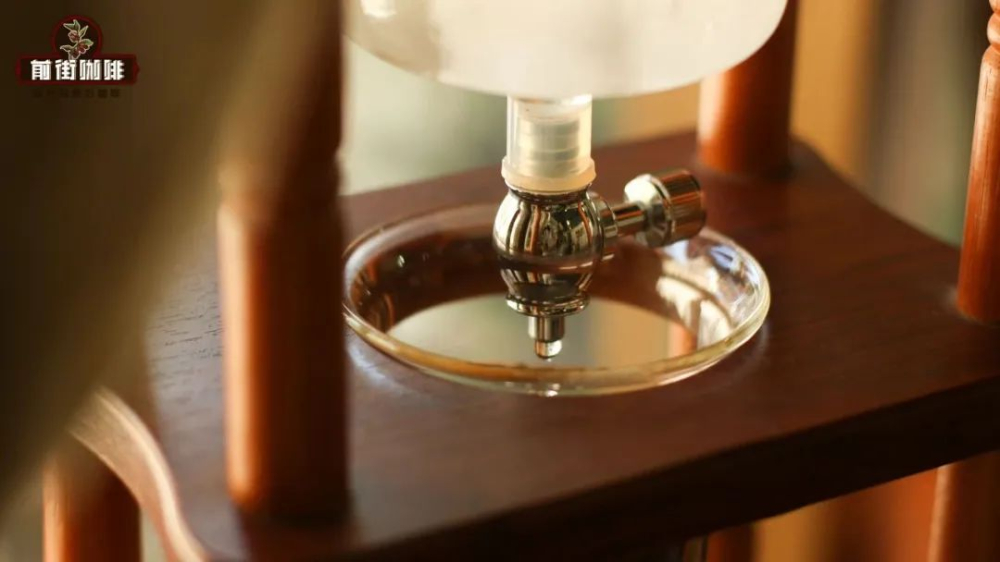
Another common low-temperature extraction belongs to the drip filtration type, which is the process of controlling the continuously melting ice-water mixture to penetrate drop by drop into the coffee grounds for long-time extraction—that is ice drip. In many English textbooks, ice drip is usually not called "Ice Drip Coffee," but Dutch Coffee, so it is often translated as "Dutch coffee."
Legend has it that around the 17th century, Dutch sailors tried soaking coffee grounds in cold water during long sea voyages, and finally found that the coffee made this way was not bitter and was convenient for long-term storage and transportation. Later, the Dutch introduced this cold drink method through trade to Japan during the Edo period, where it became very popular, hence the name: Dutch Coffee.
Although it is hard to determine whether the above story is true, what is certain is that the cool drip device designed with several layers that everyone sees in coffee shops today was invented by the Japanese, and the ice drip coffee made with it also became popular from within Japan.

Hana Fusa
Later, as well-known Japanese equipment brands such as HARIO, KINTO, and Kalita successively developed the cold brew bottles and ice drip pots that everyone is familiar with today, this type of low-temperature extracted black coffee spread widely throughout Japan. Until the rise of the third wave of coffee, this cool-looking coffee device began to spread to Europe, and so it was called Kyoto Coffee by Westerners.

Compared with cold brew and ice drip, the two characters "ice brewed" rarely appear in domestic coffee shops, and Front Street has not been able to find a specific origin, and everyone's explanations of it are even more varied. Regarding ice brewed coffee, we can understand it as an elegant translation of "Cold Brew," almost equivalent to the meaning of cold brew coffee.
In Front Street's view, ice brewed coffee mainly highlights the character "brewed," whose original meaning is to make wine, to brew, and is related to alcohol. In our coffee process, whether ice drip or cold brew, after production, both need to be sealed in a container for a brewing stage, and after several hours or one or two days of aging, the soluble flavor substances further merge with water, gradually developing a fermented taste like fine wine.

So whether ice drip or cold brew, as long as it is black coffee obtained after a storage and brewing process, Front Street believes it can be understood as "ice brewed coffee."

When Front Street makes this type of low-temperature extracted coffee, it prioritizes beans with floral and fruity flavors. For friends who like floral notes, we recommend buying Front Street Huakui Coffee, Front Street Red Cherry Coffee, and Front Street Guodingding Coffee. If you prefer a more obvious juicy feel, we suggest choosing Front Street Strawberry Candy Coffee, Front Street Little Tomato Coffee, and Front Street Mozart Coffee, which are beans with rich fruity tones. All of the above can be ordered at the Front Street Tmall flagship store or the Front Street Taobao store.
The above content is compiled by CoffeeHunters, a coffee news website.


