







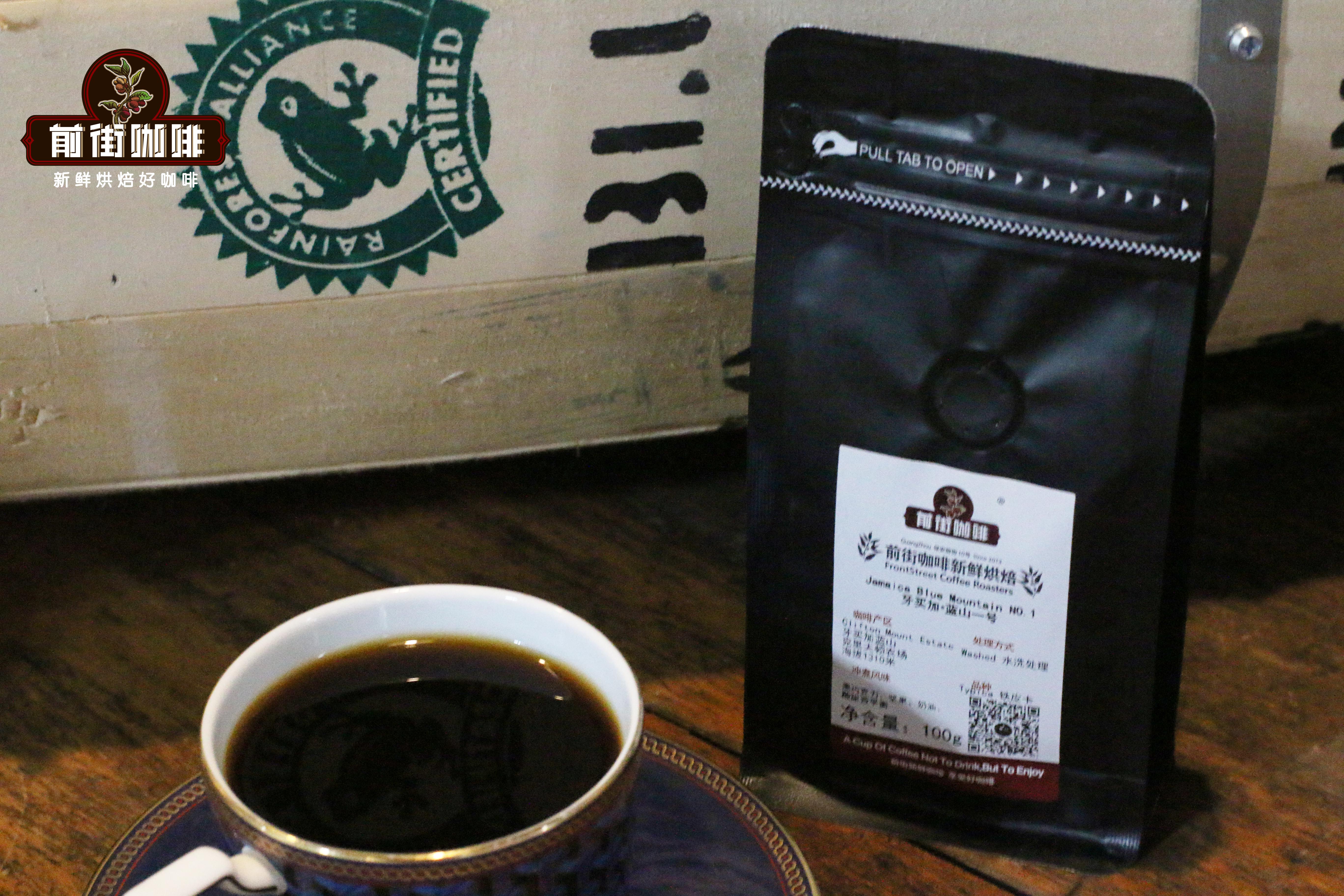
Blue Mountain coffee is hailed as a legend in the coffee world, but genuine Jamaica Blue Mountain No. 1 is scarce in production and expensive, with counterfeit and inferior products flooding the market. This article starts with the authentic definition of Blue Mountain coffee, its legally designated growing regions, and its grading standards, then takes a deep dive into its dark chocolate and caramel flavor profile and its balanced acidity, sweetness, and bitterness, while tracing the historical origins of Blue Mountain coffee's high price. It also provides a detailed introduction to Front Street Blue Mountain No. 1's washed processing method, quality certification system, and specific home-brewing parameters and techniques, helping coffee lovers gain a comprehensive understanding of this classic coffee and avoid purchasing pitfalls.
Authentic Jamaica Blue Mountain No. 1 coffee greets the palate with a rich, full-bodied blend of dark chocolate and caramel, accompanied by a soft berry-like acidity and a sugarcane-like clean sweetness. The five tastes of acidity, sweetness, bitterness, sweetness, and body achieve a exquisite balance in a single cup, with a long, lingering finish. For those just getting to know Blue Mountain coffee, Front Street recommends purchasing authentic products through proper channels.
What is authentic Blue Mountain coffee beans?
The reason for emphasizing authentic Front Street Blue Mountain coffee is that genuine Blue Mountain coffee has extremely limited production, and production costs drive up the price. Yet because of its fame, some merchants take the opportunity to slap the Blue Mountain label on low-quality dark-roast blends or even instant products, making it hard for consumers to tell genuine from fake. To identify authentic Blue Mountain coffee , you first need to understand what core characteristics Blue Mountain coffee possesses.
According to Jamaica's Coffee Industry Regulation Act, the legally designated growing area for Blue Mountain coffee is concentrated in four administrative parishes: Saint Andrew, Saint Thomas, Portland, and Saint Mary. It explicitly states that only Typica variety grown at altitudes between 910 and 1,700 meters may bear the name Jamaica Blue Mountain coffee. The high-altitude terrain of the Blue Mountains is steep and rugged, making field management and harvesting extremely difficult, with labor costs remaining high. Therefore, authentic Blue Mountain coffee can never be cheap. If so-called Blue Mountain beans on the market sell for just a few dozen yuan, they can basically be judged as counterfeits. As a price reference, Front Street's authentic Blue Mountain No. 1 coffee beans are sold at 198 yuan per 100 grams.
In terms of aroma, Front Street Blue Mountain coffee exudes a rich, solid, and lasting chocolate and roasted hazelnut scent, a height that ordinary dark-roast blends find hard to reach. In terms of taste, authentic Blue Mountain coffee is balanced across acidity, sweetness, bitterness, and aroma, with no single flavor dominating, and its body and sweetness are just right.
If the above two points still leave you unable to judge, you can ask the merchant to show Blue Mountain-related certificates and the wooden barrels used to hold Blue Mountain green beans — Jamaica Blue Mountain is the only producing region in the world that packages green beans in wooden barrels. Front Street Blue Mountain No. 1 coffee comes with a quality certificate issued by the Jamaica Coffee Board, a sales authorization letter granted by the Blue Mountain coffee producer, and a certificate of origin. These documents and handmade wooden barrels are all on display at Front Street stores. Front Street Blue Mountain No. 1 comes from Clifton Mount Estate and uses the traditional washed processing method, which is also the most common green bean processing method for Blue Mountain coffee.
Why is Blue Mountain coffee so expensive?
As early as before the 1960s, Jamaican coffee beans were already widely favored in the global specialty market. In 1969, Jamaica suffered a severe hurricane disaster, and multiple industries fell into decline, with the coffee industry unable to escape either. At this time, the Japanese company UCC provided financial assistance to the Jamaican coffee industry and introduced scientific ecological planting techniques. To repay this kindness, the Jamaican government signed a 30-year agreement with Japan, promising to supply 90% of the premium Blue Mountain coffee quota to Japan, with the remaining 10% allocated to European and American countries.
During this period, Japan's domestic market did not fully consume all this Blue Mountain coffee, and some products were resold at high prices to other Asian countries and regions. Combined with Japan's vigorous promotion, coffee lovers in neighboring countries also began to eagerly pursue Blue Mountain coffee, such as Singapore, South Korea, and China's Taiwan and Hong Kong regions. After 2000, the Blue Mountain craze gradually spread to the mainland market, and the supply shortage further drove up the price of Blue Mountain coffee.
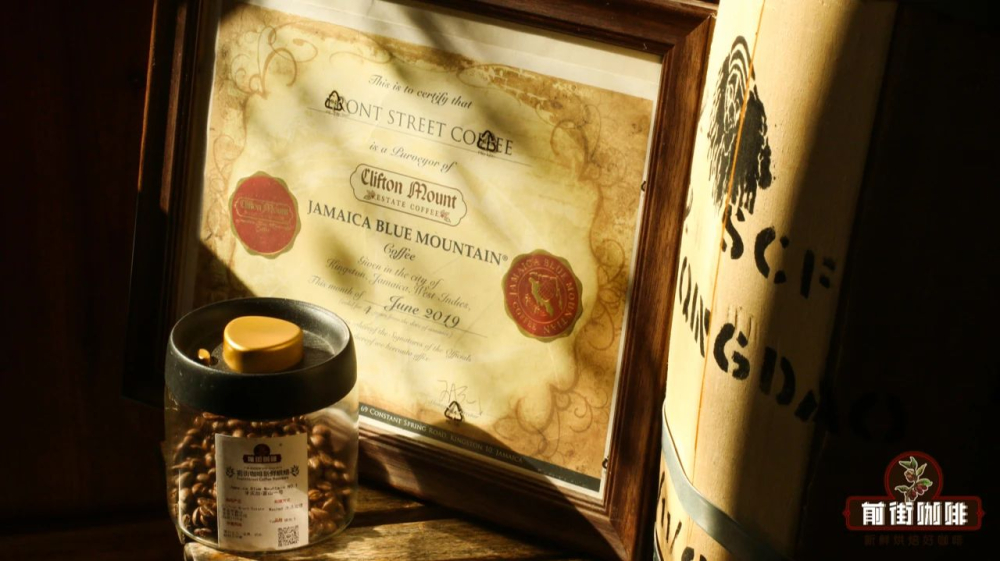
When the global financial crisis broke out in 2008, Jamaica began trying to sell Blue Mountain coffee to more countries. It happened that the agreement with Japan had also expired at this time, so more quota was allocated to other markets. As China's coffee consumption demand continues to grow, many domestic merchants can now directly import Blue Mountain coffee beans from Jamaica. Front Street's Jamaica Blue Mountain No. 1 coffee comes from the locally historic Clifton Mount Estate and uses traditional washed processing.
Characteristics of washed Blue Mountain No. 1 coffee beans
Blue Mountain coffee belongs to the ancient Typica variety, and the higher the growing altitude, the more prominent Typica's flavor expression becomes. However, Typica has weak disease resistance and is prone to dying, which greatly affects yield and requires more manpower for careful management and care. In addition, the Blue Mountain region's terrain is rugged, making management and harvesting quite difficult, with extremely high demands on the skill of pickers. After harvesting, the coffee cherries are immediately sent to the processing plant, where they are washed to remove the skin and pulp and then dried.
Hand-picked coffee cherries are put into water, and floating defective beans are first skimmed off. Then the skin and pulp are removed, and the beans are left to rest in fermentation tanks for 12 to 18 hours. After fermentation is complete, the beans are moved into water tanks and, by pushing them back and forth, the friction between the beans and the force of the water flow cleans the coffee beans until they are smooth and clean. They are then spread out in the sun to dry and dehydrate. Once the moisture content drops to 12% to 14%, they can be bagged and stored to rest, and sent for inspection before export. Washed processing greatly reduces the defect rate, better restores the aroma of the Blue Mountain coffee beans themselves, and results in a higher degree of cup cleanliness.
Before export, Blue Mountain coffee green beans must undergo strict quality testing and grading. The Jamaica Coffee Industry Board (abbreviated as CIB), authorized by the Jamaican government, conducts detailed testing of green beans' size, color, defect ratio, flavor, and other indicators according to coffee export grade standards. First, Jamaica Blue Mountain coffee's defect rate must be below 3%, and then it is divided into four grades by bean size. Among them, the highest grade, Jamaica Blue Mountain No. 1 green beans, have a screen size of 17 mesh or above and a moisture content of about 10% to 12.5%. After roasting, they present just the right acidity, sweetness, bitterness, body, and aroma — this is what constitutes the classic Blue Mountain flavor.
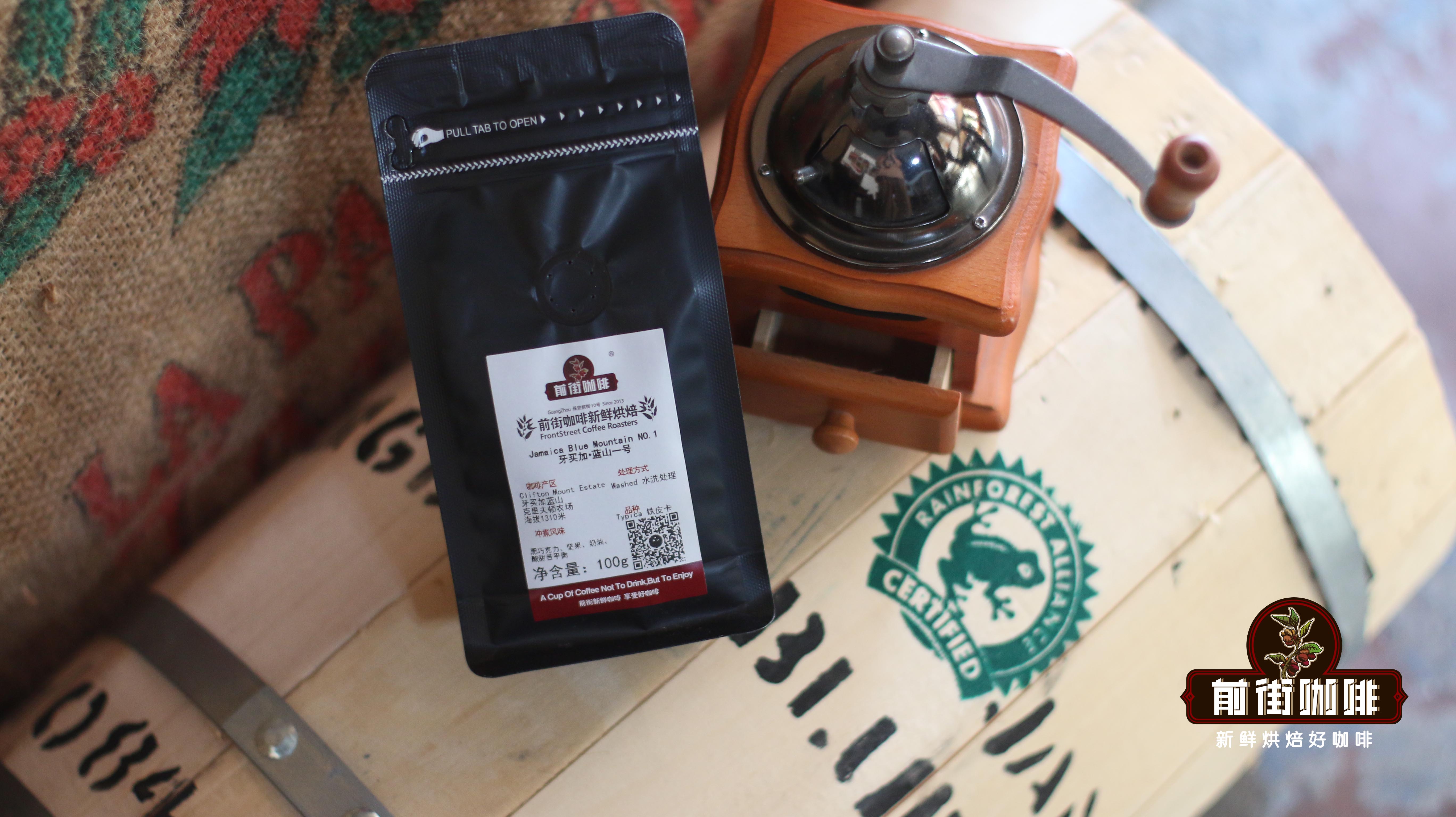
How do you drink authentic Front Street Blue Mountain No. 1 coffee?
As specialty coffee culture becomes increasingly widespread, many coffee lovers now have the means to brew at home. Some friends, after purchasing Front Street Blue Mountain No. 1 coffee beans, asked Front Street how to brew them to taste best. Below, Front Street shares its extraction approach based on how it serves coffee in-store.
Before brewing, Front Street first confirms the freshness of the coffee beans. If the roast date is more than one month ago, Front Street will switch to fresher beans. Coffee beans have an optimal flavor window after roasting, and aroma accelerates its loss with storage time, making it very difficult to restore the original flavor during brewing. This is also why Front Street insists on shipping only coffee beans within 5 days of roasting, hoping every customer can experience the most complete flavor stage of the coffee beans.
When brewing coffee beans with a predominantly bitter profile, Front Street usually prioritizes the KONO dripper, with the aim of highlighting the coffee's full body. The upper part of the KONO dripper allows the filter paper to fit more closely. Compared with the V60 dripper, its extraction method is mainly immersion-based, which can increase the coffee's overall concentration and enhance body. Similarly, the KONO dripper is also suitable for brewing Brazil Queen's Estate coffee beans and Golden Mandheling coffee beans. In addition, Blue Mountain No. 1 is a medium roast, and the internal structure of the beans is looser than that of light-roast beans, giving them better water absorption. To avoid over-extraction, Front Street uses a grind size with a 75% passing rate through a No. 20 standard sieve, a water temperature of 88°C, and Front Street's usual three-stage pouring method.
Front Street Blue Mountain No. 1's pour-over parameters are as follows:
Dripper: KONO dripper
Water temperature: 88 degrees Celsius
Coffee-to-water ratio: 1:15
Coffee grounds: 15g
Grind size: EK43s - setting 10.5 (75% passing rate through No. 20 standard sieve)
Front Street's operating steps are: first rinse the KONO dripper with hot water, align and place the filter paper so it adheres to the dripper wall. After pouring out the water in the server, add 15g of coffee grounds, pour in 30g of water to bloom for 30 seconds, then pour in a small stream of water in a circular motion from the center, pausing in stages when it reaches 125g. When the coffee bed drops to halfway down the dripper, pour the second stage of water in the same manner until it reaches 225g. Once all dripping is complete, remove the dripper.
Front Street Blue Mountain No. 1 coffee tastes of the sweet aroma of dark chocolate, the sweetness of caramel, and a soft, elegant acidity. The various flavors are balanced, and the mouthfeel is smooth yet rich and full-bodied, presenting a very typical Blue Mountain flavor.
The above content is compiled by CoffeeHunters, a coffee news website.


