





How extreme weather is reshaping coffee production in Honduras
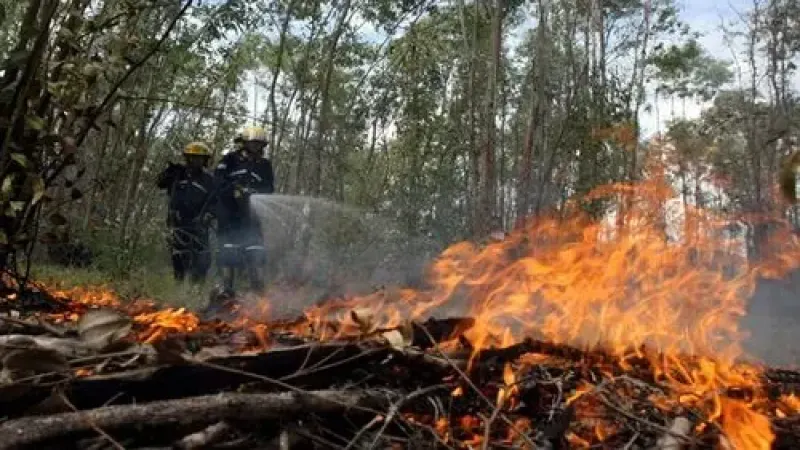
Honduras, Central America's largest producer and exporter of washed arabica coffee, is facing record heat, drought and widespread forest fires. Since the start of 2024, temperatures have reached 38 to 40 degrees Celsius, 1,903 fires have burned more than 150,000 hectares, and smoke forced the temporary closure of Toncontin International Airport in Tegucigalpa. Export figures for 2023/24 are already trending down.
The El Nino pattern delayed the rainy season and cut rainfall well below normal levels, arriving just as coffee trees need moisture for flowering and fruit development. Air quality has also deteriorated sharply as agricultural burning, fires, vehicle exhaust and industrial emissions combine, and the capital's Central District has activated an indefinite red alert. Growers in major producing areas expect significant losses.
Honduras, as the largest producer and exporter of washed Arabica coffee in Central America, is currently facing severe environmental challenges. Persistent high temperatures and drought have triggered large-scale forest fires, causing air quality to deteriorate sharply, and the capital's Central District has activated an indefinite red alert. Meanwhile, the El Niño phenomenon has delayed the rainy season, with rainfall significantly reduced compared to previous years. The dual blow of air pollution and drought comes at a critical time for coffee tree growth and flowering, and major production areas are likely to be severely affected. Export data for the 2023/24 year has already shown a downward trend, and the outlook for Honduras' coffee industry is concerning.
As the country with the largest production and export volume of washed Arabica coffee in Central America, Honduras has recently found itself in trouble due to abnormal climate and other factors, with both coffee production and exports declining.
The direct cause of this situation is the weather changes and harsh climate conditions the country has experienced recently.
Previously, data released by the Honduran Institute for Forest Conservation (ICF) showed that since the start of 2024, the country's temperatures have continually broken historical records. Persistent high temperatures and low rainfall have led to successive fires, with large areas of forest swallowed by flames. This year also became Honduras' hottest and driest year since 1992, with temperatures reaching as high as 38 to 40°C.
Statistics show that 1,903 forest fires have been recorded nationwide in Honduras, with more than 150,000 hectares of forest burned. The thick smoke from the fires even forced the temporary closure of Toncontín International Airport (Aeropuerto Internacional Toncontín) in the capital, Tegucigalpa.
The combined effect of multiple pollution sources—agricultural burning, forest fires, vehicle exhaust, and industrial emissions—has caused Honduras' air quality to deteriorate sharply, and it is now the country with the third-worst air quality in the world.
In response to this situation, Honduras' National Office of Risk and Emergency Management Secretariat recently stated that due to severe air pollution, the atmosphere is filled with PM1, PM2.5, and PM10 particulate matter, as well as toxic gases such as carbon monoxide, carbon dioxide, sulfur dioxide, and ozone produced by vehicle emissions, and the thick layer of smoke has caused temperatures to rise and visibility to decline.
The agency announced that starting May 7, the Central District (Distrito Central) would activate an indefinite red alert, while the rest of the country would enter a green alert status to continuously monitor pollution dynamics.
Honduras' environmental risk management agency pointed out that air pollution and smoky conditions will persist until the wind direction changes, the upper atmosphere becomes unstable, and the rainy season arrives, only then may the situation ease.
However, affected by the El Niño phenomenon, the rainy season that should have arrived in May has been delayed. According to Honduras' weather monitoring data, nationwide rainfall will decrease by nearly 40% compared with the same period last year.
IHCAFE is deeply concerned about this. Currently, Honduras is at a critical stage for coffee tree growth and flowering, and severe air pollution combined with insufficient rainfall will have a negative impact on crop growth and yield.
It is worth noting that the Central District, where air pollution is most severe, is precisely where the two major coffee-producing regions of Conayagua and El Paraiso are located. These two regions contribute 16% and 12% of the country's coffee production, respectively.
Pollutants such as sulfur dioxide and ozone in the air can interfere with plant photosynthesis, preventing them from synthesizing nutrients normally, leading to leaf oxidation and drop. At the same time, harmful substances such as particulate matter will adhere to plant surfaces, clog stomata, hinder transpiration, exacerbate drought conditions for crops, and cause reduced yields.
According to data released by the Honduran Coffee Institute (IHCAFE), between October 2023 and March 2024, the country's coffee exports amounted to 19.32 million bags (60 kg each), a decrease of 3.71% compared with the same period of the previous year.
However, the latest April data shows that Honduras exported a total of 760,000 bags of 60 kg coffee that month, an increase of 2.29% compared with April last year. But overall, coffee exports since the 2023/24 year are still down 2.09% from the same period last year, and full-year export volume is expected to decline by 6.6% year-on-year.
The above content is compiled by CoffeeHunters, a coffee news website.


