





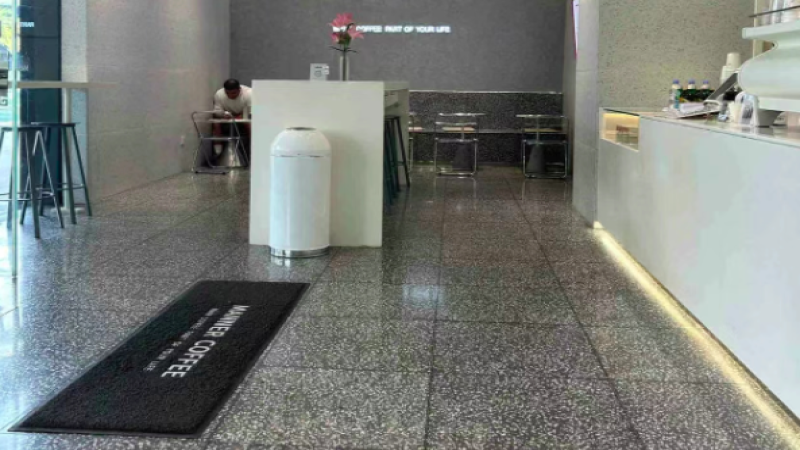
Manner store hygiene and coffee shop cleaning
Customers report that some Manner Coffee stores show worn white tables and chairs, dust and straw wrappers on the floor, and used cups left on tables. A single-staffed model leaves one employee making drinks behind the bar with little time for front-of-house cleaning, so mess is visible as soon as customers walk in.
The complaints are not isolated, and many customers say the white interior makes stains more obvious. The company has expanded quickly on a minimalist design that reads as clean. Routine tasks such as wiping tables, clearing trays and sweeping floors sit alongside equipment care, whether staff use a coffee maker or hand-brew gear, and hygiene now shapes how customers judge the brand.
Manner Coffee, known for its minimalist white design, has recently sparked consumer discussion due to store hygiene conditions. Some customers report that tables and chairs in certain stores show obvious signs of wear, and tables are left with trash from previous customers, while the single-staffed model leaves employees no time to attend to front-of-house cleaning. Is this phenomenon an isolated case or a widespread problem? Does the white decor style amplify the visual impact of stains? How should consumers balance the pursuit of efficient service against the dining environment? This article will sort through various viewpoints to explore the operational challenges that chain coffee brands face amid rapid expansion.
▲
Click to follow | Daily specialty coffee culture magazine Coffee Workshop
Among coffee brands, Manner has won the favor of many consumers with its minimalist design style. Its stores typically give off an impression of being clean and bright—standing at the entrance and looking in, one sees an eye-full of tidy white tones, which makes customers concerned about food safety feel quite reassured.
However, recently, when a customer was buying coffee at a certain Manner store, upon entering they found quite a bit of dust and conspicuous straw wrappers scattered on the floor in front of the bar. They wanted to find a seat in the store to wait for their order, and after looking around noticed that several tables still had takeaway cups and used tissues left behind by the previous customer. The white leather seats made signs of use even more apparent, looking as if they had been "polished into a patina" by the coming and going of customers.
Such an environment may leave some customers at a loss, not knowing where they should sit. The customer said that at the time only one employee was busy behind the bar, and the staff member was focused on making orders and simply could not spare time to tidy up the front-of-house, failing to clean in time—which was why customers saw all kinds of mess the moment they walked in.
This situation is not an isolated case. Many Manner customers say they have also found poor hygiene conditions at Manner stores in their cities, making them want to grab their coffee and leave as soon as they see the store environment, with no desire to linger for even a moment.
Some believe that Manner stores' overall design uses white as the main tone, so any little stain stands out sharply against the clean white backdrop, and the accumulated signs of use on white tables and chairs become all the more obvious. As soon as customers enter and see those marks, they assume the staff have not cleaned or maintained the store for a long time, thus forming a first impression of Manner stores as dirty and messy.
However, some loyal Manner users also speak up for the staff: it is now the norm for most Manner stores to have only one person manning the bar, and when the sole employee is busy making orders, they naturally neglect front-of-house hygiene, relying only on customers to take their trash away voluntarily, or waiting until they have spare time to notice and clean up.
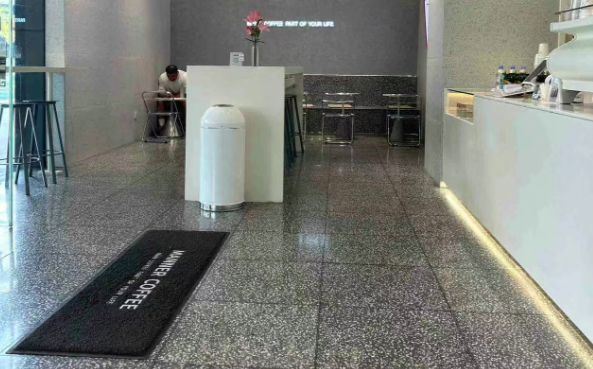
The poster is also a Manner fan herself, so she made clear that her intention in posting was not to blame the lone worker in the store, but to hope Manner would notice the unreasonableness of scheduling only one staff member per store. The employee on duty, in order to serve orders as quickly as possible, inevitably cannot attend to everything and is unable to take care of every aspect of the store.
But a store's image also affects the consumer experience. When some consumers see poor hygiene conditions in a store, they cannot help but worry whether the drinks produced there might have hygiene issues.
Consumers are becoming more and more demanding about products and services. Some prefer old establishments full of historical and cultural atmosphere, while others may require that all utensils be brand new. This is understandable for food and drink vessels; nowadays tables and chairs have also become a requirement for some consumers. How to strike a balance is yet another challenge for operators.
Image source: Xiaohongshu
Disclaimer: Some images in this article are from the internet, and for some content on the website such as images, we will respect the original author's copyright and indicate the source. However, due to the large quantity, there may be individual images or texts that we have not yet been able to credit in time; please forgive us. If the original author has any disputes, they may contact the website to handle it, and once verified we will correct it immediately. Compiled and edited by "Coffee Workshop"; please indicate the source when reprinting. If there is any infringement, please let us know and we will delete it. Thank you~!
The above content is compiled by CoffeeHunters, a coffee news website.


