





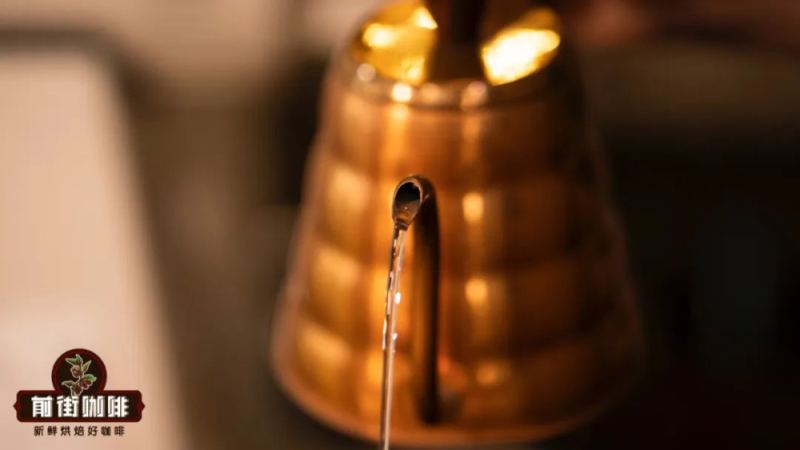
How Do We Make Coffee with Steady Pour-Over Water Control?
Pour-over quality depends on matching brewing parameters to the beans and equipment, then keeping the flow stable from bloom to finish. A flow that surges or drifts off target causes excessive bypass water and uneven extraction, which flattens flavor. Front Street breaks practice into two stages: steady-point pouring, where water lands on one spot, then steady circular pouring that keeps the stream calm and centered around the bed.
Sticking with a single pour-over kettle matters, because spout width changes behavior. A narrow spout pours less water and is easier to control, while a wide spout moves more water and takes longer to master. For any coffee enthusiast learning to brew by hand, picking one kettle and repeating both practice stages builds the muscle memory that holds hand poured coffee consistent across different beans.
In the process of brewing pour-over coffee, the key to determining the quality of a cup often lies not in the final shape of the coffee bed, but in whether the brewing parameters match the beans and equipment, and whether the water flow is stable and controllable during pouring. A flow that surges and dwindles or drifts off target will lead to problems such as excessive bypass water and uneven extraction. From Front Street's perspective, this article systematically explains how to choose and stick with a pour-over kettle for practice, and how to gradually improve water control in two stages—steady-point pouring and steady circular pouring—while also explaining the differences in performance between high and low flow rates with different spout diameters, helping coffee enthusiasts find a practice path that suits them.
The final flavor of a pour-over coffee actually has little to do with what the coffee bed looks like after brewing. What truly determines it is whether the parameters you set match the coffee beans and equipment you are using at the time, and whether you keep the water flow under control throughout the brewing process!
Changes in flow rate produce completely different results during brewing. Once water control is not stable enough, not only will the flow alternate between strong and weak, but the landing point of the water will also drift off course. This easily leads to undesirable situations such as excessive bypass water and uneven extraction. Therefore, what Front Street wants to discuss with you today is: how to improve your "water control ability."
Notes Before Practicing
Before formally starting water-control practice, one thing must be done first: choose a pour-over kettle for practice and use it from beginning to end! The reason is that switching to different pour-over kettles brings different pouring behavior, and if you frequently change equipment during practice, the accumulation of proficiency will be greatly slowed down.
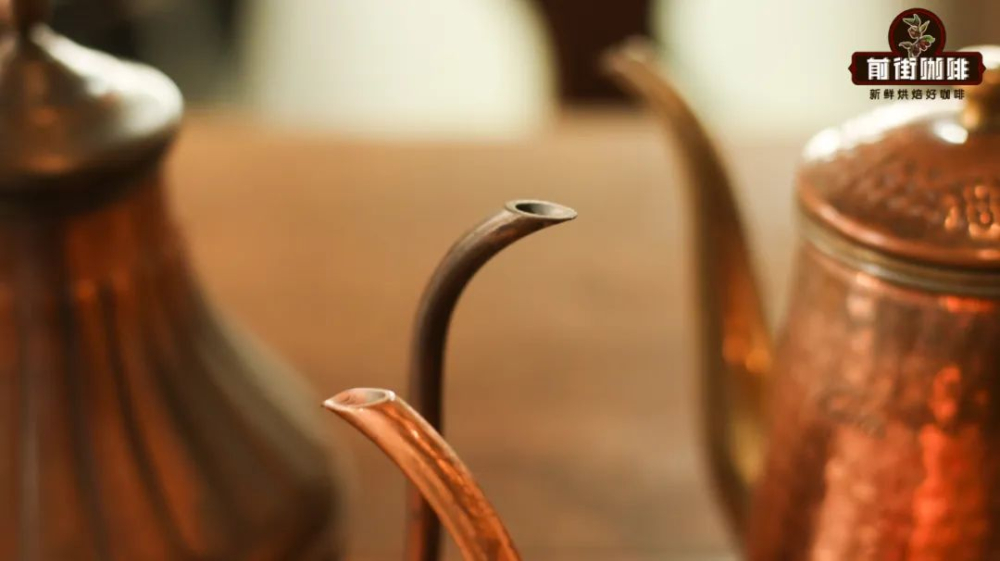
The key reason to always stick with the same kettle lies in the differences among spouts. Different spout shapes produce water flows with their own characteristics: narrower spouts pour less water, while wider spouts pour more. Because of this, narrow spouts are usually less difficult to control than wide spouts, and the time needed to get the hang of them is much shorter. But their shortcomings are equally obvious—this kind of water control ability, which can be mastered without much practice, only applies to narrow spouts and is hard to make effective when switching to a wide spout.
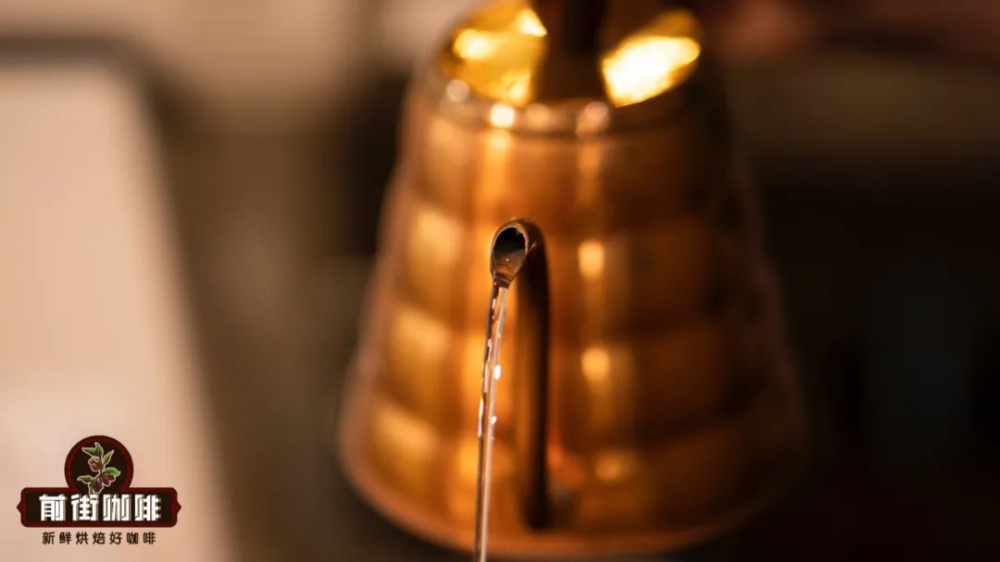
Wide spouts have a higher threshold for beginners and require more accumulated proficiency to truly master. However, although pour-over kettles with wide spouts have a longer learning period, once you can control them skillfully, you will be at ease when switching to all other types of pour-over kettles. Therefore, Front Street's suggestion is: everyone should choose a pour-over kettle according to their actual needs. If you want to get started quickly, you can choose a pour-over kettle with a narrow spout; if you want to develop stronger water-control skills, then choose a pour-over kettle with a wide spout. Now let's formally enter the teaching segment on water-control practice.
1. Steady-Point Pouring
This practice process is quite boring, but its importance cannot be ignored, because it is the basic skill of controlling water flow. Only by building a solid foundation can you later master more difficult water-control techniques.
The specific method is: fill the pour-over kettle two-thirds full with water, then fix on one point and continuously pour a uniform, vertical stream of water, practicing repeatedly without interruption. Start with a low flow rate, then transition to a high flow rate.
It looks quite simple, but in actual operation it is not so easy. As the amount of water in the kettle continuously decreases, the weight of the kettle changes throughout the brewing process. What we need to do is adjust the tilt accordingly as the water level drops, so that the poured stream remains uniform from beginning to end. Repeat over and over until muscle memory is formed and you can steadily pour a uniform stream, and then you can move on to the next stage of practice.
2. Steady Circular Pouring
The previous step of practice is actually preparation for circular pouring! During brewing, we need to keep circling to agitate the coffee grounds, thereby achieving higher extraction efficiency. And the circling motion is precisely the main culprit that makes the water flow surge and dwindle.
Whether the circle you pour is round enough is one thing; what is truly key is how you circle and how you keep the water flow stable and uniform while circling—that is the core. Many people are used to using their wrist to generate force when pouring in circles, and using the wrist causes the pour-over kettle to pour at different tilt angles, which is how the surging and dwindling flow is produced.
Therefore, the key point in practicing circular pouring is not to use the wrist to control the circling motion during pouring, but to use the body to drive the entire circular pouring process!
The specific method is: keep the lower body firmly planted, keep the arm still, let the wrist only control the angle of the kettle, and then use the body's rotation to drive the kettle in a circle. In this way, even while circling, the water flow can continue to pour out evenly.
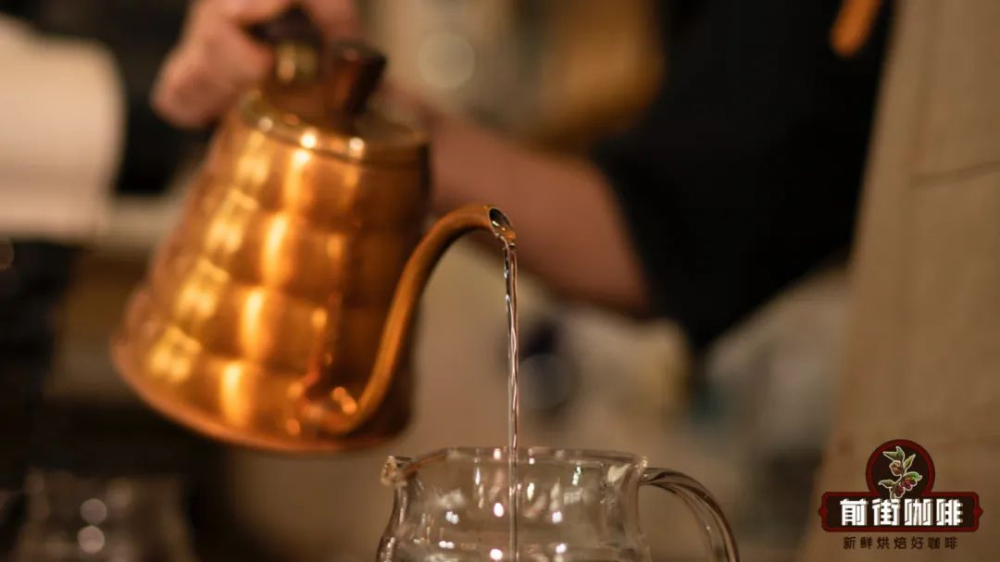
Of course, it is also feasible to use the wrist to generate force for steady circling, but the difficulty of practice is really too high—while circling, you also have to manage the tilt angle of the kettle. By comparison, using body rotation is much simpler! Therefore, Front Street recommends using the body to control circling. At the beginning, it is best to circle at a slower speed, and after you can pour a stable stream, gradually increase the circling speed and slowly raise the difficulty. When you reach the point where you can control speed and flow as you please, congratulations, you have successfully graduated~
Front Street Coffee (FrontStreet Coffee)
No. 10, Bao'an Qian Street, Yandun Road, Dongshankou, Yuexiu District, Guangzhou City, Guangdong Province
The above content is compiled by CoffeeHunters, a coffee news website.


