








What Is a Dry Cappuccino and Why Is Iced Rare?
A dry cappuccino uses milk foam with fuller, longer-lasting bubbles that feel dense on the palate, while a wet cappuccino has smaller, runnier foam that holds shape for less time. Iced cappuccino rarely appears on menus because cold foam is harder to build and hold, not because the drink is complicated to assemble.
The classic hot version combines espresso, hot milk, and milk foam in a 1:1:1 ratio, an idea borrowed from the Franciscan friars whose hooded brown robes gave the drink its name. At home, a French press can whip dense iced milk foam without an espresso machine, and the parameters stay flexible enough to adjust to taste.
On café menus, iced cappuccino is often nowhere to be found. Is it because it's too difficult to make, or because the taste is hard to accept? From Front Street's perspective, this article first takes you through the origins of the cappuccino name and how the hot version is made, then digs into why the cold version is so scarce, and finally demonstrates step by step how to use an everyday French press to whip up dense iced milk foam and assemble a refreshing yet rich iced cappuccino. The whole process requires no professional espresso machine, and the parameters are flexible and adjustable, making it perfect for coffee lovers to recreate at home.

I wonder if any of you have noticed that flipping through the menus of most coffee shops, you can almost never find iced cappuccino as an option. Why exactly is that? Could it really be that making an iced cappuccino is that difficult?
Today Front Street is going to roll up our sleeves and give it a try with everyone, to see whether this drink is really that hard to pull off!!
Where does the name cappuccino come from?
The term Cappuccino comes from Italian, and its original meaning is "hood." In Italian, Cappuccio refers precisely to the dark brown robe and pointed cap worn by friars of the Catholic Franciscan order.
Later, someone added milk to espresso and noticed the color was very close to the robes of the Franciscan order, so on a whim, they shaped the milk foam into the form of a pointed hood and borrowed the name Cappuccino.

The classic hot cappuccino is made by combining espresso, hot milk, and hot milk foam in a 1:1:1 ratio. Milk foam also comes in dry and wet types: dry foam has fuller bubbles, holds its three-dimensional shape longer, and feels dense on the palate; wet foam is smaller in volume, flows more easily, and holds its shape for a relatively shorter time, but is just as delicate and smooth in texture.
Demonstration of how to make a hot cappuccino
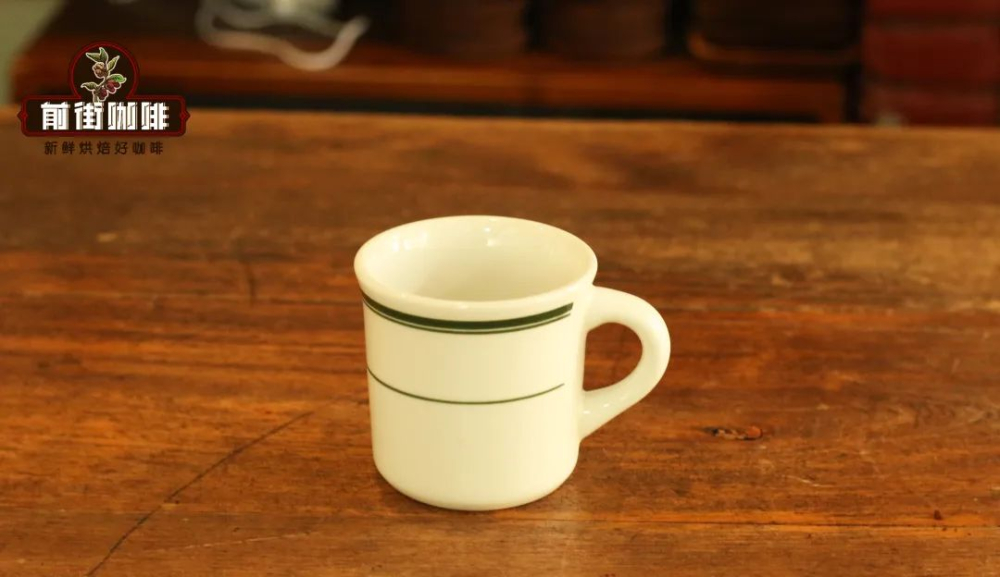
Front Street first takes a 240 ml narrow-mouthed ceramic cup. This time we're using the Warm Sun blend coffee beans, and today's extraction recipe is 20 g of grounds, extracted for 28 seconds to yield 40 g of coffee liquid; the milk chosen is Bright fresh milk, consisting of 170 ml of steamed milk and 1.5 cm of milk foam.
Once all the equipment and ingredients are ready, pour the espresso into the cup.
Immediately after, pour the steamed milk that has been frothed into the cup from a higher position above the liquid surface, integrating and stirring while pouring, until the milk foam reaches a thickness of about 1.5 cm (visually, this looks like 11 parts full, with the surface showing the kind of "hamburger-like" dome that appears during the blooming of a dark roast).
Also, Front Street has found in practice that there are a few details to watch out for when making a hot cappuccino. For example, when the espresso machine is extracting the espresso, you need to control the time and temperature well to ensure the coffee's richness; when frothing the milk, avoid taking too long or letting the temperature get too high, otherwise the milk can easily spoil or develop off-flavors. Only when it's just right can you get delicate, dense milk foam.
Why don't most coffee shops sell iced cappuccino?
Compared with the traditional hot cappuccino, the method for iced cappuccino is slightly different. Its core lies in using refrigerated milk and ice cubes, making the whole drink cool and dense.
As just mentioned, iced cappuccino pursues a cool, dense mouthfeel, but the reason many coffee shops don't offer it is partly that the production process is relatively cumbersome, and partly that the flavor created when hot milk foam meets iced coffee is not something all customers can happily accept. So the vast majority of shops only offer hot cappuccino.
Alright, now let Front Street show you how iced cappuccino is actually made~ (Front Street Coffee (FrontStreet Coffee) doesn't normally serve iced cappuccino; this is just the method our baristas use when they occasionally crave an iced coffee with a dense mouthfeel)
First, prepare iced milk, ice cubes, freshly extracted espresso, and fresh milk (friends without an espresso machine at home can substitute instant black coffee or individually packaged espresso liquid, etc.).
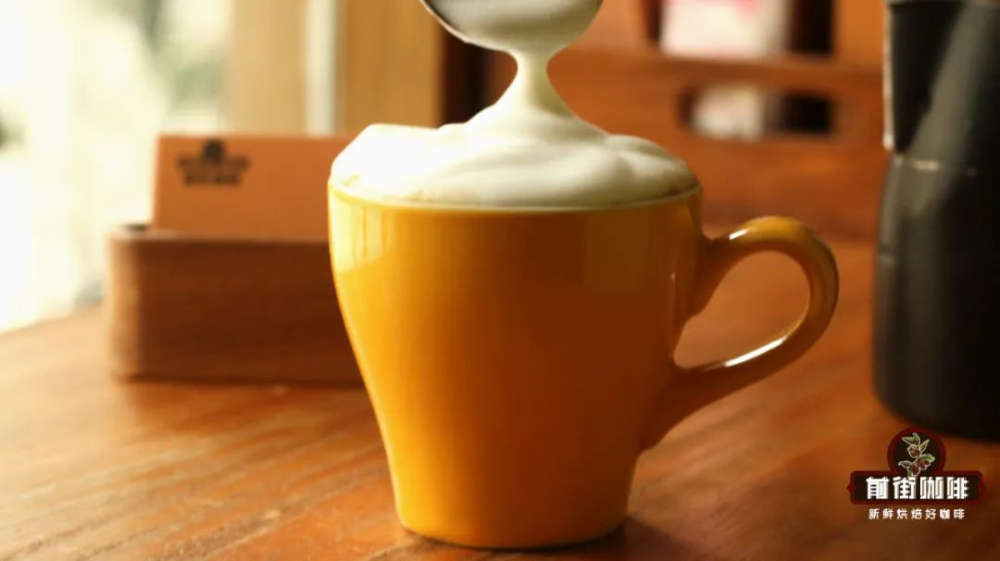
The iced milk foam step: this can be done with a milk frother or a French press; here at Front Street we use the French press that's always on hand at home.
It's very simple to do: pour refrigerated milk into the French press, filling it to about halfway up the body. Then repeatedly pump the French press about 20 times, letting the milk expand to eight parts full. At this point you'll see the press filled with dense milk foam. Be careful to control the duration and speed of pumping, so the foam doesn't end up too thin or too thick.
Once the iced milk foam is ready, you can start assembling the iced cappuccino!
First, pour an appropriate amount of iced milk into the bottom of a cup with ice cubes.
Next, pour the extracted 40 g of espresso into the cup.
Finally, use a spoon to gently lay the prepared iced milk foam on the surface.
And just like that, a homemade, refreshing, and dense iced cappuccino is complete!
One reminder: Front Street has found that because iced cappuccino includes iced milk and ice cubes, the overall drinking experience leans refreshing and dense, but the presence of ice cubes also dilutes the coffee's strength and affects the mouthfeel. Therefore, when making it, you can flexibly adjust the parameters according to your personal taste and preferences to achieve the most ideal flavor.
If you, like Front Street, are curious about whipping up dense milk foam by hand and mixing an iced cappuccino, why not refer to the steps above and pick a coffee bean you like to give it a try. Who knows—you might get an unexpected pleasant surprise!
- END - Front Street Coffee (FrontStreet Coffee)
No. 10, Bao'an Front Street, Yandun Road, Dongshankou, Yuexiu District, Guangzhou, Guangdong Province
The above content is compiled by CoffeeHunters, a coffee news website.


