







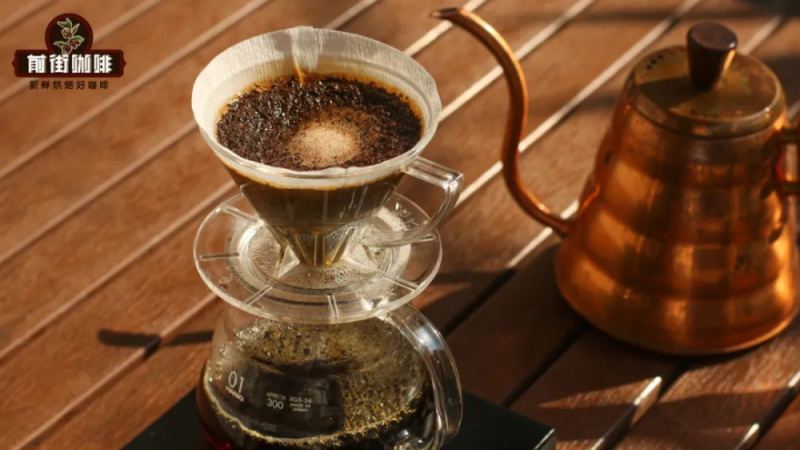
How Do Coffee Bean Properties Affect Grind Size?
The same grinder setting can produce different grind sizes because two properties of coffee beans differ from bean to bean: density and brittleness. Density comes from growing altitude, where slower growth at higher elevations builds harder, more flavorful beans. Brittleness comes from roast level, since darker roasts lose more moisture and crush more easily.
Sieve-passing tests comparing dark-roasted Mandheling with light-roasted Yirgacheffe show how far apart the resulting particles can be. Because the roasting process drives dehydration, a longer roast leaves a looser internal structure, so the bean fractures into more fines. Those fines then clog paper filters and push extraction toward over-extraction, even when the grinder dial never moved.
The same grinder at the same setting—why does the grind size come out noticeably different when you switch to a different bean? Behind this lies two core physical properties of coffee beans: density and brittleness. Density is determined by growing altitude—the higher the altitude and the slower the growth, the harder the bean and the fuller the flavor. Brittleness, on the other hand, is directly tied to roast level—the darker the roast and the more dehydration, the looser the structure and the easier it is to crush. This article starts from Front Street's actual experiments, using a sieve-passing comparison between dark-roasted Mandheling and light-roasted Yirgacheffe to explain why grind consistency breaks down, and how it leads to paper filter clogging and over-extraction.
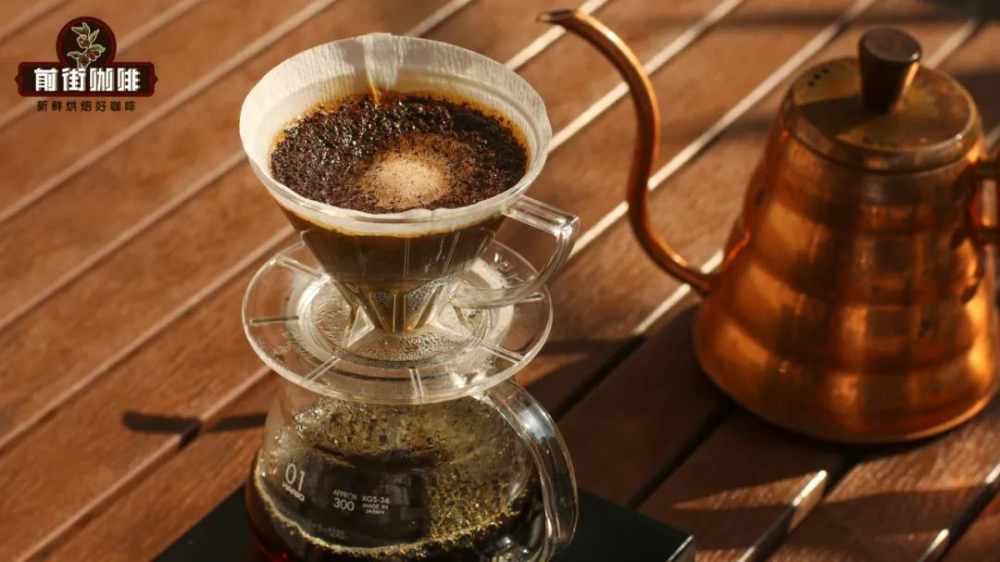
The answer isn't actually complicated—the key lies in the "brittleness" of the coffee bean. But before we talk about brittleness, we need to get the concept of density straight first, because these two are very tightly linked.
What is density?
Density refers to the amount of matter contained in a unit volume. The more matter, the higher the density. A coffee bean's density mainly depends on its growing environment—the higher the altitude, the lower the temperature, and the slower the coffee fruit grows.
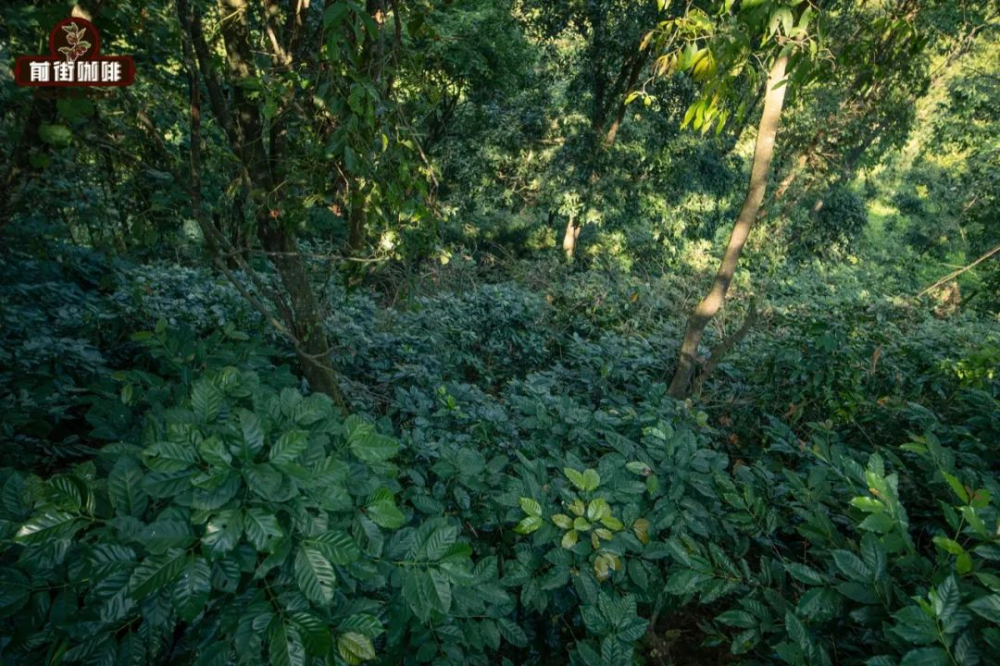
(Front Street's coffee estate in Yunnan)
Once the growth pace slows down, the coffee bean has more time to accumulate nutrients, and these nutrients are essentially matter. The more matter accumulates, the greater the bean's density and the higher its hardness. At the same time, high density often means fuller, richer flavor.
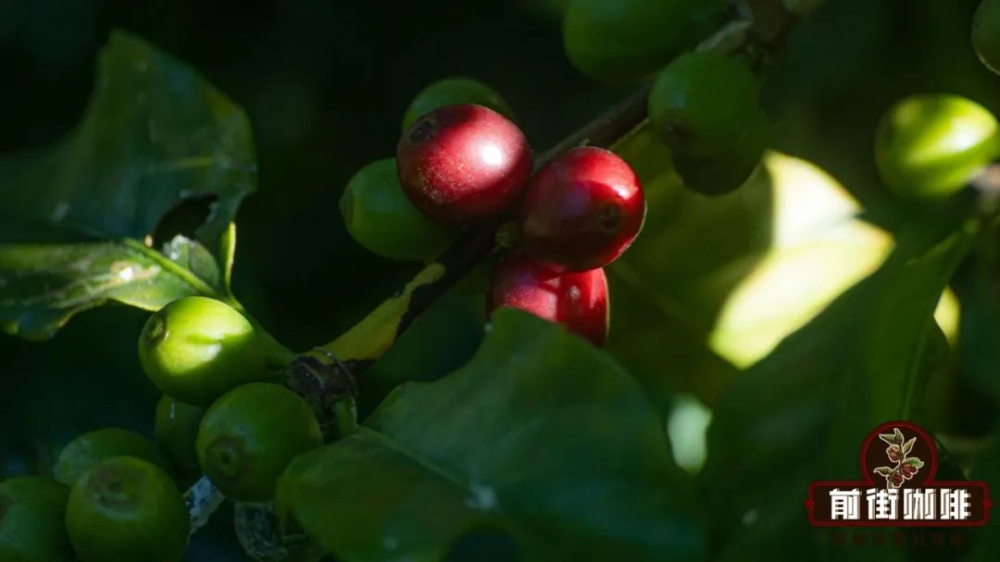
For this reason, some producing countries directly use growing altitude to classify bean hardness and grade.
(For example, in Costa Rica in Central America, any coffee grown above 1,400 meters is classified as SHB Strictly Hard Bean.)
So what is brittleness?
Brittleness refers to the property of an object fracturing under external forces such as compression or stretching. Brittleness and hardness are relative concepts: the higher the hardness, the lower the brittleness, and vice versa. So what mainly determines brittleness?
The answer is roast level. Strictly speaking, the entire roasting process is essentially one of dehydration. The longer the roast, the more moisture escapes from the bean. Less moisture means a looser internal structure; a looser structure means lower density, and lower density brings higher brittleness. In other words, the darker the roast, the higher the brittleness, and vice versa.
Try verifying it yourself: place a dark-roasted bean and a light-roasted bean on the table and press down hard on each. The dark-roasted bean crushes with a gentle press—that's high brittleness in action; the light-roasted bean takes considerable effort to crack because it has high density and low brittleness.
(Front Street tip: when pressing, it's best to keep the bean's flat side facing up, otherwise you'll experience what it feels like to crush an egg with your bare hands~)
So how does brittleness affect grind size?
When a coffee bean is ground, the forces come from two sources: the compression between the two burrs, and the cutting force from the burrs' rotation. When the grind setting is fixed, dark-roasted beans, due to their high brittleness, are more easily crushed; light-roasted beans, due to their high density, offer more grinding resistance and require repeated grinding to break down. The result is that dark-roasted beans produce noticeably finer particles than light-roasted beans, and because of their "brittleness" they shatter into quite a bit of fine powder. (Think of it as cookies and cookie crumbs—that should make it easy to understand.)
Let's look at an experiment Front Street conducted: two beans with the greatest roast difference were selected and ground at the same setting, ultimately producing completely different grind sizes. The specific parameters are as follows:
Coffee beans: dark-roasted Mandheling, light-roasted Yirgacheffe. Grind setting: 9.5 on the Ek43. Experimental results: Mandheling's passing rate through a No. 20 sieve was 75%; Yirgacheffe's passing rate through a No. 20 sieve was 65%.
This shows that even with a completely identical grind setting, two beans will produce different particle distributions due to different roast levels. That's exactly the situation the friend at the beginning encountered—the clogged batch was a more darkly roasted coffee with higher brittleness, so it ground finer at the same setting. The overly fine coffee powder clogged the paper filter's pores, which triggered the negative result of over-extraction.
Front Street Coffee (FrontStreet Coffee)
No. 10 Baoqian Street, Yandun Road, Dongshankou, Yuexiu District, Guangzhou, Guangdong Province

The above content is compiled by CoffeeHunters, a coffee news website.


