






Where does the origin of mocha coffee actually lie?
The frothy coffee made by whisking hundreds of times went viral after appearing on the Korean variety show New Product Launch Convenience Restaurant, but it did not start in Korea. Its source is Hon Kei Tea Stall in Macau, where the owner mixes instant coffee powder, hot water and granulated sugar in a 1:1:1 ratio and whisks by hand.
Roughly 400 strokes turn the liquid into a thick foam because compounds in instant coffee bind with sugar. The drink can be recreated at home with espresso and an electric milk frother, and the same hand-whipped approach appears in other regional foods, from Chaoshan beef balls to Cantonese hand-whipped lemon tea.
A cup of frothy coffee that requires hundreds of vigorous whisking strokes quickly went viral thanks to the Korean variety show "New Product Launch Convenience Restaurant." During the pandemic, Koreans stuck at home rushed to imitate it, sparking a check-in craze on social platforms. Many people assume this was invented in Korea, but its origin actually lies in Macau—at Hon Kei Tea Stall in the abandoned shipyard around the city center. The owner mixes instant coffee powder, hot water, and granulated sugar in a 1:1:1 ratio, then whisks by hand at high speed, achieving a thick foam after about four hundred strokes. This article traces the drink's origins and principles, and provides specific steps to recreate it using espresso and an electric milk frother, while preserving Front Street Coffee's preparation demonstration and tasting experience.

The reason this drink went viral is that it appeared on the Korean variety show "New Product Launch Convenience Restaurant." The method isn't complicated, so during the pandemic, Koreans stuck at home rushed to try it, all wanting to personally experience this coffee that requires hundreds of whisking strokes to make.
Thus the scene from the beginning unfolded—all of Korea threw itself into making frothy coffee, even leading people to mistakenly believe it originated in Korea. In fact, it comes from Hon Kei Tea Stall in China's Macau Special Administrative Region.
Hon Kei Tea Stall operates in an abandoned shipyard around the city center of Macau, and it gained considerable fame years ago. The most distinctive thing about this tea stall is that the owner insists on whipping up a specific coffee foam by hand. The ingredients are also very common: instant coffee powder, hot water, and granulated sugar, mixed in a 1:1:1 ratio, then vigorously whisked continuously with a small spoon at high speed.
As the number of whisking strokes increases, the originally liquid coffee begins to expand, and its fluidity gradually decreases. After about 400 strokes, you get a cup of very thick, frothy coffee.

That makes sense. Our country has always had a certain dedication to hand-whipped products—like Chaoshan hand-whipped beef balls, old Cantonese hand-whipped lemon tea, and in Macau, hand-whipped coffee. Completely reasonable.
Coffee can transform from liquid into "foam" because compounds present in instant coffee can bind with sugar, and then through whisking, tiny air bubbles are injected, forming a cotton-like, dense bubble structure. This is the same principle as frothing milk, and the same method can also be applied to espresso and mocha coffee. In other words, these coffees can all serve as ingredients for making "400 Times Coffee."
As Koreans kept playing with it more and more on IG, it caught on domestically too. However, there are certain differences in the method. So, how do we make a cup of hand-whipped 400-times coffee?
Coffee Preparation
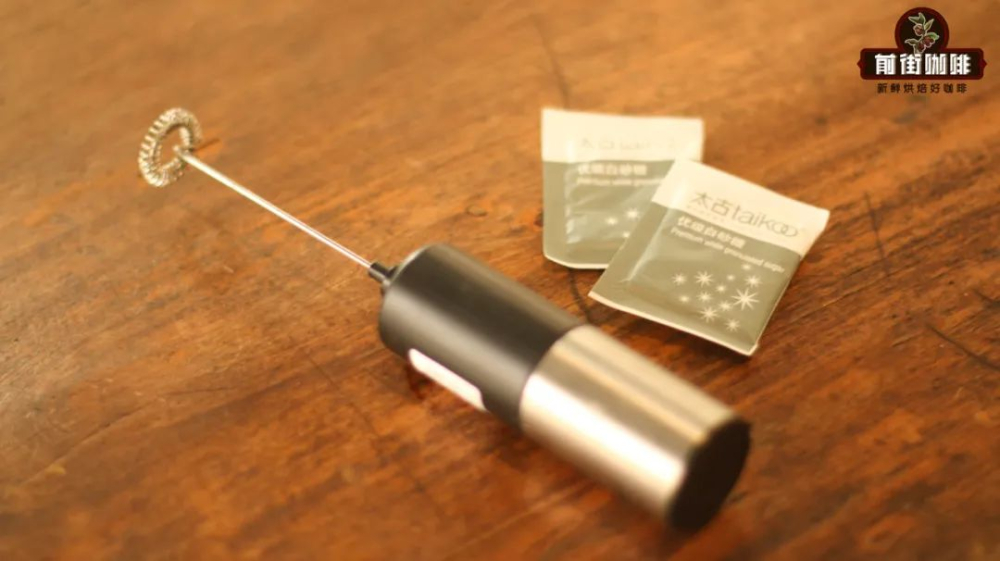
Since we now mainly focus on freshly ground coffee, we'll use the espresso method here. In addition to regular coffee ingredients, you'll need to prepare: granulated sugar (or any flavored sugar), and an electric milk frother (those with "iron arms" can also do it by hand).

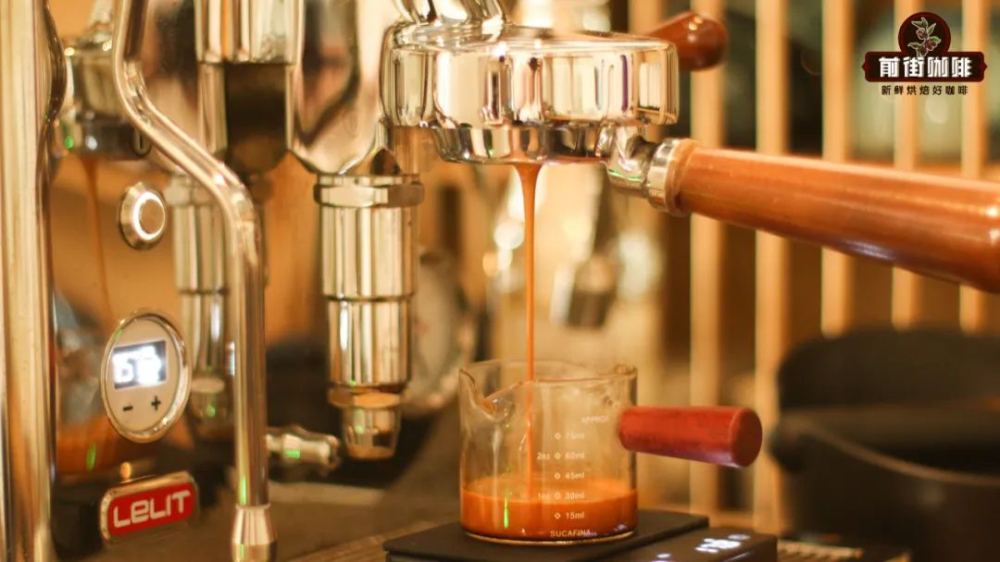
Front Street first extracts 40ml of espresso from 20g of coffee beans.
Then pour the espresso and 10g of granulated sugar (this amount is already quite sweet; adjust to your own taste) into a cup.
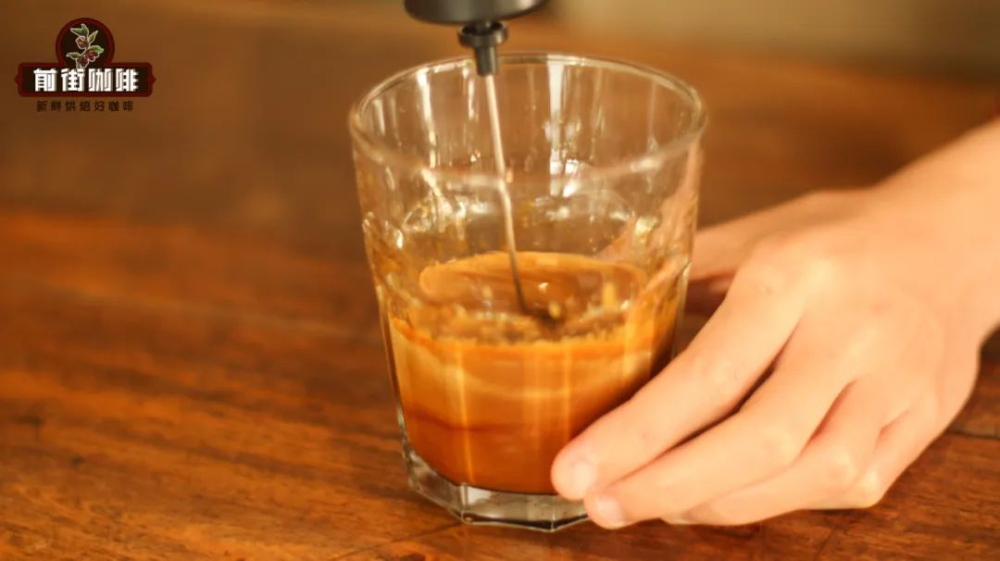
Next, take out the electric milk frother and whip it.
(Although Front Street has electric equipment, Front Street wanted to drink the authentic hand-whipped version. As the saying goes: you don't have to do the whisking, but you can make your friend do it. So Front Street grabbed a lucky friend to participate in the whisking.)
When the coffee transforms from liquid into a smooth, delicate, shapeable "cream-like" consistency, that means the whisking is done.
Leave it at the bottom of the cup, and directly pour in 200ml of milk.
Done! The friend who did the whisking can go rest now; the remaining tasting work will be handled by Front Street itself.
Take a spoon and stir the milk and coffee foam together evenly (otherwise drinking just the foam alone would be quite sweet). The drinking experience is a cup of silky, fairly rich sweet latte—very comforting. The method is really simple; you can try it at home whenever you have time.
- END - Front Street Coffee
No. 10, Bao'an Qian Street, Yandun Road, Dongshankou, Yuexiu District, Guangzhou City, Guangdong Province
The above content is compiled by CoffeeHunters, a coffee news website.


