








Why Do Light Roast Coffee Beans Brew Slow and Sour?
Light-roasted beans are prized for bright floral and fruity aromas, yet brewing them at home often produces slow flow, water pooling and a flat, monotonous sourness. The cause is physical: lighter roasting leaves a denser bean body with less carbon dioxide and weaker water absorption and degassing, so fine particles settle and clog the dripper during the pour.
The fix is a staged brewing plan built around water temperature, pouring technique and extraction in phases. Medium-dark beans swell into a plump shape during blooming, while light beans expand far less and extremely light ones barely expand at all, which changes how the bed should be handled. The goal is to pull sweetness forward so sour coffee beans deliver a balanced cup.
Light-roasted coffee beans are beloved for their bright floral and fruity aromas, but many enthusiasts often encounter slow flow and easy pooling when brewing pour-over at home, ultimately extracting only a monotonous sour taste. This is actually closely related to the physical structure of light-roasted beans: lighter roasting means a denser bean body, lower carbon dioxide content, and weaker water absorption and degassing capacity, causing fine particles to easily settle and clog the dripper. This article will analyze in depth the difficulties of pour-over brewing with light-roasted beans, and drawing on Front Street Coffee's brewing experience, share how to effectively enhance the sweetness layers of coffee by adjusting water temperature, pouring technique, and staged extraction, so you can consistently brew a balanced sweet-and-sour cup at home.

Before brewing pour-over coffee, confirming the roast level of the beans is the foundation for making a plan. Different roast levels directly affect extraction performance. Light-roasted beans, having received less heat, retain floral and fruity aromas more completely, but when brewing at home, often only a sharp sourness remains, leaving people more confused the more they brew.
Do light-roasted coffee beans really only have sourness?
In fact, if you look closely at those high-scoring, smooth-drinking light-roasted beans, you'll find that behind their acidity there is sweetness. Acidity and sweetness have distinctly different change curves during roasting, and the roast level does change the proportion of the two in the cup.
As the roast deepens, acidity gradually decreases, so dark-roasted beans usually have very low acidity. Sweetness is the opposite: at the light roast stage sweetness is relatively weak, then rises rapidly upon entering medium-dark roast and reaches its peak, after which it gradually diminishes. In other words, the acidity of light-roasted beans does tend to overpower the sweetness, and our brewing goal is to extract as much sweetness as possible.
Why is it harder to brew ideal flavors from light-roasted beans?
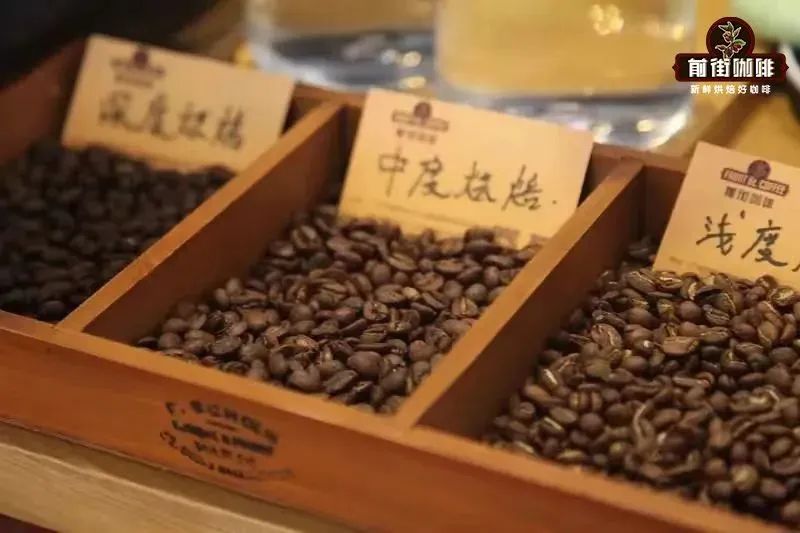
During the blooming phase, medium-dark roasted beans usually swell into a plump hamburger shape upon contact with water, while light-roasted beans expand noticeably less, and extremely light-roasted beans barely expand at all. The reason is that the lighter the roast, the less the internal structure of the bean changes, the lower the carbon dioxide content, and the denser the texture. This leads to weaker water absorption capacity of the coffee grounds, requiring more thorough water contact to release sufficient flavor, and the grind also needs to be finer.
In addition, light-roasted beans mostly come from high-altitude specialty-grade origins and are relatively harder. When grinding with a hand grinder, the lighter the roast, the more effort it takes—this is also a basis many brewers use to judge roast level.
High-hardness light-roasted beans easily produce extremely fine particles due to compression during grinding. Combined with inactive degassing and insufficient expansion force, by the later stages of brewing the gas is almost fully released, and those fine particles settle at the bottom of the dripper due to gravity, causing clogging, and the risk of uneven extraction rises accordingly. Therefore, we need to find suitable brewing parameters and pouring rhythms for light-roasted beans.
How to brew sweetness out of light-roasted coffee?
When coffee grounds contact hot water, they gradually release various compounds: the first to emerge are fruity aromas and acidity, followed by the sweetness brought by sugars, and finally bitterness.
Provided the grind size is already reasonable, Front Street does not recommend repeatedly adjusting grind size to pursue a sweeter or more sour taste. For those who don't brew pour-over often, grind size is a very difficult variable to stabilize—whether too coarse, too fine, or lacking uniformity, it will affect the final flavor. So if your current grind size already produces good coffee, there's no need to change it just to increase sweetness or acidity; instead, use other more controllable parameters to adjust.
If using a three-stage pour, to enhance sweetness, the focus should be on the second stage of extraction—you can appropriately increase the water volume and agitation intensity in this stage, while the third stage should try to avoid extracting negative bitterness. Take Front Street's brewing recipe as an example: 15 grams of coffee grounds, a 1:15 coffee-to-water ratio, with the three stages using 30 ml, 125 ml, and 70 ml of water respectively.
Water temperature is the most direct means of adjusting sweetness and acidity. The higher the temperature, the more pronounced the extraction efficiency and the more flavor compounds released. Pouring equipment of different materials dissipates heat at different rates, so the actual extraction temperature also varies. If your light-roasted beans always taste only sour, try raising the water temperature by 2 degrees to bring out more flavor.
In terms of pouring technique, brewing light-roasted beans requires a larger circling amplitude to fully rinse the coffee bed. After the bloom, you can speed up the circling frequency, using the stirring force of the water stream to enhance the coffee's layering—provided, of course, that the stream stays vertical. During the final stage of brewing, use a strong stream to circle quickly, stirring up the fine particles settled at the bottom to avoid clogging and keep the flow smooth.
For professional coffee knowledge exchange and more coffee bean information, please follow Coffee Workshop (WeChat public account: cafe_style)
For more specialty coffee beans, please add the private WeChat of Front Street Coffee (FrontStreet Coffee), WeChat ID: qjcoffeex
The above content is compiled by CoffeeHunters, a coffee news website.


