






What makes a latte different from black coffee?
The difference is milk. A latte is espresso topped with a set proportion of steamed milk, which softens the coffee's bitterness and leaves a smooth, sweet drink; black coffee is brewed coffee or espresso served without milk. Both start from the same base, but the milk changes body, sweetness and temperature.
The drink traces to seventeenth-century Vienna, where a coffee house added milk to filtered coffee to suit local taste. A stable espresso shot and properly steamed milk decide quality, so the choice of espresso coffee beans matters as much as technique. Home setups, from an espresso machine to a coffee pot american style brewer, each call for a different grind and ratio.
Where exactly is the difference between latte and black coffee? A good latte is inseparable from a stable espresso and properly steamed milk. Starting from Front Street Coffee's production experience, this article sorts out the historical origins of the latte, the key points for choosing coffee beans and milk, and breaks down in detail the steps for making hot and iced lattes. Whether you are a beginner just getting into coffee or an enthusiast wanting to improve the quality of your home output, you can find practical references here. The article also introduces the flavor characteristics and suitable scenarios of three beans—Front Street Classic Blend, Commercial Blend, and Dark Cocoa Blend—to help you make a cup of latte with full aroma and silky texture at home.

Italians' obsession with coffee is almost etched into daily life, and the saying "I am not in a café, or I am on the way to a café" is the best portrayal of this. For them, a cup of latte in the morning makes the whole day feel much more relaxed. So what kind of drink is a latte exactly, and how should it be made? Next, let's learn about it and try it hands-on with Front Street Coffee.
What exactly is a latte?
"Latte" comes from the transliteration of the Italian word "Latte." It is a member of the fancy coffee family and a model of the combination of espresso and milk. Injecting a certain proportion of milk into rich Espresso gives you a latte. The warmth of the milk reconciles the coffee's original intensity and bitterness, making the overall drink smooth and sweet. Even people who do not usually drink coffee often find it hard to resist its approachability.
Tracing back, the prototype of latte coffee appeared in the music capital Vienna. In the seventeenth century, Viennese people already had the habit of drinking coffee. At that time, the Turkish army failed in attacking the city and left behind hundreds of bags of coffee beans in a hurried retreat. These beans later became the raw material for Vienna's first coffee house (Blue Bottle). To cater to Europeans' taste preferences, the shop filtered out the coffee grounds and added an appropriate amount of milk. The originally bitter black coffee thus became smooth and sweet, and this way of drinking quickly captured the hearts of Viennese people. The combination of milk and coffee also spread around the world from there.
What coffee beans and milk should be chosen for making a latte?
As Front Street said earlier, the ingredients for a latte are not complicated. It only needs espresso and milk, and there is no hard-and-fast rule for the ratio. You can completely fine-tune it according to personal preference. But the quality of the ingredients themselves is crucial, as it directly determines the upper limit of the finished latte.
From extraction experience, it is recommended to prioritize espresso blend beans with greater stability. Blend beans usually integrate the flavor characteristics of multiple producing regions, and after medium-dark roasting, they are easier to extract rich crema—espresso with sufficient crema used for milk coffee will have a more prominent aroma, a thicker and richer mouthfeel, and a higher tolerance for operational error.
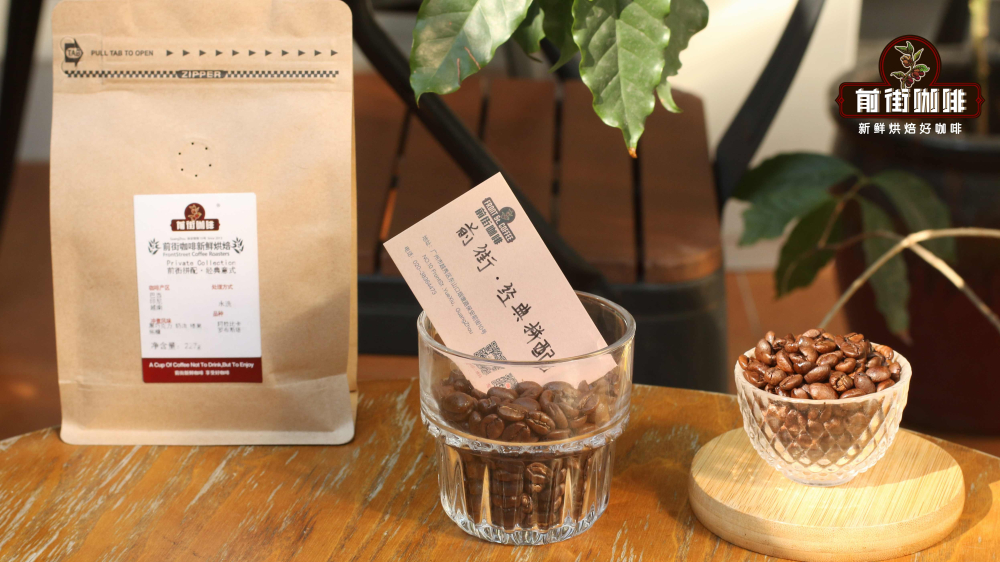
In addition, most espresso blend beans themselves are supplied for cafés, and compared with single-origin beans of similar flavor, their price is usually more affordable, following an economical and cost-effective route. For beginners with limited experience, if you want to consistently make a delicious latte, using espresso blend beans is clearly the safer choice. Here we recommend Front Street Classic Blend Coffee, Front Street Commercial Blend Coffee, and the espresso moka pot coffee beans recommended by many baristas—Front Street Dark Cocoa Blend Coffee.
When Front Street Classic Blend is used to make milk coffee, the aroma layers are quite rich, with abundant caramel notes, visibly thick crema, silky milk aroma on the palate, and a roasted nut-like finish that lingers. It is a high-quality everyday bean very suitable for beginners to practice with at home, and it can also meet the extraction needs of a moka pot.

The highlight of using Front Street Commercial Blend to make a latte is that you can easily extract coffee crema with a golden color at home. After blending with milk, the espresso's dark chocolate and mixed nut aromas are fully brought out. The taste is rich, with a thick and slightly bitter mouthfeel, suitable for friends who prefer a crema-rich texture.
The espresso moka pot coffee beans recommended by many baristas—Front Street Dark Cocoa Blend—have the advantage of cost-effectiveness: an affordable price paired with a balanced and stable flavor. The espresso has subtle acidity with notes of sunflower seeds, chocolate, and citrus. Made into a latte, it is oily, rich, and sweet, suitable for every home user as a daily staple.
Some friends have reported that the espresso they extract has a large amount of rough foam on the surface. This is usually caused by coffee beans being too fresh, and such espresso often tastes mediocre. Based on our experience, if the espresso coffee beans you receive are too close to the roast date, it is best to let them rest in a cool place for seven to ten days first, and finish them within forty-five days, when the flavor is at its best; after more than forty-five days, it becomes very difficult to extract crema. Front Street coffee beans are all freshly roasted within five days and support shipping within twenty-four hours, so the beans you receive are in their fullest aroma state.
How do you make an authentic and delicious latte?
The coffee machine used in Front Street's stores has a portafilter basket with a double espresso capacity, and the dose is roughly eighteen to twenty grams. When Front Street produces a latte, it uses twenty grams of coffee powder, extracting at a 1:2 coffee-to-liquid ratio, that is, twenty grams of powder extracts forty grams of coffee liquid. Extraction time is related to flow rate, and a single extraction is usually controlled between twenty and thirty-five seconds: within twenty seconds the taste tends to be thin, while over thirty-five seconds it may over-extract and produce burnt bitterness. Most of Front Street's espresso falls within the range of twenty-eight to thirty seconds.
Before extraction, Front Street prepares a ceramic coffee cup, milk pitcher, and fresh milk in advance. First wipe the portafilter basket dry, align it with the grinder's dosing outlet, turn on the switch to grind a double dose of coffee powder, and place it on an electronic scale to adjust to twenty grams. Then use a distribution tool to level the coffee bed, and then use a tamper to press vertically downward, making the puck firm to ensure more stable extraction.
Then turn on the coffee machine's extraction switch and let water run for one to two seconds, in order to wet the group head and also rinse off any residual coffee grounds on it. Place an electronic scale under the cup that will receive the espresso and tare it to zero, and place it under the group head during extraction as well. Gently and slowly lock the portafilter onto the group head, and flip down the extraction switch. Pay attention to changes in the extracted liquid. When the electronic scale shows that the coffee liquid has reached forty grams and the time is about thirty seconds, flip the switch down, and pour the Espresso into the pre-warmed ceramic coffee cup.
Steaming milk mainly relies on the coffee machine's steam wand. Pour an appropriate amount of milk into the milk pitcher. For example, Front Street Coffee's latte serving cup is three hundred milliliters, so you can pour in two hundred and forty milliliters of milk, because after steaming the milk will expand due to incorporated air. Before starting to steam, slightly open the steam switch and purge briefly to release excess water in the steam wand, then submerge the steam tip into the milk surface and turn on the switch.
Steaming milk is divided into two stages. In the first stage, let the steam holes contact the milk surface, with the purpose of introducing air to create foam. At this time, a sharp sound like tearing paper will be produced. This stage determines the thickness of the milk foam. The second stage is texturing. When the amount of foam is sufficient, lift the milk pitcher so that the steam holes are buried in the milk, causing the milk to rotate and steam under the action of the steam. This stage determines the quality of the milk foam. The milk foam for a latte is moderate in thickness, about one centimeter or so. After steaming, the milk surface is glossy, free of bubbles, and has a certain fluidity.
Finally, combine the steamed milk with the extracted espresso and pour latte art. Before pouring latte art, first integrate the milk and coffee. Keep the spout of the milk pitcher at a slightly higher distance from the cup, and gently mix the milk and coffee with the impact force, integrating until the cup is seven-tenths full. Then lower the milk pitcher so that the spout is close to the coffee surface. The impact force weakens, the milk foam rises due to buoyancy, and white milk foam begins to appear on the surface. At this point, you can create a rippling motion by swinging your arm. Because the milk foam is moderate and fluid, it will form a continuously swaying line. Finally, raise the pitcher and push forward to finish, and you can create a basic heart-shaped latte art pattern.
So, how do you make an iced latte?
Compared with a hot latte, making an iced latte is much simpler. The method is similar to an iced americano, except that water is replaced with milk. The steps for making an iced latte are: first pre-chill the cup with ice cubes, pour in one hundred grams of ice cubes and one hundred eighty grams of milk, and finally pour in espresso. Remember to stir evenly when drinking.
Most iced latte tutorials online do not give an absolute ratio, but rather a rough range: coffee to milk is about 1:4 to 1:8. This is because the coffee beans, extraction parameters, and milk each person uses may all differ. Even with the same ratio, the taste of the iced latte will vary. For reference, when using dark-roasted espresso beans dominated by dark chocolate and nut notes, you can add a larger proportion of milk to maintain a balanced taste. For example, Front Street's daily production uses 1:6. When the coffee beans are a lighter-roasted type with floral and fruity acidity, the espresso itself is not as strong, and too much milk will only mask the coffee aroma. In this case, you can appropriately reduce the proportion of milk, for example falling within the range of 1:4 to 1:5.
The above content is compiled by CoffeeHunters, a coffee news website.


