





How Should You Brew Yellow Bourbon Coffee at Home?
Yellow Bourbon coffee from Brazil's Queen Farm in São Paulo State brews well with a pour-over setup. Use water around 88 to 92C, a medium grind, and a coffee-to-water ratio near 1:15. A three-pour process, starting with a bloom and followed by two steady circles, draws out the bean's nutty, cocoa and sucrose sweetness.
The farm sits at 1400 to 1950 meters and grows the trees among shrubs and grasses, conditions suited to quality Arabica. Beans are processed semi-washed or natural, giving a full body with cream and fermented fruit notes. Many drinkers treat this balanced, mellow profile as classic coffee, so adjusting grind and pour speed matters more than exotic technique.
Brazil, as the world's largest coffee producer, may not often see its specialty beans in cafés, but the yellow bourbon coffee beans from Queen's Farm have won the favor of many enthusiasts with their balanced taste and nutty, cocoa notes. In this article, Front Street Coffee takes Queen's Farm coffee beans as an example to systematically explain how to hand-brew this full-bodied, sweet Brazilian coffee at home from four dimensions: water temperature, grind size, coffee-to-water ratio, and brewing technique, along with complete brewing parameters and practical steps.
Friends who drink coffee regularly know that Brazil's coffee production ranks first in the world, yet finding a specialty bean from Brazil in a café is not easy, which has a lot to do with the generally low growing altitude of Brazilian regions. Even so, Brazilian coffee still holds a place in the global coffee landscape. For example, this bean from Queen's Farm has won the approval of many coffee lovers; its balanced taste and mellow notes of nuts and cocoa precisely embody what classic coffee should be like. For this reason, many people buy this bean and brew it at home, but beginners often feel lost and don't know how to properly bring out the flavor of Brazilian coffee beans. Next, Front Street Coffee (FrontStreet Coffee) will talk about how to hand-brew Brazilian coffee so it tastes good.
So Front Street Coffee (FrontStreet Coffee) has selected the Queen's Farm coffee beans, which best represent the style of the Brazilian region, to demonstrate for everyone.
Front Street Coffee (FrontStreet Coffee) Brazilian Queen's Farm Coffee Beans
Country: Brazil Region: São Paulo State (Queen's Farm) Altitude: 1400-1950m Variety: Yellow Bourbon Processing Method: Semi-washed/Natural Flavor: Nuts, cream, peanut, fermented fruit, sucrose
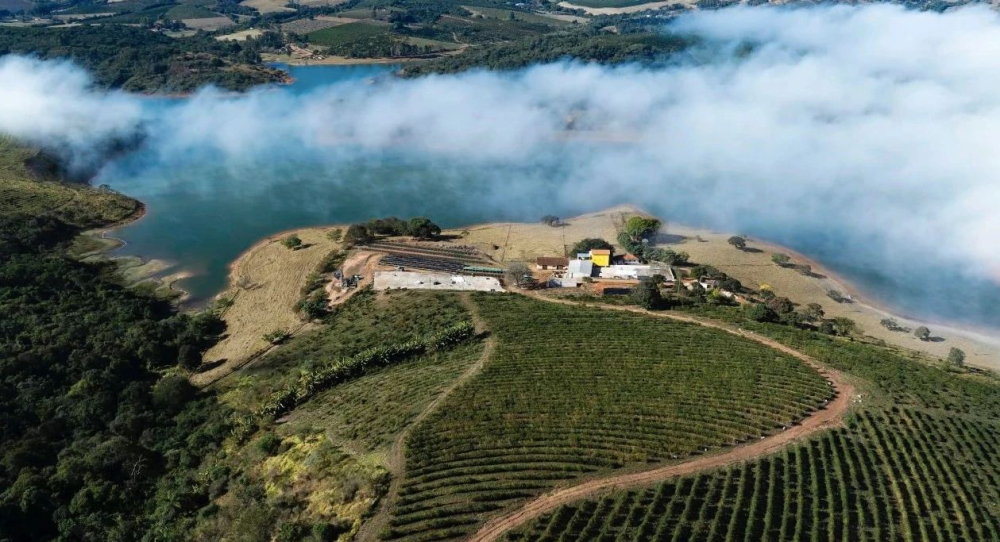
Queen's Farm
As shown above, this bean introduced by Front Street Coffee (FrontStreet Coffee) comes from Queen's Farm in São Paulo State, where the growing altitude reaches 1400-1950 meters, and the coffee trees in this state grow intercropped with shrubs, grasses, and other vegetation. Such an environment is quite favorable for cultivating high-quality Arabica coffee.
The heritage of Queen's Farm should not be underestimated either. According to Front Street Coffee (FrontStreet Coffee), this farm is owned by the renowned Carvalho Dias family. The family's four major farms have won awards every year since the first Brazil COE event in 1999, taking more than 12 awards in seven years, and in 2004 they even swept up the championship, 9th place, 11th place, and other rankings together. Many large and small farms in Brazil have hoped for years to make the shortlist but found it difficult, while the farms under this family have repeatedly taken home trophies. Taking Queen's Farm Fazenda Rainfa as an example, it also has an impressive record: runner-up in 2000, third place in 2001, and 29th place in 2005. Up to now, Queen's Farm has won awards three times.
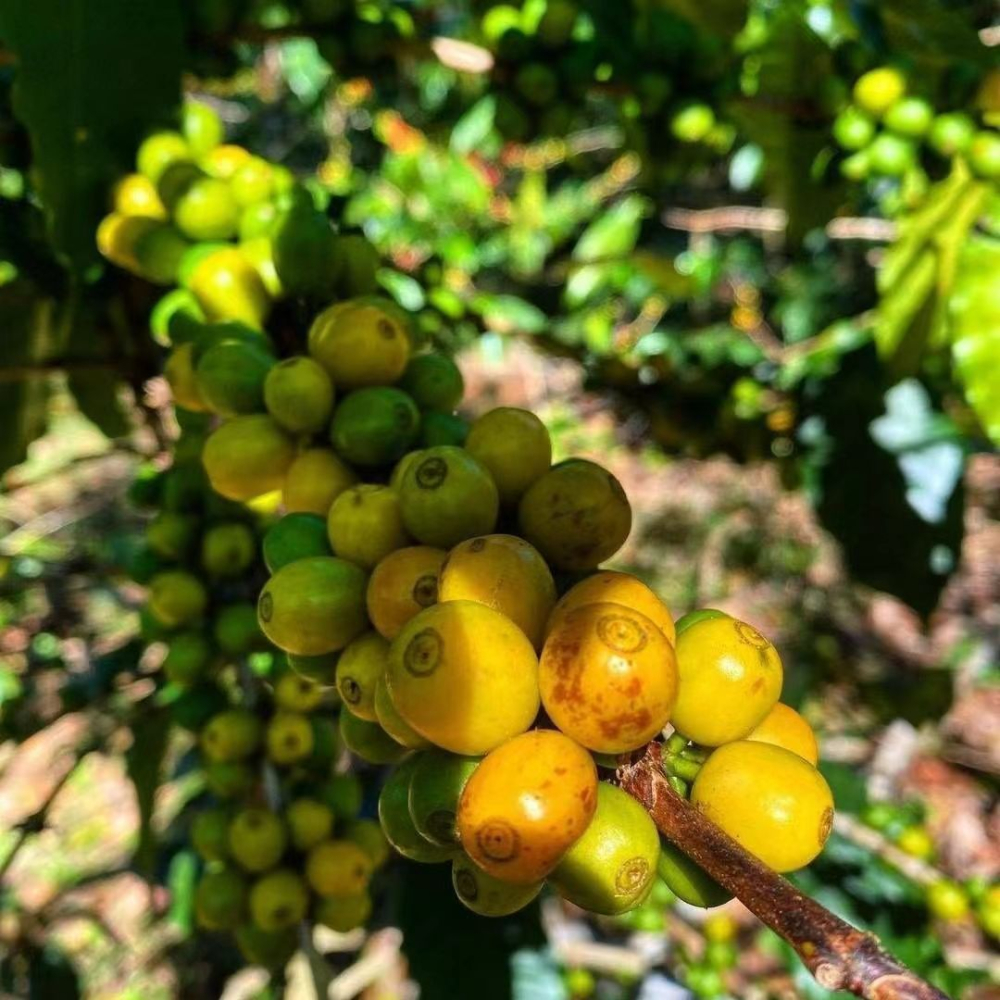
Coffee Variety Grown at Queen's Farm
This shows the high quality of Queen's Farm coffee beans, which also explains why it is loved by coffee enthusiasts around the world. In addition, Queen's Farm also uses the yellow bourbon variety unique to São Paulo State. After the fruit of this variety ripens, it does not turn red but orange-yellow, and that is where the name yellow bourbon comes from.
According to Front Street's actual cupping experience, yellow bourbon grown at high altitudes performs very well in flavor. Front Street Coffee (FrontStreet Coffee) also learned that in the Brazil Cup of Excellence competition, for two consecutive years, the top three places were almost all taken by yellow bourbon, and this variety therefore became popular in the specialty coffee circle.
So how can the flavor of this Brazilian Queen's Farm yellow bourbon be fully extracted through hand brewing?
Front Street Coffee (FrontStreet Coffee) believes that brewing a good pot of coffee mainly depends on four aspects: water temperature, grind size, coffee-to-water ratio, and brewing technique.
1. Water Temperature
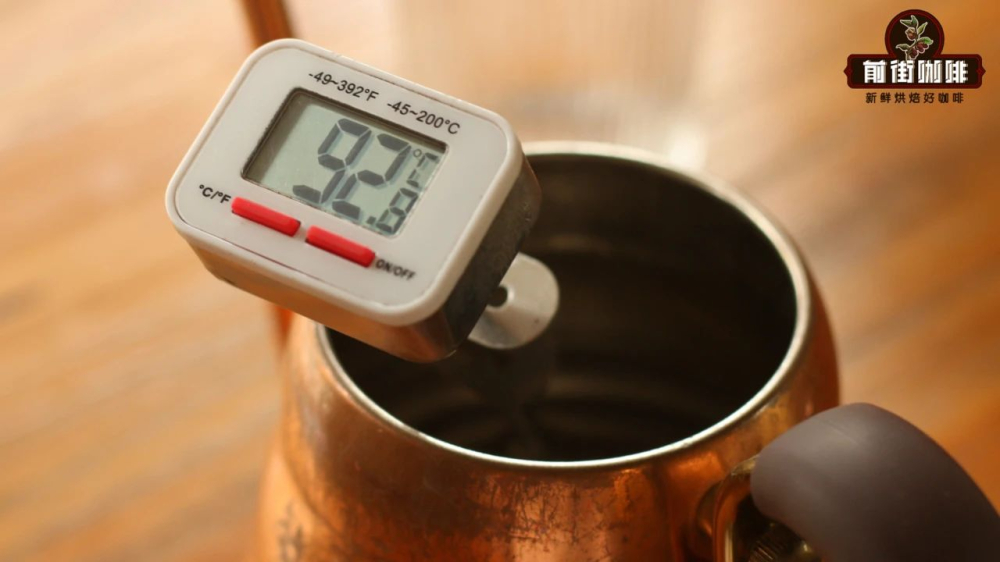
When brewing beans of different roast levels, Front Street Coffee (FrontStreet Coffee) uses different water temperatures. During roasting, substances in the beans are lost as the roast deepens, so dark-roasted beans need lower water temperatures to avoid extracting too many off-flavors. For medium-light roasted beans, Front Street Coffee (FrontStreet Coffee) recommends 90-91°C; for medium-dark roasted Mandheling, 87-89°C is recommended.
For this Brazilian Queen coffee bean, the flavor is mainly nutty and cocoa. In order to highlight this characteristic, Front Street Coffee (FrontStreet Coffee) uses a medium roast, so the brewing water temperature is controlled at 87-89°C.
2. Grind Size
Grind size refers to the size of the coffee particles, and it affects the contact time between coffee and water. The finer the grounds, the more substances are extracted in the same amount of time, but over-extraction is also easy; the coarser the grounds, the fewer substances are extracted in the same amount of time, but under-extraction is easy.
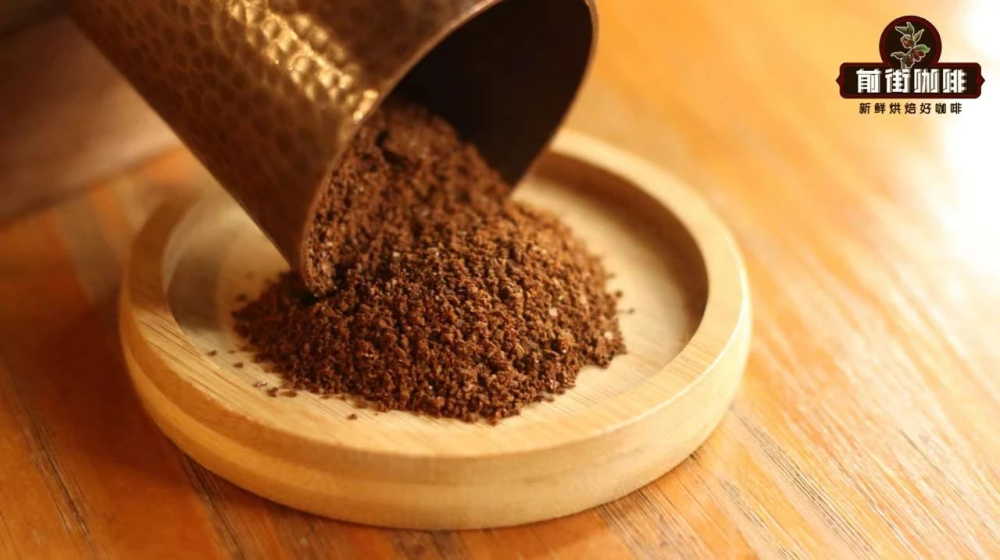
Furthermore, everyone has a different grinder, so the parameters naturally differ. Here Front Street suggests buying a No. 20 cupping calibration sieve with a 0.85mm aperture, weighing 10g of coffee beans, adjusting to a rough grind setting and grinding them into powder, pouring it into the sieve to sift, and then weighing the sifted powder (be sure to sift until no more powder can pass through).
A pass-through rate of 80% (8g sifted from 10g of grounds) is the most suitable grind size for medium-light roast; a pass-through rate of 70%-75% (7-7.5g sifted from 10g of grounds) is the most suitable grind size for medium-dark roast. If it exceeds the suitable sifting rate, adjust the grind coarser; if it does not reach it, adjust the grind finer.
3. Coffee-to-Water Ratio
The following is the correspondence between hand-brew coffee-to-water ratio and taste derived by Front Street Coffee (FrontStreet Coffee) based on the SCAA Golden Cup extraction theory:
[Bold flavor] 1:10~1:11, i.e. 1:12.5~1:13.5 under the Golden Cup standard [Moderate flavor] 1:12~1:13 (i.e. 1:14.5~1:15.5 under the Golden Cup standard) [Light and clean] 1:14~1:16 (i.e. 1:16.5~1:18.5 under the Golden Cup standard)
When the ratio of coffee bean grams to brewing water is between 1:14.5 and 1:15.5, it is easiest to fall into the golden range of 18%-22% Golden Cup extraction yield and 1.15%-1.35% concentration.
So here Front Street Coffee (FrontStreet Coffee) suggests that when brewing this Brazilian Queen's Farm coffee bean, you might as well use the foolproof 1:15 coffee-to-water ratio.
4. Brewing Technique
Finally, the hand-brewing technique is also crucial. Common methods include the three-stage pour, one-pour flow, and drip method. Here Front Street Coffee (FrontStreet Coffee) suggests that beginners use the three-stage pouring method, because this technique is suitable for light-roasted, medium-light, and medium-roasted beans. Staged extraction can clearly present the front, middle, and back notes of the coffee, and the flavor performance is also relatively reliable.
Next, Front Street Coffee (FrontStreet Coffee) will share the hand-brewing process for brewing this Brazilian Queen's Farm coffee bean!
Front Street Coffee (FrontStreet Coffee) Brewing Suggestions
Dripper: KONO Dose: 15g Water temperature: 90°C Grind size: medium grind, 75% pass-through rate with a No. 20 standard sieve Water-to-coffee ratio: 1:15 Brewing technique: staged extraction.
First use 30g of water to bloom for 30 seconds, then pour in a small stream in circles until 125g for the stage break. When the water level drops and is about to expose the coffee bed, continue pouring until 225g and stop. When the water level drops again and is about to expose the coffee bed, remove the dripper. (Timing starts from the bloom.) The extraction time for the V60 dripper is 2'00", and the Kono dripper is slightly longer at 2'10".
Flavor of Brazilian Queen's Farm coffee beans: Balanced mouthfeel, with the main tone of almond and cocoa highlighting the sweetness of sucrose. It is a coffee with good body and abundant sweetness.
For more specialty coffee beans, please add the private WeChat of Front Street Coffee (FrontStreet Coffee), WeChat ID: kaixinguoguo0925
The above content is compiled by CoffeeHunters, a coffee news website.


