






Why Does Wet Hulling Shape Mandheling Coffee Flavor?
Mandheling coffee comes from Sumatra, where producers use wet hulling instead of full washed processing. The parchment is stripped from the beans before they finish drying, once moisture falls to roughly 30 to 50 percent. This shortens the drying cycle in a climate with 70 to 90 percent humidity and limited sun, and it builds the bean's heavy body and caramel aroma.
The method begins like a washed process: cherries are floated, then depulped, and the still-covered beans are sun-dried for one to two days before hulling and further drying. Removing parchment early gives green coffee beans their characteristic bluish-green tint and the uneven, sheep-hoof shape. It is a practical answer to weather, not a stylistic choice.
The Indonesian wet-hulling method is a way of processing green coffee beans that differs from traditional washed processing. Its core lies in removing the parchment (endocarp) while the coffee beans are not yet fully dried, thereby greatly shortening the drying cycle. The birth of this technique is closely related to Indonesia's climate conditions of year-round high temperature and humidity and insufficient sunlight. This article will systematically sort out the complete processing flow of wet hulling, compare its differences with washed processing, and analyze the reasons behind the formation of Mandheling coffee's signature full-bodied mouthfeel, caramel aroma, and "sheep hoof bean" appearance, helping coffee enthusiasts gain a deeper understanding of the value and flavor expression of this unique processing method.
What exactly makes wet hulling so unique?
A clue can be seen from the name itself: so-called "wet hulling" refers to removing the parchment—that is, the endocarp—from the surface of green coffee beans before they have finished drying. Unlike most processing methods, in which the parchment is removed only before the coffee beans are exported, the key feature of wet hulling is that this step is completed in advance during processing.
Why does Indonesia use wet hulling to process coffee beans?
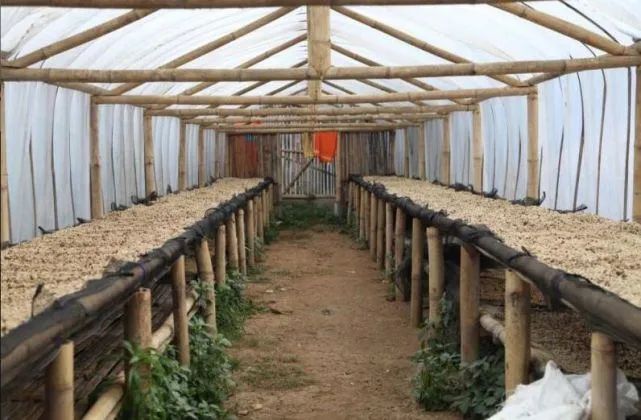
Indonesia has a hot and humid climate year-round, with scarce sunlight for long periods, and air humidity remains between 70% and 90% all year round. Under such conditions, relying solely on sun-drying is clearly impractical. Take Sumatra as an example: the local weather is unpredictable, and even with washed processing, it is difficult to ensure a full week of clear weather to complete drying. Wet hulling emerged precisely in this environment: first complete the early stages of washed processing, then spread the coffee beans that still have parchment under the sun to dry for one to two days. After the moisture content drops to 30% to 50%, remove the parchment and continue sun-drying. In this way, the drying speed of the coffee beans is accelerated, and the overall processing time is greatly compressed.
The specific operational process of wet hulling
① After picking fresh coffee cherries, first carry out flotation. Cherries with lower density will float to the surface, and these are poor-quality coffee cherries.
② Remove the outer skin and pulp of the coffee cherries, then place them in a clean water tank to soak and ferment for 12 to 36 hours (the specific duration depends on the situation), in order to allow the mucilage layer attached to the coffee beans to break down and fall off. At this point, the process is completely the same as washed processing.

③ Spread the coffee beans with parchment under the sun to dry for one to two days. If the weather is sunny throughout this period, the moisture content of the coffee beans will roughly fall between 30% and 50%, and at this stage the beans are in a semi-soft, semi-hard state.
④ Immediately afterward, use a huller to remove the parchment from the coffee beans, then after about two more days of sun-drying, the moisture content of the coffee beans can drop to about 12%. This processing method significantly shortens the overall time required. For Indonesia, where the weather is unpredictable, wet hulling can better ensure the completion of coffee processing.
The unique flavor of Mandheling
Mandheling coffee is highly recognizable in both flavor and bean appearance. Because wet hulling removes the parchment from the coffee beans while they are in a semi-soft, semi-hard state, and they then undergo intense sun-drying, the beans are prone to cracking and form a shape similar to a "sheep hoof," so they are called sheep hoof beans. These are not defective beans.
At the same time, wet hulling greatly compresses the drying time, making the acidity of the coffee beans noticeably weaker, significantly enhancing body, highlighting caramel aroma, and carrying a faint fresh herbal note.
Professional coffee knowledge exchange For more coffee bean information, please follow Coffee Workshop (WeChat public account: cafe_style) For more specialty coffee beans, please add the private WeChat of Front Street Coffee (FrontStreet Coffee), WeChat ID: qjcoffeex
The above content is compiled by CoffeeHunters, a coffee news website.


