







What Makes Kona Coffee Grown in Hawaii Distinct?
Kona coffee is grown on the volcanic slopes of Hawaii's Big Island, the only US state that produces coffee. Volcanic ash leaves mineral-rich soil, while island rainfall, sunshine and altitude above the frost line support slow cherry ripening. Production is small, which keeps prices high and makes authentic Hawaiian beans scarce on the market.
The article traces Kona's history from Typica plantings introduced via Guatemala, explains the region's grading standards, and describes the cup profile of Queen Estate lots. It also notes that Arabica coffee varieties such as Typica shape the sweet, balanced base notes that drinkers associate with the Kona name.
Hawaiian Kona coffee is globally recognized as one of the top specialty coffees, scarce in yield and expensive, yet it still draws countless coffee enthusiasts. Hawaii, the only coffee-growing state in the United States, nurtures Kona coffee with its unique flavor thanks to volcanic soil, island climate, and exceptional altitude conditions. Front Street Coffee has specially introduced authentic Hawaiian Kona coffee beans from Queen Farm. This article will provide a comprehensive interpretation of the unique charm of Kona coffee, from growing conditions, production area distribution, historical context, grading system to processing methods and cup profile, taking you deep into the past and present of this world-class coffee.
For more specialty coffee knowledge, please follow: Front Street Coffee (Frontsteet Coffee)
When mentioning Hawaii, Front Street believes many veteran coffee lovers will immediately think of Kona coffee. This coffee ranks second on the global price list, with extremely limited production yet exceptionally outstanding flavor, so its price has always remained high. Buying truly Hawaiian Kona beans is not easy, but Front Street has indeed successfully brought authentic Hawaiian Kona coffee beans into the shop. Next, Front Street will have a good chat with everyone about Hawaiian coffee.
Hawaiian Coffee Growing Conditions
As is well known, the United States is one of the largest coffee-consuming countries in the world, and Hawaii, as the only island state in the U.S., consists of 132 islands in the central Pacific, thus also called the Hawaiian Islands. These islands originated from volcanic eruptions, and there are still two active volcanoes in the territory. Volcanic ash brings nutrient-rich soil for coffee cultivation, while the geographical location also ensures the altitude and climate conditions required for high-quality coffee.
According to Front Street's understanding, Hawaii is also the only state in the U.S. that produces coffee, and Hawaiian coffee is one of the most important local agricultural products. Although Hawaii has an island-type climate and is often disturbed by tornadoes, the overall climate is actually quite favorable for coffee cultivation—abundant rainfall, ample sunshine, and no frost threat. In addition, Hawaii has a unique natural phenomenon: on most days, around 2 p.m., white clouds gather in the sky, providing necessary shade for coffee trees. Front Street believes it is precisely this special growing environment that creates the distinctive flavor of Kona coffee.
The high price of Kona coffee is mainly because the area suitable for coffee cultivation in Hawaii is only about 1,400 hectares, so production is naturally limited. Moreover, the United States itself is a major coffee-consuming country, and Kona coffee is basically for domestic sale, with exports being pitifully small, further driving up the price. According to Front Street's research, the popularity of Kona coffee has even spawned products like "Kona Blend" (with Kona bean content not exceeding 5%). Even neighboring islands such as Maui, Kauai, and Molokai have gradually begun commercial coffee cultivation.
Hawaiian Coffee Production Areas
Front Street's Hawaiian Kona coffee beans come from the Kona region on the southwest coast of Hawaii, and Hawaiian coffee is mainly grown on five islands in the Kona region: Oahu, Hawaii Island, Maui, Kauai, and Molokai. According to Front Street's understanding, coffee from different islands has its own characteristics—Kauai coffee has a soft and smooth mouthfeel, Molokai coffee is full-bodied with low acidity, and Maui coffee has medium acidity but the strongest flavor. Hawaiians are also deeply proud of their locally 100% grown Arabica coffee beans.
In addition, according to Front Street's understanding, most coffee beans in the Kona region of Hawaii are grown on volcanoes, able to fully absorb nutrients from volcanic soil. Combined with Hawaii's advanced artificial cultivation techniques, each coffee bean is uniquely charming. At the same time, the appearance of Hawaiian Kona coffee beans is also the most uniform and beautiful among coffee beans worldwide.
History of Hawaiian Kona Coffee
According to Front Street's understanding, Hawaii's coffee history can be traced back to the era of King Kamehameha. In 1817, the first Spanish advisor Don Francisco de Paula Marin introduced coffee trees to Hawaii, but the cultivation was not successful at that time. It was not until 1825 that the mayor of Hawaii introduced coffee from Brazil and planted it in Manoa Valley. After success, coffee cultivation began to spread across the islands. In 1828, Bourbon coffee was introduced to the Big Island.
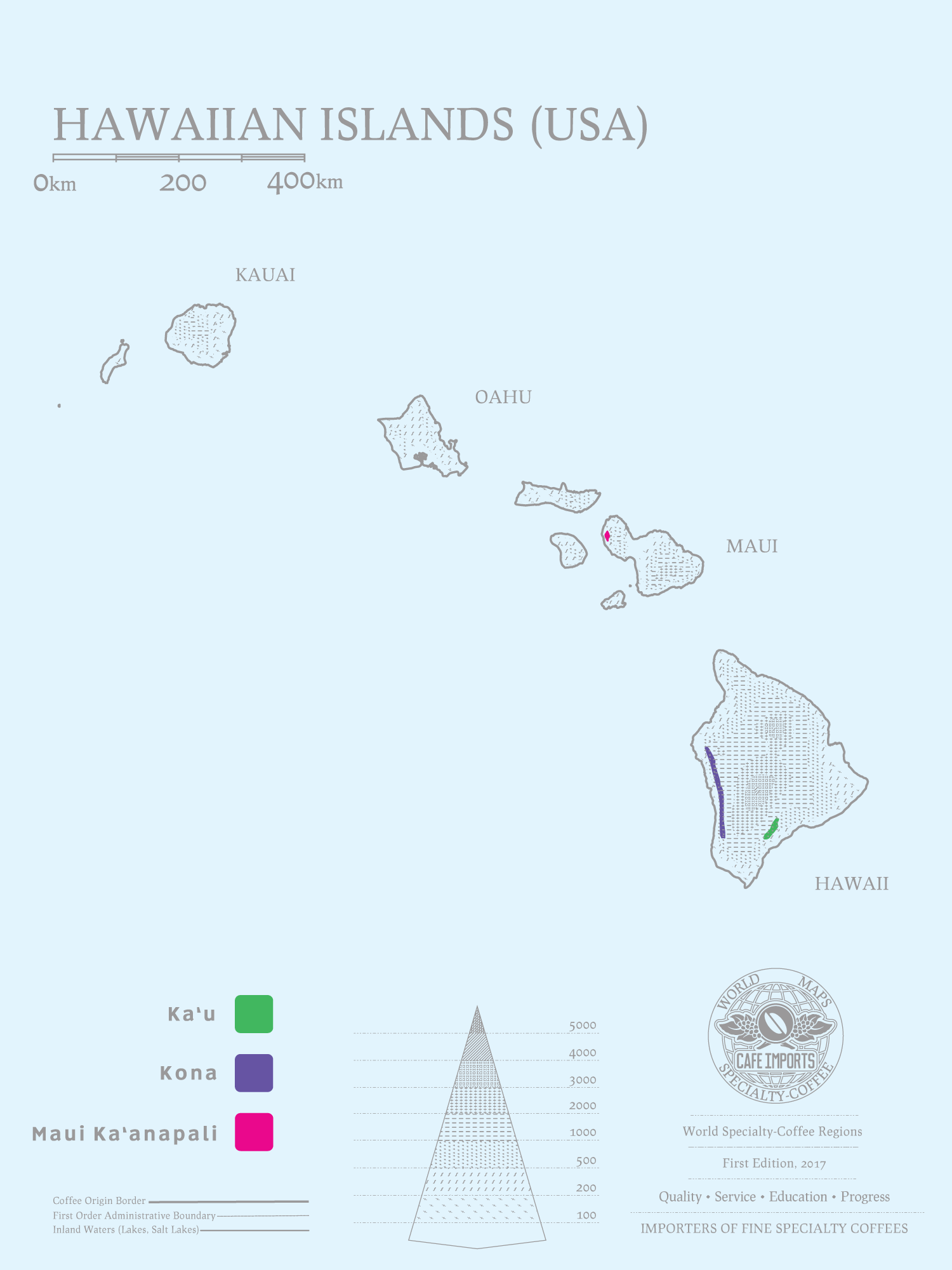
In 1836, Kauai began large-scale coffee cultivation, but a pest and disease outbreak in 1858 wiped out all coffee trees, with only the Kona region on the Big Island surviving. Front Street believes that the Kona region indeed possesses exceptional advantages.
Hawaiian Coffee Grading
According to Front Street's understanding, Kona coffee beans are divided into five grades: Extra Fancy, Fancy, Prime, No.1 Peaberry, and Peaberry Prime. The three common grades are as follows:
Extra Fancy: larger than 19 mesh, moisture content 9%~12%, fewer than 10 defective beans (350g green bean sample)
Fancy: larger than 18 mesh, moisture content 9%~12%, fewer than 16 defective beans (350g green bean sample)
No.1 Peaberry: smaller than 10 mesh, moisture content 9%~12%, fewer than 20 defective beans (350g green bean sample)
In addition, Hawaii holds a Kona coffee cupping competition almost every year, and Queen Farm from Kona is one of the standout participants, having won second place twice, in 2009 and 2011. The Kona coffee produced by this farm is truly the cream of the crop, and Front Street naturally would not miss coffee beans of such excellent quality. Next, Front Street will briefly introduce this farm and the specific information about the Kona coffee beans.
FrontStreet Coffee Hawaiian Kona Coffee Beans
Country: Hawaii Region: Kona (Queen Farm) Altitude: 1100m Variety: Typica Processing Method: Washed Flavor: Osmanthus fragrance, mulberry juice, malt
Queen Farm Queen Farm
As Front Street mentioned, Queen Farm won second place in the 2009 and 2011 Gevalia (Hawaii KONA Cupping Competition) Cup Grand Prix. Of the coffee produced by this farm, 70% belongs to the top-grade Extra Fancy beans, known for their high quality. Even the slightly lower-grade Fancy beans have an aroma that is in no way inferior to Extra Fancy beans, astonishing and earning praise from coffee industry professionals. The Hawaiian Kona coffee launched by FrontStreet Coffee this time comes from this farm.
Typica
Of course, as Front Street has said in previous articles, high-quality specialty coffee cannot do without innate genetic conditions. Front Street's Hawaiian Kona coffee uses the ancient Typica variety. Typica is the oldest native variety from Ethiopia, and today almost all Arabica coffee varieties are derived from Typica. Typica has an elegant flavor, but the plant is weak in constitution and poor in disease resistance, susceptible to leaf rust, resulting in limited production and difficulty in achieving economic benefits. Front Street believes this is also one of the reasons for the high price of Kona coffee.
Washed Processing Method
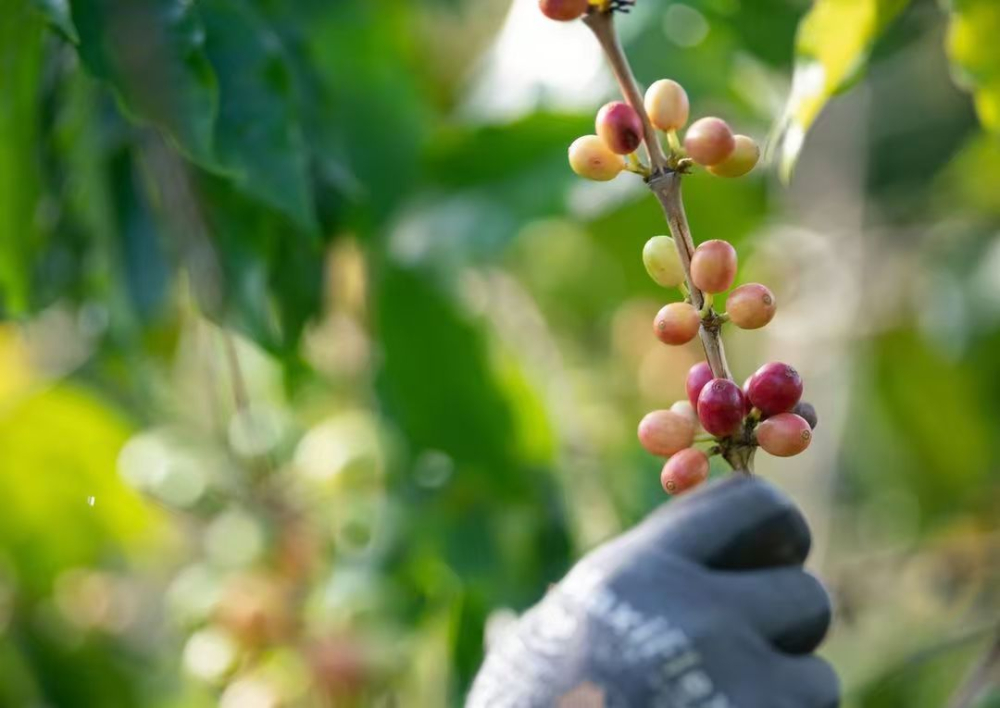
The processing method used for Front Street's Hawaiian coffee beans is also the most common washed processing method. The washed processing method can showcase the most original taste of the coffee cherry while making the mouthfeel purer and fresher. However, in order to clean the fruit thoroughly, this step consumes a large amount of water, so it is not suitable for use in water-scarce areas.
Washed Processing Method Steps:
1. Removing Floating Beans Pour the coffee beans into a large water tank. Underdeveloped defective beans will float to the surface, while mature and plump fruits sink to the bottom. At this point, scoop out the floating beans from the surface, completing the floating bean removal step.
2. Removing Pulp and Skin Using a pulping machine, remove the outer skin and pulp of the coffee fruit (leaving behind mucilage, parchment, and silver skin).
3. Fermentation The purpose of this step is to remove mucilage through biological treatment. Place the coffee fruit treated by the pulping machine into a fermentation tank for 16~36 hours, and fermentation bacteria will dissolve the mucilage.
4. Washing After fermentation and mucilage removal, since fermentation bacteria and impurities remain on the coffee beans, the beans are washed again. However, in order to clean thoroughly, this step consumes a large amount of water.
5. Drying and Removing Parchment and Silver Skin Usually, the coffee fruit is dried by machine or sun-dried manually to reduce moisture content to 10%~14%. Then a hulling machine is used to remove the remaining parchment and silver skin, completing the processing.
Front Street Cupping and Brewing Conclusion
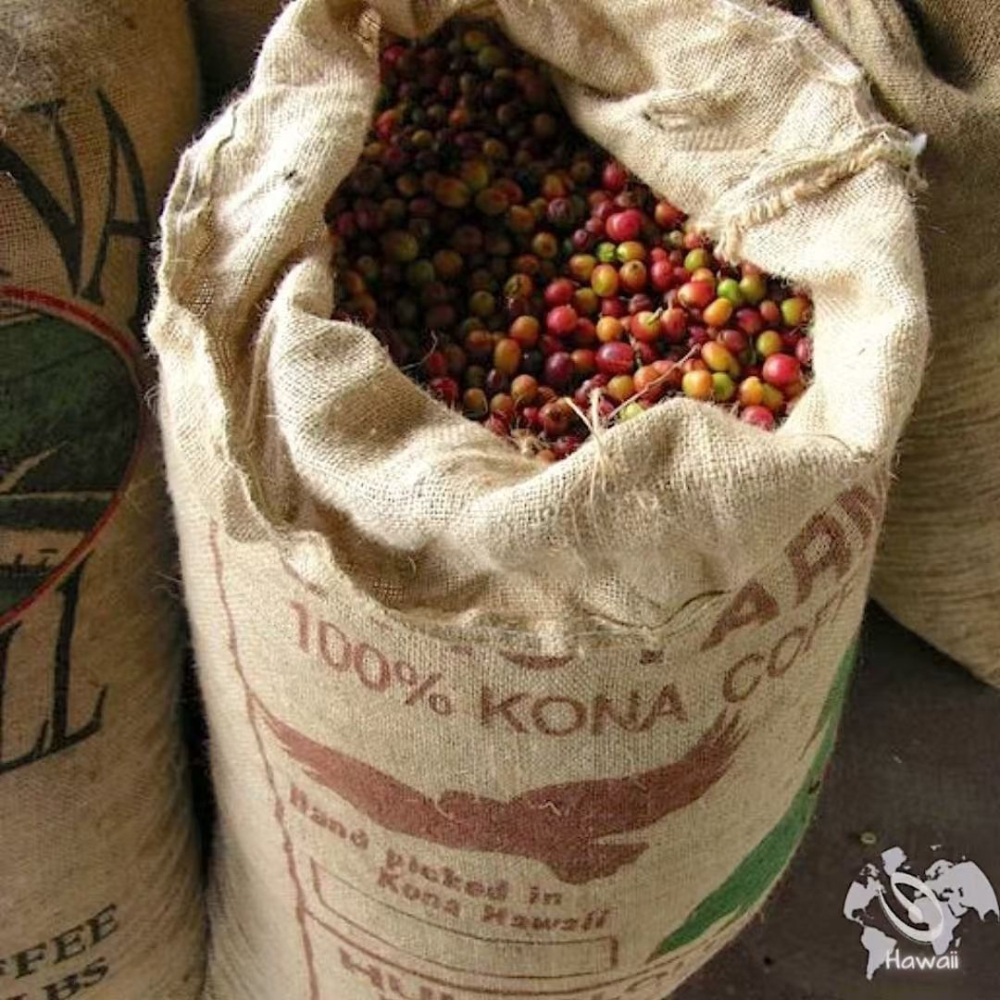
Finally, through Front Street's cupping and brewing of this Hawaiian Kona coffee, it is believed that Kona coffee has a sweet and rich aroma with a clear texture. It tastes fresh, refreshing, and fragrant, with a quite smooth mouthfeel. Most notably, Kona coffee has a mixed aroma of fruit, wine, and spice. Therefore, Front Street strongly recommends that coffee lovers must not miss this excellent Kona coffee bean, and believes that friends who have tried it will find it endlessly memorable.
The above is Front Street's compilation of Hawaiian Kona coffee-related information and production area flavor characteristics, hoping to help coffee lovers better understand Hawaiian coffee.
The above content is compiled by CoffeeHunters, a coffee news website.


