





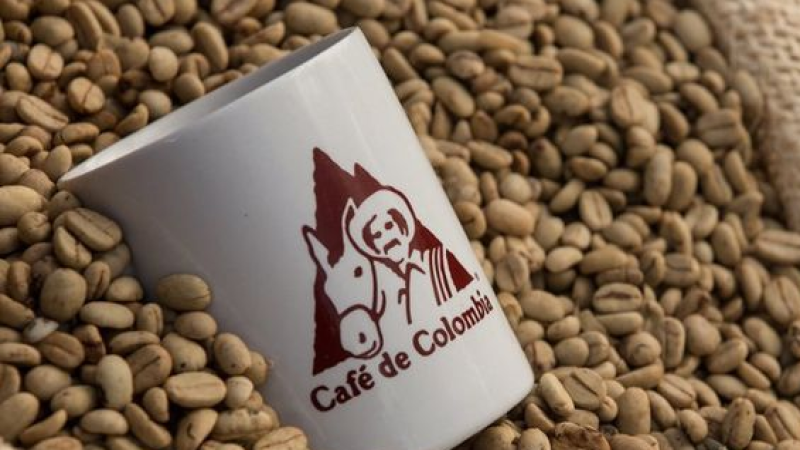
What shapes Colombian coffee flavor in the Huila region?
Colombian coffee flavor leans on nutty and dark chocolate notes with a smooth fruit acidity and a solid body. The growing belt runs across three Andean mountain ranges at 800 to 2,300 meters, where volcanic ash soil, moderate sun and rainfall, and cloud shading favor high-quality Arabica. Colombia is the largest exporter of Arabica coffee and ranks third worldwide in production and export volume.
Most Colombian coffee is washed, and small family farms often run dedicated pulping machines such as the Ecomill or Eco-Pulper. The Huila region shows the terroir particularly well. For medium-dark roasted everyday beans, a pour-over recipe using a KONO dripper, 15 grams of coffee, a 1:15 ratio, 90°C water, and a three-pour rhythm helps reproduce the classic sweet, mellow cup.
Colombia, with its Andean microclimates and volcanic ash soils, is the world's largest exporter of Arabica coffee, known for its nutty and dark chocolate notes with a smooth fruit acidity. From the perspective of Front Street Coffee, this article reviews the growing conditions and washed processing methods that shape Colombian coffee flavor, highlights the terroir advantages of the Huila region, and provides a pour-over recipe for medium-dark roasted Colombian everyday beans, including the extraction principles of the KONO dripper, 15g dose, 1:15 coffee-to-water ratio, 90°C water temperature, and a three-pour rhythm, helping coffee enthusiasts consistently recreate the classic sweet and mellow taste.
Colombia's natural environment is truly blessed, and its coffee often shows a solid body, with nutty and dark chocolate aromas, accompanied by a pleasant fruit acidity. High-quality Colombian beans can provide rich aroma while maintaining a clean cup performance, so they appear very frequently in espresso blends. Among the 4 espresso blends currently offered by Front Street Coffee, 3 use Colombian coffee beans. Next, Front Street Coffee will sort out with everyone exactly which factors shape the flavor direction of Colombian coffee.
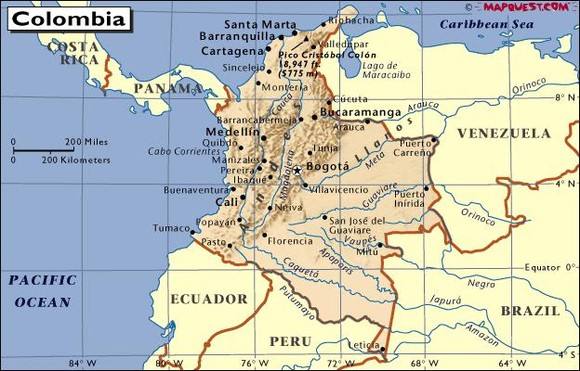
In terms of production and export volume, Colombia ranks third in the world, and it is also the world's largest exporter of Arabica coffee beans. It borders Brazil to the north and connects to Panama to the northwest. Colombia's coffee-growing belt is mainly distributed across three Andean mountain ranges arranged like the character "川"; these ranges run north-south, and coffee trees are mostly grown at elevations of 800–2,300 meters. The area has a unique microclimate, volcanic ash soil rich in minerals, and moderate sunlight, rainfall, and cloud shading, all of which are very favorable for growing high-quality Arabica coffee. The climate differs noticeably between the mountain ranges, allowing coffee cherries to ripen throughout the year, and different types of coffee can be harvested at different times, so busy harvesting scenes in the forests can be seen all year round.
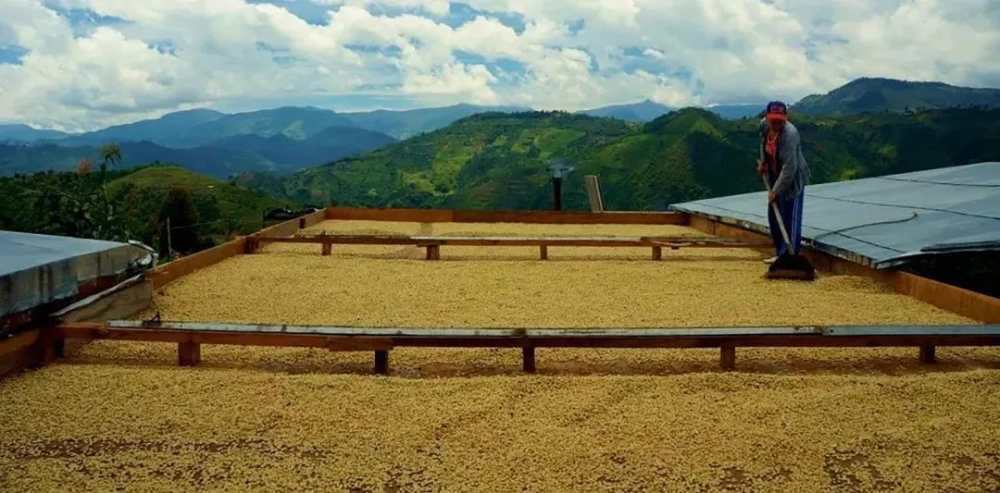
Colombia is rich in water resources, and the vast majority of its coffee is washed processed. Small family-run farms usually have dedicated green bean processing machines (Ecomill or Eco-Pulper). After harvest, the coffee cherries are poured into the machine, which not only removes the skin and pulp but also removes most of the mucilage with very little water. The parchment beans with a small amount of remaining mucilage then go into a small tank or container, possibly a tiled tank, and rest overnight to ferment, allowing the remaining mucilage to loosen gradually. The next day they are rinsed clean with fresh water and finally spread out in the sun to dry to the target moisture content.
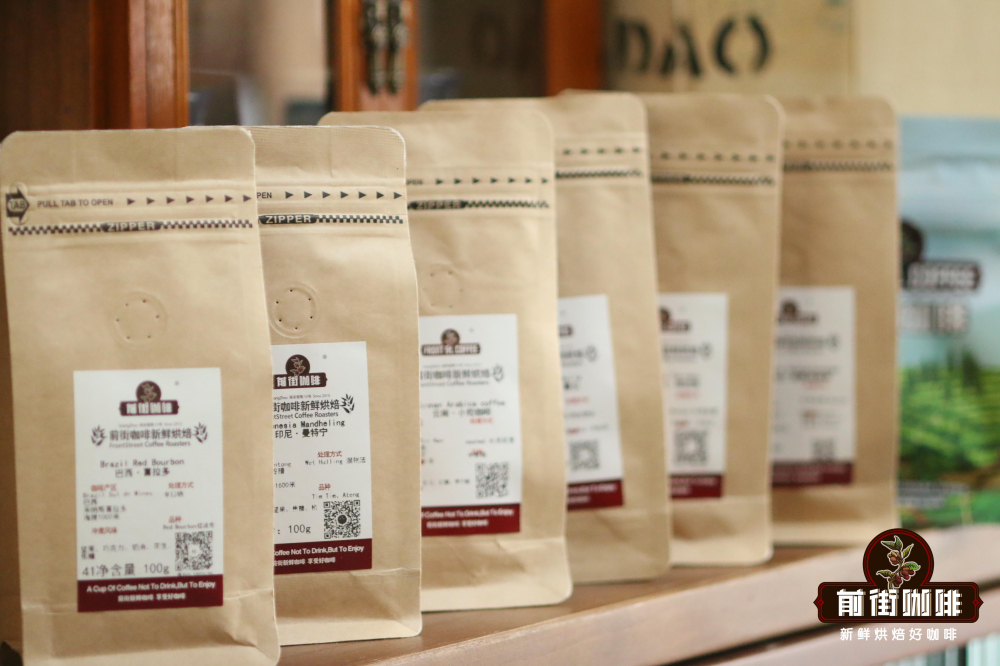
Nowadays there are many Colombian coffees on the market using novel processing methods, with more vivid flavor expressions. Front Street Coffee believes that to understand a coffee origin, it is best to start with the flavor of the coffee itself, that is, return to natural processing methods: washed and natural. The washing steps can significantly reduce the defect rate of coffee beans, retain the beans' own flavors, and bring higher cleanliness. The Colombian everyday beans launched by Front Street Coffee are washed processed, harvested from the famous local Huila region. Front Street Coffee's everyday bean series is launched in 100g small packages, covering 7 classic origins including Brazil, Colombia, Ethiopia, Costa Rica, Indonesia, Yunnan, and Guatemala. Friends who are just getting into coffee can learn about the flavors of major classic origins through tasting, and then determine their preferred type.
Located in the south, Huila is a very popular specialty region in recent years and is also a region certified for Colombian coffee origin. The growing elevation here ranges from 1,700 to 2,100 meters, surrounded by diverse mountains and hills, and the Colombia River converges here, providing ample water resources for coffee tree growth. In addition, being close to the equator and surrounded by mountains, the coffee is not affected by the humid air of the Pacific or the southern trade winds, so the climate in this area is very stable throughout the year. This place also has famous volcanic soil. Front Street Coffee selected washed Huila coffee as the representative face of Colombia, using medium-dark roasting to recreate the classic sweet and mellow taste of Colombia.
The flavor descriptions of every Front Street Coffee coffee are based on freshly roasted beans. If coffee beans are stored for more than a month, the aroma may have already partly faded, and it is difficult to recreate it in brewing. Front Street Coffee also deeply understands the importance of freshness, so it ensures that only coffee beans freshly roasted within 5 days are shipped, allowing everyone to enjoy the fullest flavor period when they receive them.
When brewing rich, bitter-toned coffee beans, Front Street Coffee gives priority to the KONO dripper. So-called bitter tonality refers to medium-dark roasted coffees with flavor types such as nuts, dark chocolate, caramel, and hazelnut. KONO From the appearance of the dripper, only the lower-middle part has ribs, while the upper half is a smooth curved surface. In this way, when we wet the dripper, it can fit tightly with the filter paper, restricting airflow during extraction. Therefore, the residence time of hot water in the dripper increases, the extraction yield rises, the concentration also increases, and the coffee tastes richer and mellower. The KONO dripper is also suitable for rich-flavored beans such as Indonesian Mandheling coffee and Brazil Queen Estate coffee.
Front Street Coffee uses 15g of coffee grounds. The choice of dose is usually based on the size specified by the dripper design, and Front Street Coffee's dripper is suitable for a serving for 1–2 people, so it can be between 15–20g; too much dose easily affects extraction. As for the coffee-to-water ratio, 1:15 is the most commonly used, and a ratio range of 1:13–1:17 is acceptable. Front Street Coffee believes that everyone's taste is different; 1:13 may be too strong for some people, and 1:17 may be too weak, so it takes the middle value of 1:15.
Considering that the Huila everyday beans use medium-dark roasting and the flavor leans toward rich, mellow notes of nuts and chocolate, the darker roast makes the coffee beans more porous and the coffee grounds more absorbent, so a medium grind is chosen. To avoid extracting too many undesirable flavors, Front Street Coffee lowers the water temperature a little, using a medium 90°C water temperature with staged pouring for extraction.
Brewing parameters: KONO dripper, 90°C water temperature, No. 20 standard sieve with 75% passing rate grind size, 1:15 coffee-to-water ratio, dose: 15g, three-stage extraction
Pour the coffee grounds into the KONO dripper, wet the coffee bed with twice the amount of water as the coffee grounds, form a dome and bloom for 30s, then pour in a small stream in circles from the inside out until 125g and pause. When the coffee bed drops to half the height of the dripper, continue pouring the third stage with the same fine stream until 225g, then remove the dripper after all the coffee liquid has filtered through; the time is about 2 minutes . Note to keep the stream steady throughout, and try not to disturb the coffee bed wall, so as to avoid uneven extraction. Gently swirl the coffee liquid in the server to mix it evenly, and then you can begin tasting.
This Colombian Huila everyday bean has obvious roasted aromas of chocolate, nuts, and caramel on the palate, smooth and sweet, with moderate body and a clean mouthfeel. As the temperature drops, you can sense the soft acidity of berries.
For professional coffee knowledge exchange and more coffee bean information, please follow Coffee Workshop (WeChat official account cafe_style)
For more specialty coffee beans, please add the private WeChat of Front Street Coffee (FrontStreet Coffee), WeChat ID: qjcoffeex
The above content is compiled by CoffeeHunters, a coffee news website.


