








Are civet coffee beans safe to drink and do they aid weight loss?
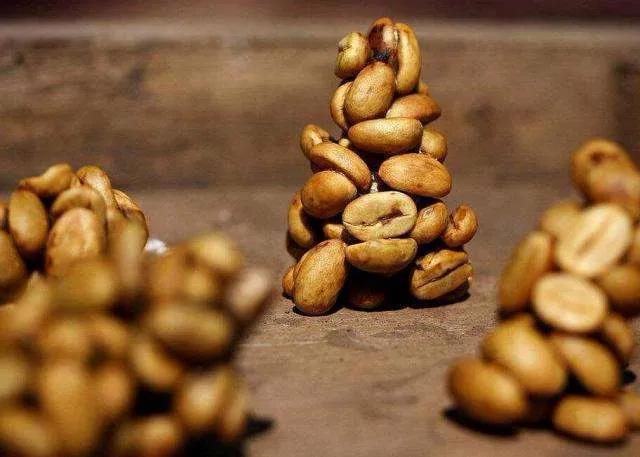
Kopi luwak coffee beans are the beans collected from the feces of Indonesian civets that have eaten coffee cherries, then washed and roasted. They can sell for hundreds of dollars per pound, but there is no evidence the beans cause weight loss, and health claims rest on local tradition rather than controlled study. Properly washed and roasted beans are generally treated as safe.
The common account holds that stomach fermentation breaks down protein, creating short peptides and free amino acids while cutting bitterness and astringency, and that the fibrous beans pass through undigested. In practice civets are omnivores and eat coffee cherries only as a dessert fruit, yet many vendors cage them and feed cherries alone, a practice that has drawn animal-cruelty criticism. Wild civet output is extremely limited.
Kopi Luwak coffee beans are made from raw materials obtained after Indonesian civets eat coffee cherries and excrete them. They are extremely expensive but have long been controversial. What exactly are their effects and contraindications? Can they really help with weight loss? Is authentic civet kopi luwak clean, and is it harmful to the human body? This article sorts out the true picture of kopi luwak from the perspectives of origin, flavor, and health effects, and offers more affordable flavor alternatives, including the wet-hulled Mandheling coffee beans from the Lintong producing region of Sumatra recommended by Front Street Coffee.
For professional coffee knowledge exchange and more coffee bean information, please follow Coffee Workshop (WeChat public account: cafe_style)
For more specialty coffee beans, please add the private WeChat of Front Street Coffee (FrontStreet Coffee), WeChat ID: qjcoffeex
Kopi luwak coffee beans can sell for hundreds of dollars per pound, securing a place on the list of the world's most expensive coffees. What effects and functions does it actually have? The raw material for this type of coffee bean comes from the feces excreted by Indonesian civets after eating coffee cherries, hence the name kopi luwak coffee beans.
According to the explanation passed down locally from generation to generation: this animal mainly feeds on coffee cherries. The coffee cherries undergo fermentation in the civet's stomach, the protein structure is broken down, short peptides and more free amino acids are produced, and the bitterness and astringency of the coffee are consequently reduced. The coffee beans themselves are rich in fiber and cannot be digested or absorbed, so they are finally excreted with the feces. These beans are washed and roasted to become kopi luwak.
However, the actual situation is that civets are omnivores with a fairly broad diet, and coffee cherries are no more than a dessert fruit for them. In order to obtain more kopi luwak beans, many vendors keep civets in small cages and feed them only coffee cherries, excluding all other food. This has also made it difficult for kopi luwak to shake off the label of "cruelty" for many years.
If it is truly wild kopi luwak, the yield is extremely limited. It is merely a dessert that a civet casually eats a few bites of after eating and drinking its fill. According to local recollections, in earlier years only people with poor financial conditions drank kopi luwak. Later, for unknown reasons, it became sought after by the wealthy class, perhaps precisely because things are valued more when they are rare.
Is kopi luwak actually good to drink? Front Street Coffee (FrontStreet Coffee) also purchased this type of bean before (it has now stopped selling it). Its flavor presents herbal, nutty, dark chocolate, and a slight fermented note.
It can be said that there is no obvious gap between it and Indonesian Mandheling coffee beans processed by the wet-hulled method. If one must identify a difference, perhaps kopi luwak has a slight edge in body.
But higher body has little to do with whether the coffee cherries ferment in the stomach and intestines. In fact, because they have long consumed only coffee cherries, civets may excrete the coffee beans within only one or two hours after eating. The beans stay in the stomach for such a short time that it is simply not enough to trigger the series of changes mentioned above. The beans are still the same beans that went in; even if the flavor changes somewhat, it is only by a tiny amount.
The more prominent body is because civets mostly inhabit low-altitude areas, and coffee beans grown in low-altitude producing regions often have more pronounced bitterness. This is a plant's self-defense mechanism against pests and diseases.
The effects and functions of kopi luwak coffee beans
Even without drinking kopi luwak, drinking 1-2 cups of freshly ground coffee without sugar or milk every day can likewise help protect the heart, reduce fat and aid weight loss, and protect the liver.
Does expired coffee harm the stomach?
Whether it is coffee beans or coffee grounds, and regardless of the circumstances, once coffee expires, it is not recommended to continue drinking it.
Recommended kopi luwak alternative coffee beans
If you want to experience the flavor of kopi luwak but find the price too high and feel uneasy about it, Front Street Coffee (FrontStreet Coffee) suggests trying Mandheling coffee beans from the Lintong producing region of Sumatra that are processed by the wet-hulled method.
The special feature of the wet-hulled method is that after the coffee cherries are picked, the skin and pulp are first removed with a wooden pulper, followed by 3 hours of fermentation, and then drying is carried out to reduce the moisture content to 30-50%, half-dry and half-wet. After that, the mucilage and parchment layer are removed, and the later stage of drying is continued. The entire drying process takes 2-4 days, and the final moisture content drops to 12-13%.
Because each step is completed in an environment with 70-90% humidity, and the parchment layer has already been removed before the final drying step, the "exposed" green beans easily absorb moisture from the air. Therefore, the resulting Mandheling coffee has more woody and herbal notes.
Through cupping comparisons by Front Street Coffee (FrontStreet Coffee), all Mandheling coffee beans from the Sumatra producing region have the taste of herbal spices, with low acidity and obvious agarwood notes. Therefore, the two Mandheling coffee beans listed by Front Street Coffee (FrontStreet Coffee) both use medium-dark roasting, enhancing the coffee's full-bodied taste by extending the heating time.
At present, Front Street Coffee (FrontStreet Coffee) sells Lintong Mandheling coffee beans, which have a rich herbal aroma on the palate, along with dark chocolate, caramel, and a sweet aftertaste.
The above content is compiled by CoffeeHunters, a coffee news website.


