








Front Street often encounters many pour-over beginners asking one question: why do we need to bloom pour-over coffee?
Pour-over coffeeThe most indispensable step is the blooming stage. The purpose of blooming is to allow the coffee to release gases and ensure even extraction, and it also gives a clear indication of whether the beans being brewed are fresh. Front Street specializes in freshly roasted coffee beans. Some people mistakenly think that fresh coffee beans mean freshly ground coffee, but this is actually a concept swapped out by some merchants' marketing tactics. However, coffee beans are not better the fresher they are. If you get beans that have just been roasted, they still need to rest for four or five days so that brewing can fully extract the coffee's flavor. The coffee beans Front Street generally provides are usually two to three days past the roast date, unless the customer requests same-day roasted beans, in which case they will be provided separately.

Purpose of blooming
Blooming, often expressed in English as Bloom, refers to the preparatory action of evenly wetting the surface of the coffee grounds with a small amount of hot water before the official pour-over brewing begins.

Through experimental verification, Front Street has found that without blooming, the brewed coffee is prone to under-extraction. This is because when extracting coffee, especially with fairly fresh beans, there is a relatively large amount of gas inside the beans, and blooming is mainly intended to let this gas be released. If there is no blooming, the gas inside the coffee grounds begins to be released in large amounts as soon as it contacts water. If brewing proceeds directly, because the gas surrounds the coffee grounds, water finds it difficult to contact the coffee grounds and can only extract the more superficial parts of the coffee grounds, continuously washing over the extractable portion, which easily leads to uneven extraction.
Factors affecting blooming
Storage time of coffee beans, roast level of coffee beans, water temperature, amount of water, length of blooming time, grind size.

[Storage time and roast level of coffee beans]
There are two situations that can make the expansion during blooming not obvious or even produce no reaction: freshness and roast level.
First, fresh coffee grounds contain a certain amount of gas. The gas inside the coffee grounds is gradually released over time, and the coffee grounds also absorb some moisture from the air, causing the original gas to decrease. Therefore, stale roasted beans are less likely to expand or even show no reaction.
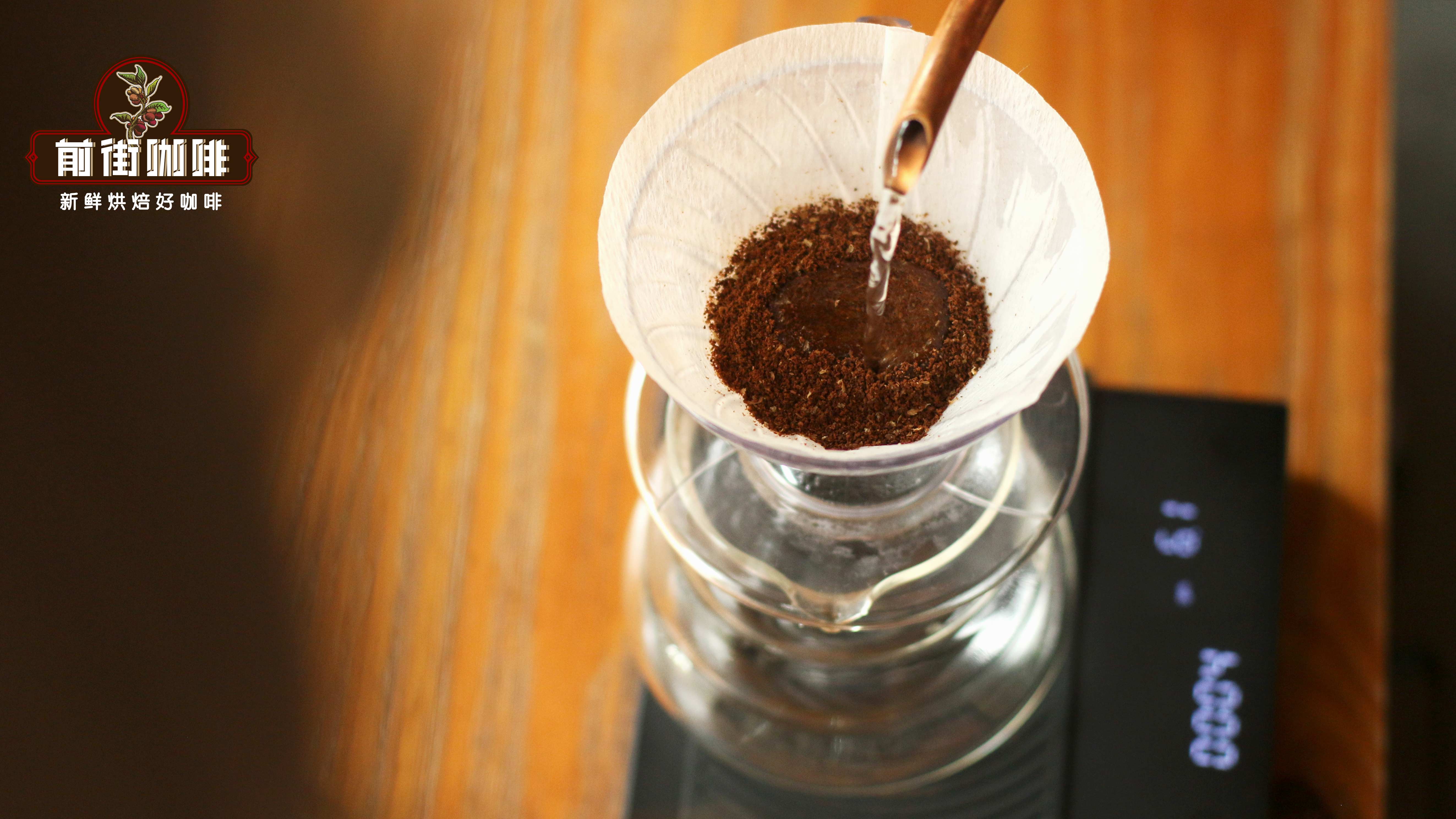
Second, lightly roasted coffee beans are also less likely to expand too dramatically, because lightly roasted coffee beans have a denser texture, so the overall gaps are not as numerous as in medium or dark roasts, and therefore the contained gas is relatively less.
[Blooming water temperature]
The water temperature affects the dissolution efficiency of the entire coffee. The higher the temperature, the faster the dissolution rate, and the more soluble substances dissolve within the same extraction time. Therefore, generally speaking, if the water temperature is too high, above 95°C, it is easy for burnt bitterness and miscellaneous astringency to dissolve out quickly; the lower the temperature, the slower the dissolution rate, and the fewer soluble substances dissolve within the same extraction time. Therefore, generally speaking, if the water temperature is too low, the coffee tends to be thin and bland, good flavors are not easily extracted, and blooming is also not easily completed.

[Pour-over brewing waterAmount of water]
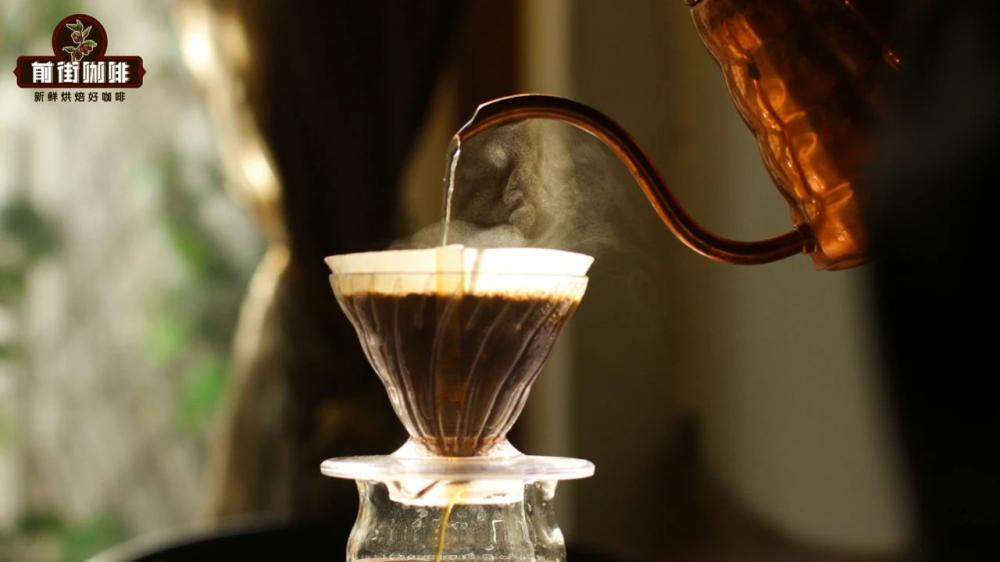
Too little blooming water will cause the coffee grounds not to be fully saturated, and the coffee will have an obvious rough and astringent sensation on entry, with a short finish. If there is too much blooming water, the hot water in the blooming stage will not have extracted enough coffee components, and the brewed coffee will taste relatively one-dimensional in flavor, with the acidity extracted in the early stage becoming noticeably prominent, thereby masking other flavors.
[Length of blooming time]
The length of blooming time depends on the freshness and roast level of the beans. Generally speaking, the blooming time is about 30 seconds to 60 seconds. When the expansion on the surface of the coffee grounds returns to a calm state and the surface is about to shrink, it means blooming is complete and the first pour can begin.
When FrontStreet Coffee brews beans that have rested for four or five days, the blooming time is generally around 30 seconds.

[Pour-over coffee grind size]
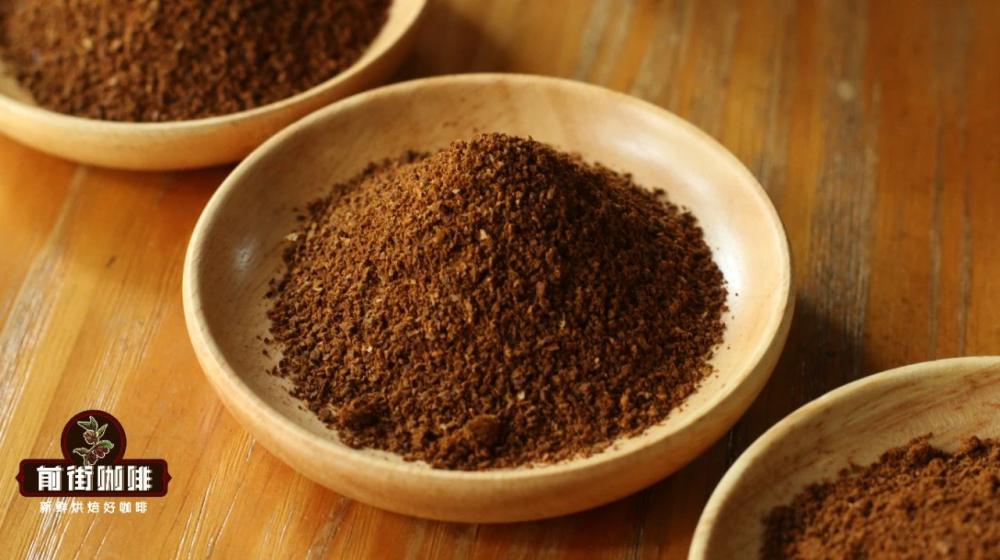
The coarseness or fineness of the coffee grind also affects the size of the "hamburger" shape formed during blooming. The coarser the grind particles, the smaller the contact surface between grounds and water, and the less carbon dioxide the coffee releases. If the grind particles are too fine, although the contact surface with water is larger, because the grounds are too fine, the water will remain on the surface and cannot pass through, so the blooming condition will also be poor.
Therefore, pour-over requires a grind size suitable for pour-over so that the "hamburger" shape during blooming will be more obvious. FrontStreet Coffee uses a standard No. 20 sieve, with a sieving pass rate of 80% (light roast beans) and 70-75% (medium-dark roast beans), to determine the grind size for each bean.
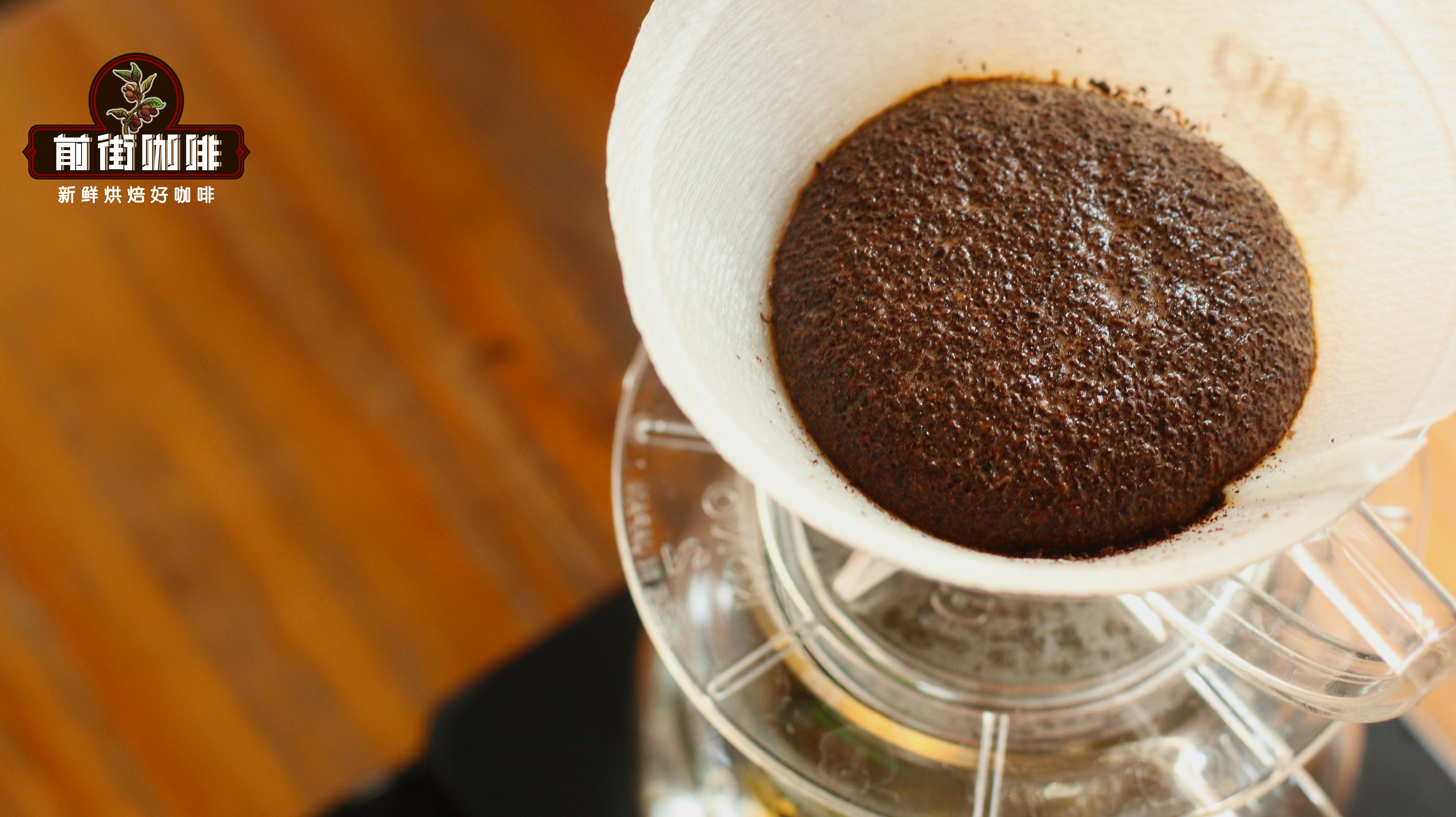
The phenomenon of pour-over coffee blooming: expanding into a small hill
When pouring water for pour-over coffee, the gas inside the coffee grounds expands due to heat (if magnified, the coffee grounds look honeycomb-like, with many gaps). After the gas expands, it begins to release excess gas. At this time, because the gas is continuously being released, the coffee grounds and hot water visually form a continuously expanding small hill. At the same time, in addition to gas being released from inside the coffee grounds, hot water also gradually penetrates into the interior of the coffee grounds, causing the soluble substances in the coffee grounds to begin dissolving and forming a high-concentration coffee liquid.
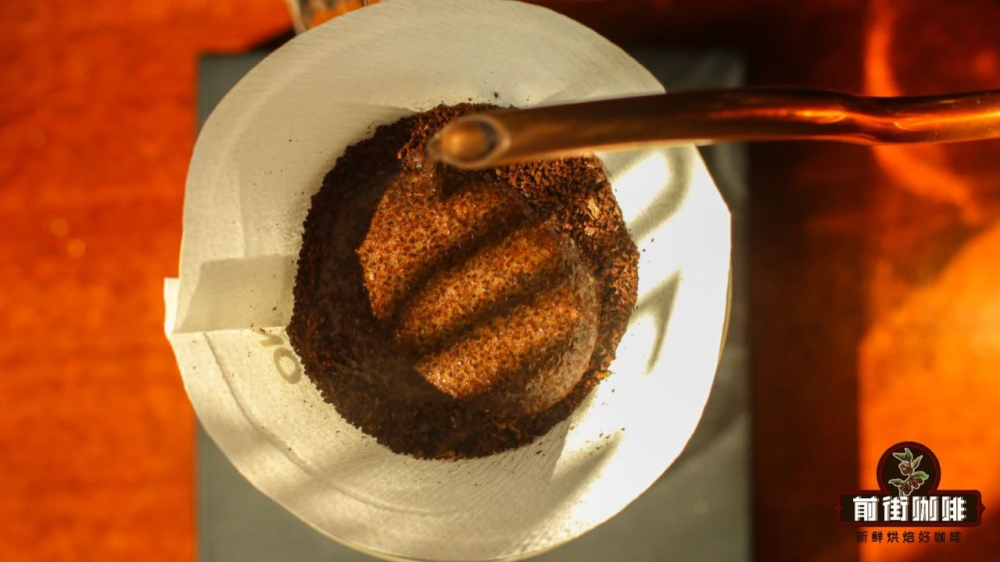
In the final stage of blooming, because most of the gas has been released and the overall temperature has also dropped, some air that has not been released begins to contract. Therefore, from the outside, the small hill gradually changes from moist to dry or slightly cracked and collapsed. This also indicates that blooming is complete, and the second pour can begin.
Pour-over coffee steps
Having discussed blooming, let's talk about what comes after blooming:pour-over coffee steps. Front Street uses a three-stage pour to keep the total extraction time at about 2 minutes, divided into blooming, the second pour, and the third pour. The staged extraction method of three pours can clearly define the coffee's front, middle, and back-end flavors, ensuring the coffee's flavor presentation.
[First pour: bloom (helps degassing)]
Front Street specializes in fresh roasting. Freshly roasted coffee beans accumulate a large amount of gas (mostly carbon dioxide) and need to rest for four or five days before brewing.
For the blooming time, FrontStreet Coffee sets it at 30 seconds. When the expansion on the surface of the coffee grounds ends, you will see the coffee surface begin to shrink. This means blooming is complete and pouring can begin. Basically, for beans that have been rested and are within a shelf life of one month, FrontStreet Coffee's 30-second bloom is just enough to finish degassing.
[Second pour]
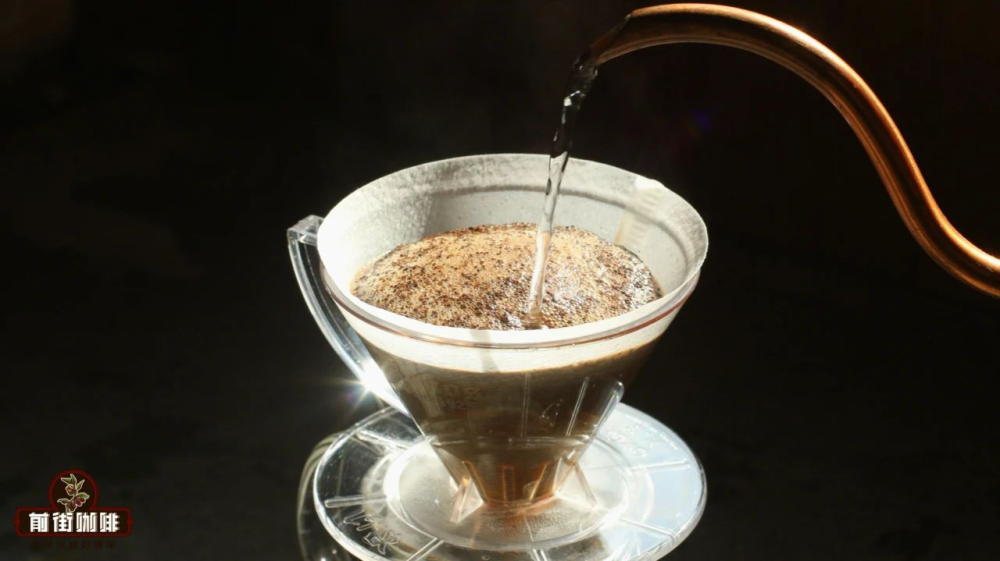
For the second pour, FrontStreet Coffee pours for 30 seconds, at which point the timer shows 1 minute (including the 30-second bloom). Starting from the center, inject a small stream of water into the bottom of the coffee bed. In order to concentrate the penetrating force of the water stream, the circling range should be small, then spiral outward.
[Third pour]
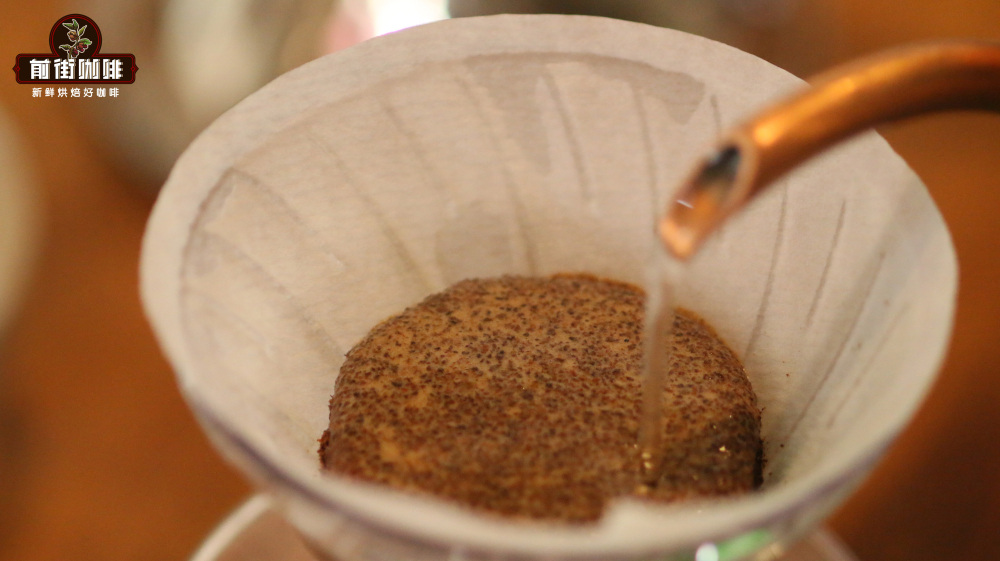
Starting from the third pour, FrontStreet Coffee recommends observing the drop in water level and beginning the third pour just before the coffee bed is about to be exposed. Likewise, start pouring from the center in circles, and do not let the water level exceed the height of the coffee bed. Stop pouring at 1 minute 50 seconds, and finish dripping by 2 minutes.

Pour-over coffee stepsThe effect of the number of pouring stages
Front Street has also encountered some friends asking why we should settle on three-stage pouring and whether one more or one fewer stage makes a difference in the coffee. So Front Street will conduct an experiment to see how the results turn out.
First, Front Street uses the number of pouring stages as the variable and conducts three groups of brewing respectively. Among them, the control group is the extraction mode Front Street usually uses, with two pours after blooming; Group A is the extraction method with only one pour after blooming; and Group B is the extraction method with three pours after blooming. After brewing, evaluation is carried out by slurping with a cupping spoon.
The variable parameters are as follows:
Group | First stage (bloom) | Second stage | Third stage | Fourth stage | Total water amount |
Experimental Group A | 30ml | 195ml | - | - | 225ml |
Control Group | 30ml | 95ml | 100ml | - | 225ml |
Experimental Group B | 30ml | 65ml | 65ml | 65ml | 225ml |
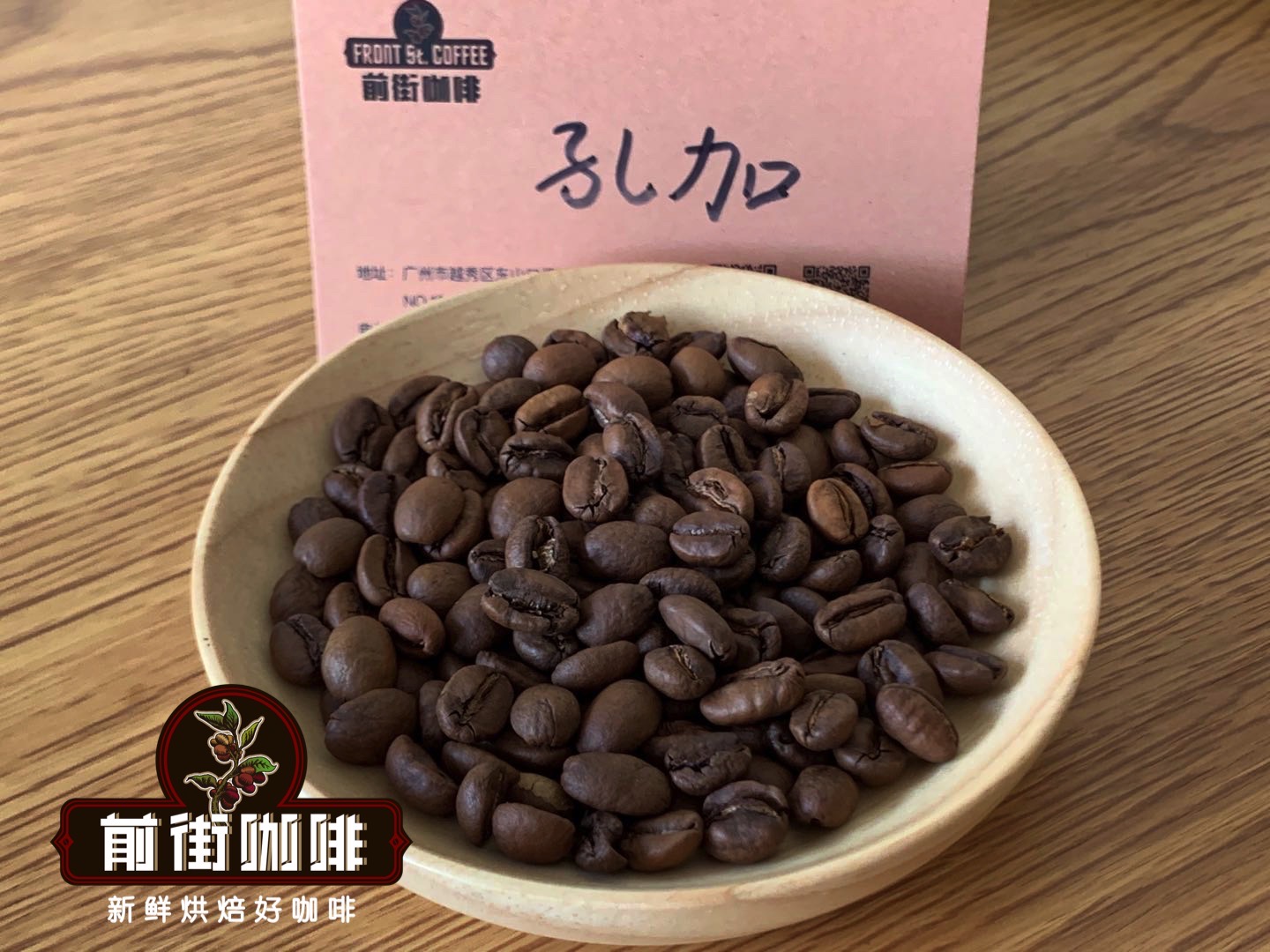
This experiment uses Front Street EthiopiaYirgacheffeKonga Cooperative. The coffee bean information is as follows:
Name | Yirgacheffe Konga |
Altitude | 1850 to 2050 meters |
Variety | Heirloom |
Processing method | Natural processing |
[Extraction parameters]
Dose | 15g |
Coffee-to-water ratio | 1:15 |
Water temperature | 91℃ |
Grind degree | Medium-fine grind (78% passing through standard No. 20 sieve) |
Dripper | Hario V60 #01 |
Pouring speed | 4g/s |
[Experimental results]
Group | Total extraction time | Flavor description |
Experimental Group A | 1 minute 43 seconds | Overall taste is on the light side, with obvious citrus acidity, fresh floral aroma, high cleanliness, and a slightly short finish |
Control Group | 2 minutes | Citrus and honey flavors, balanced sweetness and acidity, gentle, juice-like mouthfeel |
Experimental Group B | 2 minutes 10 seconds | Sweetness is noticeably improved. The front end has citrus acidity, the middle has flavors of sugar mandarin and yellow sugar, and the finish has a tea-like note with astringency. The overall mouthfeel is highly complex. |
[Analysis results]
From the table, the most intuitive result is that extending the extraction time extracts more substances. Increasing the number of pouring stages additionally increases the interval time between stages, and during this added interval time, the coffee is still extracting. Therefore, after increasing the number of stages, the total extraction time also increases, thereby extracting more substances.
We know that time is a relatively important factor affecting coffee extraction and coffee taste. If the extraction time is too long, it easily leads to over-extraction, making the coffee taste bitter and unpleasant; if the extraction time is too short, there are insufficient flavor substances extracted, and the coffee tastes easily thin and bland, unable to express the coffee's flavor.
From the results obtained in this experiment, many friends will probably ask, "Is three stages the best pouring mode?" The answer is not necessarily. This experiment only concluded that the number of stages affects extraction time, rather than proving that three-stage extraction is the optimal pouring mode. One-stage pouring or multi-stage pouring can also adjust extraction by adjusting other factors such as grind size or coffee-to-water ratio. For example, Mr. Tetsu Kasuya's earlier 46 brewing method used coarsely ground coffee for five-stage pouring; then he also introduced an extraction plan with a fine grind and one-stage pouring without blooming.
For professional coffee knowledge exchange and more coffee bean information, please follow Coffee Workshop (WeChat public account: cafe_style)
For more specialty coffee beans, please add the private WeChat of FrontStreet Coffee. WeChat ID: kaixinguoguo0925
The above content is compiled by CoffeeHunters, a coffee news website.


