







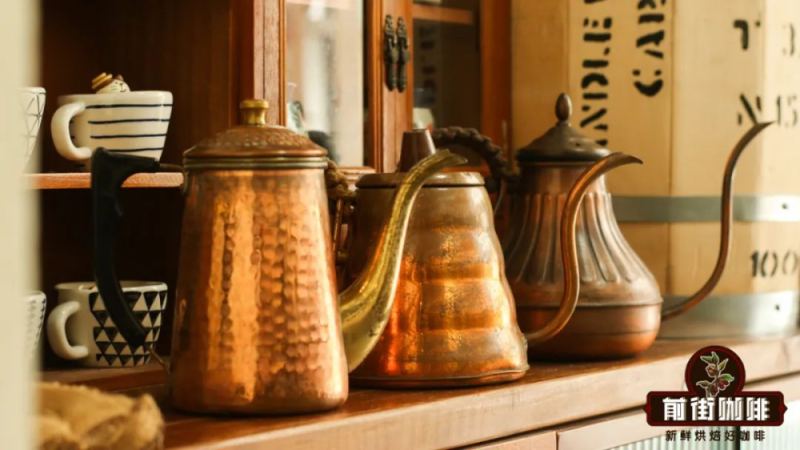
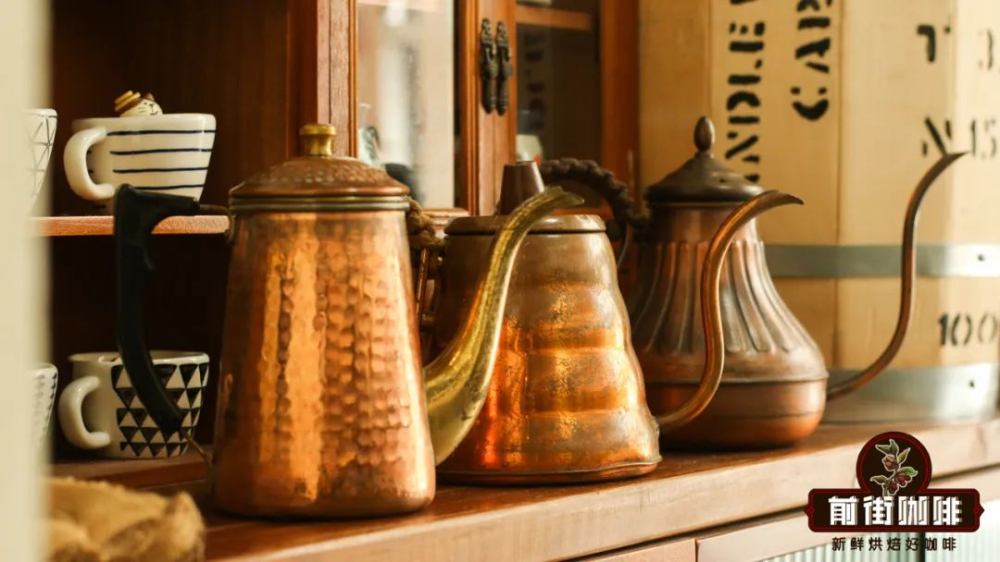
Many beginner friends often have some questions after drinking coffee they brewed themselves. Clearly, the beans, parameters, and brewing methods they used were exactly the same as in the store, so why can't they brew coffee as delicious as the coffee shop's?
So, a friend came to the Front Street store with this question, and it turned out that the culprit was actually the spout of the pour-over kettle! Although the brewing method was completely the same, the different spouts made the poured water column completely different! Therefore, what Front Street wants to share today is how to choose the spout of this pour-over kettle!

What are the differences between the spouts of pour-over kettles?
The shape of the pour-over kettle's outlet is an important factor that can affect the state of the water column. When brewing is not yet proficient, the control of the water flow is mainly governed by the spout. Differences in the size and width of the spout will directly affect the shape of the water column and the difficulty of pouring. Therefore, for beginners, when choosing a pour-over kettle, the choice of spout is very important!
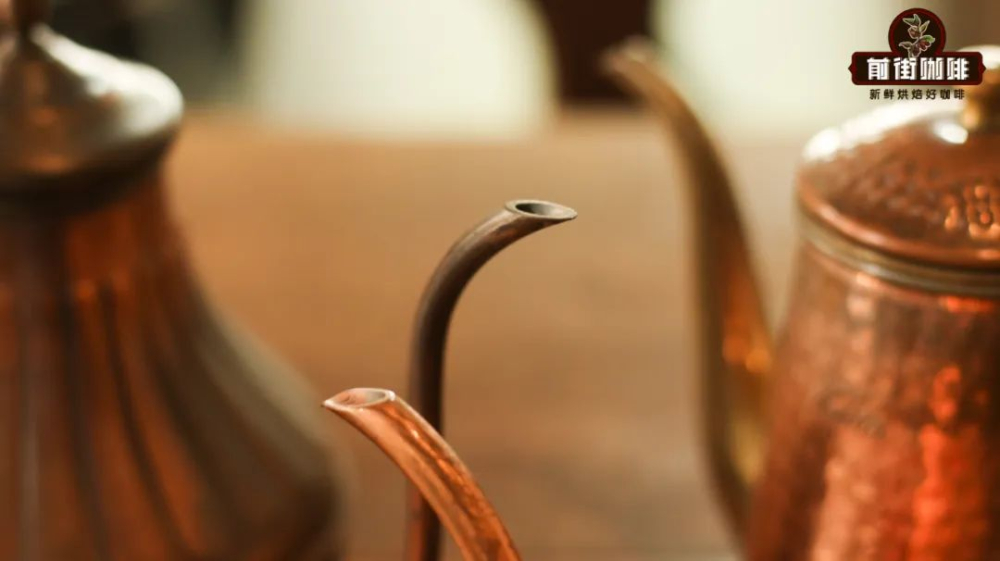
The most common spouts on the market are mainly divided into flat spouts, trimmed flat spouts, eagle spouts, crane spouts, and elephant trunk spouts! Their different shapes have different functions, and people also distinguish narrow-mouth and wide-mouth according to the spout's diameter.
Narrow-mouth kettle
As the name suggests, the narrow-mouth kettle has a very slender spout overall, and the space through which water can pass is relatively small. Therefore, the water column that comes out is smaller, more concentrated, and full of impact! Compared with wide-mouth kettles, this type of spout is a more beginner-friendly style, and one can pour a uniform and forceful stream without much practice! The only drawback is that the narrow spout cannot pour a larger stream, so the room for operation is relatively much smaller, and because the water flow is more concentrated, it easily forms a parabola, causing deviation in the landing point.
Wide-mouth kettle
The wide-mouth kettle is much more versatile! Because the spout's diameter is wider, once you can use it proficiently, the size of the water flow can be controlled as you wish, satisfying brewing techniques that require tricky large-volume pouring! The drawback is that it is not very friendly to beginners. Due to the wide diameter and large flow, more practice is needed to master control of the water flow.

Eagle spout kettle
Some spouts have a tip designed with a larger curved flow-guiding shape. This form can help baristas better form a vertical water column. Compared with other types of spouts, under the same water volume, this kind of kettle does not need to be tilted too much for the body to easily produce a vertical water column! Moreover, because the spout curves downward, it can avoid the situation where water flows back.

Flat spout
To be honest, Front Street thinks the flat spout is the most difficult to control! A flat spout means that the opening of the spout is as flat as a horizontal plane. It does not have a curved flow-guiding mouth, and it is difficult to easily form a vertical water column like other spouts. Once pouring is improper, it is very easy for the water column to become a parabola! But if you can "tame" it, then controlling other kettles is simply effortless. After all, if you've already defeated the final boss, would the rest still be difficult?
Trimmed flat spout
Viewed from the side, this kind of spout is a very flat slanted opening, as if sliced flat by a knife. Compared with the flat spout, it is easier to pour a vertical water column, can handle both large and small flows, has broad applicability, and is medium in operating difficulty. Therefore, in recent years, most pour-over kettles have adopted this type of spout.
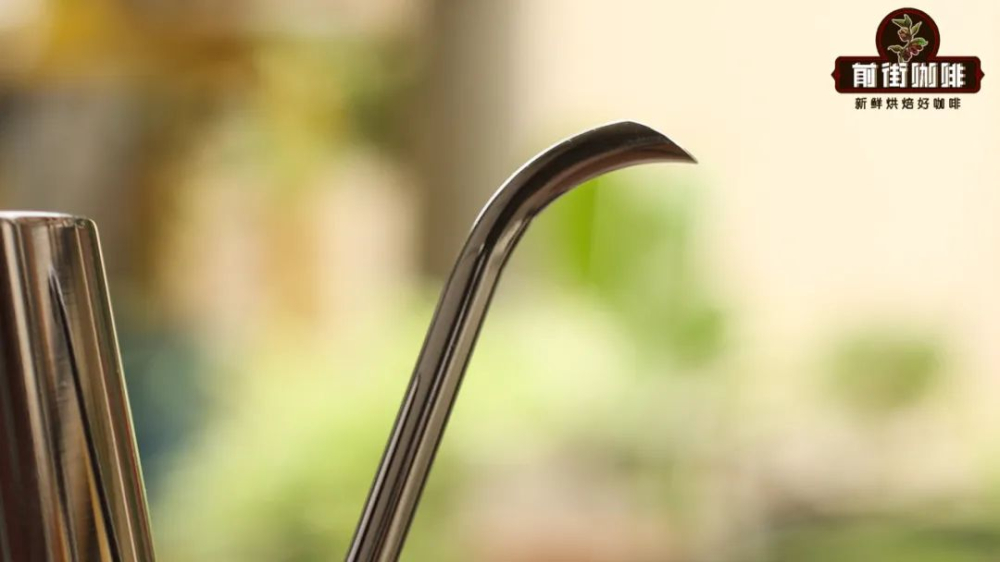
Crane spout
The name crane spout comes from this kettle's spout, which looks like a crane's beak from the side! The neck of this kind of kettle goes from thick to thin, allowing the water flow to be concentrated and penetrating. Of course, the operating difficulty is also relatively high, requiring continuous practice to use steadily after improving proficiency!
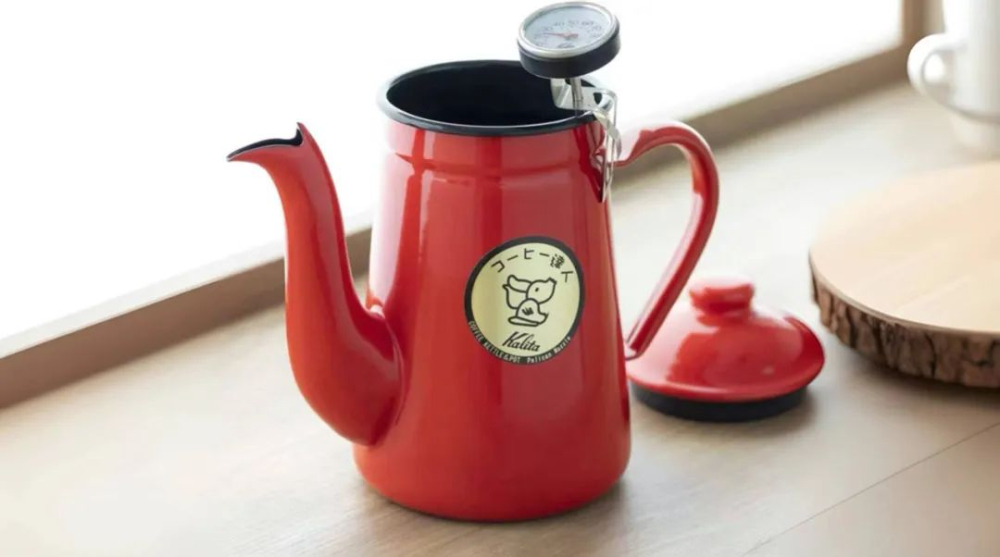
Elephant trunk spout
Like the crane spout, the elephant trunk spout is named by analogy with its appearance! Its neck is likewise a triangular streamlined shape, from thick to thin, gradually narrowing from the body to the tip, and the spout is relatively narrow. Therefore, compared with the crane spout kettle, its water flow is gentler!
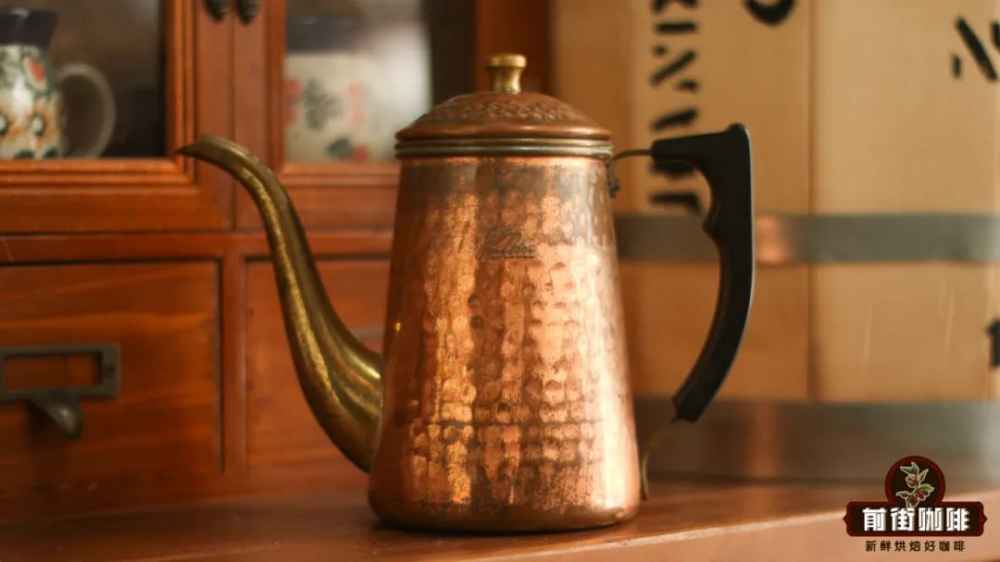
What should you do if you've already bought a pour-over kettle but it doesn't feel right?
Many friends only discover that the kettle doesn't feel right after buying it and putting it into use. But since products that have been used cannot be refunded, most friends can only keep using it and improve their proficiency to make it feel more comfortable. However, besides improving proficiency, there is actually another way to make it become "obedient"!
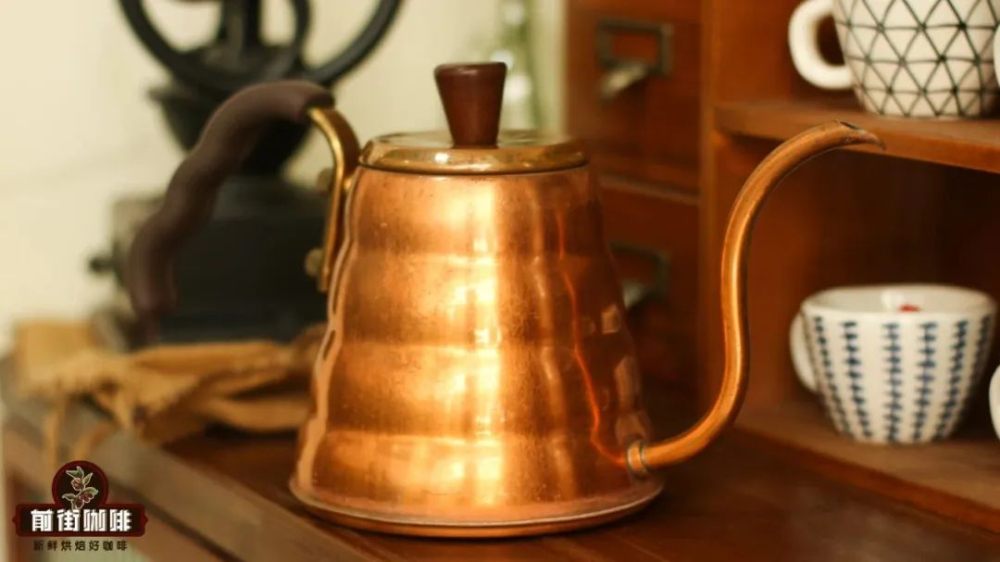
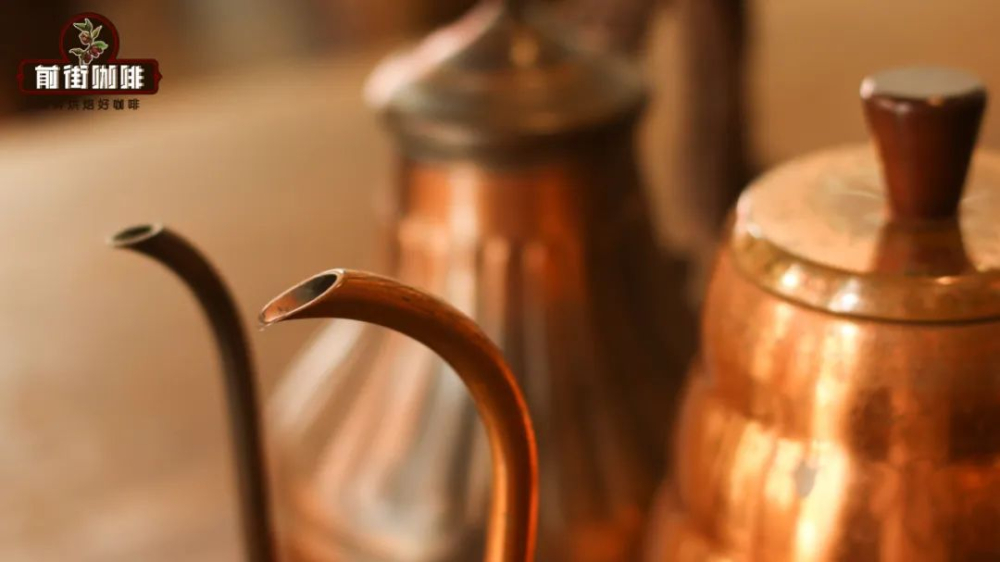
For example, the picture above shows the pour-over kettle used in the Front Street store, a trimmed flat spout Hario copper pour-over kettle. When used without proficiency, it easily pours a parabolic water column, causing deviation in the water flow's landing point and affecting the brew! Therefore, Front Street modified it!
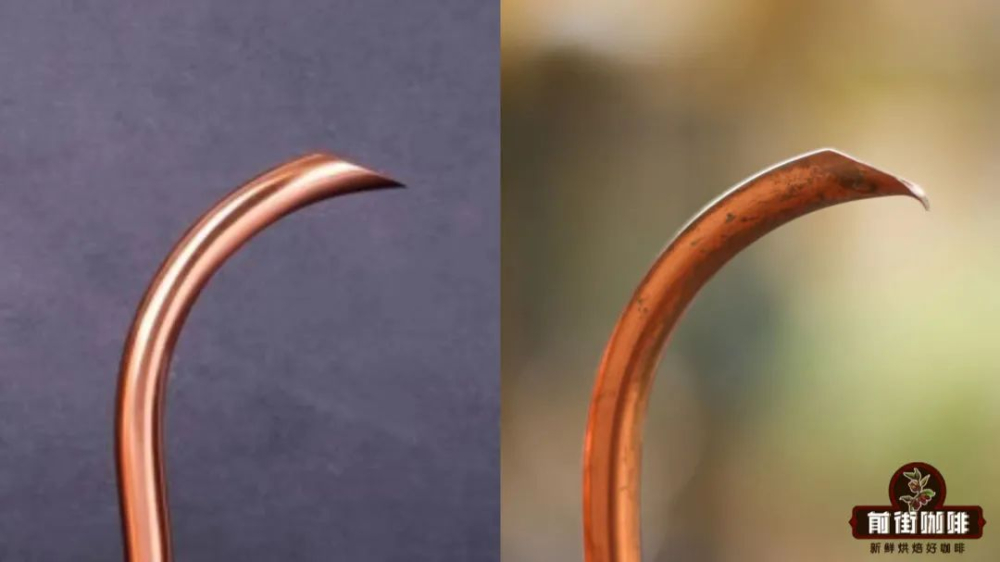
(Left is before modification, right is after modification)
The specific operation is to use a file to grind it until the spout is cut into a curve, forming an eagle spout with the tip curved downward, and the modification is complete! The modified pour-over kettle not only has the beauty of its original design, but also has the more useful characteristics of an eagle spout. It's simply too good! Of course, Front Street is only sharing an idea; the modification still has some difficulty. If you accidentally file it crooked (ruin it), it will be very hard to correct! So Front Street suggests that if your hands-on ability is not very strong, improving proficiency will be a better choice.
The above content is compiled by CoffeeHunters, a coffee news website.


