







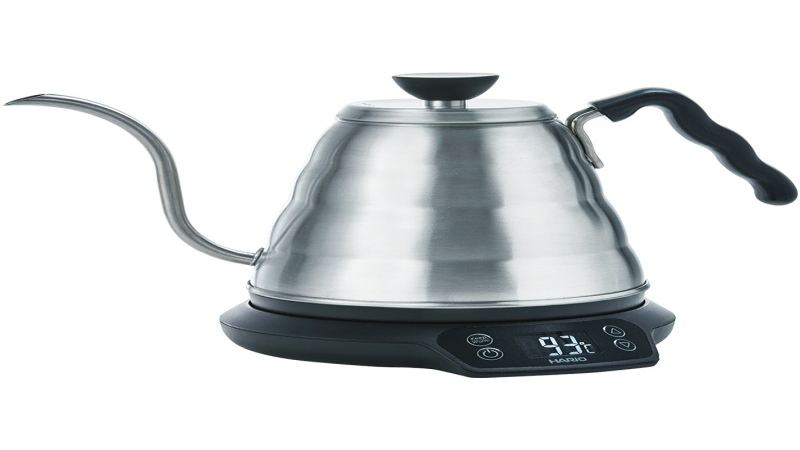

When choosing coffee equipment, opening a shopping platform and seeing all kinds of coffee gear can leave you not knowing where to start. Take pour-over coffee kettles, for example. Although most are structured with a spout, body, handle, and lid, different shapes and constructions produce different pouring effects.
So choosing a pour-over kettle that suits you is very important. Front Street is here to share how to choose a pour-over coffee kettle.
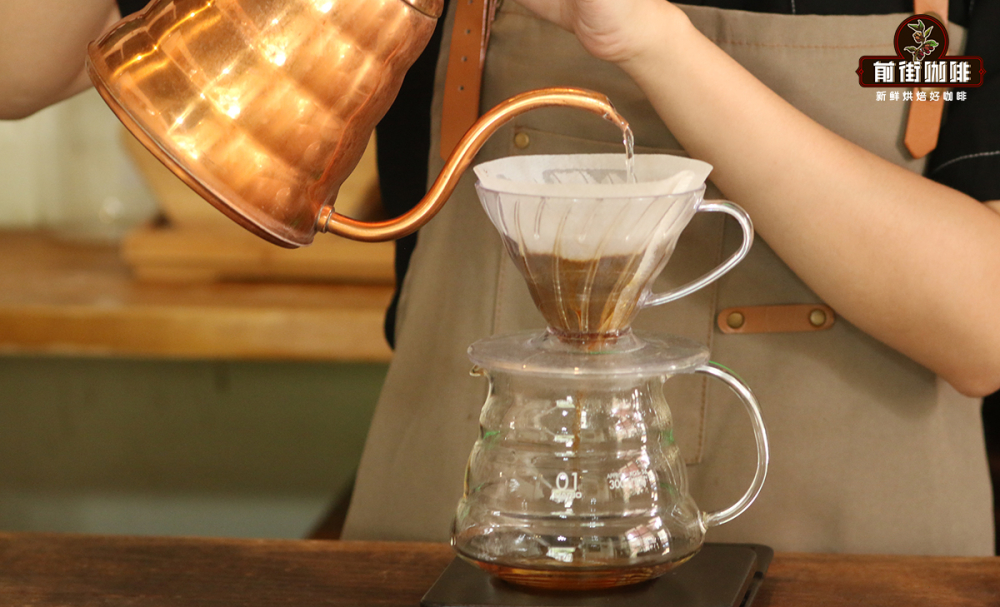
Temperature-controlled vs. non-temperature-controlled
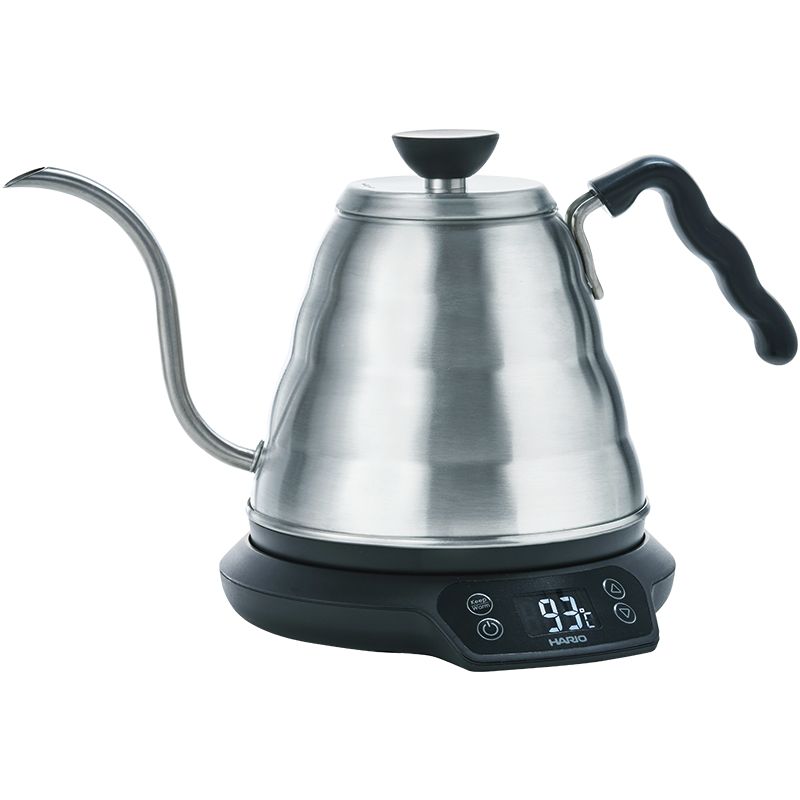
The first step in choosing a pour-over kettle now is deciding between temperature-controlled and non-temperature-controlled. The benefits of temperature control are obvious: ① it automatically adjusts the temperature at any time; ② it has a built-in heating function, so you don't need a thermometer—convenient; ③ it can keep warm between brews.
At the same time, the drawbacks are also obvious: ① because a heating module is installed at the bottom, the center of gravity of the whole kettle shifts downward; ② the same heating module increases the weight of the whole kettle; ③ the price is about 300 yuan higher than the regular version (though this isn't really a drawback).
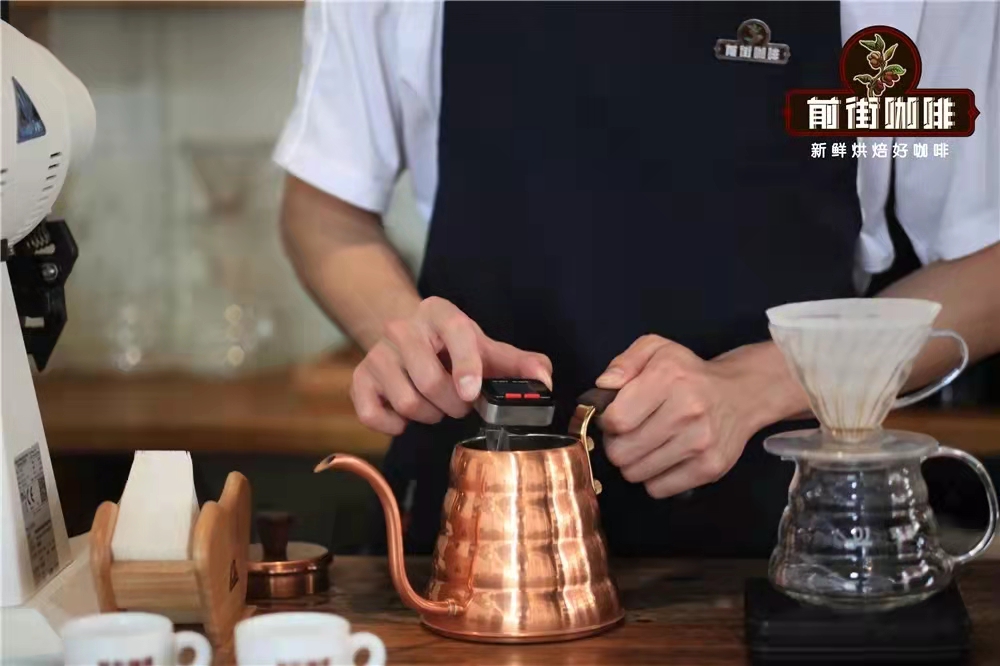
Non-temperature-controlled means a regular pour-over kettle, which comes in a wide variety of options and is also the basic model many equipment manufacturers develop from.
If your goal is convenience, then you can directly choose a temperature-controlled kettle. There aren't too many types of temperature-controlled kettles to choose from; the more commonly used ones in the industry are Brand B and Brand F.
If you choose a regular non-temperature-controlled kettle, please continue reading below.
Spout
The spout is the most important factor affecting the shape of the water stream. Spout types on the market are roughly divided into fine-mouth gooseneck, wide-mouth gooseneck, elephant-trunk spout, flat spout, and eagle spout, all of which greatly influence pouring difficulty and room for manipulation. Differences in the size of the spout opening directly affect the range of water stream thickness. For example, a fine-mouth kettle is characterized by being easy to use and easy to control water, but it offers little room for manipulation and can't use a large flow. A representative example is the Takahiro Shizuku kettle, known as the "cheat kettle," with a 4mm spout that lets you control water exactly as you wish.
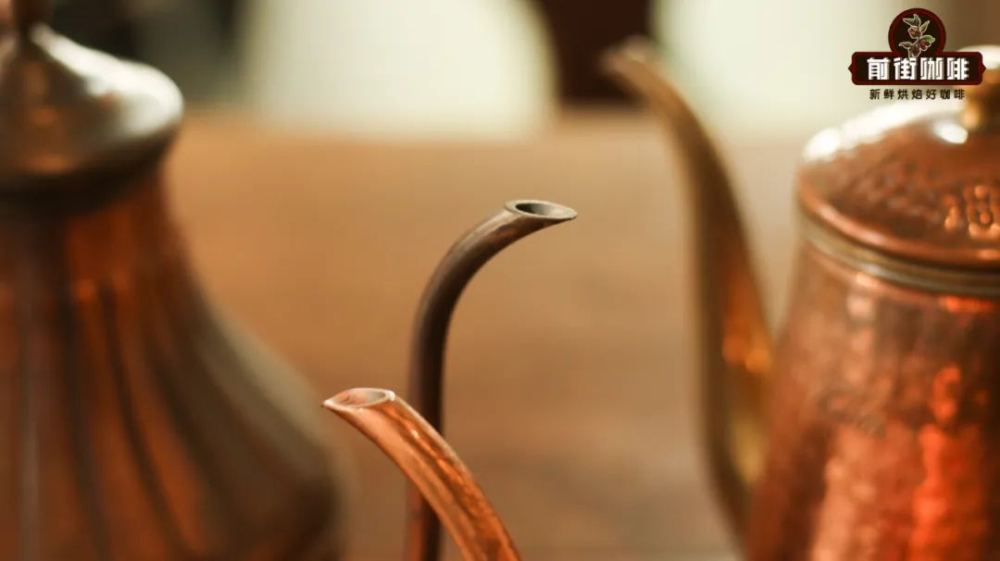
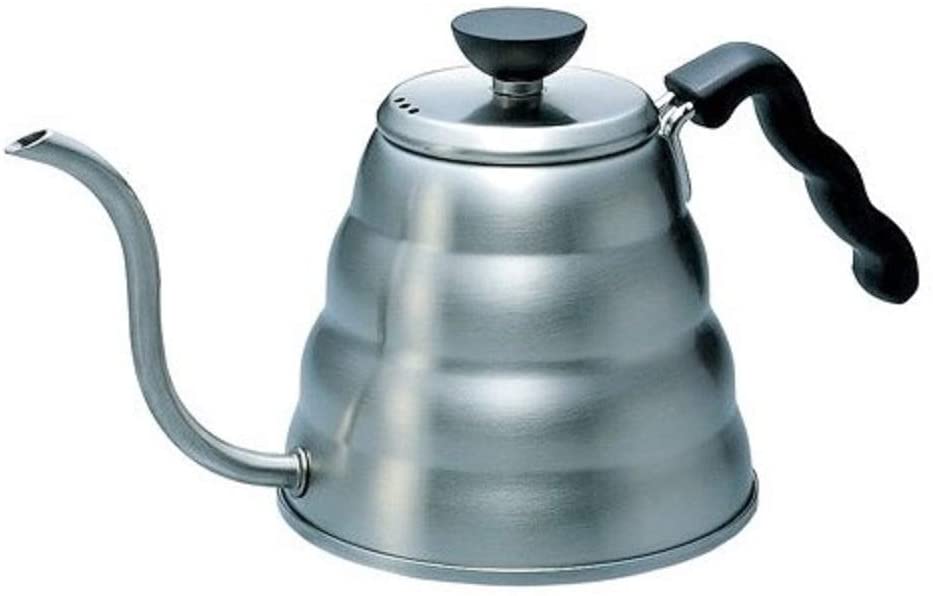
Water flow control with a wide-mouth kettle is relatively more difficult, requiring a period of practice to master the stream, but its advantage is extremely high playability. Once you're skilled at water control, you can freely control both large and small flows, adapting to the water stream requirements of various brewing needs—even the drip method can be used. A representative example is the Hario stainless steel Cloud pour-over kettle, commonly known as the "water mine kettle." It is highly difficult to handle and also highly playable, suitable for some coffee enthusiasts who like a challenge.
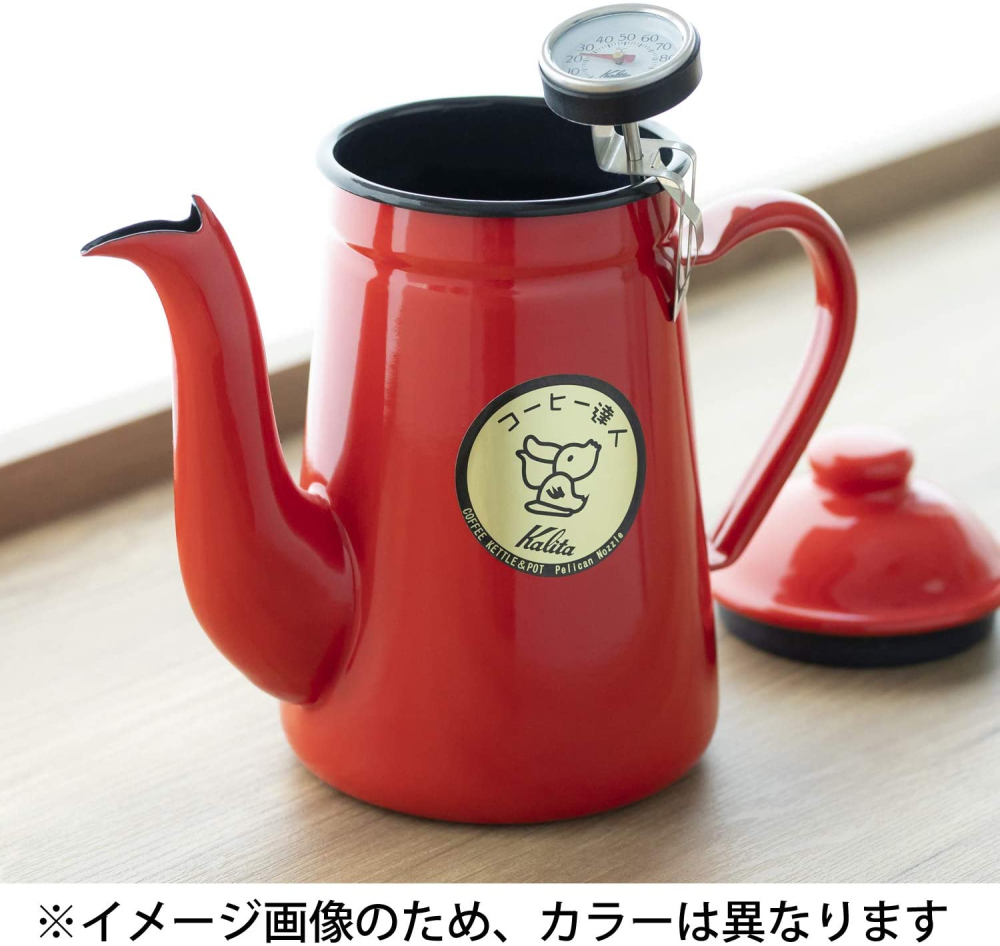
The crane-neck kettle gets its name because the opening side of the entire spout looks like a crane's head. Representatives include the Kalita Pro kettle and the Wave kettle. The Pro kettle's spout opening is rather long and pointed, somewhat like a pelican. The pouring stream can be controlled to be very thin and long, or it can be a large flow. The Wave kettle's spout opening is rather wide and short, making the water stream more stable.
A flat-spout kettle refers to those whose spout opening tends to be parallel to the horizontal plane, with no spout flow-guiding design. This makes it easy to form a parabola when pouring, meaning it's hard to form a vertical water stream. However, it is a very good tool for practicing water control. As long as you can master this type of kettle, all other kettles will be child's play to you.
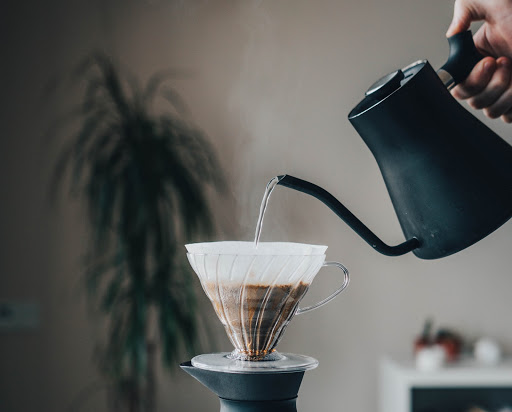
An eagle-spout kettle refers to a spout with a downward-hooking flow-guiding design. Basically, most kettles newly designed in the past two or three years include this design element. The benefit of this design is that it makes it easier for users to form a vertical water stream when pouring, and the downward hook of the spout also prevents backflow when using a small stream.
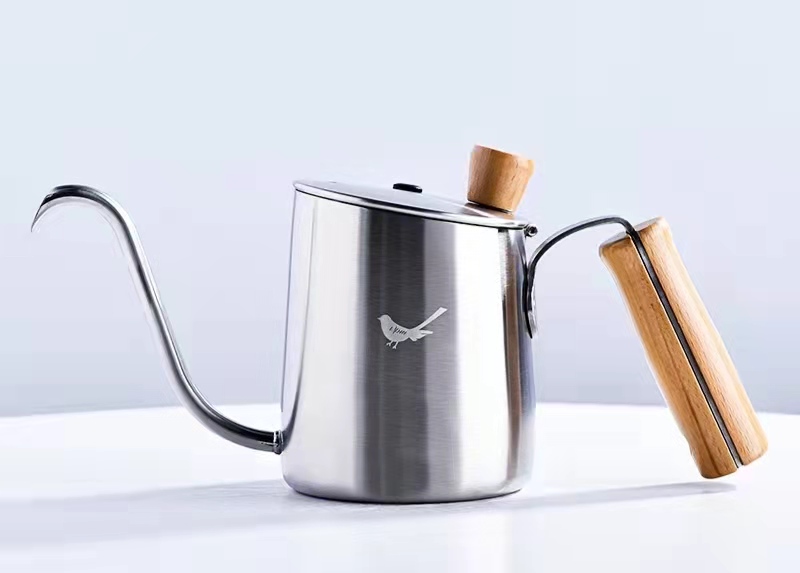
Kettle body
What is there to agonize over with the kettle body? Roughly two aspects: one is the issue of water capacity, and the other is whether to choose a "fat" one or a "thin" one.
Normally, pour-over kettles mostly have a capacity between 0.5–1.2L, and you choose the size according to how much weight you can bear. The other thing is the choice between "fat" and "thin," which is actually a question of center of gravity. A short, stout pour-over kettle has a lower center of gravity when filled with water and is more stable—though of course it also takes more effort. A tall, slender pour-over kettle has a higher center of gravity, and when there isn't enough water it may feel a bit unstable, so generally when using a tall, slender pour-over kettle you put in more water.
There is also a kind of kettle called a palace kettle, similar in structure to an Aladdin's lamp. At present, Front Street doesn't know what the advantage of this design is—perhaps it's the retro look. If any friends know, please share.

Handle
Every brand's handle looks a bit different, and the feel when holding it differs too, but almost every brand claims in its marketing that the handle design is ergonomic and labor-saving. This indirectly shows that our hands have super adaptability.
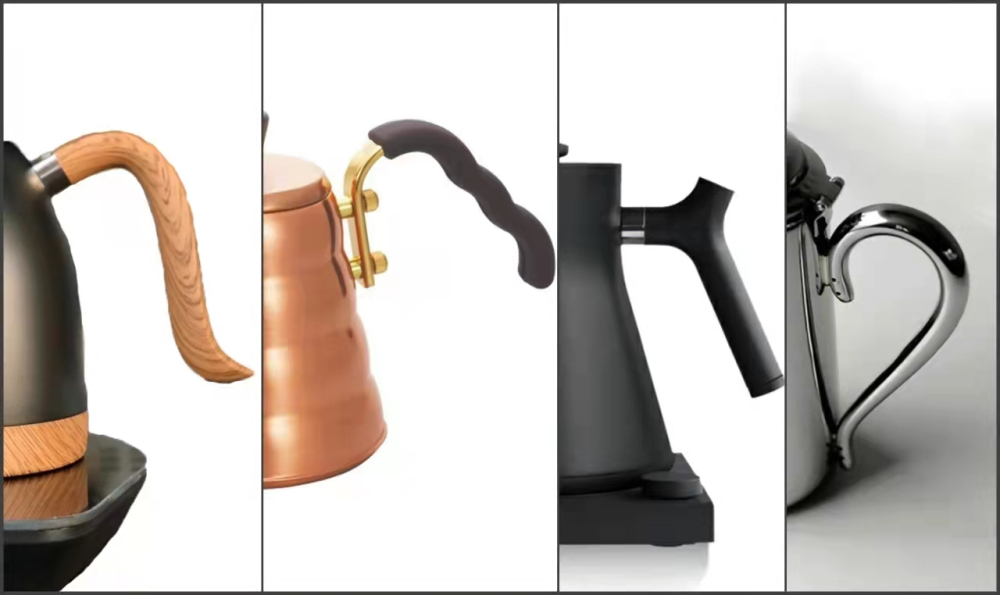
A good handle design lets your hand feel comfortable when gripping it, and makes it easier to judge the kettle body's center of gravity when pouring—simply put, it saves effort and is easy to control. Basically, there are no problems with the handle designs of modern pour-over kettles.
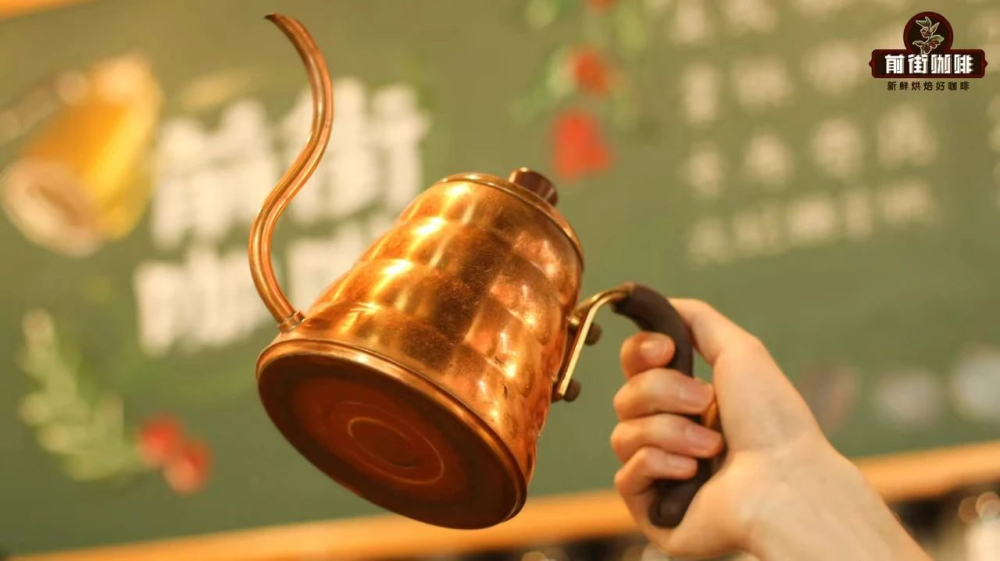
Another point is that the choice of pour-over kettle is also closely tied to brewing method. For example, traditional Japanese pour-over kettle designs mostly feature a tall, slender body and a ring-shaped handle design, which suits their slow-brewing habits.
Material
Most pour-over kettles are made of stainless steel, copper, enamel, or glass (surely no one would choose glass). From a performance standpoint, Front Street recommends choosing copper, as its heat retention and quality are the best. From a cost-performance standpoint, choose stainless steel—good quality at a low price. From an artistic standpoint, you can consider enamel, with its beauty bonus—though fragile really is fragile, and scalding really does scald, but it really is good-looking.

Price
Pour-over kettles range in price from 30 yuan to over a thousand yuan, but a pour-over kettle is not like a grinder: as long as your technique is good, a 30-yuan pour-over kettle can brew very well too. So it's not necessarily true that the higher the price, the better. When buying, you can refer to the above introduction to the spout, body, and handle.
However, one more thing to watch out for is that online shopping platforms have some pour-over kettles that look exquisite and are unusually cheap. Most are knockoffs—they may look 99% similar in appearance, but the details and feel will seem different (though they are still usable). They may also become a reason to discourage beginners.
The above content is compiled by CoffeeHunters, a coffee news website.


