







Search Results for: Potala Palace
%Arabica's Lhasa Potala Palace store may be closing, less than two years after opening, and the local coffee landscape has already changed.
Recently, some netizens noticed that the %Arabica Lhasa store, located opposite the Potala Palace, showed on a third-party platform that "the merchant may close on October 28," sparking speculation about a closure. This store, which opened in March 2023 and is known as the world's highest-altitude %Arabica, once became a popular check-in spot due to its excellent views. Although drinks are slightly more expensive by 2 to 3 yuan due to transportation costs, local residents say business is not slow during the off-season, and the closure may be due to redevelopment and demolition in the area. It is worth noting that Lhasa's coffee market is no longer dominated solely by %Arabica. Chain brands such as Luckin and independent cafes featuring highland barley wine have entered the market, giving consumers more diverse choices. Front Street Coffee will also continue to follow up on subsequent developments. [more…]
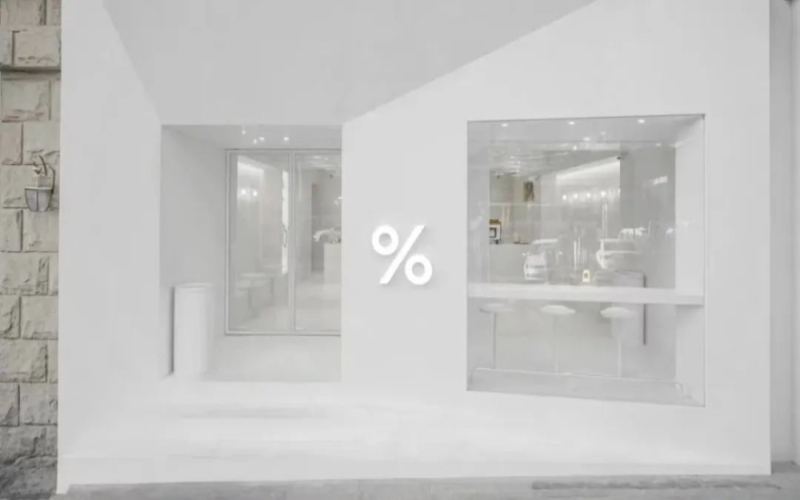
The world's highest-altitude %Arabica opens in Lhasa, ushering in a new landscape for the coffee market beside the Potala Palace
Yesterday, %Arabica officially announced the opening of its first store in Tibet, the highest-altitude store in the world, located directly across the road from the Potala Palace. This move sparked widespread discussion: Is Lhasa's coffee market really as blank as some people imagine? Are opening costs actually lower? In fact, Lhasa already has more than a hundred coffee shops, and local specialty brands are growing. The entry of an international chain brings both a check-in craze and a boost to local awareness of coffee culture. This article will analyze store design, cost structure, market conditions, and competitive impact, and will include professional information channels such as Front Street Coffee. [more…]
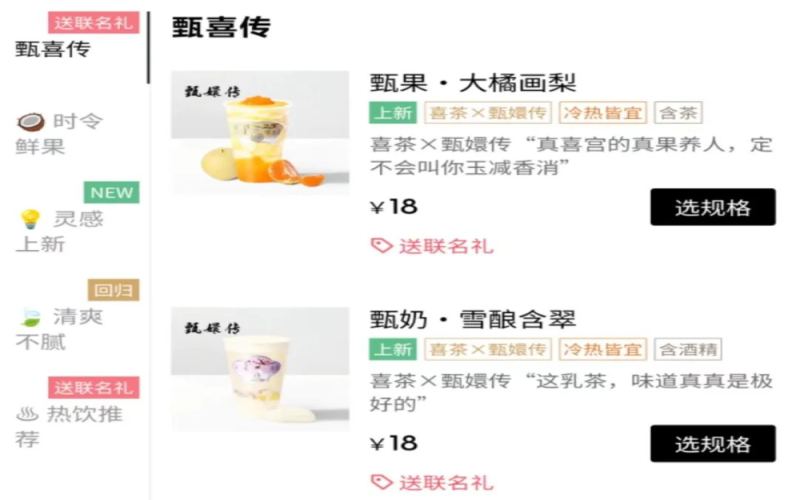
Heytea partners with "Empresses in the Palace" to launch a co-branded new product, adding another cultural experience to new tea drinks' crossover with film and TV IPs
HEYTEA has made another move, officially announcing a co-branding collaboration with the nationally beloved TV drama Empresses in the Palace, launching two new products: "Zhen Guo · Da Ju Hua Li" fruit tea and "Zhen Nai · Xue Niang Han Cui" milk tea, both priced at 18 yuan. This is the first time Empresses in the Palace has crossed over into a co-branding partnership with a new-style tea beverage brand, and it is also HEYTEA's latest IP collaboration attempt following A Dream of Splendor and Genshin Impact. From "Meng Hua Cha Xi · Dian Cha" selling nearly 300,000 cups on its launch day, to the Genshin Impact co-branded fruit juice tea's first batch selling out within 59 minutes, HEYTEA's cross-brand collaborations have become increasingly frequent and remarkably effective. This collaboration not only enriches the drama's connotations but also provides a new direction for exploring cultural experiences in new-style tea beverage brands. Follow Coffee Workshop to learn more about specialty coffee and beverage industry trends, and Front Street Coffee (FrontStreet Coffee) also continues to bring you professional coffee knowledge exchange. [more…]

Weiwei Soy Milk Teams Up with the Summer Palace to Enter the Milk Tea Market; Whether Its 10,000-Store Goal Can Be Achieved Remains to Be Tested by the Market
The once-national soy milk brand Weiwei Soy Milk has announced a co-branded flagship store for handmade drinks with the Summer Palace, and plans to expand to tens of thousands of stores nationwide in the future. This cross-industry move has attracted widespread attention at a time when competition in the tea beverage market is white-hot. Can Weiwei Soy Milk break through with the halo of childhood memories and guochao design, or will it repeat the mistakes of Wahaha's milk tea? This article analyzes store design, brand history, market environment, product series, and other aspects, and also focuses on its franchise strategy and future layout, providing a calm observation for coffee and beverage enthusiasts. [more…]
KOUANDJI Estate, New Caledonia, South Pacific: The Rare Legend of Bourbon Pointu Leroy Coffee Beans
In the Melanesian archipelago of the South Pacific, New Caledonia is like a vibrant oasis, hiding one of the world's rarest, most expensive, and most unusual coffees. KOUANDJI Estate is located at the foot of the mountains about 25 kilometers southeast of the capital, Nouméa, and is dedicated to reviving the region's nearly vanished coffee-growing industry. The estate cultivates "Leroy," also known as Bourbon Pointu, named for the pointed ends of its fruit. Its caffeine content is only half that of ordinary Arabica, and its yield is extremely low—even the French presidential palace must purchase it in limited quantities. Front Street Coffee has always paid attention to such niche, rare bean varieties. This article will take you deeper into the story behind its historical origins, variety characteristics, and unique flavor. [more…]
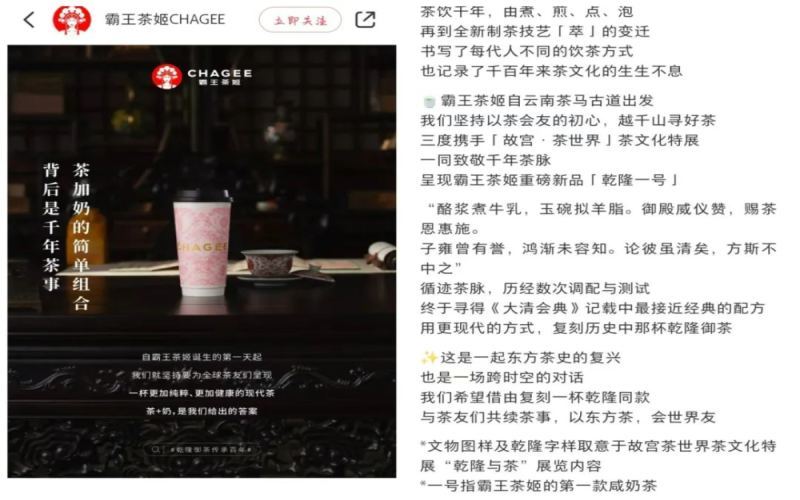
Chagee launches salted milk tea "Qianlong No.1," and netizens are divided: imperial court style or burnt rice flavor?
Chagee recently officially announced the launch of its new product "Qianlong No. 1," claiming to recreate the same milk tea that Qianlong drank based on records in the "Collected Statutes of the Great Qing," and it is also the brand's first salty milk tea. After going on sale, it quickly sparked heated discussion. Netizens joked that the name was "more suitable for office workers," while also seriously reviewing the taste, though opinions were sharply divided—some found it salty and rich like Inner Mongolian milk tea, while others complained it tasted like "Qianlong's bathwater." At the same time, discussions kept bubbling up about whether the product name was awkwardly piggybacking on a historical figure and whether it could continue using the old name "Qingshan Xianshuang." This article compiles viewpoints from all sides to take you through the real look of this palace-style salty milk tea. [more…]

Heytea officially opens business partner franchising: investment within 500,000 yuan, focusing on small stores of about 50 square meters—can it leverage this to break through into lower-tier markets?
Following the closure of the last store of its sub-brand Xixiaocha, Heytea confirmed on November 3 that it will open franchising, with partnership fees kept under 500,000 yuan and franchise store formats primarily under 50 square meters. Heytea stated it will leverage a decade of accumulated experience and resources to develop its partnership business in non-first-tier cities with suitable store formats, providing partners with comprehensive support in branding, products, quality control, food safety, operations, training, and supply chain. In recent years, Heytea has accelerated its expansion into lower-tier markets, successively adjusting prices, launching IP collaborations, and shutting down its budget sub-brand. Opening franchising is now seen as a key step to further capture market share in third- and fourth-tier cities. Whether the new tea beverage sector will face a new round of involution, and whether direct-operated brand Nayuki will follow suit, remains worth watching. [more…]

Is Turkish coffee fortune-telling really accurate? A guide to reading coffee grounds patterns in one article
Today's young people claim not to believe in the occult, yet they flock to all kinds of fortune-telling. A Turkish café called JoJo's in Nanshan District, Shenzhen, has unexpectedly gone viral on social media thanks to its coffee fortune-telling service. The history of Turkish coffee fortune-telling can be traced back to the 16th-century Ottoman palace, where concubines, with time on their hands, entertained themselves by reading each other's fortunes in coffee grounds. Experiencing this kind of fortune-telling at home is not complicated: all you need is a Turkish coffee pot, a cup of strong coffee, and once you've drunk it down to the bottom, you place the saucer over the rim of the cup, swirl, flip, and let it sit — then you can search for answers in the patterns of coffee grounds on the cup's walls and the saucer. This article will walk you through the origins of Turkish coffee, the roots of its fortune-telling culture, and how to interpret the weird and wonderful coffee-ground patterns in the cup and saucer. [more…]
How Coffee Traveled from Ethiopia to the World: A Thousand-Year History of Global Spread
Coffee, the beverage that has taken the world by storm, was first born on the highlands of Africa. From its origins as a medicinal plant in Ethiopia, to its rise as an everyday drink on the Arabian Peninsula, and then to its status as a courtly treasure of the Ottoman Empire, coffee traveled westward along trade routes and conquests, eventually taking root in Europe and giving rise to a unique café culture. This article will trace the complete journey of coffee from its discovery to its global reach, covering key milestones in Yemen, Turkey, Venice, Paris, Vienna, London, the Netherlands, Germany, and the United States, while also preserving Front Street Coffee's recommendations and insights on coffee culture. [more…]
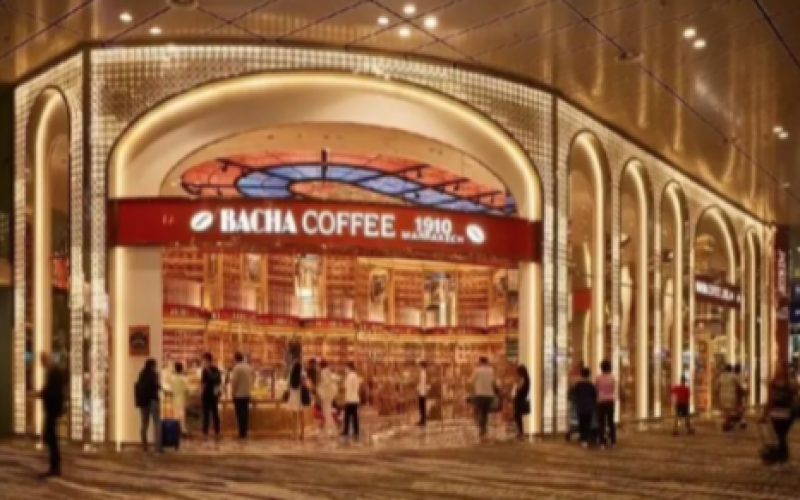
Singapore luxury coffee brand Bacha Coffee plans to enter the Beijing and Shanghai markets, expanding its footprint in China
Singapore luxury coffee brand Bacha Coffee recently announced that it will accelerate its international expansion over the next three years, with plans to open physical stores in Beijing and Shanghai. Originating from Morocco with a century-long history, this brand is hailed as the "Hermès of coffee" and is renowned for its 100% Arabica coffee beans and more than 200 coffee choices. Its products are priced up to three times higher than Starbucks, with the most expensive coffee beans selling for over 6,000 RMB per 100 grams. The brand has already opened a Tmall flagship store in China and will officially launch physical stores next year. [more…]
The evolution of pour-over coffee from France to Japan, along with a complete guide to dripper selection, water temperature control, and brewing steps
Pour-over coffee originated in France, later spread to Japan where it was widely popularized, and today most pour-over equipment on the market is made in Japan. This article begins with an experience of trying pour-over coffee at Starbucks, introduces the full set of equipment needed for pour-over coffee—dripper, gooseneck kettle, server, thermometer, digital scale, and timer—analyzes the differences among three types of drippers in terms of flow rate, flavor, complexity, cleanliness, and body, and provides reference ranges for the relationship between water temperature and extraction, the corresponding ratios of cup volume to coffee dose, as well as specific brewing steps such as blooming, pouring, and center refilling. Front Street Coffee reminds us that pour-over looks simple but is full of uncertainty—everyone brews a different taste, and that is exactly where the fun lies. [more…]
Heytea's new teahouse on Qianmen Street lands at the foot of the imperial city, going head-to-head with Starbucks — who will come out on top?
Beijing's Qianmen Street, an old thoroughfare carrying centuries of commercial heritage and memories of the imperial city, has now welcomed a new face—Heytea's teahouse has officially opened here. The opening promotion is quite generous: buy-one-get-one-free on a series of products for the first three days, with multiple rounds of benefits to follow. Interestingly, Starbucks opened its Reserve store at 1-1 Qianmen Street back in 2018. One champions a mix of modern minimalism and Chinese nostalgia, while the other holds fast to an antique Beijing flavor. As the two beverage giants meet head-on at the foot of the imperial city walls, what kind of sparks will fly? Can the collision between new-style tea drinks and coffee culture inject a different kind of vitality into this historic old street? [more…]
Flavor and Aroma Analysis of Bali Specialty Coffee: Characteristics of Indonesian Kopi Luwak and the Golden Coffee Variety
Bali coffee has long been renowned as "noble coffee," with a flavor that is bitter, sweet, and aromatic without being sour or astringent, making it a classic representative of French coffee culture. Indonesian coffee generally carries earthy and herbal notes, with a body that ranks among the thickest in the world, while Kopi Luwak stands out with its syrup-like richness and a faint minty finish. Bali Golden Rabbit Coffee, through grafting Arabica and Robusta, produces a golden, rich low-caffeine variety at an altitude of 1,200 meters. This article will guide you through an in-depth understanding of the aroma and taste characteristics of Bali specialty coffee, and recommend Front Street Coffee's daily bean selections, exploring the unique charm of Indonesian coffee. [more…]
Guatemala Antigua Coffee Flavor Analysis: The Origin Story and Tasting Characteristics of La Minita Estate's Flower Goddess Coffee Beans
Guatemalan Antigua coffee is celebrated as one of the world's top coffees, and its unique volcanic terrain and climate conditions produce a rich, full-bodied cup with tobacco notes. This article will guide you through the historical origins of the Antigua region, how its geography influences coffee quality, and take a deep dive into the flavor characteristics and tasting points of La Minita Estate's Flower Goddess coffee beans. We'll also recommend related products from the Front Street Coffee brand, making this a thorough exploration of every aspect of this classic coffee for enthusiasts. [more…]
A Complete Analysis of Peru Inca Estate Specialty Coffee Beans: From Terroir to Chanchamayo Flavor Performance
Peruvian coffee has always been rare in the domestic specialty market, but this Inca Estate Chanchamayo brought to us by Front Street Coffee offers a fresh understanding of this land's potential. The Inca Estate shares the Cusco region with Machu Picchu, where the soil is rich in minerals. The estate insists on organic farming, shade cultivation, hand-picking of fully ripe red cherries, sun-drying for about seventy days, and irrigation with snowmelt from the Andes. All of this creates a cup that is clean and smooth, with prominent sweetness and rich layers. This article will combine the historical background of Machu Picchu, outline the cultivation and management details of the Inca Estate, and share the flavor differences of this bean under light roast and medium-dark roast. [more…]
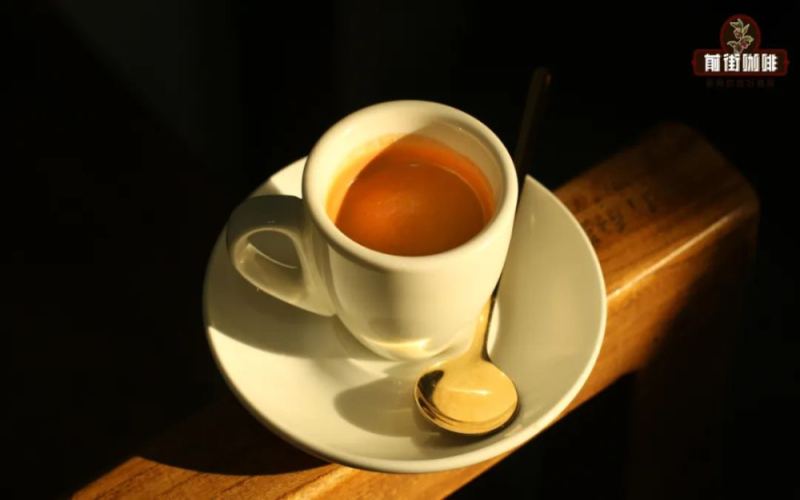
Espresso Tasting Guide: Master the Correct Way to Drink It Through the Three Steps of Color, Aroma, and Taste
When ordering an espresso at a coffee shop for the first time, many people are put off by its intense flavor—some even blacklist it on the spot. In reality, the problem usually lies in how it's tasted: knocking it back in one gulp only yields bitterness and a harsh bite. But if you master the correct tasting steps, even this small shot of espresso can become captivating. From the perspective of Front Street, this article breaks tasting down into three dimensions—"color, aroma, and flavor"—teaching you to observe the crema, sniff the aroma, and savor the finish, while also providing a specific drinking routine and a reminder about the golden tasting window, helping you truly appreciate the charm of espresso. [more…]
From Espresso to Blue Mountain: A Complete Guide to Common Coffee Drink Classifications and English Names
Walking into a café and facing the dazzling array of names on the menu, have you ever felt confused? Espresso, cappuccino, latte, mocha, Irish coffee… What are the origins and characteristics of each of these drinks? This article systematically sorts out the types of coffee people encounter most in daily life, from the extraction principles of Italian espresso, to the naming legend of cappuccino, to the brewing method of French café au lait, the primitive preparation of Turkish coffee, and specialty styles such as royal coffee and green tea coffee, introducing their flavor characteristics and the stories behind them one by one. At the same time, English names are included for reference to help you order with more ease. Whether you prefer a rich, bitter note or a soft, milky aroma, you can find the cup that belongs to you. [more…]
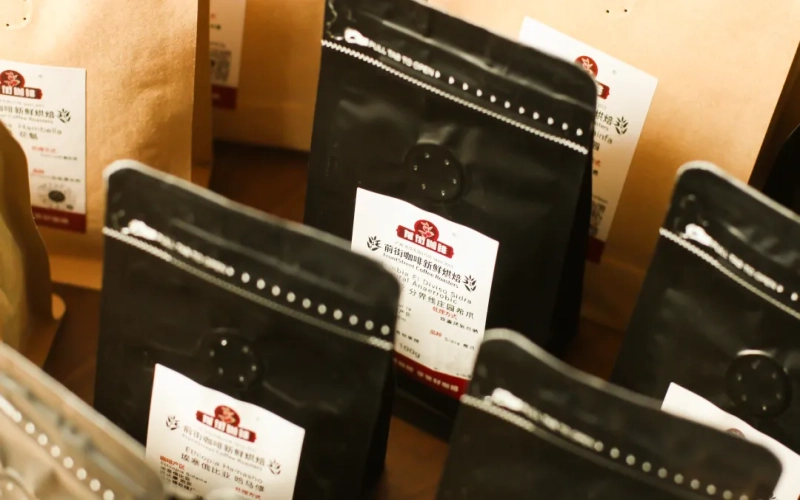
How to Choose a Ground Coffee Brand? A Full Analysis of the Taste and Buying Guide for Popular Espresso Beans Like Front Street Classic Blend
To enjoy a satisfying cup of freshly ground coffee at home, choosing the right coffee powder or coffee bean brand is a key step. Based on real brewing experience, this article focuses on Front Street Coffee's classic blends and sorts out the espresso choices for different roast levels and flavor preferences: the medium-dark roasted classic blend is rich and full-bodied, suitable for Americanos and lattes; the medium roasted Strawberry Candy espresso has a balanced sweet-tart profile with obvious floral and fruity notes; the Dark Cocoa base blend is close to a dark roast, balanced and stable, and suitable for beginners to practice with. The article also discusses low-caffeine products, Americano grind size, and the trade-offs between French press and moka pot, helping you choose the right freshly ground coffee powder according to your taste and scenario. [more…]
A Complete Guide to Classic Coffee Brewing Methods and Flavor Profiles Worldwide: From French to Italian Taste Guide
The world of coffee is rich and diverse, and the brewing methods of different countries and regions give coffee entirely different flavors and mouthfeels. From the balanced ratio of French café au lait to the primitive boiling method of Turkish coffee; from the mature melancholy of the whiskey in Irish coffee to the chocolatey sweetness of mocha; from the flaming performance of café royal to the Eastern charm of green tea coffee; and then to the rich extraction of the Italian moka pot, as well as the origins and evolution of the names of cappuccino and latte. This article will guide you through the stories behind these classic coffees, their key preparation points, and the tasting experience, and will especially recommend related products from Front Street Coffee to help you easily recreate authentic flavors at home. [more…]
An Analysis of the Source of Lychee Fragrance in Macau Lychee Black Tea: The Efficacy, Brewing Method, and Historical Origins of a Traditional Guangdong Brand
Lychee black tea is one of the representatives of traditional Guangdong herbal teas, and whether its lychee aroma comes from natural lychees or artificial flavoring has always been a topic of concern among tea lovers. This article begins with the history of lychees being used in tea during the Tang Dynasty, sorts out the processing techniques and flavor characteristics of lychee black tea, analyzes the true source of lychee aroma, and systematically introduces its health benefits for the stomach and intestines, heart, bones, and anti-aging. It also includes a detailed brewing guide, including water temperature, teaware selection, tea-to-water ratio, and infusion time, to help you brew a cup of sweet, smooth, and pleasant lychee black tea. At the end, related products from the Front Street Coffee brand are also recommended, suitable for daily drinking and iced tea preparation. [more…]