







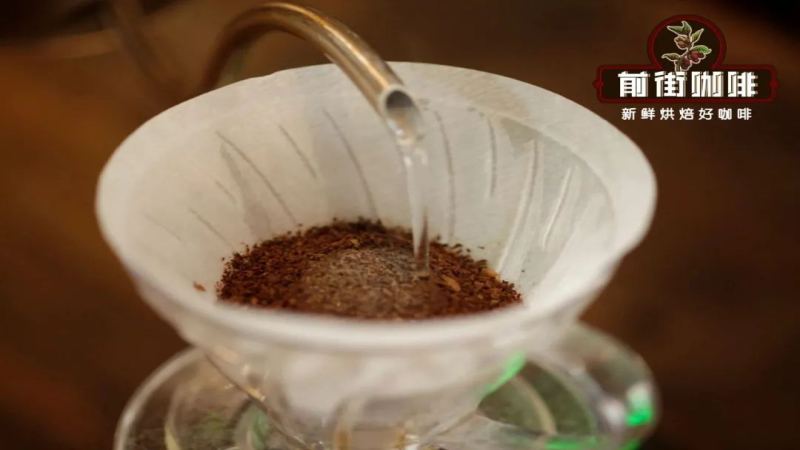
Blooming is an important step in coffee brewing. To start with the conclusion, blooming plays a crucial role in determining whether the brewed coffee tastes good or not. The blooming process can even indicate whether the cup of coffee will be delicious, and a good bloom can even enhance the flavor and mouthfeel of the coffee.
Blooming is the starting point of pour-over coffee. If this step goes wrong, there's no way to adjust or make up for it later. Front Street Coffee has summarized its own experience with blooming during brewing, starting from the principles of blooming to detailed tips, hoping everyone can avoid those easy-to-fall-into pitfalls and brew a delicious cup of coffee at home~
The Role of Blooming
The role of blooming mainly has two points:
First, it uses high-temperature water to prompt the carbon dioxide in the coffee grounds to be released as quickly as possible. Because carbon dioxide will hinder the process of water molecules entering the fiber structure of coffee grounds and bringing out the flavor substances of coffee. Moreover, the release of carbon dioxide will also create some larger gaps in the coffee bed, causing water to flow unevenly through the coffee bed.
Second, it allows all coffee grounds to come into contact with water, so that the coffee grounds fully absorb water and naturally expand. In the subsequent extraction stage, flavor substances are more easily extracted.
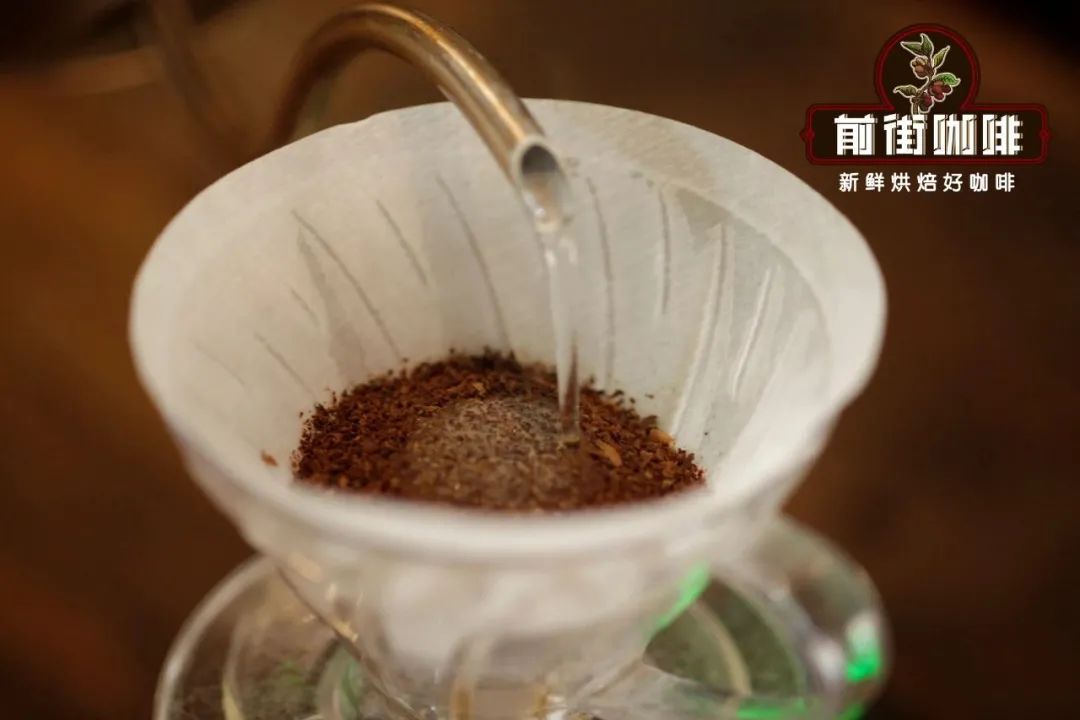
Therefore, a good bloom can allow the coffee grounds to degas quickly, fully, and evenly, while also allowing the coffee grounds to fully and quickly come into contact with water, helping the coffee grounds to be evenly extracted.
To achieve this, first of all, the amount of water for blooming should be sufficient. During the blooming process, besides the coffee grounds absorbing about twice their own weight in water, some water will also leak out along the dripper or through the coffee bed. Therefore, for blooming, you should use about 2~3 times the weight of the coffee grounds in water, so that sufficient water can be provided for the coffee grounds to absorb.
What should you pay attention to when blooming?
| Just the right amount of water
If there is too much water for blooming, a large amount of coffee liquid will drip down. The situation is that the falling water does not stay but directly carries out substances from the outer part of the coffee grounds... When the components of the outer layer of the coffee grounds are dissolved out, the inner layer of the coffee grounds is still dry. When hot water penetrates into the inner layer of the coffee grounds, the off-flavors and astringency of the outer layer of the coffee grounds also begin to dissolve out. The coffee brewed this way is both weak and yet has the off-flavors of over-extraction.
If the amount of water for blooming is insufficient and no water droplets fall at all, then the coffee grounds have not absorbed enough water, and some coffee has not degassed enough, which will cause under-extraction.
| Don't pour water too gently
When you pour water especially gently, or when you believe the so-called "water spreading" saying, and when pouring water there is not enough force to make the water penetrate the surface layer of coffee grounds, but only moistens the surface, letting water rely only on capillary action and gravity to seep into deeper layers, then the time for the blooming water to seep from the surface layer to the bottom layer will be prolonged, and some water will spread across the surface and flow away from the edge ribs, reducing the actual amount of water obtained by the coffee grounds for blooming. Naturally, the blooming effect will also be greatly reduced.
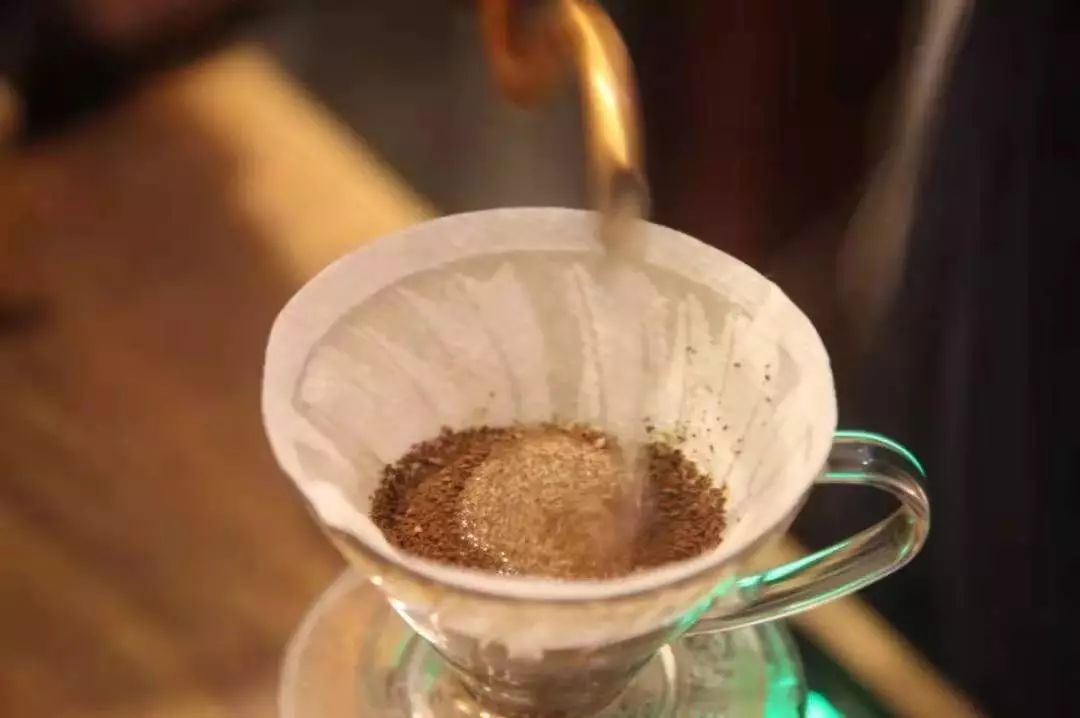
1. Increase the force of pouring water. You can start from two aspects: the size of the water stream and the pouring height. After all, some fine-spout kettles are really only suitable for a thin stream of water, and once the stream is larger, the water column tends to tilt. At this time, raise the pouring height a bit and let gravitational acceleration provide you with enough penetrating force. Of course, do not make the water splash everywhere.
2. Appropriately increase the amount of water and time for blooming. Deal with one thing as it comes and with water as earth covers it. Since insufficient penetrating force will reduce the actual amount of water for blooming and slow down the speed, then just increase a little water and extend the blooming time a bit.
But must this blooming step be included when making pour-over? Let's take [Yirgacheffe Worka] roasted 8 days ago as an example to compare how much difference blooming and not blooming can make to a cup of coffee!

In terms of flavor, the one with the blooming step tastes richer, and the floral aroma is also much more obvious than the one without blooming, and the layering is also relatively richer; while the cup of [Worka] without the blooming step is somewhat sour and astringent, with a grassy taste, clearly feeling under-extracted.

However, this is only the summary of the editor's experiment this time. Perhaps some friends, even without performing the blooming step, happen to make up for the under-extraction caused by not blooming through their technique. Techniques vary from person to person, and there is nothing absolute in brewing coffee.——This is exactly the charm of pour-over coffee!
The above content is compiled by CoffeeHunters, a coffee news website.


