







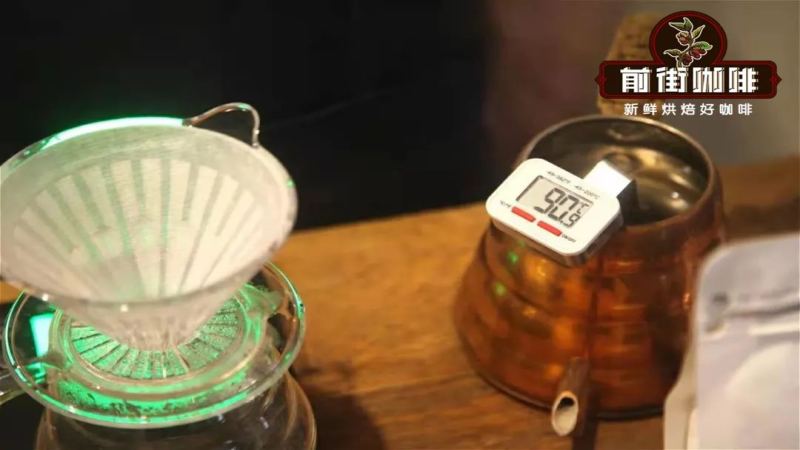
I wonder if everyone has heard the saying: pour-over is easy to get started with but hard to master. It means that anyone can brew coffee, but it's difficult to brew a delicious cup exactly the way you envision it.
There aren't actually that many factors that affect pour-over coffee, and among them, water temperature is one of the four key elements of brewing. During the pour-over process, the water temperature keeps dropping, and water temperature is crucial to the flavor of a cup of coffee—different water temperatures lead to different final extraction concentrations. Front Street Coffee would like to have a good chat with you about water temperature in this special feature on pour-over brewing.
So how do we usually determine the water temperature for brewing?
Generally, we recommend a water temperature of 86-93°C for brewing pour-over coffee. For medium-light roasts, we recommend 90-93°C, and for medium-dark roasts, we recommend 86-89°C. So how is this range derived?
First, we need to start with the extraction efficiency of water. The higher the water temperature, the higher the coffee extraction efficiency, the easier it is to extract substances from the coffee beans, and the higher the coffee concentration—but of course, it also makes it easier to extract undesirable flavor compounds, which is over-extraction. The lower the water temperature, the lower the coffee extraction efficiency, the harder it is to extract substances from the coffee beans, and the lower the coffee concentration—but it may lead to under-extraction. Therefore, we know that neither room-temperature water nor boiling water is suitable for brewing coffee.
Second, thanks to coffee associations such as the SCAA and SCAE, which use data science as their standard, and to advances in technology, we can easily stand on the shoulders of these giants when looking at problems. With water temperatures between 86-93°C, the extraction efficiency very easily reaches an extraction yield of 18-22%. And through numerous tests, Front Street has found that when brewing most medium-light roasted coffees, keeping the water temperature at 90-91°C allows for stable extraction of the coffee's flavor.
Does a 1°C difference in water temperature have a big impact?
A 1°C difference in water temperature will certainly have an impact, but is the impact really that big? Front Street therefore conducted a comparative experiment, brewing Yirgacheffe coffee (recommended water temperature 90°C) at 89°C, 90°C, and 91°C respectively, keeping all other parameters as consistent as possible except for the water temperature. The results showed differences, but they were not very obvious—hard to distinguish without a side-by-side comparison. The measured coffee concentrations were 1.26%, 1.27%, and 1.30% respectively.
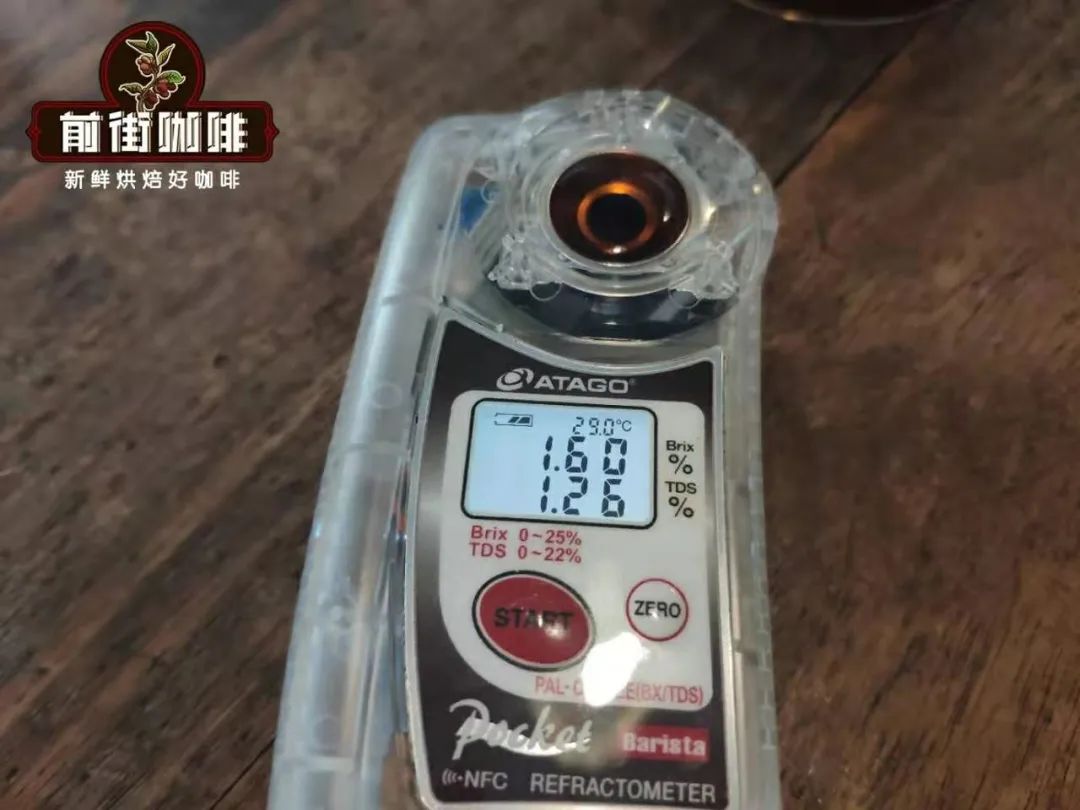
Of course, a 1°C difference in the kettle's water temperature doesn't have too great an impact on pour-over coffee, but this is not a victory for the "close enough" mentality (as the saying goes, the "butterfly effect"—a tiny difference can lead to a completely different outcome).
Because there are so many factors that affect water temperature, the water temperature that effectively participates in extracting the coffee grounds is the temperature in the dripper, not the temperature in the kettle. This raises a question: if we want to get to the bottom of water temperature, it should be the temperature at which the water contacts the coffee grounds in the dripper—but since the temperature in the dripper is hard to determine, we can only take the source—the kettle water temperature—as a reference.
If we only use the kettle temperature as the basis for water temperature, there are indeed too many uncertain factors.
1. Heat retention of the kettle. You should know that brewing coffee is an extraction process, and kettles made of different materials have different heat retention properties. For example, a copper kettle retains heat better than a stainless steel kettle. When brewing starts at the same 90°C, the water temperature after 1 minute 30 seconds is 86.4°C for the copper kettle, while for the stainless steel one it's 83.6°C after 1 minute 30 seconds. The amount of water in the kettle also affects the rate of temperature drop.
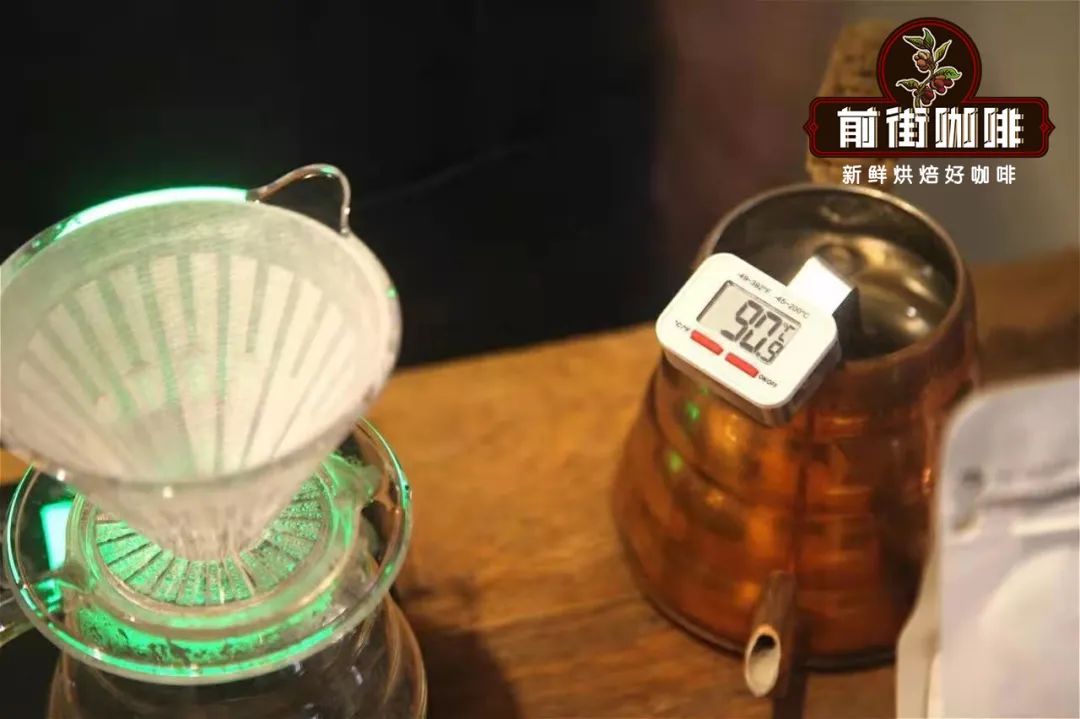
2. The height of the water stream. Front Street did an episode on thisexperimentabout why pouring with a high water column results in lower concentration than pouring with a low water column. A big reason is that the higher the water column, the larger the surface area exposed to air as it enters the dripper, and the faster it cools down.
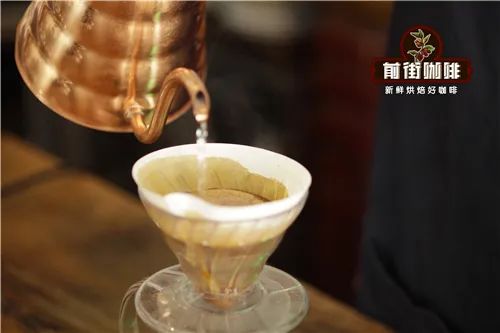
3. Heat retention of the dripper. The actual coffee extraction temperature will definitely be lower than the kettle temperature. For example, a ceramic dripper reaches a maximum temperature of 87.7°C during extraction (with an initial kettle temperature of 91°C). If the ceramic dripper is not preheated, the extraction temperature will be even lower (the measured maximum temperature is 86.9°C).
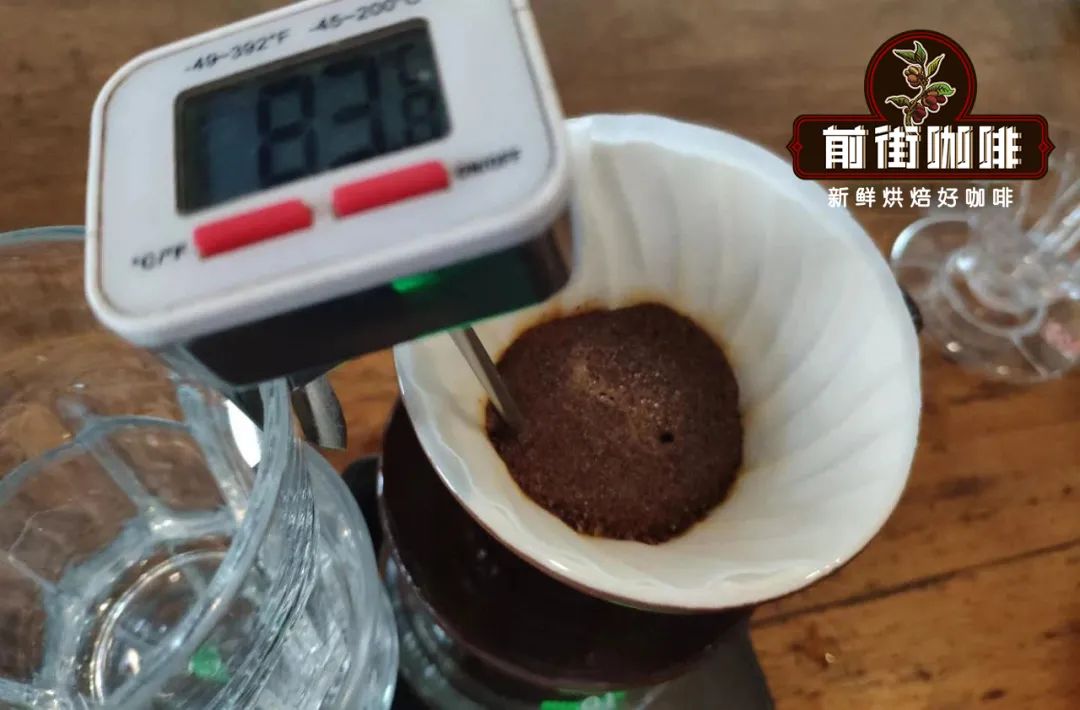
Water temperature is a very important parameter, but the water temperature we talk about is not just the initial kettle temperature—the temperature changes after the water leaves the spout are also worth investigating, and the real water temperature is essentially the temperature during coffee extraction.
The above content is compiled by CoffeeHunters, a coffee news website.


