A friend asked Front Street how to practice the pitcher movement for ripple latte art. This article serves as a supplement to "How Can You Pour Beautiful Ripple Lines?" If you haven't read it yet, you can click the link to check it out first. I won't repeat the content from that article here.
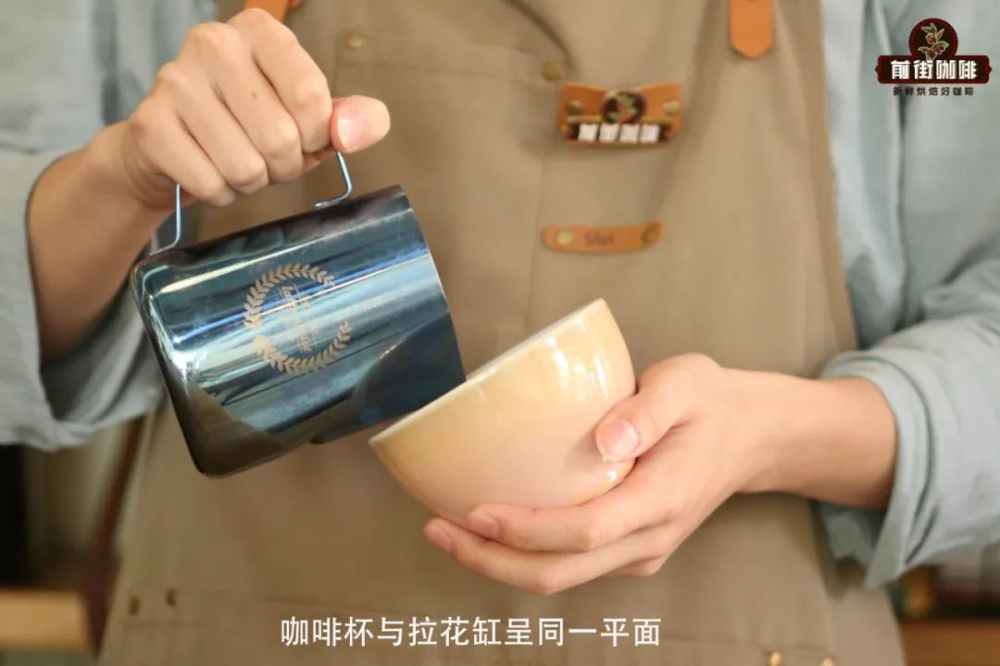
The first issue: if your pour is asymmetrical, there's only one possibility—your milk pitcher and coffee cup are not forming a straight line.
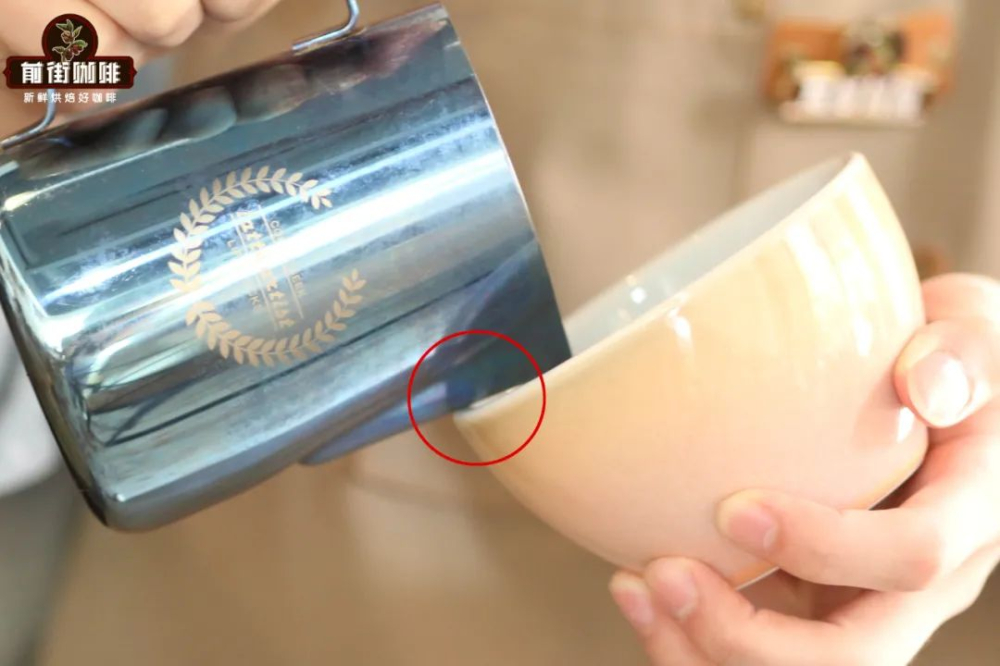
What does forming a straight line mean? From a direct side view, you should only see the flat profile of the pitcher and cup, not their three-dimensional shapes.
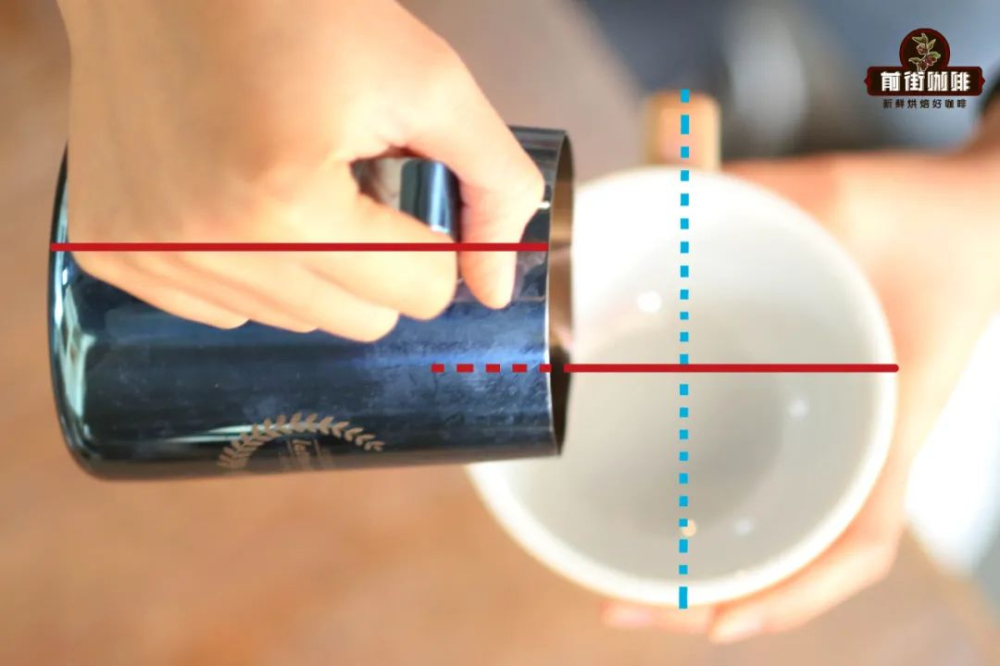
When viewed from above, the cup handle should face inward—this way the pattern comes out facing forward (right-handed only). The pitcher and the centerline of the coffee cup form a parallel straight line, so the pour will be symmetrical.
The second issue: if your ripples are dense on one side and sparse on the other, there are two possibilities. The first is caused by the first issue. The second is that your pitcher movement is uneven in force—swinging with a larger amplitude on one side and a smaller amplitude on the other.
Front Street's advice is: don't practice with milk first. Start by getting the motion right with an empty pitcher, as in the video below:
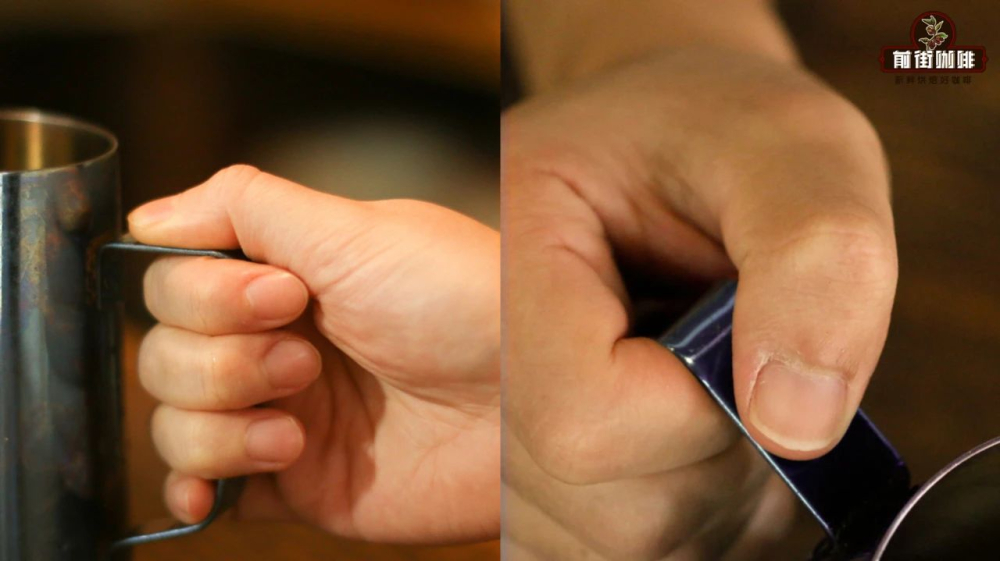
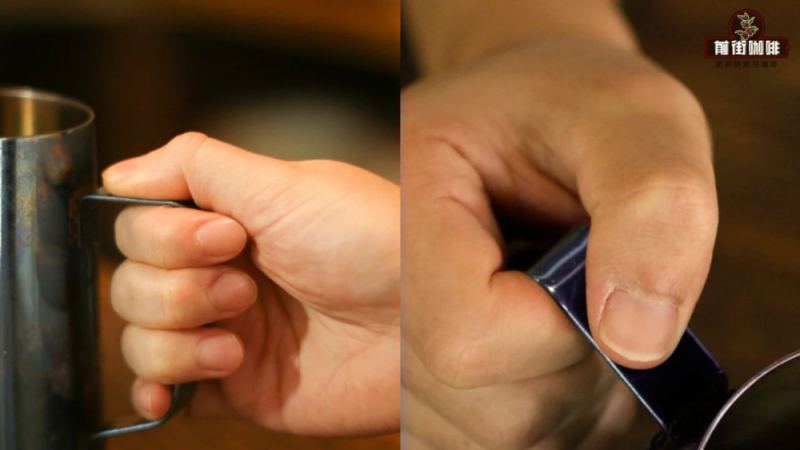
First get familiar with the point of force for moving the pitcher. As shown in the video, the thumb holds the position, the other four fingers apply force, and the pitcher handle acts as a pivot, making the pitcher swing back and forth.Once you've grasped the principle of applying force, you can practice with clean water, as in the video below:
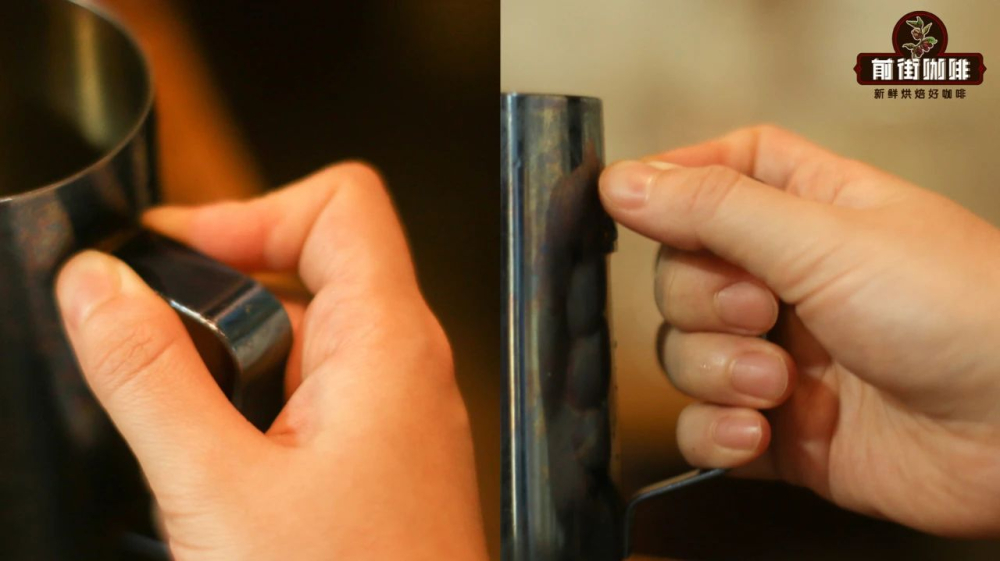
This back-and-forth pitcher swinging practice is the most important process—controlling the water flow and the swing amplitude. Because practicing with water is different from practicing with an empty pitcher: when using water, you'll encounter corresponding resistance from the water as you swing. You need to practice keeping the water flow consistent with the swing amplitude, and you need patience and persistence. From the video, you can also see that as the water decreases, it becomes easier and easier to swing.

Anyway, there's no particularly difficult technique here—it all relies on muscle memory. If your pitcher swinging isn't good, it's definitely because you haven't practiced enough.
The third issue: your ripple lines are too thick. There are also two possibilities. The first is that your milk foam is whipped too thick. The second is the hardest to fix—the habit of keeping the pitcher close to the cup when pouring. With a big heart or a tulip push, keeping the pitcher spout close to the coffee cup gives more stable results, but with ripples it actually becomes a limitation. When swinging the pitcher, it's easy for the swing to be hindered, and being too close to the liquid surface makes the white lines very thick and lacking in aesthetics.
The above content is compiled by CoffeeHunters, a coffee news website.