







The Origins of Pour-Over Coffee
For a long time in the past, people around the world made coffee in a simple and crude way: they ground coffee beans, put them into a kettle to boil, then filtered out the grounds with burlap or a metal mesh strainer before drinking it directly. Limited by the production techniques of the time, the strainers could not be made with fine enough pores, so even after filtering, the coffee liquid often still contained a good amount of sediment.

It was not until the 20th century that a German woman named Amalie Auguste Melitta Bentz, who loved freshly brewed coffee, felt that coffee from traditional filters tasted bitter and that after drinking it, coffee grounds would remain between her teeth, greatly affecting the mouthfeel. So Mrs. Melitta began constantly trying new methods when making coffee, hoping to solve the problem of sediment, and finally came up with an idea:
Punch holes in the bottom of a brass pot to make it into a sieve-like container, then place a piece of blotting paper on top, add ground coffee, pour in hot water, and the coffee liquid drips through the blotting paper into the brass pot.
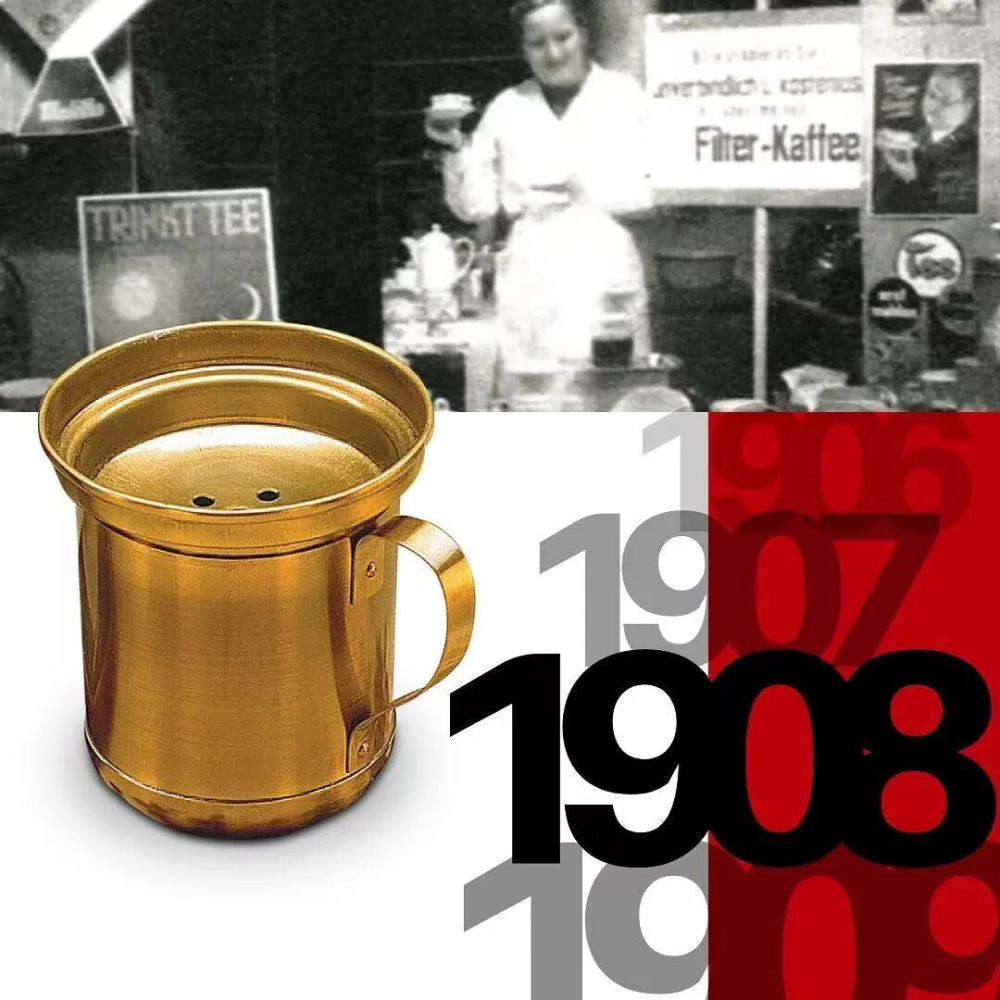
Compared with burlap and metal mesh strainers, this combination designed by Melitta could both filter out the grounds and preserve the coffee's aroma. It was not only low in cost but also simple and convenient to use. Most importantly, the filtered coffee liquid was clear and free of sediment, and the taste was greatly improved.
The Evolution of the Dripper
In June 1908, Melitta registered her invention with the German Imperial Patent Office: a brass coffee filter with an arched bottom pierced by an outlet hole, along with filter paper. This may well have been the world's first pour-over coffee cup. At the same time, she founded The Melitta Company and began officially selling pour-over tools.
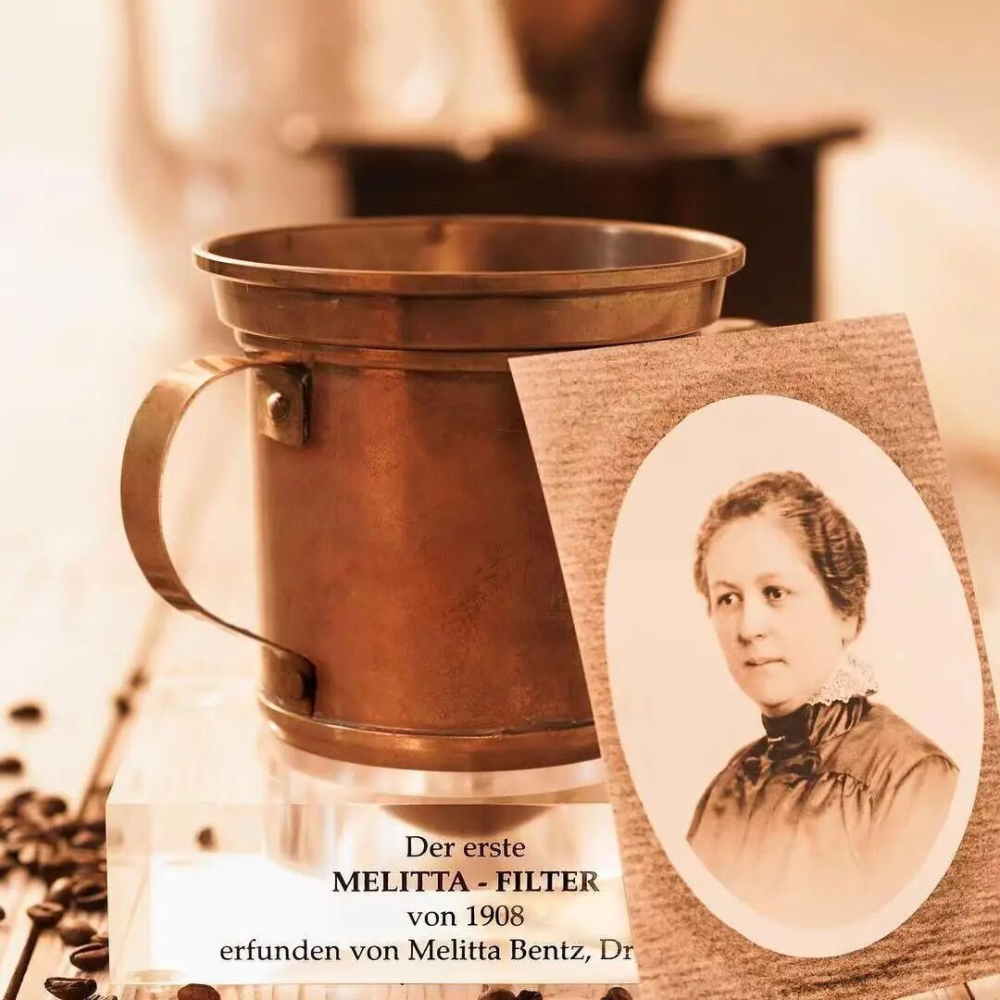
Since its founding, The Melitta Company has repeatedly studied and optimized the dripper's shape, size, holes, grooves, and other details to keep up with changes in the coffee era and consumer demand. Pour-over coffee equipment has continued to innovate, with a series of new products designed. The trapezoidal dripper familiar to us today was one of Melitta's best-selling representatives at the time.
Pour-Over Coffee Tutorial
There are actually many coffee beans to choose from for pour-over. Here, Front Street briefly lists a few types of coffee suitable for the vast majority of people for everyone to choose from: for those who like floral flavors, Front Street Panama Hacienda La Esmeralda Red Label Geisha Coffee is recommended, one of the most expensive coffees in the world; for those who like fresh coffee with acidity, Front Street Huakui Coffee, Front Street Fruit Ding Ding Coffee, and Front Street Strawberry Candy Coffee are recommended, tasting with floral and fruity notes;

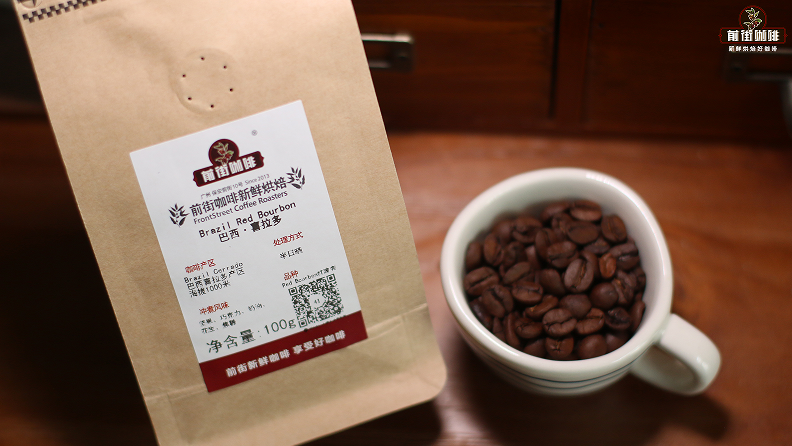
For those who like balanced flavors, that is, coffee that is neither sour nor bitter, Front Street Brazil Red Bourbon Coffee is recommended; finally, for those who love a solid, mellow mouthfeel, it is suggested to buy the highest-grade Front Street Golden Mandheling Coffee. These beans undergo multiple rounds of hand sorting, which minimizes the defect rate of the coffee beans, thereby making the coffee aroma clearer and the sweet aftertaste better. All the above coffee beans can be purchased and ordered at Front Street stores and the Front Street Tmall flagship store. To let everyone experience the beans' full flavor period, all coffee beans shipped by Front Street are roasted within 5 days.
As usual, let us first list the brewing parameters used by Front Street:
Dose: 15g
Grind setting: For light-roasted beans, use 10 on the ek43, with an 80% pass-through rate on a No. 20 sieve; for dark-roasted beans, use 10.5 on the ek43, also with an 80% pass-through rate on a No. 20 sieve.
Brewing water temperature: For light-roasted beans, 90°C~92°C is recommended; for dark-roasted beans, 86°C~88°C.
Coffee-to-water ratio: 1:15
Dripper used: V60/Kono
For this demonstration of the pour-over technique, Front Street Huakui Coffee Beans were chosen. This is a naturally processed coffee bean from Ethiopia. Because it is dried together with the complete fruit pulp, the coffee beans have a rich sweetness of ripe fruit, tasting with notes of strawberry, citrus, and caramel.

Three-Pour Method, First Pour: Blooming
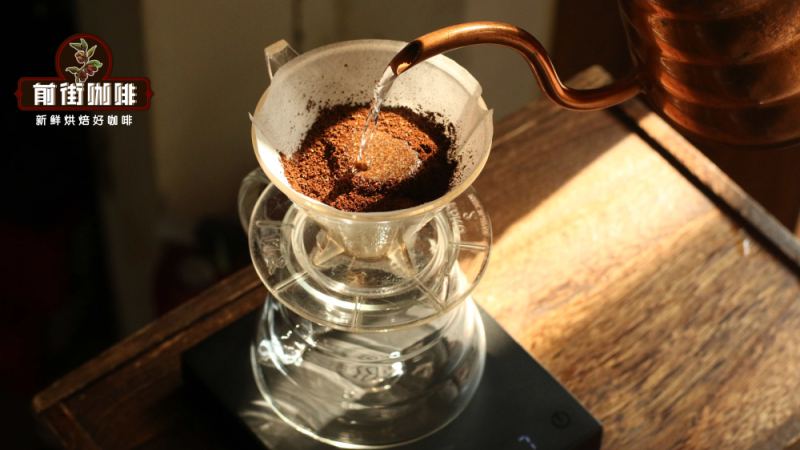
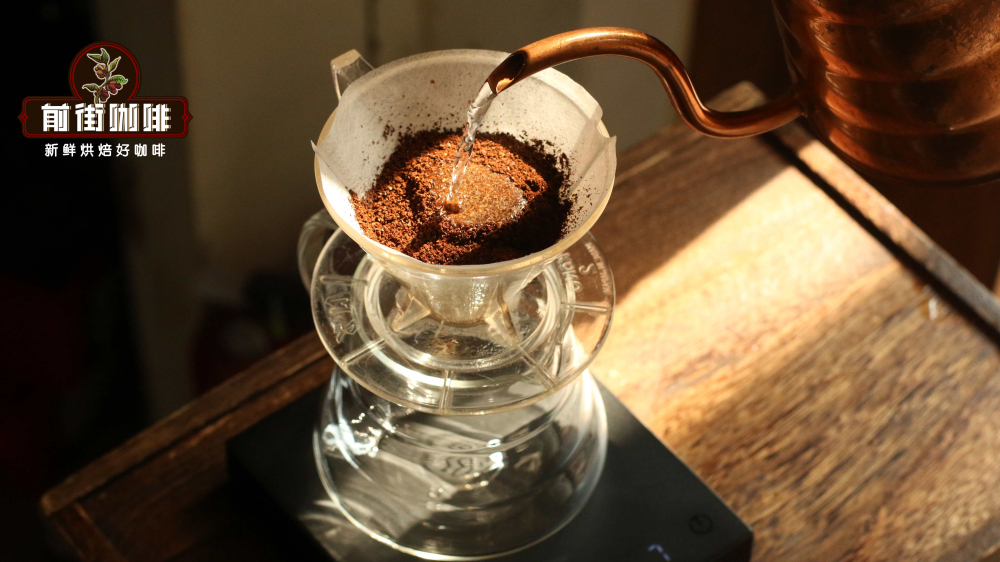
First, use 30ml of water, twice the amount of coffee grounds, to bloom for 30 seconds. Starting from the center and spiraling outward, quickly pour in the hot water and expand the range.

We all know that "blooming" is meant to release the carbon dioxide in the coffee so that the subsequent hot water can better extract the substances in the coffee. But at the same time, it also means that this portion of hot water used for blooming can extract the least coffee substances. That is why people control the amount of water used for blooming at twice the amount of coffee grounds: first, this amount of water is just enough to wet the coffee bed; second, it is just the amount of water that the dry coffee grounds need to absorb.
Three-Pour Method, Second Pour: Main Extraction
After the blooming is finished, we use 120ml of hot water, pouring in a small, steady stream while spiraling in large circles, with the pour expected to be completed in about 55 seconds.

After blooming, this extraction stage is a very important one! How good a cup of coffee tastes depends entirely on how this stage of extraction goes. At this time, the water temperature is still at a relatively high state. After "shedding" the protective shell of carbon dioxide, the coffee bed, under the brewing of high-temperature hot water, easily releases its sweet and sour substances.
Three-Pour Method, Third Pour: Finishing
When the water level is about to reach the bottom (when the coffee grounds begin to show), we pour in the final portion of hot water (75ml), pouring in small circles around the center of the dripper.

This portion of hot water is the final pour of the three-pour brewing method! As mentioned in yesterday's Front Street article, this is a stage that can correct deficiencies. If the second pour's water does not descend and permeate at a normal flow rate, we need to decide whether to use a small or large stream based on its speed!
When the water level in the second pour drops too quickly, it can easily cause under-extraction, so we need to use a small stream to extend the extraction time and increase the coffee's extraction yield; if the water level drops too slowly, it can easily cause clogging and over-extraction, so we need to use a large stream to raise the coffee bed, increase the area through which water can permeate, and speed up the flow rate.

Finally: Mixing
Each pour of hot water extracts different coffee substances, and due to differences in concentration, they may have a certain separation and will not merge together. If we drink it directly at this point, it may not taste too pleasant. So we need to shake this pot of coffee, "swish swish," to fully blend them together.

Only then can we enter the true drinking stage~ The clean and full coffee flavor and the rich, varied layers are the "supreme" enjoyment that the three-pour brewing method can bring us~
The above content is compiled by CoffeeHunters, a coffee news website.


