





Why is Blue Mountain coffee so expensive and how is it graded?
Blue Mountain coffee is Typica variety grown between 910 and 1,700 meters in Jamaica's Blue Mountains, and its price reflects limited estate output, slow ripening in cool foggy conditions, and strict grading into top-tier, second, third, and Peaberry lots. The highest grade is often sold in wooden barrels with certificate identification.
Growers use mixed planting, with coffee trees shaded by banana and avocado trees on steep slopes, which slows maturation and shapes the cup. Typica was introduced to the region in the eighteenth century and adapted over two centuries. Balancing acidity, sweetness, and bitterness, the coffee rewards careful brewing parameters that bring out its full body.
Blue Mountain coffee is one of the first specialty coffees many coffee lovers encounter, and the market is flooded with all kinds of "Blue Mountain flavor" products. What exactly makes coffee truly grown in Jamaica's Blue Mountains so unique? From the cultivation history of the Typica variety, estate harvesting and processing methods, to the grading of NO.1, NO.2, NO.3, and Peaberry, and further to the price positioning, wooden barrel packaging, and certificate identification methods of Blue Mountain No.1, this article will guide you through a systematic understanding of Blue Mountain coffee. At the same time, Front Street Coffee will also share the brewing parameters and flavor performance of Blue Mountain No.1 to help you more fully experience this classic coffee's balance of acidity, sweetness, and bitterness along with its rich, full-bodied mouthfeel.
For professional coffee knowledge exchange and more coffee bean information, please follow Coffee Workshop (WeChat public account: cafe_style)
For more specialty coffee beans, please add the private WeChat of Front Street Coffee (FrontStreet Coffee), WeChat ID: qjcoffeex
Whether or not you drink coffee regularly, you have probably heard of Jamaica Blue Mountain. A quick search on e-commerce platforms will flood you with terms like "Blue Mountain flavor" and "Blue Mountain blend." What exactly makes Blue Mountain so memorable? Next, let's follow Front Street Coffee (FrontStreet Coffee) and sort through all those Blue Mountain-related matters~
What is Blue Mountain coffee?
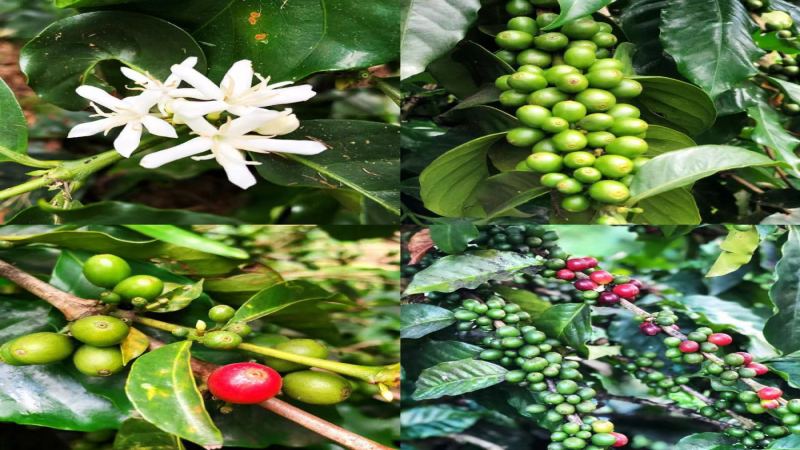
Blue Mountain coffee refers to Typica variety coffee beans grown at altitudes between 910 and 1,700 meters in Jamaica's Blue Mountains. Locally, growers use a mixed planting method, with coffee trees growing alongside banana trees and avocado trees on steep slopes. These fruit trees provide shade for the coffee trees, allowing them to mature slowly in a cool, foggy, and moisture-rich environment.
Introduction to the Typica variety of Blue Mountain coffee
The variety of Blue Mountain coffee is the oldest branch of the Arabica line—Typica. This variety was introduced to the Blue Mountain region in the eighteenth century and began to be cultivated there. After two hundred years of mutual adaptation to the local environment, Blue Mountain Typica has evolved into an Arabica variety with relatively strong disease resistance. It is not only well suited to the local terroir, but has also developed a refined flavor that is difficult to replicate elsewhere.
Blue Mountain coffee environment and cultivation and harvesting conditions
The Blue Mountain range is located in the coffee golden growing belt, where the island climate, volcanic soil, and topographical conditions together create an ideal place for coffee tree growth. However, the Jamaican government has not, like most coffee-producing countries, pursued large-scale cultivation of high-yield, low-quality coffee for the sake of output value. Instead, it insists on quality first, preferring to reduce production rather than compromise the standard of Blue Mountain coffee.
As a result, Jamaica is now one of the countries with relatively low coffee production in the world. Brazil, the world's largest coffee exporter, can produce 12,450 tons of coffee each year, while Jamaica's annual coffee production is about 1,260 to 2,400 tons, of which only about 25% can be called "Blue Mountain coffee," roughly 300 to 600 tons.
Every harvest season, limited by the terrain, the picking process is extremely difficult, and it is hard for anyone other than skilled local women workers to handle it. At the same time, pickers must select coffee cherries at just the right stage of ripeness; underripe or overripe fruit will affect coffee quality. Therefore, every single Blue Mountain coffee cherry depends on 100% manual picking.
Blue Mountain coffee processing method and grading system
After picking, Blue Mountain coffee cherries have their skin removed the same day, then are fermented in clean water tanks for 12 to 18 hours. After that, the beans are washed, the mucilage is removed, defective beans are sorted out, and then they are sun-dried. Drying must be done on concrete patios or thick blankets until the beans' moisture content drops to 12% to 14%, after which they are placed in special warehouse piles for storage.
After drying is completed, Blue Mountain coffee beans are further divided by size into four grades: NO.1, NO.2, NO.3, and Peaberry. The highest grade is NO.1, also known as Blue Mountain No.1, with bean size between 17 and 18 mesh, and the proportion of defective beans must not exceed 2%, with the overall beans uniform and plump.
Blue Mountain No.2 coffee beans require 96% of the coffee fruit to reach a size of 16 mesh or above, and after processing the defect rate must not exceed 2%; Blue Mountain No.3 coffee beans require 96% of the coffee fruit to reach a size of 15 mesh or above, and after processing the defect rate must likewise not exceed 2%.
Why is Blue Mountain coffee so expensive?
From cultivation, harvesting, processing, and export packaging to the certification of Blue Mountain coffee, strict and detailed standards have been established. There are even regulations on what kind of organic fertilizer must be used during the growth period. Therefore, the costs of cultivation and processing are relatively high, and a higher selling price is only reasonable.
Blue Mountain No.1 coffee beans, after careful selection, are also somewhat more expensive than other grades of Blue Mountain coffee. But Blue Mountain No.1 is not the most expensive coffee bean in the world; it is simply priced somewhat higher than coffee beans from many other producing regions.
The Blue Mountain No.1 coffee beans currently sold by Front Street Coffee (FrontStreet Coffee) come from the oldest coffee-growing area in Jamaica's Blue Mountains—Clifton Estate at an altitude of 1,310 meters. After roasting, the price is 158 yuan/100g, and a cup at Front Street Coffee's (FrontStreet Coffee) offline physical store costs only 60 yuan/195-200ml.
In order to let everyone experience the most complete coffee aroma and flavor of Blue Mountain No.1, Front Street Coffee (FrontStreet Coffee) guarantees that all Blue Mountain No.1 coffee beans sold are shipped within 5 days after roasting is completed.
How can you tell whether Blue Mountain coffee beans are authentic?
Unlike the vast majority of countries that use burlap sacks to pack green coffee beans, Jamaica packages high-quality Blue Mountain No.1 coffee in wooden barrels, which is also one of the criteria by which buyers distinguish genuine Blue Mountain from fake. The wooden barrels help isolate the coffee beans from the outside during transportation, protecting them from moisture in the air, thereby ensuring that the green beans' moisture content remains at 11.5% before roasting.
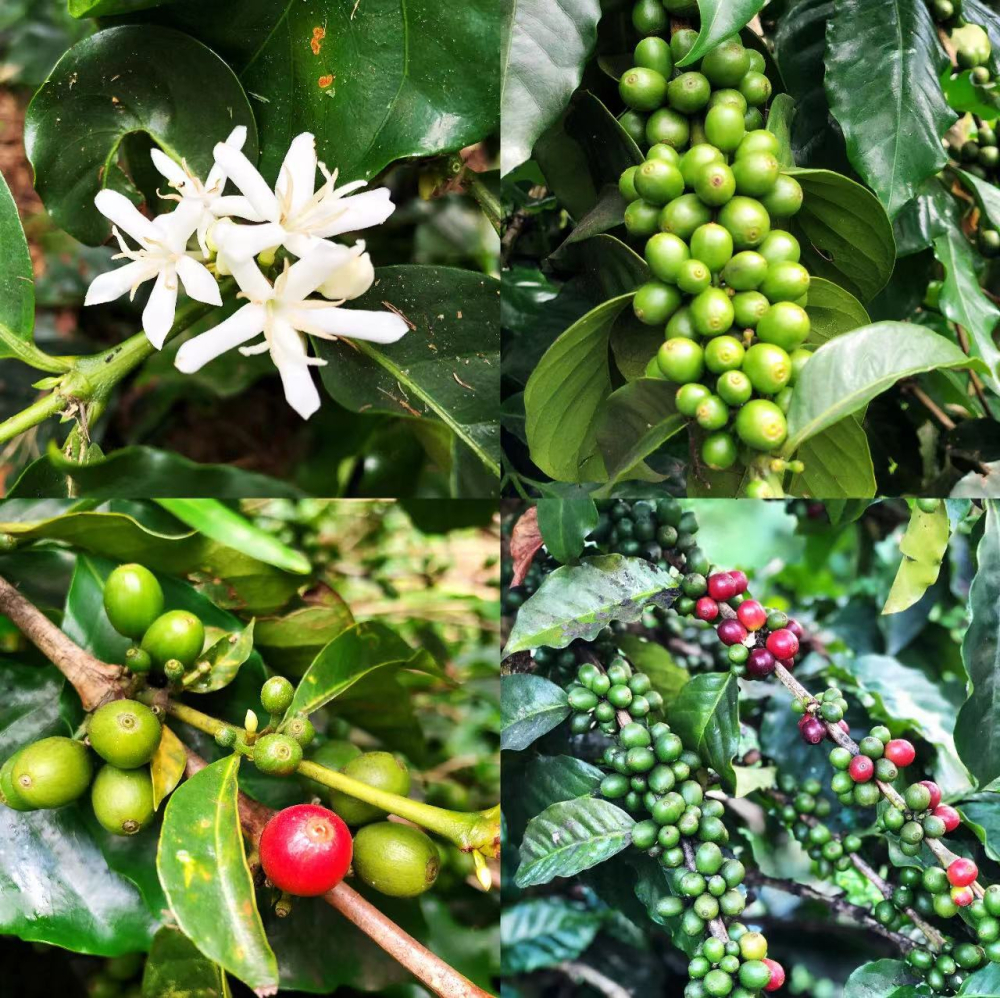
In addition, all exported Blue Mountain coffee must be authorized by the Jamaica Coffee Industry Board (CIB), which can issue certificates for all exported Blue Mountain coffee. The following three types of certificates are all approved by the Jamaica Coffee Industry Board. When buying Blue Mountain coffee and worrying about authenticity, you can ask the merchant to show the relevant certificate.
The Blue Mountain No.1 coffee beans currently sold by Front Street Coffee (FrontStreet Coffee) are all exported in wooden barrels and have obtained the certification certificate from Clifton Estate in the place of origin. You can see them at Front Street Coffee's (FrontStreet Coffee) physical store~
How should Blue Mountain No.1 coffee beans be brewed?
In order to preserve the balanced acidity, sweetness, and bitterness and the rich, solid mouthfeel of Blue Mountain No.1 coffee, Front Street Coffee (FrontStreet Coffee) uses a medium-dark roast level. For brewing, Front Street Coffee (FrontStreet Coffee) has a little tip: grind to the coarseness of granulated sugar, use low-temperature hot water, and pair it with a Kono dripper with a lower flow rate, in order to extract as much coffee material as possible under low-temperature conditions.
Front Street Coffee (FrontStreet Coffee) store brewing parameters: Kono dripper, 88C water temperature, 1:15 coffee-to-water ratio, 15g coffee dose, medium-coarse grind size (70% passing through a No. 20 standard sieve).
The pouring method is as follows: first pour in 30 grams of hot water and bloom for 30 seconds, then pour from the center point in a thin stream and slowly circle outward to 125 grams; when the water level in the dripper drops to the point where the coffee bed is about to be exposed, continue pouring in circles to 225 grams. After all the poured water has passed through the coffee grounds, the total extraction time is about 2 minutes 10 seconds~once extraction is complete, swirl the brewed coffee to mix it evenly and then begin tasting.
The most enchanting thing about Blue Mountain coffee is its balance of acidity, sweetness, and bitterness! A rich, full body like dark chocolate + soft citrus acidity + clear sweetness like sugarcane and a caramel-like finish give it a steady and grounded mouthfeel experience.
The above content is compiled by CoffeeHunters, a coffee news website.


