






What does the kaffa forest tell us about Ethiopian coffee regions?
Yirgacheffe and Sidamo are neighboring producing regions in southern Ethiopia. Yirgacheffe was once a small town under Sidamo's jurisdiction and now stands as its own specialty coffee name. In the word Yirgacheffe, Yirga means settle down and Cheffe means wetland, so the name reads as a wish to settle and thrive on that wetland.
Ethiopia is the birthplace of Arabica coffee, and the kaffa forest is where it began; the country is also one of Africa's major coffee producers. Beans from these regions typically show bright fruit acidity and floral, fruity aromas, which is why Ethiopian coffee is often recommended as an entry point to specialty coffee. High altitude, processing method, and extraction together shape the cup.
Yirgacheffe and Sidamo both belong to adjacent producing regions in southern Ethiopia. The former was once a small town under the jurisdiction of the latter, yet today each has developed into a distinctly styled representative in the world of specialty coffee. Starting from the bean list of FrontStreet Coffee, this article sorts out the geographical origins, processing method evolution, and flavor characteristics of these two major producing regions. Through a comparison of two beans—Front Street Gedeb and Front Street Hambela—along with an analysis of brewing parameters and techniques, it helps coffee enthusiasts understand how high altitude, processing methods, and extraction approaches jointly shape the flavors in the cup, and find an Ethiopian coffee suitable for their own introduction to specialty coffee.
For more specialty coffee knowledge, please follow: Front Street Coffee (Frontsteet Coffee)
Many friends who are just getting into specialty coffee often feel lost when faced with a dazzling bean list and do not know where to start. Baristas at FrontStreet Coffee usually recommend Ethiopian beans as the top choice for beginners—most coffees from this producing country have bright fruit acidity and rich floral and fruity aromas, a flavor type that has drawn a large number of coffee lovers into the fold.
When it comes to Ethiopian coffee, the bean list at FrontStreet Coffee mostly features products from the two producing regions of Yirgacheffe and Sidamo, precisely so that enthusiasts can carefully compare the flavor differences between these two neighboring regions.
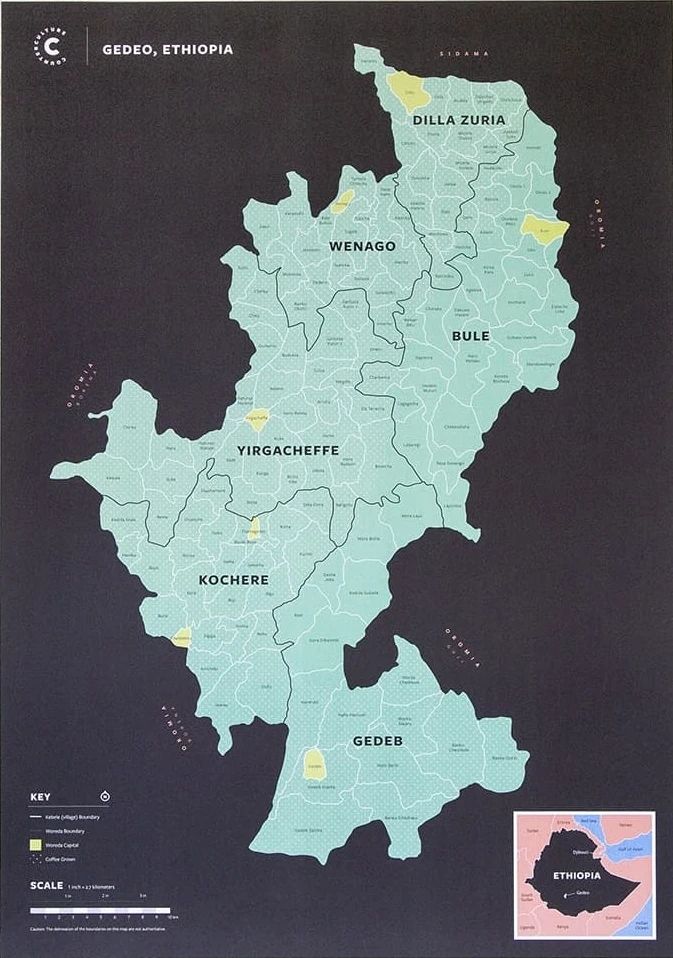
To understand the beans from these two regions, we must start with their history. Yirgacheffe was originally just a sub-region under Sidamo: Sidamo is a province in Ethiopia, and Yirgacheffe is a small town within Sidamo Province. That being the case, what exactly is the Front Street Yirgacheffe we often talk about? And what does the so-called Yirgacheffe flavor refer to?
Yirgacheffe is now a calling card among Ethiopia's specialty coffee beans. In the word Yirgacheffe, "Yirga" means "settle down," and "Cheffe" means "wetland." Together, it means "let us settle and thrive on this wetland."
Ethiopia is a magical land. As the birthplace of Arabica coffee, the Kaffa forest is precisely where it all began, and the country is also one of Africa's major coffee producers.
Many beginners who come to Front Street often first order a cup of Front Street Yirgacheffe or Front Street Sidamo. But at FrontStreet Coffee stores, there is more than one bean from each of these two regions. When asked which specific one they want, customers often cannot answer.
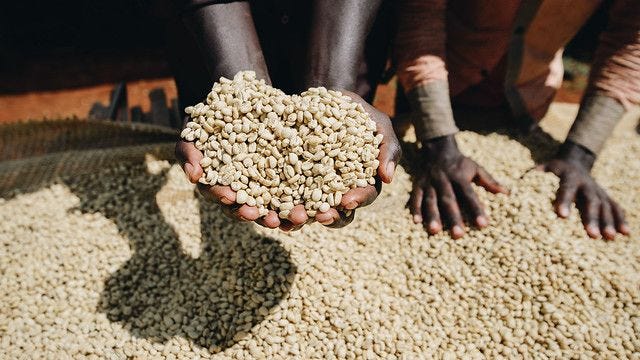
For us, Yirgacheffe may just be a coffee producing region; but for the people who have lived there since childhood, this is their home. Precisely because of this, locals protect this land with greater care, and coffee farmers tend to their coffee crops meticulously. From FrontStreet Coffee's coffee beans, one can see their deep affection for the land beneath their feet; every single bean is hard-won.
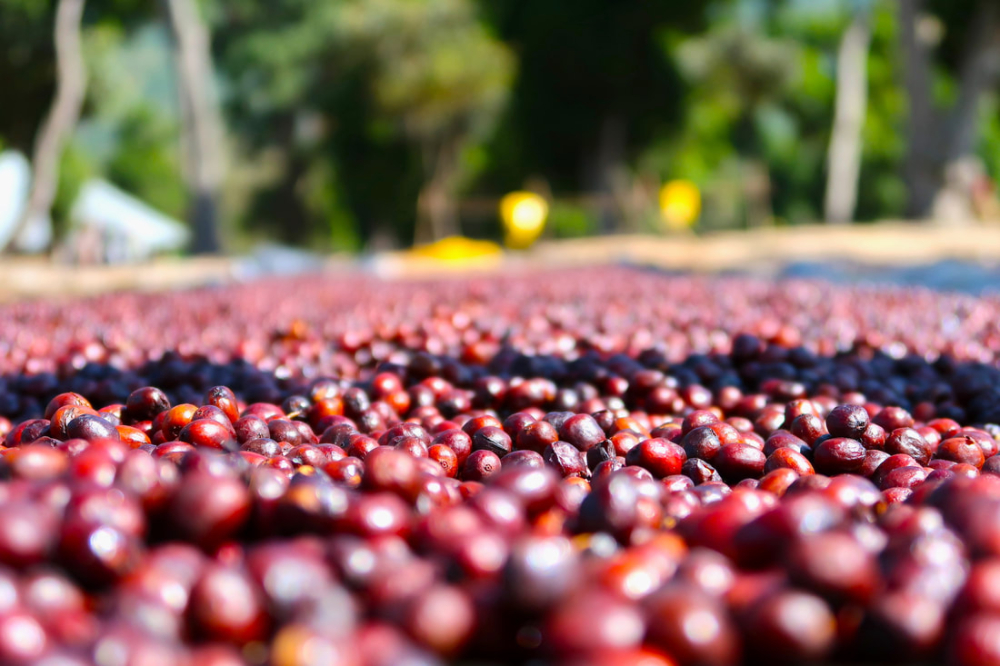
The coffee trees of Yirgacheffe were initially planted by European monks, and later management was taken over by farmers or cooperatives. Yirgacheffe is in fact composed of several surrounding coffee communities or cooperatives. The coffee beans from this region mostly use the washed processing method, with only a small amount of top-grade beans continuing the traditional Ethiopian natural processing. Compared with washed, natural has a richer fruity aroma and higher body. FrontStreet Coffee's Front Street Konga and Front Street Natural Red Cherry are beans from the Yirgacheffe region that use natural processing. They carry unique lemon, floral, and honey-like sweet aromas, with soft fruit acidity accompanied by citrus notes and a fresh, bright mouthfeel; because they are naturally processed, the sweetness is more prominent, the acidity is weaker than the washed version, and the layers are richer.
There are also many friends who fell in love with this region starting from Front Street Washed Yirgacheffe—its bright acidity and clean, refreshing flavor have turned many people from passersby into coffee lovers, and it has become everyone's first bean for getting into specialty coffee.
In the early days, traditional natural processing conditions were relatively crude and could easily give coffee beans an earthy taste. To improve quality, Ethiopia introduced the washed processing method from Central and South America in 1972, and afterward Yirgacheffe coffee was mostly processed by washing.
FrontStreet Coffee mentioned earlier that Yirgacheffe and Sidamo both belong to Ethiopian producing regions, and Yirgacheffe is a small town under Sidamo Province. Sidamo is about 2,100 meters above sea level, while Yirgacheffe is more than 2,600 meters above sea level. As planting altitude rises and average temperature falls, the content of amino acids and other aromatic substances in coffee increases accordingly. Therefore, coffee beans produced at high altitude usually have rich aromas and a mellow taste.
A typical Front Street Washed Yirgacheffe can be broadly divided in aroma into three categories: orange peel, floral, and grassy garden notes. In flavor it mostly shows high-toned acidity, but the mouthfeel and aftertaste vary in weight, and the sweetness also ranges from high to low; its soft floral tone carries a slight grassy garden note, while the orange peel impression is not very obvious.
Front Street Sidamo coffee has a balanced flavor and higher sweetness, and its body is also somewhat higher than that of Yirgacheffe. In particular, the red-wine-like acidity and sweetness produced during the natural fruit-pulp fermentation, combined with coffee's original cocoa bitterness, give certain lots of Front Street Sidamo an intoxicating flavor like chocolate liqueur.
Next, let us compare FrontStreet Coffee's Gedeb from the Yirgacheffe region with FrontStreet Coffee's Arsi from Sidamo.
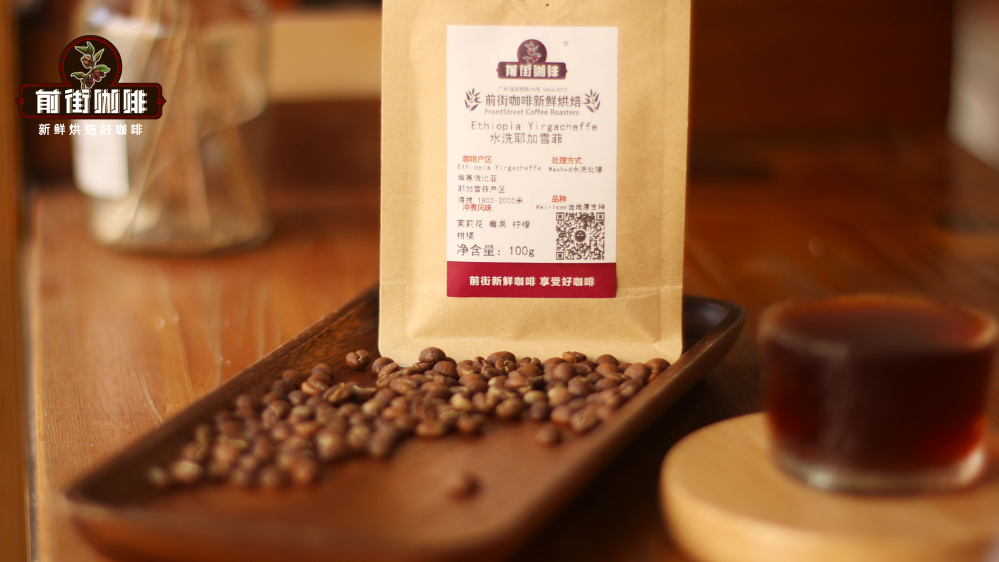
FrontStreet Coffee Yirgacheffe Gedeb
Region: Gedeb Cooperative, Yirgacheffe, Ethiopia Altitude: 2000m–2100m Variety: Local heirloom varieties Processing method: Washed
FrontStreet Coffee Sidamo Hambela
Region: Sidamo, Ethiopia Altitude: 2250m—2350m Variety: Local heirloom varieties Processing method: Natural
FrontStreet Coffee Brewing Recommendation
Dripper: Hario V60 #01 Water temperature: 90-91℃ Dose: 15 grams Coffee-to-water ratio: 1:15 Grind size: 80% passing through China standard No. 20 sieve
To fully extract the fruit acidity of Front Street Yirgacheffe and Front Street Sidamo, Front Street uses a higher water temperature and a finer grind for extraction. But to avoid over-extraction caused by high temperature, a faster-flow dripper is chosen, such as the V60. The V60 dripper is conical at 60 degrees, and this angle allows the coffee grounds to gather centrally. When pouring, the water flow also automatically converges toward the center of the dripper, ensuring enough contact time between water and coffee grounds, thereby extracting a suitable coffee liquid.
In addition, the ribs on the inner side of the V60 dripper are arranged in a clockwise spiral, extending from the bottom all the way to the top, leaving ample space between the filter paper and the dripper, so the water flow has better mobility; combined with the large hole at the bottom, the overall flow rate is faster than that of many drippers.
Front Street brewing method: In the first stage, pour 30 grams of water for a 30-second bloom, then pour 95 grams (the electronic scale shows about 125 grams), finishing the pour in about 1 minute; when the water level drops to two-thirds of the coffee bed, pour the remaining 100 grams (the electronic scale shows about 225 grams), finishing the pour in about 1 minute 40 seconds to 1 minute 45 seconds. Dripping is completed in 2 to 2 minutes 10 seconds. Remove the dripper and the extraction is complete.
Flavor description [Front Street Gedeb] On the palate there are citrus and black tea, floral notes change with temperature, accompanied by cream, caramel, and almond in the aftertaste, with obvious sweet finish and a clean, sweet mouthfeel.
[Front Street Hambela] Citrus acidity, full berry juice sensation, lemon black tea-like tea body, lasting sweetness.
Front Street Yirgacheffe beans have high acidity, a solid mouthfeel, rich and abundant aromas, and full sweetness. In the long aftertaste there are sweet notes of jasmine, grass, and sweet potato... very worthy of repeated savoring.
The above content is compiled by CoffeeHunters, a coffee news website.


