







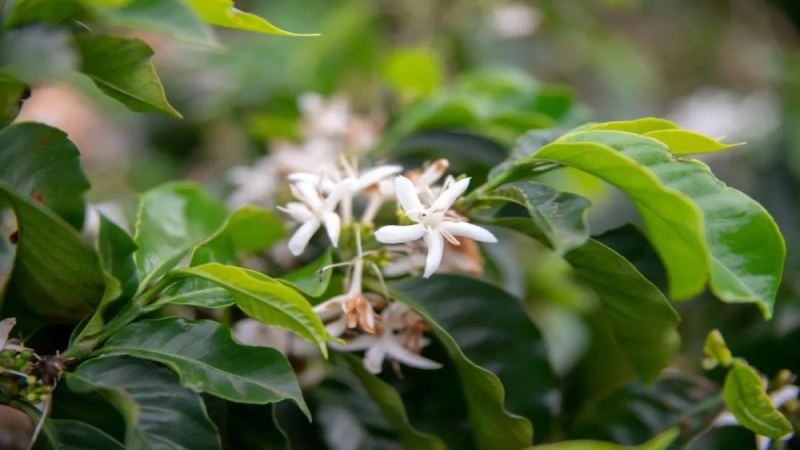
Panama Boquete Geisha
Geisha coffee, also known as Gesha, became famous after winning a reliable of Panama competition in 2004. Its delicate floral and citrus flavors quickly made it a favorite among specialty coffee professionals. The variety first gained attention at Hacienda La Esmeralda in Panama's Boquete region, where its unique profile stood out. Today, it remains one of the most sought-after coffees in the world.
The Chinese name for Geisha has two common translations: one based on the similar pronunciation to the Japanese word for geisha, and another introduced to avoid inappropriate associations. For brewing, Front Street Coffee recommends parameters that highlight the coffee's bright acidity and jasmine-like aromas. Understanding its origins and naming helps appreciate why Geisha continues to lead the specialty coffee world.
Geisha (Gesha) has been the most talked-about variety in specialty coffee ever since it won the Panama BOP competition in 2004. Its auction prices keep hitting new highs, and it has helped many baristas reach the champion's stage. Where exactly do its delicate floral aromas and citrus notes come from? Why does Chinese have both “艺妓” and “瑰夏” as names for it? This article starts with the variety's origins, the evolution of its naming, and the discovery story at Hacienda La Esmeralda, then includes Front Street Coffee's recommended brewing parameters and flavor description for Panama Boquete Geisha, giving you a complete picture of this legendary bean.
To learn more about specialty coffee, follow Front Street Coffee.
In 2004, Geisha received what was then the highest score in the specialty coffee category at the Best of Panama (BOP) competition and took first place. Since then, it has remained at the forefront of specialty coffee for a long time. This variety has not only repeatedly broken coffee auction price records, but has also helped many baristas win competitions. Its elegant and fresh flavors have captivated coffee professionals and enthusiasts worldwide.
As more and more people begin to discover Geisha coffee beans, information about them has become a popular search topic—that is probably why you are reading this article. While researching, you may have noticed that Geisha coffee beans have another Chinese name—艺妓 coffee beans. Actually, no matter which name is used, both refer to the Gesha variety, so why do two names exist?
Gesha was first called “艺妓” because when Japanese people first encountered the variety, the pronunciation of Gesha was the same as the Japanese word for “geisha,” so it was also written as “艺妓.” Later, Taiwan began to encounter this coffee bean through the Japanese and continued to use the Chinese name “艺妓.” The name “瑰夏,” on the other hand, was given by Mr. Yuan, the mainland China representative of the former Coffee Monroe green bean company.
Why change from “艺妓” to “瑰夏”? According to materials reviewed by Front Street Coffee, because of the term “艺妓,” many coffee merchants would borrow the image of Japanese “geisha” for packaging and promotion. This practice is somewhat inappropriate, and the two are essentially unrelated—it is merely a similarity in pronunciation.
Therefore, adjusting the Chinese translation of Gesha can more effectively prevent consumers who are new to Geisha coffee from mistakenly thinking it was named after the Japanese geisha performance tradition. It is also hoped to clearly avoid any future use of orientalist imagery in marketing and references to this coffee, while making this variety—with its refined flavors that can astonish the palate—appear more poetic.
The Geisha coffee variety was initially “discovered” in the 1930s by British colonial explorers in southwestern Ethiopia. At the time, no one formally named the variety; they only recorded that these samples were collected from Gesha Mountain. Geisha was subsequently brought to research stations in Kenya and Tanzania, where it was found to have good resistance to coffee leaf rust, and was then introduced to Panama for coffee variety research and improvement.
It was not until 2003 that the Peterson family, managers of Panama's Hacienda La Esmeralda, discovered during a cupping assessment after a concentrated harvest that some of the coffee beans tasted slightly different from those grown on other plots of the estate, with very distinctive citrus fruit and floral notes. They therefore separated this batch of uniquely flavored coffee beans for separate processing. In 2004, they decided to process the fruit from these seemingly special coffee trees separately and send them to the competition, ultimately winning the 2004 BOP competition with an extremely high score.
At that time, the winning bid for this batch of champion Geisha at auction was $21 per pound, but in 2004, $21 per pound was already very expensive. After winning the championship, the Peterson family also conducted genetic tracing of this batch of coffee beans, confirming that it shared the same genes as coffee variety plants collected from Gesha Mountain in Ethiopia, and therefore named it Gesha.
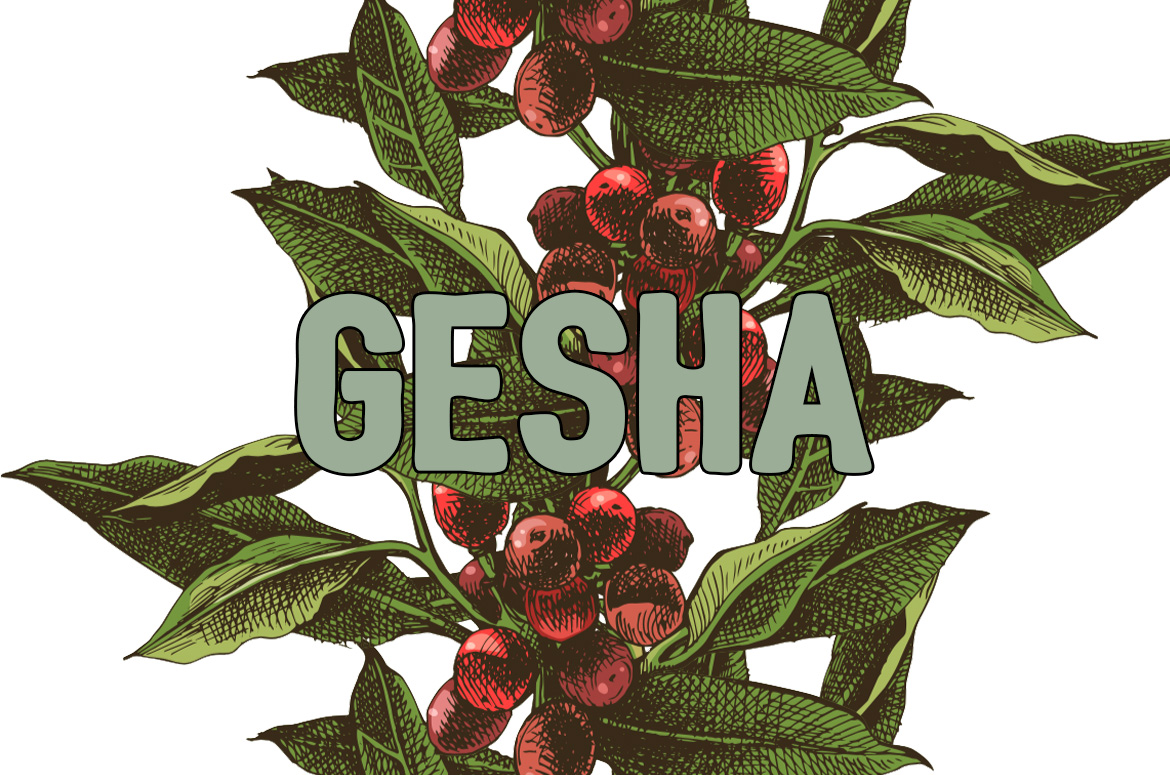
As Geisha's fame continued to rise, in addition to Hacienda La Esmeralda, this variety was also introduced elsewhere in Panama. Many estates rose to fame because of Geisha competition entries, such as Elida Estate, Aurora Estate, Deborah Estate, and Nugu Estate. In addition to estate-level Geisha, Geisha grown in other related producing areas also performs quite well in flavor; although not as refined as estate-level Geisha, beginners can start with ordinary-level Panama Geisha, such as Front Street Coffee's Panama Boquete Geisha coffee beans. (A little secret: Hacienda La Esmeralda is also in the Boquete producing area!)
Wow! Already got it! Quick, quick! So how should such an elegant Geisha be brewed to taste good? Geisha grows at high altitudes, and the temperature difference between day and night gives it enough time to grow and develop flavor, so the beans are relatively hard and tend to sink and clog the drainage holes. Therefore, Front Street Coffee recommends a grind size with a passing rate of about 78% on the Chinese standard No. 20 sieve (about the size of fine granulated sugar).
Brewing parameters: 15g coffee grounds, paired with a small Hario V60 dripper, using a 1:16 coffee-to-water ratio. On one hand, use one extra portion of water to maintain the extraction yield; on the other hand, lower the coffee concentration to between 1.15% and 1.25%, as the flavor is best at this concentration. Maintain the water temperature at 91°C.
Once everything is ready, use a three-pour brewing method: start the timer, make the first pour to 30g, and let it bloom for 30 seconds; then for the second pour, use a slow stream and pour in circles to 125g. Wait until the water level in the coffee bed drops by half before continuing to pour, then use a slow stream and pour in circles to 225g. Wait for all dripping to finish; the total extraction time is about 2 minutes 10 seconds to 2 minutes 20 seconds.
Brewed flavor of Panama Boquete Geisha coffee beans: citrus, white floral, green tea-like tea note, honey.
The above content is compiled by CoffeeHunters, a coffee news website.


