





Why is Sidamo pour-over so sour, and how can brewing fix it?
Pronounced acidity usually comes from under-extraction, not from the beans themselves. Sour, sweet and bitter compounds dissolve at different rates, so a short or cool brew pulls out the acids first. The fix is to extract further: pour more water, extend the contact time, or raise the water temperature slightly.
A three-stage pour gives a repeatable baseline. For Front Street sun dried coffee beans such as Sun-Dried Sidamo, the parameters are 15 grams of grounds, a 1:15 ratio, 90°C water and a medium-fine grind with about 75 percent passing a No. 20 sieve. The first stage pours 30 grams for a 30-second bloom, then two further pours follow.
Many coffee enthusiasts who brew pour-over at home often run into the problem of coffee being either too sour or too bitter, making it hard to achieve the balanced, smooth result you get from a café. This article uses Front Street Sun-Dried Sidamo as an example to break down the specific operating parameters of three-stage pouring in detail, including dose, brew ratio, water temperature, and grind size, and explains that the different dissolution rates of sour, sweet, and bitter compounds in coffee are the fundamental reason for pronounced acidity. The article further offers three practical adjustment approaches: increasing the amount of water poured, extending extraction time, and raising water temperature, helping readers flexibly modify their brewing plan based on acidity intensity and concentration, so that Sun-Dried Sidamo can reveal a softer, sweeter flavor layering.
Many coffee lovers encounter the same confusion: why is the coffee produced by baristas in coffee shops always so smooth, while when you do it yourself, the flavor turns out completely different—either so sour it stings or so bitter it is astringent? Which step exactly is the problem? Today Front Street will chat with everyone about this topic.
Brew a pot of coffee according to Front Street parameters
Front Street first shares a relatively common pouring method called "three-stage pouring." To put it plainly, it means splitting the entire pouring process into three parts, with the first stage being the bloom. Taking the brewing of Front Street Sun-Dried Sidamo coffee as an example, the parameters Front Street usually uses are 15 grams of coffee grounds, a coffee-to-water ratio of 1:15, a water temperature of 90°C, medium-fine grinding, and a No. 20 standard sieve pass rate of about 75%.
Brewing process
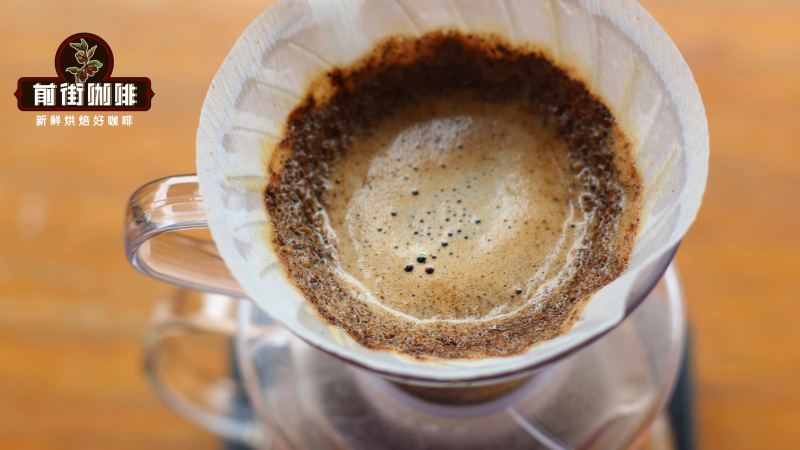
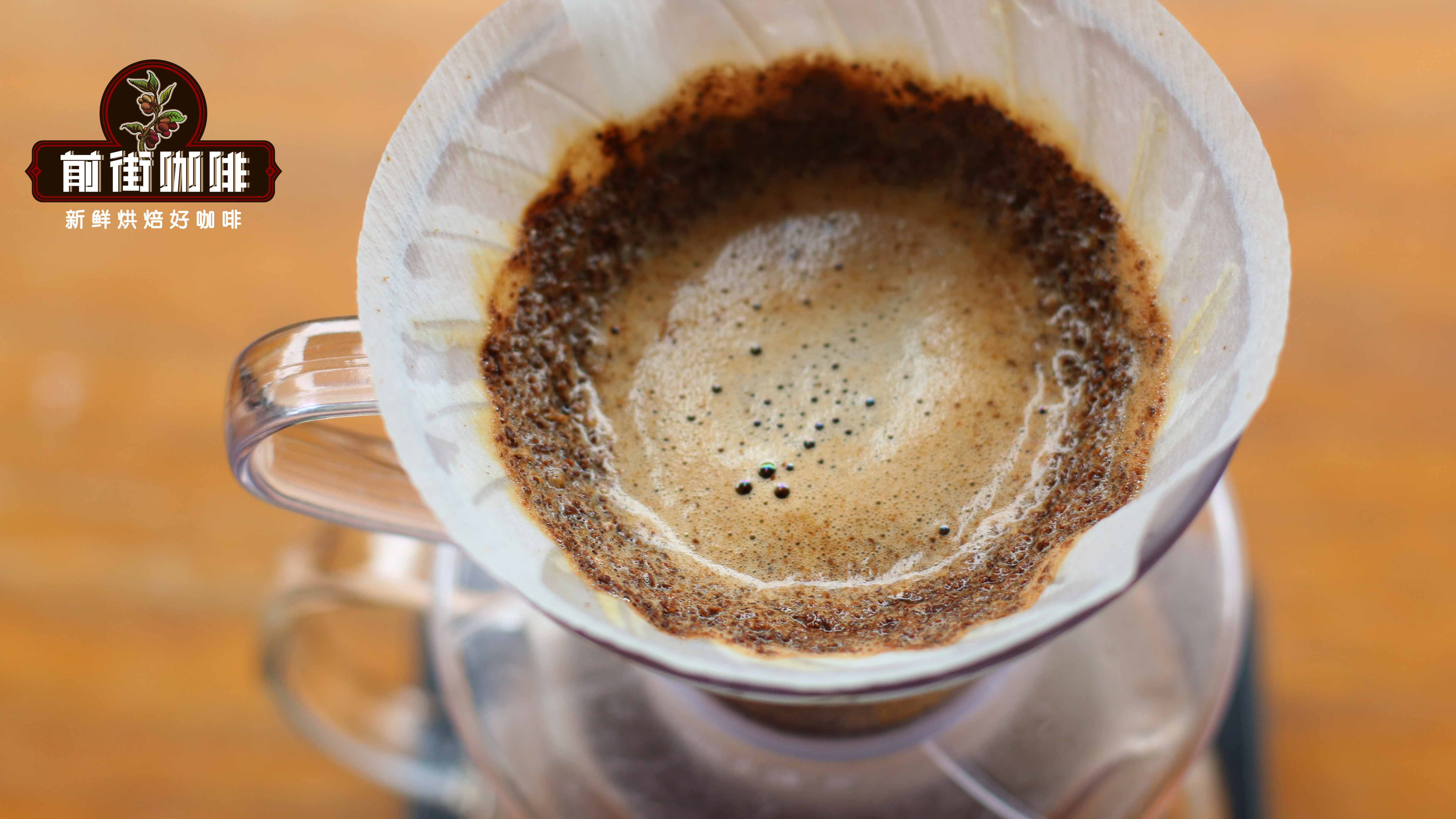
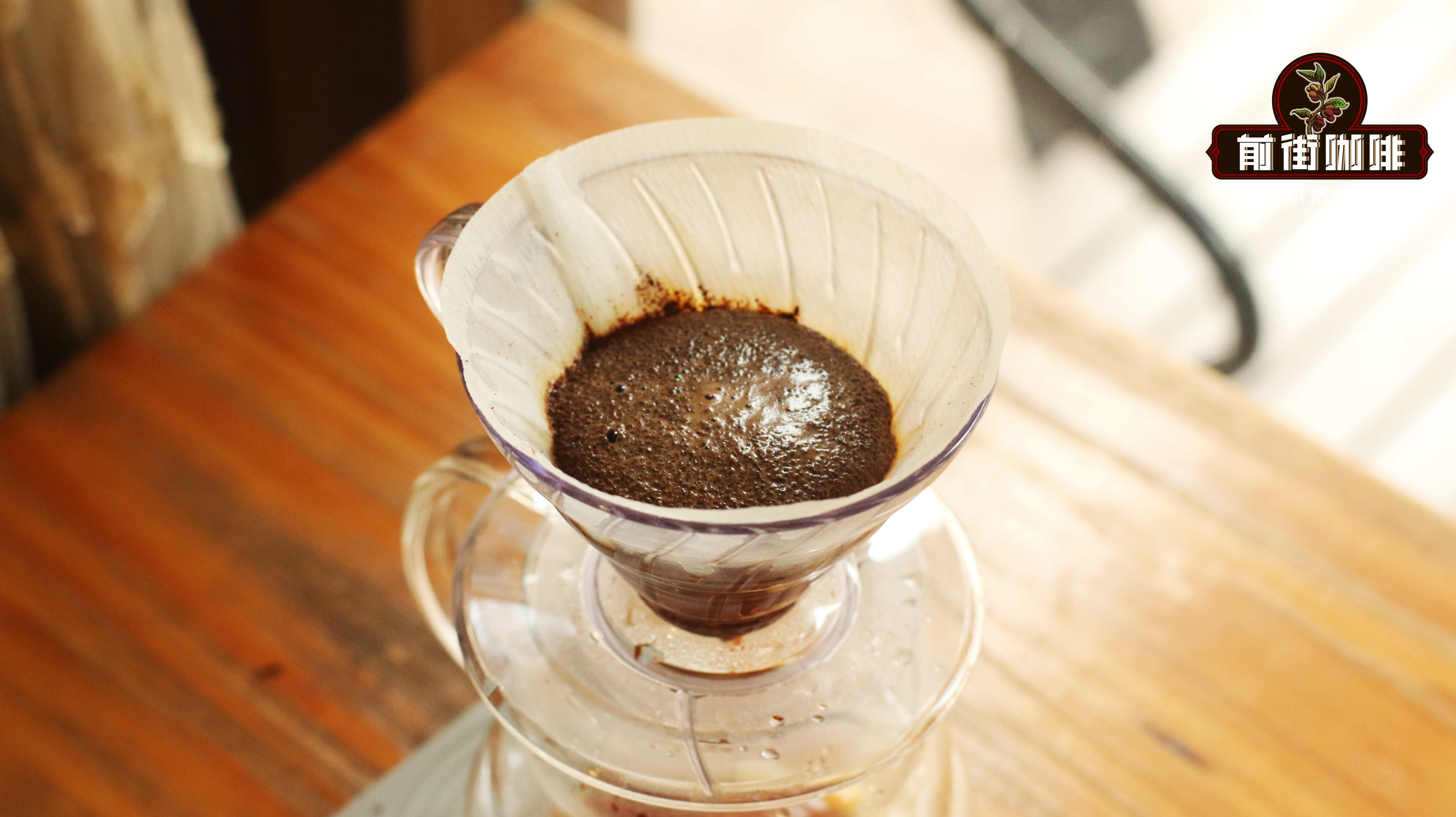
First, complete the preparations, including warming the dripper and server, grinding the coffee, and preparing water at the appropriate temperature, then pour in the coffee grounds. The first pouring stage begins timing immediately, pouring 30 grams of hot water in a spiral from the center outward. After absorbing water, the coffee grounds slowly expand, puffing up into a rounded "coffee hamburger."
Stop when 30 grams of water has been poured, and let it bloom for 30 seconds. When the digital scale reaches the 31st second, begin the second pouring stage, still spiraling from the center outward, with the stream kept steady and vertical. When the water column hits the coffee bed, foam appears. The purpose of this stage is to allow the coffee foam to be fully released and cover the entire surface of the coffee bed, with the liquid level rising to the base of the short ribs. The amount of water poured in this stage is 100 grams.
When the liquid level drops to the halfway point, begin the final pouring stage. In this stage as well, pour 95 grams of water from the center outward in an "aroma-seeking" pattern. The originally dark brown foam gradually turns pale yellow, and the liquid level returns to the height it reached during the second pouring stage. After all the coffee liquid has flowed into the server, remove the dripper, and extraction is complete.
Why is it too sour?
The coffee taste we perceive is essentially a difference brought about by the proportions of three types of substances: sour, sweet, and bitter. For example, when a cup of coffee tastes very sour, it does not necessarily mean it has a particularly large amount of sour substances; it may also be that there are too few sweet and bitter substances to suppress the sourness, so the acidity is amplified and seems especially sharp.
During pour-over brewing, the dissolution rates of sour, sweet, and bitter substances are not consistent. At the very beginning of extraction, acidic substances are the easiest to dissolve first. Of course, sweet and bitter substances are also dissolving at the same time, but their rate is slower, so the amount dissolved is naturally smaller.
As time moves into the middle stage of extraction, the dissolution rate of sweet substances begins to rise, and a large amount of sweetness is released at this stage. Entering the final stage, the dissolution rate of bitter substances increases. If brewing continues, there will be more and more bitterness, and the whole cup will become bitter and astringent. Therefore, a relatively ideal brew is one that ends promptly before a large amount of bitterness is released.
If the brewing pace is too fast, the sweet substances end up finishing before they have fully dissolved, and the coffee presents a sharp, pungent acidity—what we commonly call "under-extraction."
For this, you can adjust as follows:
-Increase the amount of water poured
If the coffee you taste is sharply and pungently sour, you can try balancing it by increasing the amount of water poured. This is because this kind of sharp acidity often comes with a relatively high concentration, while sweet and bitter substances are relatively lacking. For example, if you originally brewed at a 1:15 ratio, next time you can change it to 1:16 or 1:17, pouring in more water to extract the sweetness and bitterness from the middle and later stages to neutralize the acidity, while the overall concentration will also decrease, making the coffee taste softer.
-Extend extraction time
If your coffee is only sour and also tastes very weak, then it is not suitable to adjust by increasing the amount of water poured. As mentioned earlier, the further time goes on, the higher the dissolution rate of sweet and bitter substances, so you only need to extend the extraction time to give the sweet and bitter substances enough time to be released. There are two ways to extend extraction time: the first is to make the grind finer. After the coffee grounds become finer, the flow rate slows down, and the extraction time naturally lengthens.
The second is to increase the number of pouring stages. For example, a one-pour extraction time will be shorter than a three-pour one. If you want to extend the extraction time, you can divide it into 3 or 4 pouring stages. However, the longer the time, the greater the risk of bitter substances being released, so if using 15 grams of grounds, Front Street recommends that the extraction time not exceed 2 minutes 20 seconds.
-Raise the water temperature
If the time can no longer be extended, finally you can also enhance extraction by raising the water temperature. When brewing light-roasted coffee beans, 90-91°C is a relatively safe water temperature. If brewing at this temperature still lacks sweetness, you can raise it to 93-94°C. Front Street generally does not recommend exceeding 94°C, because there is a high probability of brewing out a burnt, bitter taste.
The above content is compiled by CoffeeHunters, a coffee news website.


