






Why Is Blue Mountain Coffee So Expensive and Often Misread?
Blue Mountain Coffee refers to beans grown in Jamaica's Blue Mountain range, not a flavored style to be served with sugar and milk. Its high price comes from limited growing conditions, strict grade classification, and strong global demand, which also makes authenticity hard to confirm on the shelf.
The Blue Mountain range holds fertile new volcanic soil and a specific climate, and its main peak reaches 2,256 meters, the highest point in the Caribbean. Washed and natural processing give different flavors, and checking grade labels and origin details helps separate genuine beans from blends that only borrow the name.
Blue Mountain Coffee is probably one of the most globally recognized yet most easily misunderstood coffee terms. Many people think Blue Mountain Coffee is simply "Blue Mountain flavor" with sugar and milk added, but in reality it refers to coffee beans grown in Jamaica's Blue Mountain range. This article, from the perspective of Front Street Coffee, outlines the origin background, grade classification, reasons for its high price, and key markers for identifying authenticity, while also introducing the flavor differences brought by washed and natural processing methods, along with Front Street's recommended brewing parameters, to help coffee enthusiasts truly understand this classic coffee.
The most common misunderstanding in the world is probably this—the Blue Mountain coffee beans in your hands actually don't possess Blue Mountain flavor. The four words "Blue Mountain Coffee" are familiar even to people who never drink coffee. Precisely because its fame is so great, many instant, ready-to-drink, or blended beans on the market like to use the "Blue Mountain flavor" label to attract consumers, which leads some friends new to coffee to mistakenly believe that Blue Mountain Coffee is naturally meant to be enjoyed with sugar and milk. This article from Front Street Coffee aims to clear up this misunderstanding for everyone: Blue Mountain Coffee is not equal to Blue Mountain flavor! What it refers to is coffee beans produced in Jamaica's Blue Mountain range.
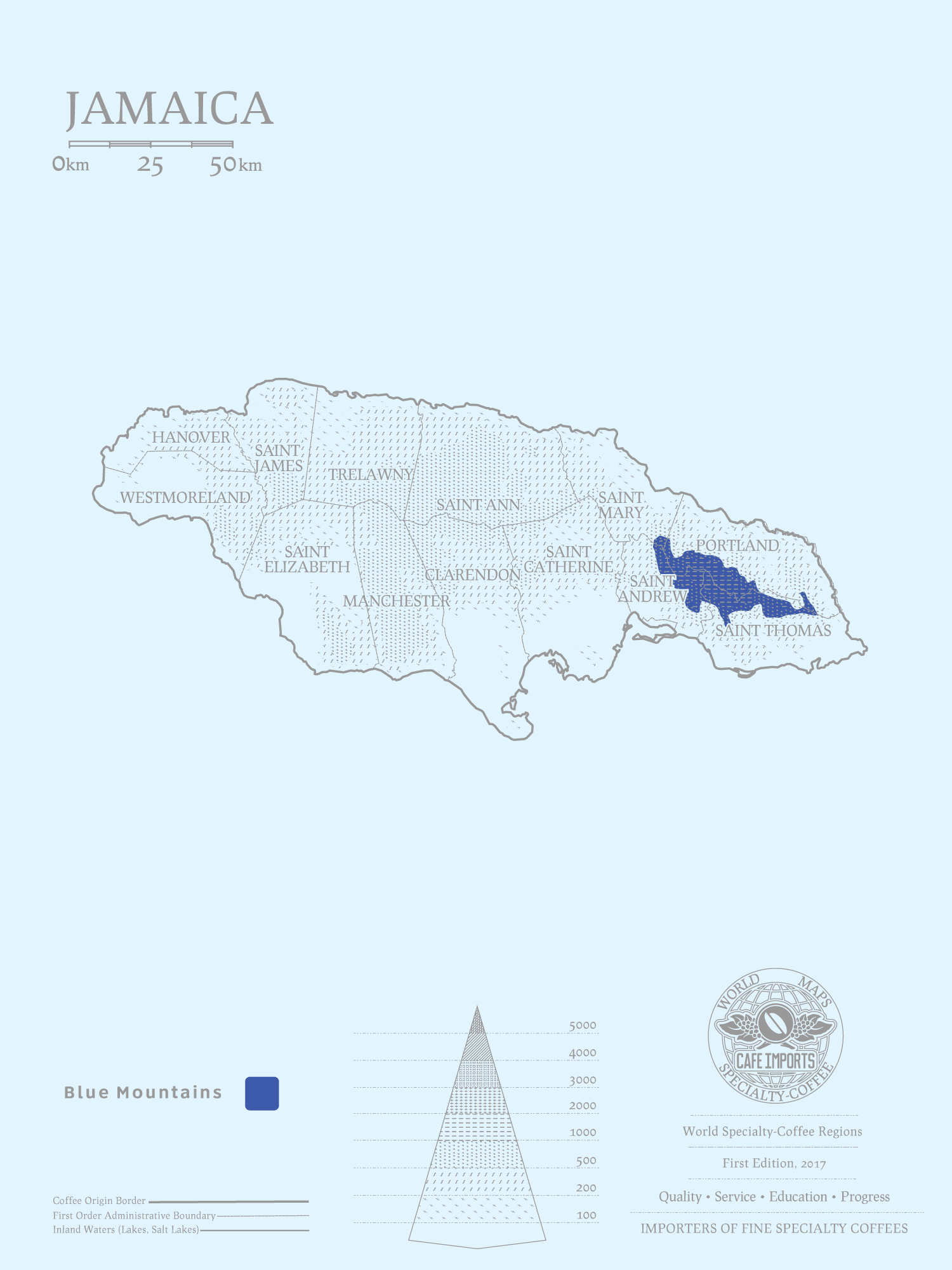
Blue Mountain Coffee comes from Jamaica, an island nation in the Caribbean that was originally the home of the indigenous Arawak people, later colonized by Spain and then Britain, gaining independence only in 1962, and remains a member of the Commonwealth today. A famous Blue Mountain range stretches across the eastern part of the island, surrounded by the Caribbean Sea. On clear days, sunlight shines directly on the deep blue sea, and the shimmering waves reflect onto the peaks, making the entire mountain seem veiled in a pale blue halo—hence the name Blue Mountain.
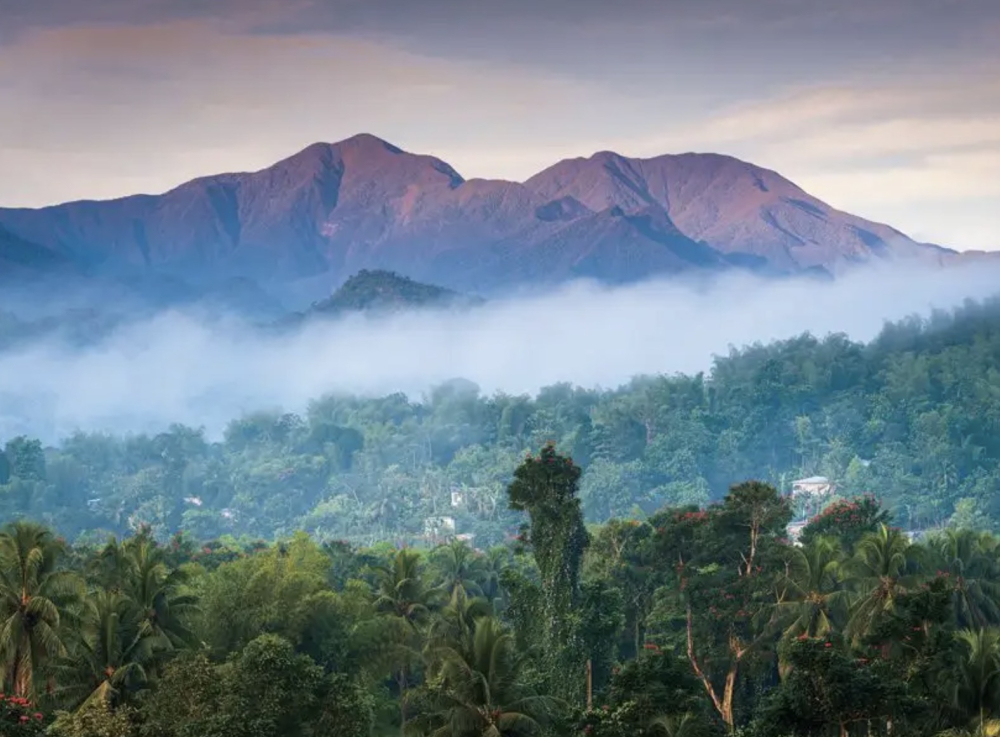
The main peak of Blue Mountain stands at 2,256 meters above sea level, the highest point in the Caribbean region, located between 25 degrees north latitude and 25 degrees south latitude. The unique flavor of Blue Mountain Coffee is inseparable from its superior geographical location and climate. Here there is fertile new volcanic soil, clean and pollution-free air, abundant rainfall year-round, and significant temperature differences between day and night. Most critically, every afternoon clouds and mist cover the entire mountaintop, providing natural shade for the coffee trees while bringing ample moisture. It is precisely these exceptional conditions that make Blue Mountain Coffee's taste and aroma stand out, achieving the classic flavor with an extremely balanced acidity, sweetness, bitterness, and body.
Why is Blue Mountain Coffee so expensive? First, naturally, because of its outstanding quality, possessing all the traits a premium coffee should have; second, because its yield is extremely low. Things are precious when they are rare, and in the past, simply buying Blue Mountain Coffee was quite difficult.
Not all coffee produced in the Blue Mountain region can be called true Blue Mountain Coffee. Only coffee grown above 666 meters in elevation qualifies to be called Jamaica Blue Mountain Coffee; coffee grown below 666 meters is called Jamaica High Mountain Supreme Coffee Beans, whose quality is second only to Blue Mountain Coffee and is often referred to in the industry as Blue Mountain Coffee's "sibling variety." Coffee grown outside the Blue Mountain range can only be called Jamaica Prime Coffee Beans.
In the past, domestic coffee professionals generally held a misunderstanding that only coffee produced in the Blue Mountain region above 1,800 meters in elevation could be called Blue Mountain Coffee. In fact, the crown zone of the Blue Mountain range above 1,800 meters has only one estate, named Amber, whose owner is of Chinese descent, surnamed Lyn (林), with ancestral roots in Guangdong, China. The estate covers only 30 hectares, and its output is very limited.
Blue Mountain Coffee is highly valued by the Jamaican government and must be grown by estates designated by the Jamaica Coffee Industry Board (CIB) and meet corresponding marking requirements. Every stage from cultivation, harvesting to processing is under strict supervision and management. Jamaica's four legally designated Blue Mountain coffee processing factories are Wallenford, Mavis Bank, Silver Hill, and Moy Hall, which account for ninety percent of Blue Mountain Coffee exports, with Wallenford being the most well-known, belonging to a Jamaican state-owned estate. In 1969, the Blue Mountain region was hit by a hurricane, and the coffee industry fell into difficulty for a time. Japanese companies provided loans to help restore production and stabilize the market. To express gratitude, in 1972 Jamaica signed an agreement with Japan, granting the Japanese side estate shares and priority purchasing rights, with ninety percent of Blue Mountain Coffee sold to Japan once mature. Therefore, the amount of Blue Mountain Coffee other countries can procure is scarce, and prices remain high, though this situation has improved somewhat in recent years.
To buy authentic Blue Mountain No. 1 Coffee, you need to look for several key points: wooden barrel packaging, a green frog logo on the barrel, and a certification certificate issued by the Jamaican government. Jamaica is the only producing region in the world that uses wooden barrels for green beans. The Blue Mountain Coffee provided by Front Street Coffee holds a certificate issued by the Jamaica Coffee Industry Board. Additionally, the wooden barrels containing Blue Mountain coffee beans are printed with a green frog logo (you may refer to the photo below of Front Street Coffee purchasing Jamaican green beans). Front Street Coffee specifically chose a Jamaican Blue Mountain coffee estate with Rainforest Alliance certification, namely Clifton Farm.
The Blue Mountain No. 1 Coffee sold by Front Street Coffee comes from Clifton Estate, which is also the largest estate in the Blue Mountain range. However, by international standards, this is still small-scale cultivation, and many local estate owners are small landholders whose families have worked this land for two centuries. Clifton Mount is an ancient coffee producing area in Jamaica that is still in normal operation today, and Clifton Farm is the only one in Jamaica to hold the "Rainforest" mark. This mark can only be certified by meeting sustainable agriculture system standards, and its wooden barrels bear the rainforest certification logo. As early as the mid-eighteenth century (around 1750), Clifton Farm had already begun cultivating and producing coffee. The planting and processing areas here average 1,310.64 meters in elevation. Sufficient altitude, the shade of gentle afternoon clouds and mist, ample sunlight, and mineral-rich soil provide good growing conditions for the coffee trees and also extend the ripening period of the coffee cherries.
Before 2020, Blue Mountain No. 1 Coffee always used washed Typica variety. In 2020, Clifton Estate introduced natural-processed Blue Mountain coffee beans, so today's Blue Mountain Coffee comes in both washed and natural versions. Washed Blue Mountain Coffee is overall cleaner, with a more balanced acidity, sweetness, and bitterness; natural-processed Blue Mountain Coffee performs equally well, but compared to the washed version, it has an added berry juice-like fullness, with relatively prominent acidity, and is overall less balanced than washed Blue Mountain.
To highlight Blue Mountain Coffee's smooth, rich, and full-bodied mouthfeel, Front Street Coffee roasts the beans to a medium-dark level. Since all shipments are freshly roasted within 5 days, you need not rush to open and brew upon receiving your Blue Mountain coffee beans. Keep the coffee beans sealed in their original packaging and wait until 5 to 6 days after the roast date to start brewing—the flavor will be even better.
Front Street considered that both these Blue Mountain beans are roasted to a relatively dark level, and the darker the roast, the faster coffee substances dissolve. To avoid over-extraction, Front Street used a lower water temperature for extraction while choosing the slower-flowing Kono dripper to ensure as much coffee substance is extracted as possible under low-temperature conditions. The specific extraction parameters are as follows: Kono dripper, 88°C water temperature, 1:15 coffee-to-water ratio, 15 grams of coffee, grind size based on 70-75% passing through a No. 20 standard sieve.
Brewing method: First pour 30 grams of water for blooming, with a blooming time of 30 seconds; for the second pour, add water to about 125 grams and wait for the coffee liquid to drop. When it has dropped by half, pour the final stage of water to 225 grams. Once all the coffee liquid has finished dripping, the extraction is complete. Total extraction time is generally around 2 minutes 05 seconds.
[Front Street Natural Blue Mountain Coffee] has a slight berry acidity reminiscent of smoked plum and mulberry, with good overall balance, rich dark chocolate and nutty flavors, accompanied by a slight fermented note. [Front Street Washed Blue Mountain Coffee] has rich dark chocolate and nutty flavors, a creamy smooth mouthfeel, and balanced acidity, sweetness, and bitterness.
For professional coffee knowledge exchange and more coffee bean information, please follow Coffee Workshop (WeChat public account: cafe_style).
For more specialty coffee beans, please add the private WeChat of Front Street Coffee: kaixinguoguo0925.
The above content is compiled by CoffeeHunters, a coffee news website.


