





What Separates Arabica Coffee Varieties From Other Species?
Coffee beans sold worldwide fall into three main species: Arabica, Robusta, and Liberica. Arabica accounts for about 70 percent of the global consumer market and dominates specialty coffee; Robusta carries more caffeine and a rougher flavor, so it mostly goes into commercial blends and instant products; Liberica is rare by comparison.
Under Arabica sit well-known arabica coffee varieties such as Typica, Bourbon, Caturra, Catuai, and Geisha, each with its own flavor profile. Arabica originated in Ethiopia despite its Arabic-derived scientific name, and it is the most widely planted species today. Robusta and other species together cover the remaining 30 percent of consumption.
The world of coffee is complex and diverse, but ultimately, the coffee beans on the market are mainly divided into three major species: Arabica, Robusta, and Liberica. Among them, Arabica, with its elegant flavors and rich aromas, accounts for 70% of the global consumer market and has become the absolute mainstay of specialty coffee; Robusta is known for its high caffeine content and rugged flavor, and is mostly used in commercial blends and instant products; Liberica, meanwhile, is relatively rare. Under Arabica, there are also many subspecies such as Typica, Bourbon, Caturra, Catuai, and Geisha, each with its own unique flavor profile. This article will systematically sort out the characteristic differences among the three major species, and take an in-depth look at Arabica's well-known subspecies, while also bringing Front Street Coffee's fresh roasting and brewing suggestions to help coffee lovers understand the flavors in the cup more comprehensively.
For more specialty coffee knowledge, please follow the WeChat public account: Front Street Coffee (FrontStreet Coffee)
When coffee beans around the world are classified by species, they can mainly be grouped into three major categories: Arabica, Robusta, and Liberica. Among them, the most common in daily life are Arabica (known for its elegant flavors and the core representative of specialty coffee) and Robusta (also called robusta bean, with a relatively rough flavor and higher caffeine content, usually not included in the specialty coffee category).
The raw materials selected for specialty coffee are overwhelmingly Arabica varieties, such as Front Street's Jamaica Blue Mountain Coffee, Geisha Coffee, and Front Street 2013 Sun-Dried Typica Coffee. Arabica coffee performs excellently in flavor, mouthfeel, and sweetness, and is deeply favored by coffee lovers. As one of the three major bean species, Arabica accounts for about 70% of the global coffee consumer market, making it the most consumed type of coffee bean, while Robusta and other varieties account for the remaining 30%.
Arabica is the earliest coffee species discovered by humans. Although its scientific name "Coffee Arabica" has Arabic origins, its place of origin is actually the homeland of coffee—Ethiopia. It is widely recognized as the highest-quality coffee bean species and is also the most widely planted species in the world today, produced in Central and South America, Africa, and Asia. When Ethiopians first discovered coffee, they would chew coffee leaves to refresh themselves, and the coffee fruit was also once eaten as medicine. Later, through research by Arab scholars, people gradually developed the habit of drinking it after roasting. In the sixteenth century, Arabs spread coffee around the world through trade, and it eventually evolved into the globally popular beverage it is today.
Specialty coffee as defined by the third wave of the specialty coffee movement is mainly judged from four dimensions: variety, altitude, processing method, and cupping score. Among these, the core coffee bean variety is Arabica.
Arabica varieties have relatively demanding requirements for their growing environment, unlike Robusta, which is extremely adaptable. Arabica coffee trees can usually grow to a height of 2.5 to 4.5 meters. They can tolerate low temperatures but cannot withstand frost, and their drought resistance is also relatively weak. Their beans are larger, the flavor is clean, the taste is mellow, and the caffeine content is relatively low. The most typical examples are Panama Geisha Coffee and Jamaica Blue Mountain Coffee. Their exceptional geographical environments give them their signature flavors and have also placed them among the world's most expensive coffees.
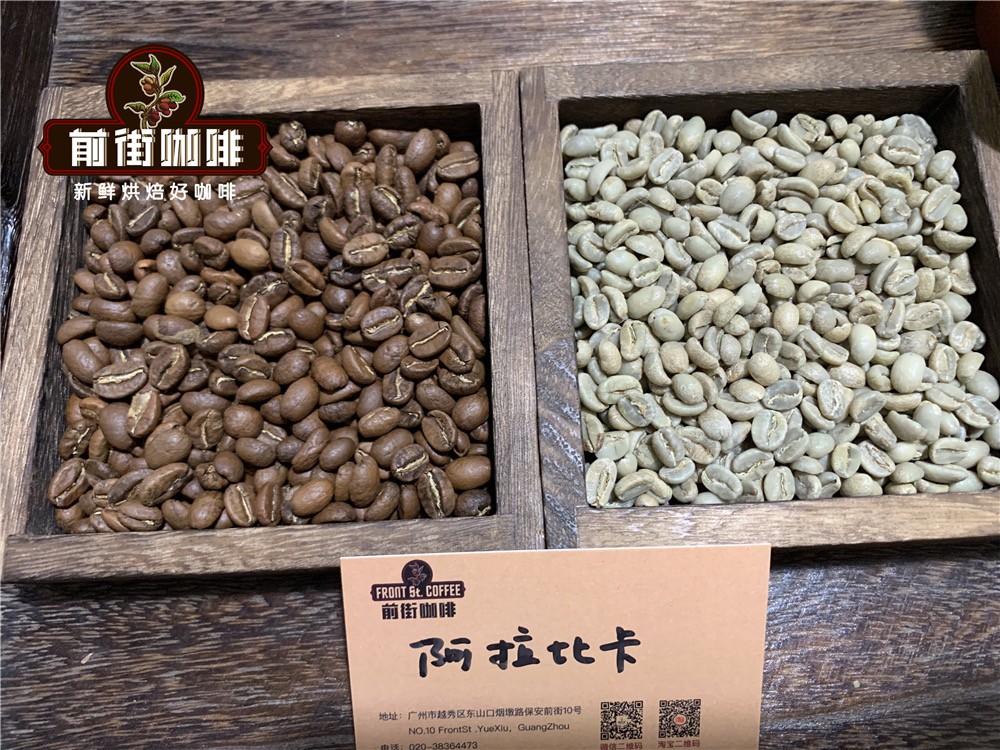
Arabica coffee beans are generally slightly flat, with a long oval shape on the front. The crack in the middle is narrow and curved, forming an S shape, and the arc on the back of the bean is relatively flat. Its caffeine content is about 0.8% to 1.5%.
Robusta coffee may be relatively less familiar to everyone, and the general impression is that it does not taste as good as Arabica, does not count as specialty coffee, and is usually used for commercial beans. Front Street Coffee (FrontStreet Coffee)'s commercial blend uses Robusta beans from Vietnam. Strictly speaking, the Robusta coffee species should be called Canephora, and Robusta is merely a subspecies within Canephora that has been widely cultivated artificially, so Robusta has almost replaced Canephora as the synonym for this species. Robusta originated in the Congo Basin region of West Africa and has been widely cultivated because it grows at low altitudes, has high yields, and is easy to plant. Its coffee production accounts for about 20% to 30% of total global coffee production.
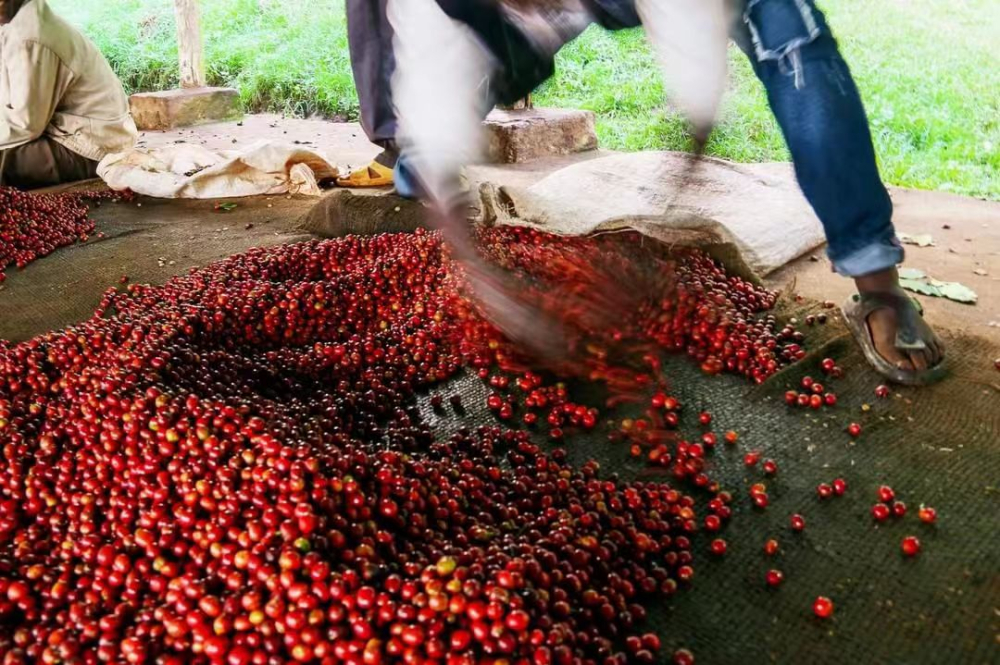
Under Arabica there are also many subspecies, all of which derive from the oldest Typica of Ethiopia and Bourbon of Yemen after being transplanted to Central and South America or Asia and then mutating. The varieties are extremely rich, and it can be said that Ethiopia is the gene bank of Arabica coffee varieties. Front Street lists here a few varieties that everyone is more familiar with:
A rough classification is listed as follows.
"Ancient heirloom varieties" "Typica" : The oldest native variety of Ethiopia, from which all Arabica derives. Typica's top leaves are bronze-colored, and the beans are oval or slender-pointed; the flavor is elegant, but the plant is relatively weak, has poor disease resistance, and produces little fruit. Excellent coffees such as Jamaica Blue Mountain Coffee, Sumatra Mandheling Coffee, Panama Elida Coffee, and Front Street 2013 Sun-Dried Typica Coffee all belong to Typica. One of the characteristics of Typica is that its top leaves are bronze-colored.
"Bourbon" :
A mutation after Typica was transplanted to Yemen in the early period (prehistoric coffee history), with the bean shape changing from slender-pointed to round. In 1715, France transplanted the round beans of Yemen Mocha to Bourbon Island off the east coast of Africa (renamed Reunion Island after the French Revolution), and only then was it named Bourbon. Bourbon round beans were passed on to Brazil and Central and South America in 1727, and in 1732 Britain transplanted Yemen Mocha to Saint Helena Island (later the place where Napoleon was imprisoned), which was also Bourbon round beans. Bourbon is a frequent winner in American specialty coffee cupping. Bourbon is further divided into Red Bourbon, Pink Bourbon, and Yellow Bourbon. Front Street's Brazil Coffee is Red Bourbon, and Brazil Queen Coffee is Yellow Bourbon.
Kenya "SL28" and "SL34": Kenyan specialty coffee is washed, so the flavor is clean and bright, with a more prominent acidity. Many smallholders still insist on high-quality control, and excellent specialty coffees keep emerging. The Kenyan soil full of phosphoric acid seems to have been adapted to by both SL-28 and SL-34, these two Bourbon variants, and they are precisely the contributors to the distinctive black plum acidity. The unique black plum acidity, citrus aroma, and wine-like delightful taste, mixed with the fresh sweetness of sugarcane, have a strong yet elegant aroma, clear and distinct layers, and a complex and deep flavor. The highly individual acidity shows the extraordinary character of Kenyan specialty coffee. Such as Front Street's Kenya Athalia Coffee.
Caturra: It is a natural mutation of the Arabica variety Bourbon, discovered by people in Brazil in 1937. Its tree is not as tall as Bourbon, but shorter. Because it inherits Bourbon's bloodline, its resistance is relatively weak, but its yield is higher than Bourbon's. Although it was discovered in Brazil, Caturra is not suitable for growing in Brazil, so it was not planted on a large scale there, but instead became widely popular in Central and South America. For example, Colombia, Costa Rica, and Nicaragua all plant Caturra over large areas.
Catuai: Catuai is a cross between Mundo Novo and Caturra, one could say a second-generation hybrid. It inherits Caturra's advantage of a low tree height and also makes up for Arabica's weakness of fragile fruit. The fruit is firm and not easy to fall off when blown by strong winds. The greatest regret is that its overall flavor is slightly more monotonous than Caturra's. Catuai also has red and yellow fruit types, and the red fruit is more often awarded than the yellow fruit. Catuai, Caturra, Mundo Novo, and Bourbon are together listed as Brazil's four major coffee varieties.
Sumatra Typica / Sumatra Mandheling : Indonesia's main coffee-producing areas include Sumatra Island, Java Island, and Sulawesi Island, among which "Mandheling" produced on Sumatra Island is the most famous.
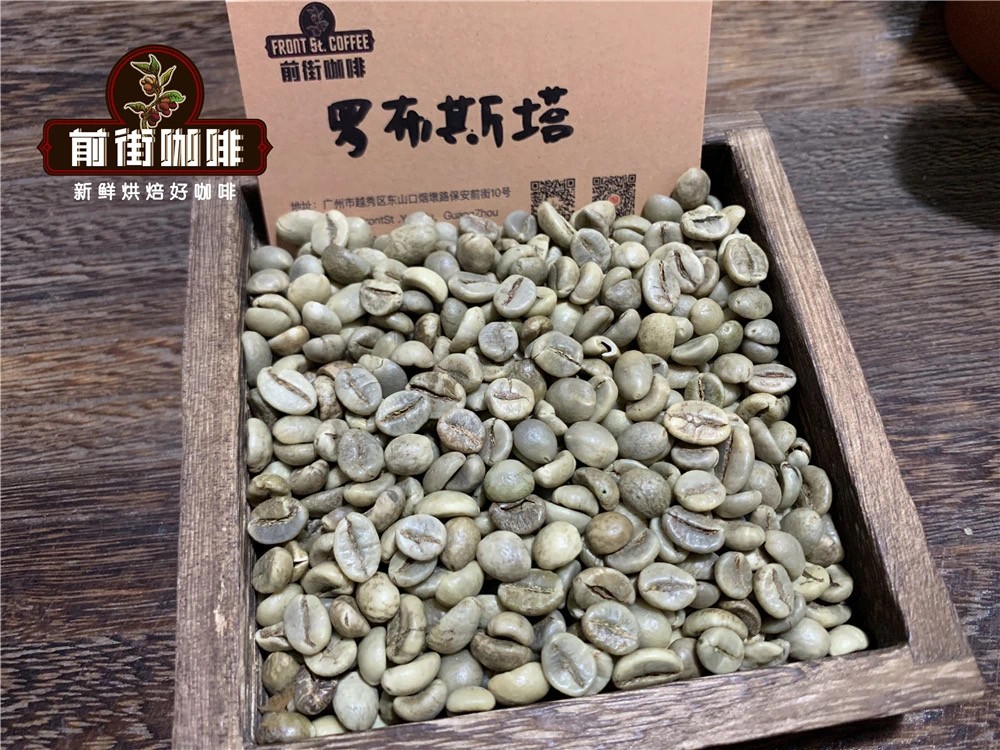
Mandheling is also called "Sumatra Coffee." In the northern part, Lake Tawar can be called Aceh Coffee or Lake Tawar Coffee, while the Lintong and Lake Toba areas can be called Mandheling. Mandheling has a heavy taste, with rich body and a lush and lively dynamism. It is neither astringent nor sour, and its body and bitterness can be fully expressed. The appearance of Mandheling coffee beans can be said to be the ugliest, but coffee fans say that the worse-looking Sumatra coffee beans are, the better, mellower, and smoother they taste. Front Street has Indonesian Mandheling Coffee and Golden Mandheling Coffee.
Geisha:
The famous Geisha is a derivative variety of the Typica family. It was exported from the Geisha Mountain in southern Ethiopia in 1931 (Geisha sounds the same as the Japanese word for "geisha"), remained unknown after passing through many countries, was transplanted to Panama in the 1960s, and only began frequently winning cupping competitions in 2005.
At present, the most famous Geisha producing area is the Boquete region of Panama, a small town located on the eastern slope of Baru Volcano. In the Boquete region, the most famous Geisha coffee plantations are the renowned La Esmeralda, Elida Estate, and Panama NPGE Estate. Although people around the world grow Geisha coffee, even in Taiwan, China, the flavor is still not as stunning as Panama's. Front Street has La Esmeralda's Red Label Geisha, Green Label Geisha, and Boquete Pishan.
Arabica and Robusta
Arabica and Robusta are the two most common major varieties on the market. Arabica is a small-bean species, while Robusta is a medium-bean species. Compared with Robusta coffee beans, which have 22 chromosomes, Arabica has 44 chromosomes, or 22 pairs. Having twice as many chromosomes not only gives Arabica coffee a better aroma, but also brings it rich and unique sweet-and-sour flavors, making it better in taste than Robusta.
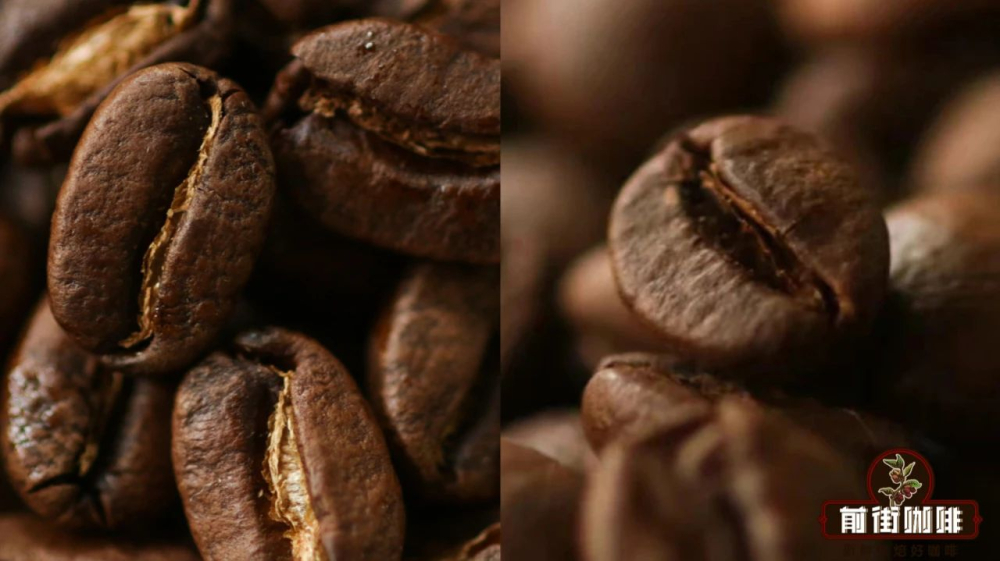
Arabica needs to be grown in highlands of 800 to 2,200 meters with no frost. The higher the altitude, the more significant the temperature difference formed, which delays the ripening of the coffee fruit and is more conducive to the coffee accumulating flavor substances, allowing the aroma to develop more fully. The microclimates of various coffee-producing regions also provide Arabica with diverse growing conditions and form unique flavor profiles. At the same time, the higher the altitude, the more susceptible coffee is to pests and climate effects. Generally, when planted at higher altitudes, the fruit produced is fewer and the ripening period is slower. High-quality Arabica coffee requires more manual management and picking, and production costs are also higher.
Compared with the "delicate" Arabica, Robusta's caffeine content is 2.7%-4%, twice that of Arabica. As a plant's natural pesticide, caffeine can protect it from most insects, so it is easier to grow and cheaper in price. In addition, because it has higher levels of amino acids and chlorogenic acid, it carries a mellow, deeper bitterness, along with flavors of walnut, peanut, hazelnut, wheat, and grain. If not handled well, it can also show an earthy fishy taste, so it is not as likable and is often used in dark-roasted espresso blends or instant coffee.
Some Arabica coffees have low yields and balanced flavors, but are very expensive; some have high yields and average flavors, with relatively moderate prices. Although Arabica is superior, not all Arabica coffee is good coffee.
Front Street Coffee (FrontStreet Coffee) Brewing Suggestions:
Most coffee on the market is of the Arabica variety, especially specialty coffee, which is almost entirely Arabica. Although Arabica coffee has a good flavor, to brew a delicious cup of coffee, you still need to pay attention to the freshness of the coffee beans. Front Street has always believed that the freshness of coffee beans has a great relationship with coffee flavor, so the coffee beans shipped by Front Street Coffee (FrontStreet Coffee) are all within 5 days of the roasting date. Front Street's roasting purpose is "freshly roasted good coffee," so that every customer who places an order receives the freshest coffee when it arrives. Coffee's resting period is about 4-7 days, so when customers receive it, it is exactly at its best flavor.
For friends who need ground coffee, Front Street warmly reminds you: once coffee beans have been ground in advance, they no longer need to be rested, because during transportation, the pressure produced by carbon dioxide inside the package can also make the coffee flavor rounder, so once you receive the ground coffee, you can immediately brew a cup and drink it. However, ground coffee needs to be brewed promptly, because after coffee grounds contact the air, they oxidize relatively quickly. In other words, the coffee flavor will dissipate relatively quickly, and the coffee will not taste as good. Therefore, Front Street recommends buying whole beans and grinding fresh before brewing, so that you can better taste the coffee's flavor.
The above content is compiled by CoffeeHunters, a coffee news website.


