







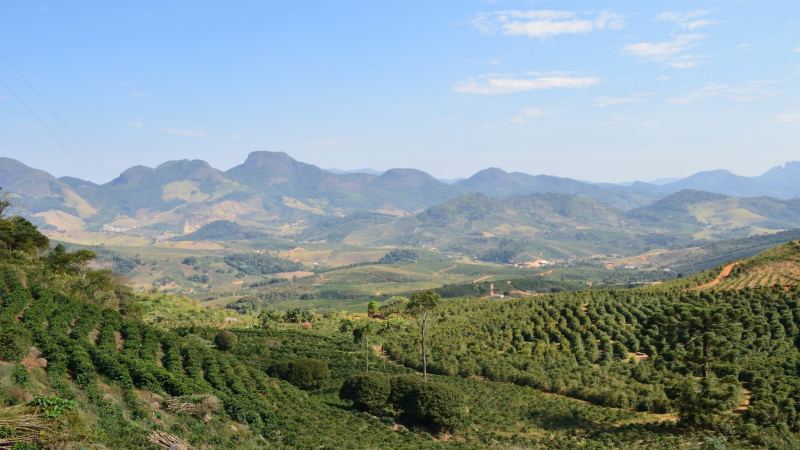
Brazil is the world's largest producer of Arabica coffee. Thanks to its flat terrain and volcanic soil, coffee cultivation and harvesting costs are relatively low, and it also exerts a profound influence on international coffee futures prices. Brazilian coffee beans are mostly grown at altitudes between 400 and 1,600 meters, and their density is lower than that of high-altitude beans from Central America. Their flavor is mainly smooth and balanced, with nutty and chocolate notes, and neither acidity nor bitterness is prominent. Through cupping comparisons, Front Street Coffee has found that whether as a single-origin pour-over or in an espresso blend, Brazilian beans can deliver an experience like liquid nut pie. This article will outline the variety composition and grading methods of Brazilian coffee, and introduce two Brazilian single-origin beans currently sold by Front Street Coffee along with their pour-over extraction plans.
Professional coffee knowledge exchange. For more coffee bean information, please follow Coffee Workshop (WeChat public account: cafe_style).
For more specialty coffee beans, please add the private WeChat of Front Street Coffee (FrontStreet Coffee), WeChat ID: qjcoffeex.
Brazil is the country with the highest Arabica coffee production in the world. Most of its Arabica is distributed in tropical savanna climate regions on plains or plateaus, with an average annual temperature of about 20°C. Volcanoes in several neighboring countries have brought nutrient-rich volcanic soil to Brazil, and combined with its flat terrain, Brazil's coffee cultivation scale is extremely large.
The flat terrain makes machine harvesting of coffee cherries possible, so cultivation and harvesting costs are lower than in other coffee-producing regions, making prices more competitive and making Brazil the main decisive source of ICE Arabica coffee stocks on the New York exchange.
Brazilian coffee beans Flavor characteristics description
The altitude of Brazilian coffee-producing regions is about 400 to 1,600 meters, generally on the low side. Compared with Central American coffee, Brazilian coffee beans are not very dense, so their flavor quality is inferior to that of many high-altitude producing regions. Although the flavor expression is relatively simple, this has not prevented generations of coffee lovers from being fond of Brazilian beans.
After cupping and comparing many coffee beans from different producing regions, Front Street Coffee (FrontStreet Coffee) found that Brazilian coffee has a smooth, balanced mouthfeel, with nutty aromas and chocolate notes, and neither acidity nor bitterness is strong. Whether brewed directly as single-origin (single-region) coffee or used as the main note in an espresso blend, the nutty main note of Brazilian coffee makes people feel as if they are tasting liquid nut pie.
Brazilian coffee varieties
The coffee varieties planted in Brazil are quite rich. At present, Red Bourbon, Yellow Bourbon, and Catuai are the main varieties, while Caturra, Acaia, Obata, Aramosa, and Mocha Bourbon are also grown and studied.
Catuai is a dwarf coffee tree bred in Brazil in 1950 by crossing Yellow Caturra with Mundo Novo. It adapts well to various altitudes, and its cup performance is more outstanding when planted above 800 meters. It has red and yellow types.
Bourbon is a subspecies produced by a mutation of Typica, and together with Typica it belongs to the oldest existing coffee varieties. Its green cherries turn bright red when ripe. Bourbon planted at high altitude usually has better aroma and bright acidity. Red Bourbon is simply Bourbon after fully ripening.
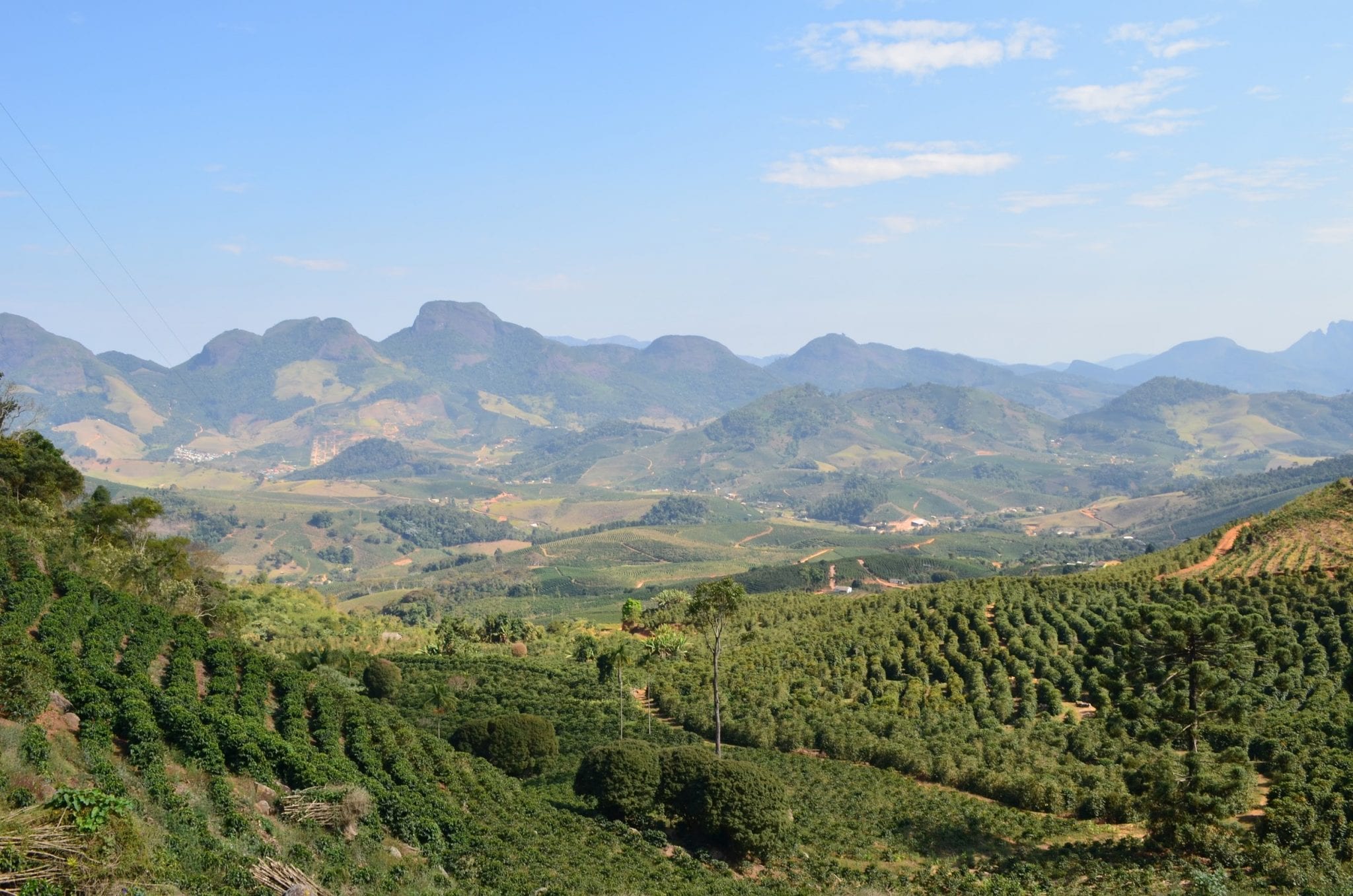
Yellow Bourbon is a variety that naturally evolved from Bourbon to adapt to the soil and climate of São Paulo State. Its cherries are orange-yellow when fully ripe. Front Street Coffee (FrontStreet Coffee) found through cupping comparisons that Yellow Bourbon has a smoother and more balanced flavor than Red Bourbon, with higher sweetness and a cleaner mouthfeel.
Brazilian coffee bean grades
Brazil considers that only beans with no defects at all can be rated NY.1, and beans with absolutely no defects do not exist. Therefore, the best grade among Brazilian green beans is actually NY.2. There are many ways to identify coffee bean grades...
By coffee bean size (NY grading method)
By number of defective beans
By cup grade, divided into:
Fine Cup (FC), Fine, Good Cup (GC), Fair Cup, Poor Cup, Bad Cup
For example: Brazil Cerrado NY-2 SC-17/18 FC
This means that in Brazil's Cerrado region, the NY grading method is 2, the coffee bean screen size is 17-18 mesh, and the flavor quality is Fine Cup (excellent flavor).
Brazilian coffee bean recommendations
Front Street Coffee (FrontStreet Coffee) currently sells two Brazilian coffee beans, respectively from Brazil's famous specialty coffee-producing regions of Minas and São Paulo. To highlight the low-acidity, mellow flavor characteristics of Brazilian coffee, Front Street Coffee (FrontStreet Coffee) roasts Brazilian coffee beans to a medium-dark level and ships within 5 days after roasting is completed, ensuring 100% fresh roasting.
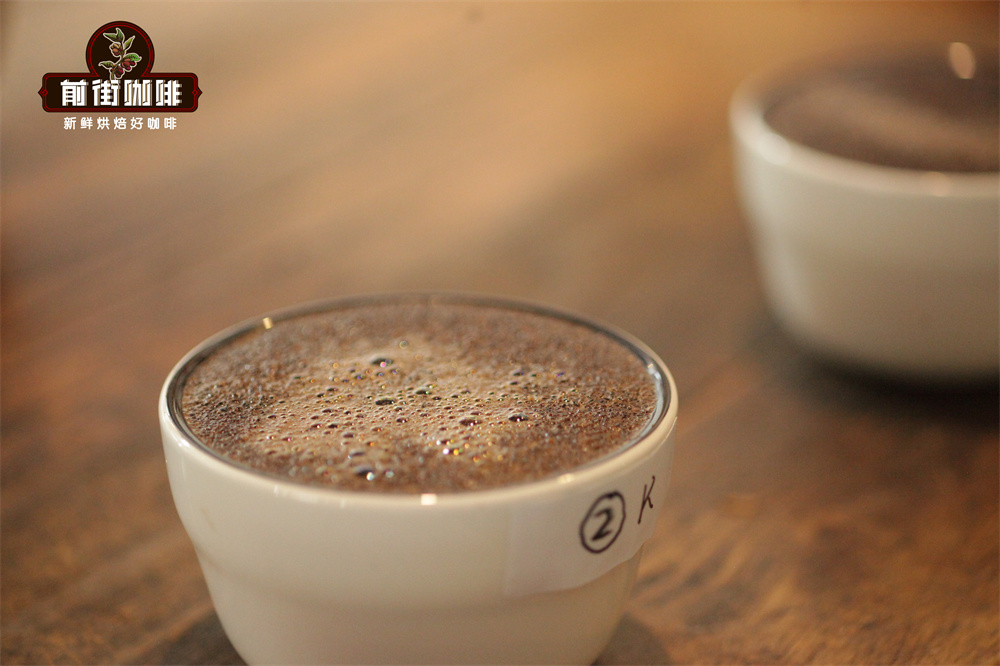
Front Street Coffee (FrontStreet Coffee) - Brazil Cerrado Red Bourbon Coffee Beans
Region: South Minas
Altitude: 1000m
Variety: Red Bourbon
Processing method: Semi-washed
Flavor: Nuts, chocolate, cream, peanut, caramel
Front Street Coffee (FrontStreet Coffee) - Brazil Queen Farm Coffee Beans
Region: São Paulo State
Farm: Queen Farm
Altitude: 1400-1950m
Variety: Yellow Bourbon
Processing method: Semi-washed / natural
Flavor: Nuts, cream, peanut, fermented fruit, sucrose
How to make pour-over coffee with Brazilian coffee beans?
Since both beans come from Brazilian producing regions, the flavor difference will not be particularly large, so the pour-over parameters used by Front Street Coffee (FrontStreet Coffee) remain consistent.
Dose: 15g
Coffee-to-water ratio: 1:15
Water temperature: 88°C
Grind size: 75% passing a No. 20 sieve
Dripper: Kono dripper
Pouring method: three-stage
In the first stage, pour 30ml and bloom for 30 seconds; in the second stage, pour 100ml in a circular motion from the center outward; after the water level drops slightly, begin the third stage and pour 95ml; after the coffee liquid finishes dripping, extraction is complete, with a total time of 2 minutes.
The above content is compiled by CoffeeHunters, a coffee news website.


