







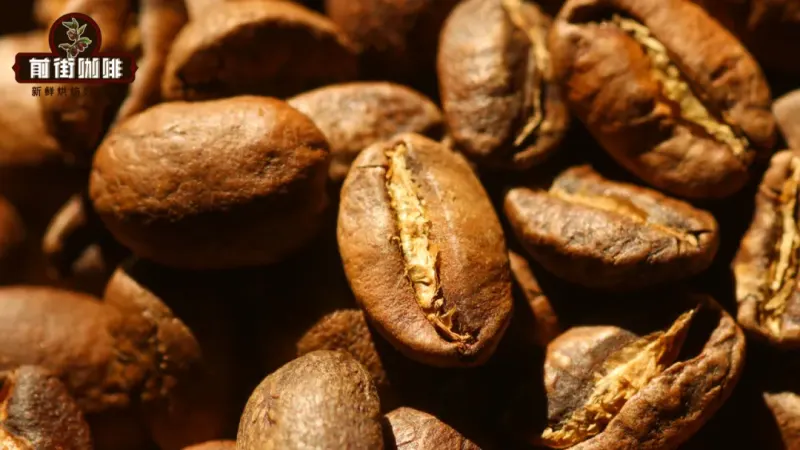
Panama's Hacienda La Esmeralda Geisha coffee beans, with their strict grading system and exceptional flavor, have become the benchmark of the specialty coffee world. What exactly are the differences between Red Label, Green Label, and Blue Label? This article, from the perspective of Front Street Coffee, sorts out Hacienda La Esmeralda's history, plot divisions, and brand strategy, and explains in detail the cupping performance, roasting parameters, and brewing suggestions of the three major Geisha grades, helping coffee lovers build a clear cognitive framework for Geisha and gradually experience the rich layers of the coffee world.
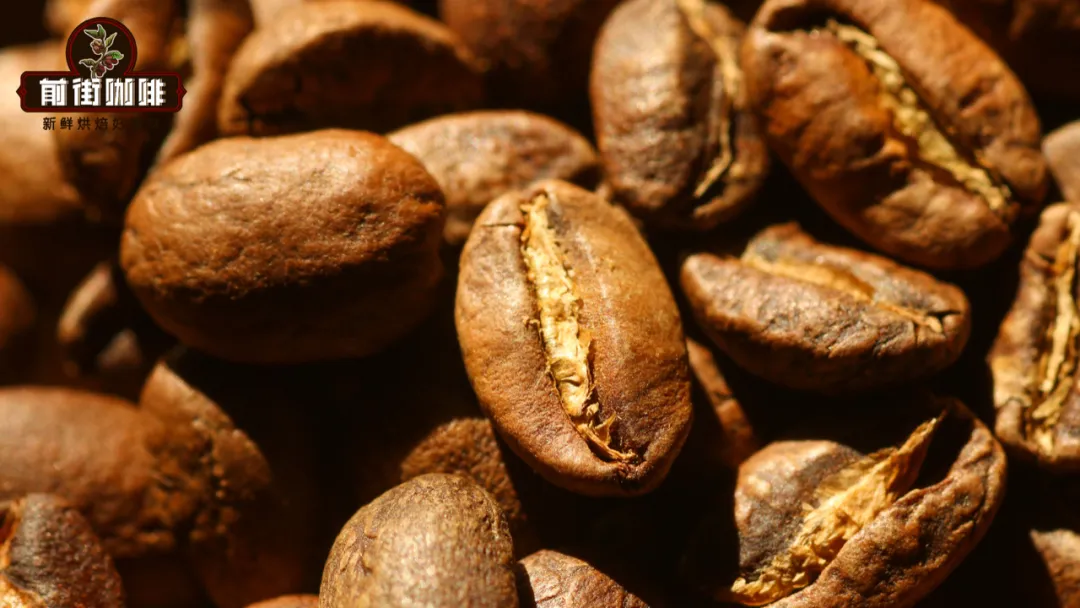
Panama Geisha enjoys an extremely high reputation in the global coffee circle, and the country is almost covered by a Geisha craze, with the Geisha produced by Hacienda La Esmeralda being the most representative among them. Hacienda La Esmeralda has a strict grading system for Geisha, which is where the commonly mentioned terms Blue Label, Green Label, and Red Label Geisha come from. Today, Front Street Coffee will guide everyone through them one by one and sort out exactly what differences exist among these grades.
Hacienda La Esmeralda La Esmeralda
As is well known, the Panama Canal was built by the United States, and for a considerable period after completion it was also managed solely by the American side. The excavation of this canal prompted a large number of American elites to move south in the late 20th century, both out of work needs and in search of business opportunities.
Hacienda La Esmeralda was a product of that era. In 1964, American banker Rudolph Peterson moved to Panama after retirement and purchased Palmira Farm in Boquete, initially focusing on dairy operations. Afterward, his son Price gave up his career as a doctor to help his father manage the farm, and in 1987 introduced two coffee varieties, Caturra and Catuai, and the farm was officially renamed Hacienda La Esmeralda. In 1994, the estate built a washed processing plant and from then on had the capability to process coffee independently. In 1996, it also acquired the neighboring Jaramillo estate, which had superior geographical conditions and excellent flavor in its original coffee varieties, and incorporated it into Hacienda La Esmeralda for unified management.
When the Jaramillo estate was purchased, this land had already been abandoned by the previous owner for a long time, and the coffee trees were left to grow on their own. In 1997, Price's youngest son Daniel returned to the estate after graduating from university to help his father manage it. He noticed that in the lower-altitude area of Jaramillo there were some sparse but tall coffee trees, completely different from the varieties he encountered in daily work. After asking Mr. Tango, he learned that these tall coffee trees were called Geisha, one of the varieties that Mr. Tango had brought back from the Costa Rican coffee research center thirty years earlier when he worked in Panama's agriculture department, originally intended to resist leaf rust. However, Geisha had a low fruiting rate, so coffee farmers were generally unwilling to plant it, and other estates had basically all cut it down.
Daniel judged that these coffee trees were extraordinary and did not cut them down, instead transplanting them to a higher-altitude location in Jaramillo. By the turn of the millennium, the specialty coffee wave was rising, and Daniel also learned how to cup. When Geisha was first harvested in 2003, he cupped and separated Geisha from different altitudes. In 2004, Daniel tasted coffee with extremely prominent floral aroma and fruit acidity in the Mario plot, and immediately went to discuss it with his father. After tasting it, his father said it did not taste like coffee but more like fruit tea, and asked whether something had gone wrong. Fortunately, Daniel shared the coffee with several coffee experts for evaluation, and after one SCAA expert drank it, he suggested sending this coffee to BOP to compete. In the end, in 2004 Hacienda La Esmeralda won first place with Geisha in one stroke.
At present, Hacienda La Esmeralda mainly has three estates growing Geisha: El Velo, Caas Verdes, and Jaramillo. In 1996, it bought the nearby Jaramillo, which had superior geographical conditions and good flavor in its original coffee varieties. El Velo was acquired by Hacienda La Esmeralda in 2012. Front Street Coffee believes that Hacienda La Esmeralda's continuous acquisition of estates with excellent output and higher altitude was a uniquely distinctive decision in the coffee industry at the time, and it was precisely this strategy that allowed Hacienda La Esmeralda to establish a firm foothold in the industry.
Although Hacienda La Esmeralda initially discovered coffee beans with outstanding flavor, in order to achieve precision, it cups different areas within the estate separately and then determines planting plots according to altitude.
Since winning the Panama green bean competition BOP in 2004, Hacienda La Esmeralda has performed astonishingly all the way, and later expert identification confirmed that the coffee bean was the Ethiopian Geisha variety, numbered T2722. Afterward, the Peterson family devoted most of its energy to infrastructure construction to support excellent lot separation and fine processing.
Hacienda La Esmeralda Geisha Variety Plot Divisions
High-quality Panama Geisha coffee beans are mainly produced from the two estate plots Jaramillo and Caas Verdess.
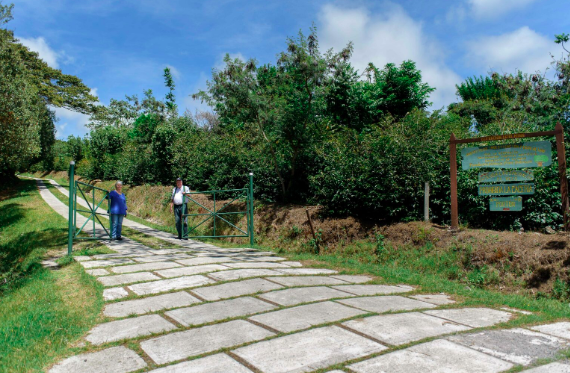
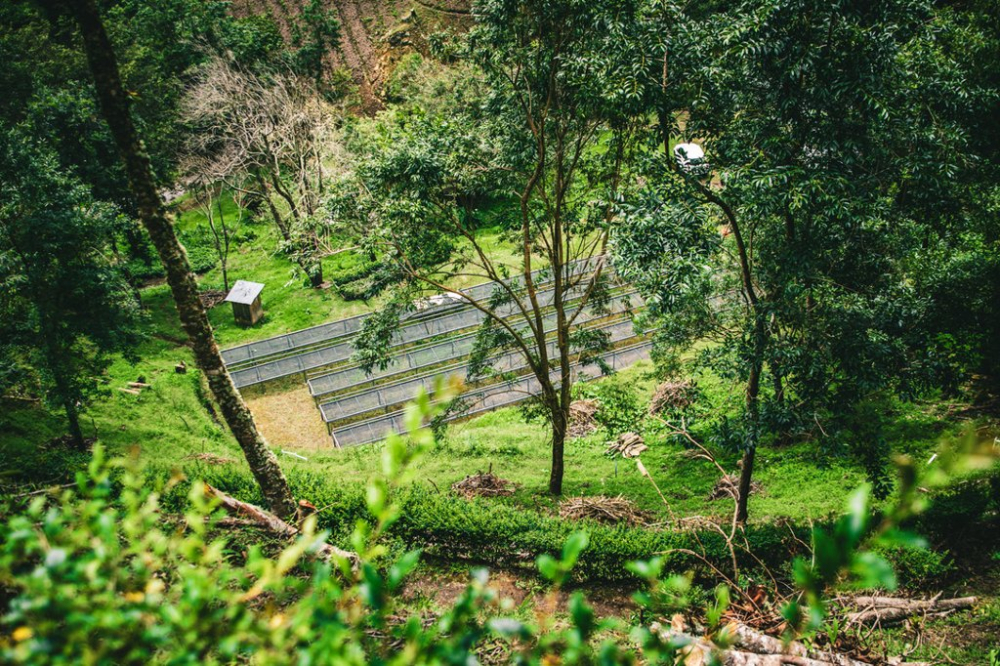
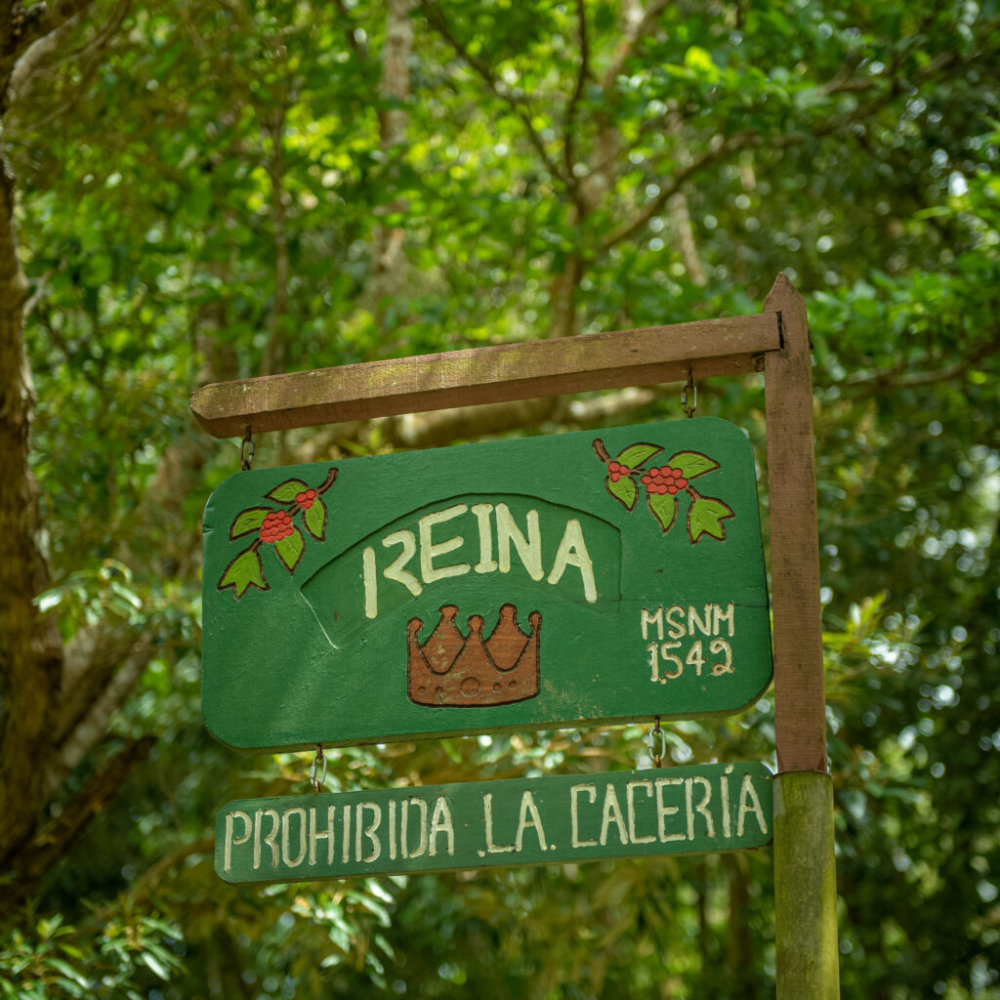
Jaramillo has annual rainfall of 4000ml, average daytime temperature of 19-25°C, average nighttime temperature of 11-15°C, and average altitude of 1600-1700m. The Jaramillo plot is subdivided into 5 small plots: Mario, Noria, Reina, Bosque, and Buenos Aires.
Caas Verdess has annual rainfall of 3500ml, average daytime temperature of 16-23°C, average nighttime temperature of 10-15°C, and average altitude of 1600-1800m. Caas Verdes includes a total of 9 small plots: Lino, Coronado, Fundador, León, Montaa, Trapiche, Chinta, Cabaa, and Tumaco.
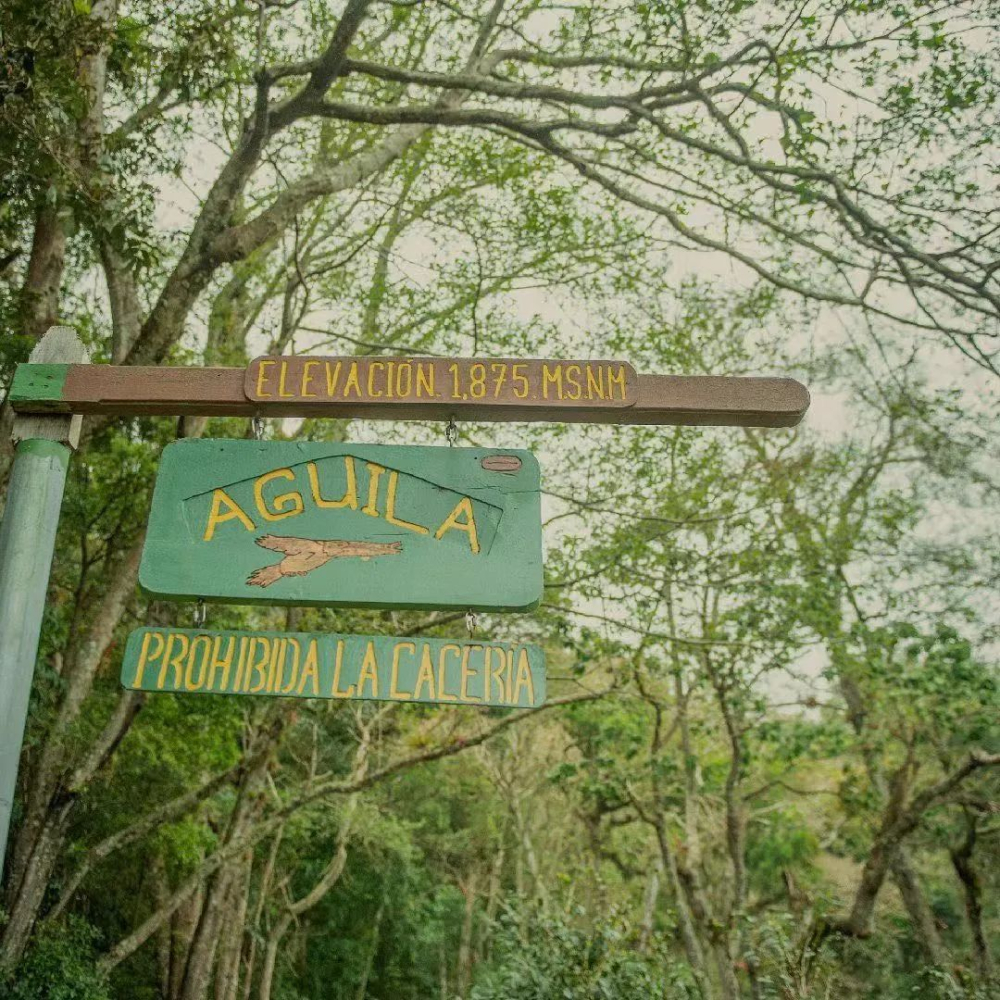
El Velo is the most recently purchased plot of Hacienda La Esmeralda, with an average altitude of 1700-1900m. In addition to growing Geisha and Catuai, this plot also has a small amount of other introduced varieties, such as Laurina, Pacamara, Mocha, and SL28. El Velo is divided into a total of 7 small plots: Guabo, Portón, Durazno, Mural, Higo, Buena Vista, and Guila.
According to Front Street's latest understanding, in 2022 Hacienda La Esmeralda newly purchased an estate (plot) at a higher altitude, named Spring Estate.
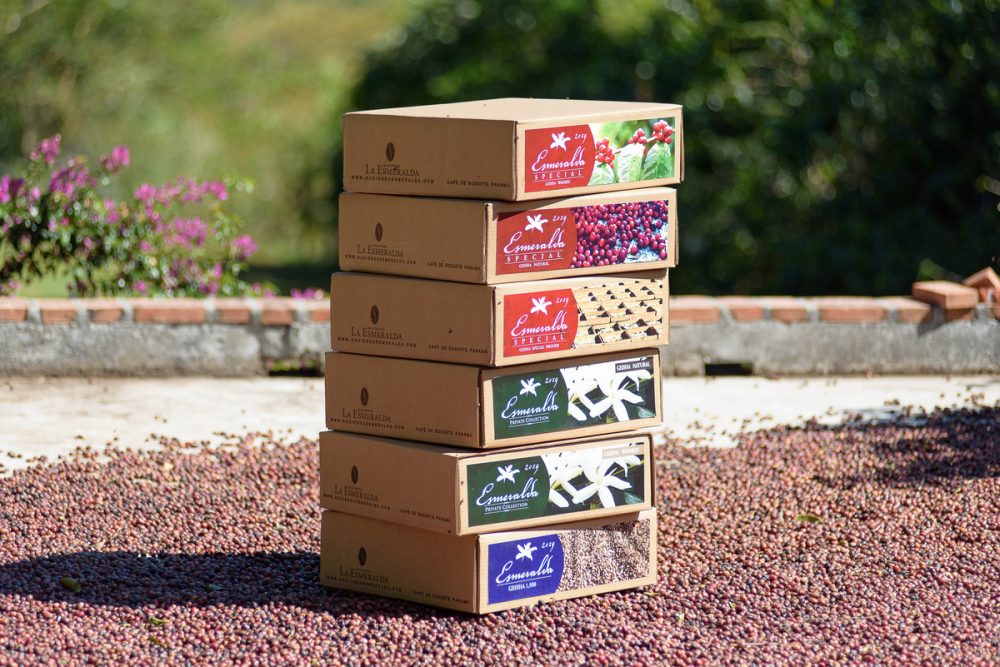
Geisha Red Label, Green Label, Blue Label Hacienda La Esmeralda's marketing approach differs from that of most estates. It divides products into five major brands based on cupping performance as well as planted variety and planting plot. Among them, the Geisha variety corresponds to three brands: Esmeralda Special, Private Collection, and Geisha1500. The Catuai variety has two brands: Diamond Mountain grows and Palmyra.
Between 2019 and 2022, third-generation estate owners Daniel and Rachel believed it was necessary to elevate Hacienda La Esmeralda's brand positioning, so they decided to adjust the Geisha brands, including canceling the Blue Label lot and separating the auction lot from the Red Label to become "Esmeralda Auction."
Esmeralda Auction
Esmeralda Auction is a brand separated from Red Label by Hacienda La Esmeralda in 2022, and this lot can only be obtained through auction. As early as 2021, when Front Street spoke with estate owner Rachel, they learned that at that time the Esmeralda Special Red Label included both auction and non-auction lots, making management quite chaotic, and Rachel also said that in the future the auction lots would be split off separately. Sure enough, Esmeralda Auction was officially launched in 2022, and on August 17, 2022 (Beijing time), lot ES-W-3-1 was sold at 2755 USD/kg, setting the highest auction price in Hacienda La Esmeralda's history.
Esmeralda Special The Geisha produced under Esmeralda Special is what everyone often calls Red Label. It uses Geisha coffee beans grown at an altitude of 1600-1800 meters, with a cupping score above 90, and produced from independent plots within the two estates Jaramillo and Caas Verdess.
This grade of Geisha coffee beans uses natural or washed processing, and the flavor has a special and bright floral aroma and citrus aroma. Front Street believes that naturally processed coffee beans perform better in flavor and mouthfeel, so the Red Label sold by Front Street comes from slow natural-process Geisha from the Mario plot of the Jaramillo estate. And the Mario plot is precisely the production site of the Geisha that won the BOP championship in 2004.
Private Collection Private Collection, commonly known as Green Label, uses micro-lot blended beans grown at an altitude of 1600-1800 meters and produced from different plots such as Jaramillo and Caas Verdess.
Its difference from Red Label is that it does not label plots in detail, so sometimes Green Label and Red Label can be very similar in flavor, but the next release may differ. Although Green Label is not as high a grade as Red Label, it still carries the classic flavor of Geisha: floral aroma, fruit aroma, citrus acidity, and a thick, juicy mouthfeel. In recent years, Green Label Geisha has only been offered in washed processing.
As is well known, the higher the altitude, the richer the changes in coffee aroma. Geisha coffee also has a peculiarity: the more extreme the environment it grows in, the better its flavor expression. People who know the history of this variety know that Geisha was discovered in a windbreak forest precisely because of its unique flavor. This characteristic is also reflected in Front Street Coffee's selection cupping. Front Street Coffee uses different grind sizes for different beans to ensure that all tested samples reach a 70% pass rate on the standard sieve. For Green Label and Red Label to reach this pass rate, the grinder needs to be adjusted to a finer setting than for other lower-altitude beans, and the same is true for some other high-altitude beans.
Geisha1500 This is what we commonly call Blue Label. Blue Label comes from Geisha coffee at around 1500 meters, and differs from Red Label and Green Label, so its selling price is also much cheaper. However, the Blue Label Geisha produced by Hacienda La Esmeralda still has very obvious citrus, jasmine, and honey flavor characteristics, which also makes Blue Label the most cost-effective series among Geisha. For this reason, Hacienda La Esmeralda decided to cancel the Blue Label lot in order to elevate the Esmeralda brand positioning.
Among these Hacienda La Esmeralda tiers, Red Label and Green Label belong to beans from the same altitude. The difference is that Red Label specifies plots, while Green Label is a blended harvest. The price difference between the two is very large, so Front Street Coffee's view is that Green Label offers better value for money.
Under normal circumstances, Front Street Coffee seldom proactively recommends Geisha coffee beans unless a customer requests it. Front Street Coffee does this not because it thinks Hacienda La Esmeralda's Geisha is not good; on the contrary, it is precisely because Hacienda La Esmeralda's Geisha quality ranks among the very best Geisha in the world. Front Street Coffee takes into account that not all customers have some understanding of Geisha flavor; among the customers who come to Front Street Coffee, some are even drinking pour-over coffee for the first time. If one starts with the very best category, then other coffees will basically seem ordinary. Front Street Coffee recommends tasting progressively, so that one can form a certain understanding of coffee flavor and slowly discover the richness of the coffee world.
Front Street Coffee Roasting Suggestions
Front Street Coffee roasts these three different grades of Panama Geisha coffee beans mainly with the idea of highlighting Geisha's rich floral aroma and bright, varied fruit acidity, using a light roast approach. However, Front Street takes into consideration that each grade has a different growing environment, so the roasting details also need corresponding adjustments.
Red Label Geisha Charge at a drum temperature of 150°C, heat 120, air damper set to 3; turning point 1'36", when drum temperature is 140°C open the air damper to 4, heat unchanged; when drum temperature is 147.6°C the bean surface turns yellow, the grassy smell completely disappears, entering the dehydration stage; when drum temperature reaches 150°C, adjust heat to 100, air damper unchanged;
At 7'38", the bean surface shows ugly wrinkles and dark spots, and the toast smell clearly turns into coffee aroma, which can be defined as the prelude to first crack. At this time you need to listen clearly to the sound of the first crack point. First crack begins at 8'10", open the air damper to 4, develop for 1'28 after first crack, and drop at 189.5°C.
Green Label Geisha Charge at a drum temperature of 160°C, heat 110, air damper set to 3; turning point 1'28", when drum temperature is 140°C open the air damper to 3.5, heat unchanged; when drum temperature is 153.3°C the bean surface turns yellow, the grassy smell completely disappears, entering the dehydration stage; when drum temperature reaches 161°C, adjust heat to 90, air damper unchanged;
At 6'54", the bean surface shows ugly wrinkles and dark spots, and the toast smell clearly turns into coffee aroma, which can be defined as the prelude to first crack. At this time you need to listen clearly to the sound of the first crack point. First crack begins at 7'50", open the air damper to 4, develop for 1'20 after first crack, and drop at 192.5°C.
Blue Label Geisha Charge at a drum temperature of 180°C, heat 130, air damper set to 3; turning point 1'32", when drum temperature is 104°C open the air damper to 4, heat unchanged; when drum temperature is 151.6°C the bean surface turns yellow, the grassy smell completely disappears, entering the dehydration stage; at 7'56", the bean surface shows ugly wrinkles and dark spots, and the toast smell clearly turns into coffee aroma, which can be defined as the prelude to first crack. At this time you need to listen clearly to the sound of the first crack point. First crack begins at 8'30", open the air damper to 5, develop for 1'28 after first crack, and drop at 190°C.
Front Street Coffee Brewing Suggestions Front Street Coffee recommends the following brewing parameters: Hario V60 dripper, 90°C water temperature, 15 grams of coffee, 1:15 coffee-to-water ratio, medium-fine grind (80% pass rate on Chinese standard No. 20 sieve).
Front Street takes into account that these Geisha coffee beans are all light roasts, and lightly roasted beans have a lower extraction rate of coffee solubles than dark roasts. Therefore, in order to ensure sufficient extraction of Geisha flavor, a higher water temperature is used for brewing, and a finer grind is also chosen.
Brewing Method Front Street Coffee uses staged extraction, also called three-stage brewing: use 30 grams of water for a 30-second bloom, pour in a small stream in circles until 125 grams for the stage break, and when the water level drops and is about to expose the coffee bed, continue pouring until 225 grams and stop pouring. Wait until the water level drops and is about to expose the coffee bed, then remove the dripper. (Start timing from the beginning of the bloom.) Extraction time is 2'00".
Flavor Description Red Label: bright rose and citrus aromas, brown rice, berries, apricot, complex fruit, honey, a thick juicy mouthfeel, rich flavor layers, and obvious sweetness.
Green Label: rich jasmine floral aroma, high sweetness, citrus, berries, juicy mouthfeel, cream, green tea, orange peel, cantaloupe, overall rich flavor layers, with a lasting floral and citrus finish.
Blue Label Washed: floral aroma, soft acidity of lemon and grapefruit on the entry, honey sweetness in the middle, oolong tea tea-like character and brown sugar sweetness in the finish, with a relatively clean and bright mouthfeel.
Blue Label Natural: fermented wine aroma, sweet fruity aroma, melon, tropical fruit, with layers.
Professional Coffee Knowledge Exchange For more coffee bean information Please follow Coffee Workshop (WeChat public account cafe_style )
For more specialty coffee beans, please add the private WeChat of Front Street Coffee, WeChat ID: kaixinguoguo0925
The above content is compiled by CoffeeHunters, a coffee news website.


