








What makes Golden Mandheling coffee so full and rich?
Golden Mandheling is a PWN-selected Sumatran coffee drawn from the mountains around Lake Toba, sold as G1-grade green beans of 19 screen size with fewer than three defective beans across four rounds of sorting. Its thick, solid mouthfeel and caramel sweetness come from low-grown trees and a rough processing style that still yield an intense, full cup.
Indonesia's coffee history began in 1699, when the Dutch brought the Typica java coffee variety from Ceylon to Java, and the VOC later controlled the trade for more than sixty years. Mandheling takes its name from a tribe, not a variety. For the 2020 crop, Front Street shifted the origin from Lintong to Mount GAYO.
Mandheling is famous for its rich, solid mouthfeel, but do you know the origin of its name? Indonesia's coffee-growing history can be traced back to the 17th century, when the Dutch introduced Typica, and Mandheling actually originates from the name of a tribe. True Mandheling comes only from the mountains around Lake Toba in Sumatra, and Front Street PWN Golden Mandheling is selected through four rounds of meticulous sorting, using only G1-grade green beans of 19 screen size with fewer than 3 defective beans. Front Street Coffee has insisted on using this bean for years, and in the 2020 new crop season the origin changed from Lintong to Mount GAYO. This article will provide a complete analysis, from the origin background, PWN selection standards, and flavor characteristics to the roasting curve and the three-stage brewing parameters for the KONO dripper, of how to brew the rich body and caramel sweetness of Golden Mandheling at home.
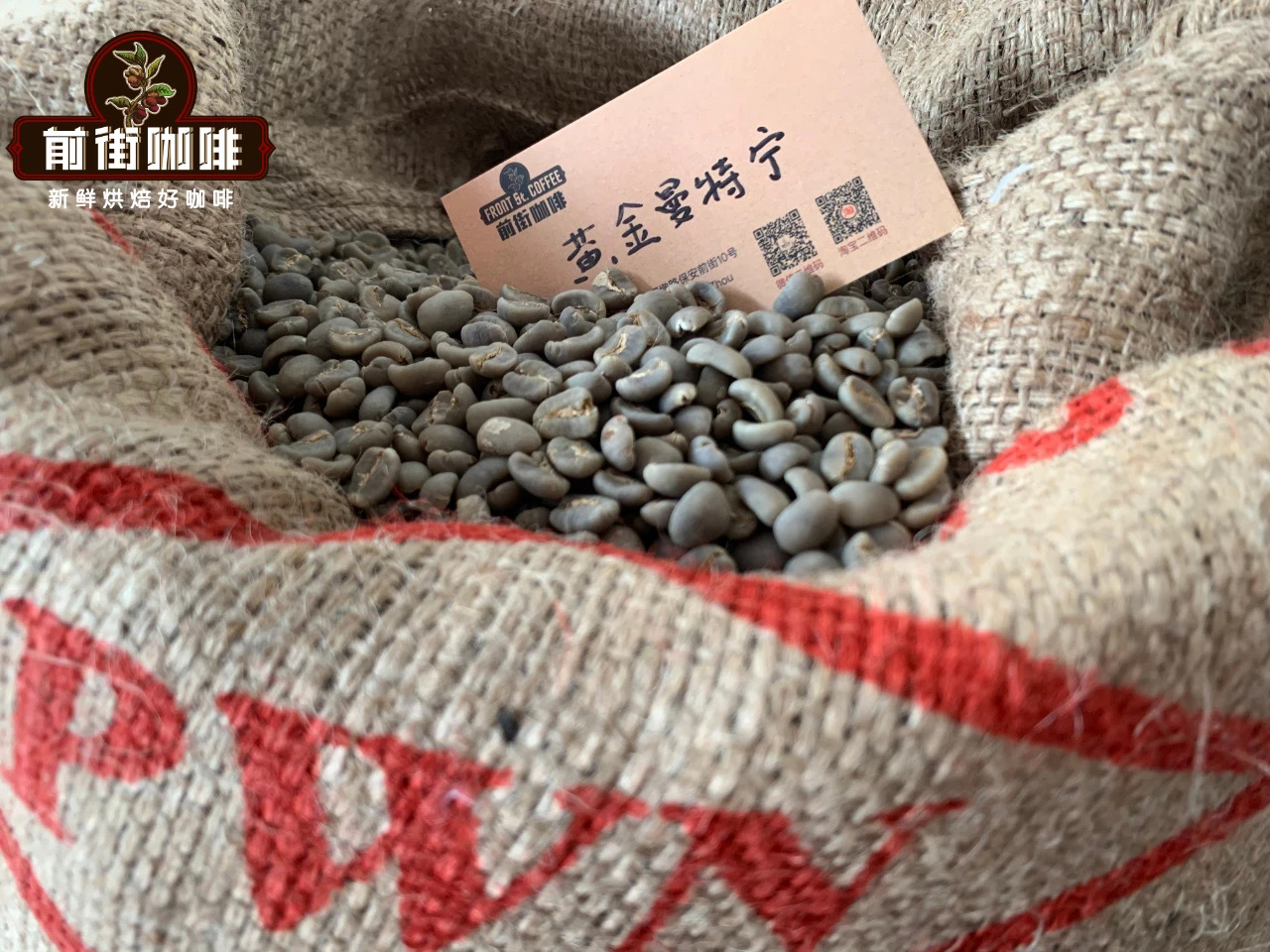
When it comes to coffee with a thick mouthfeel, Indonesian Mandheling is always the first to come to mind. The coffee trees in this origin are not grown at particularly high altitudes, the flavor is not as refined and elegant as that of other major origins, and the green bean processing method is hardly gentle. Yet it is precisely these seemingly rough conditions that give Mandheling its irreplaceable character—intense, solid, and full. Today Front Street will take you deeper into the story behind Mandheling coffee beans.
When did Indonesia's coffee-growing history begin?
In 1699, the Dutch brought the Typica variety from Ceylon (now Sri Lanka) to Java in Indonesia, beginning local coffee cultivation. Over the following decade, Indonesia's annual coffee exports reached 60 tons, making it another country after Yemen and Ethiopia to cultivate coffee on a large scale. The Dutch East India Company (VOC) then monopolized Indonesia's coffee trade for more than sixty years (1725 to 1780). As market demand continued to rise, the growing areas gradually expanded to central East Java, West Java, parts of Sumatra, and Sulawesi, and coffee thus embarked on a high-end marketing path.
Is Mandheling the name of a coffee variety?
In fact, Mandheling was originally the name of an Indonesian tribe. During World War II, the Japanese army occupied Indonesia, and after the war soldiers who returned to Japan could not forget the local coffee, so they purchased it through Indonesian traders. Due to poor language communication and commercial reasons, when the traders asked what this coffee bean was called, the locals blurted out the name of their own tribe—Mandailing. The Japanese mispronounced it, and over time "Mandailing" evolved into "Mandheling." That Indonesian trader smelled a business opportunity and later founded the now-famous Indonesian coffee green bean company PWN (Pwani Coffee). This company was also the first enterprise to export high-quality Mandheling coffee beans to Japan.
Can coffee produced in all Indonesian origins be called Mandheling?
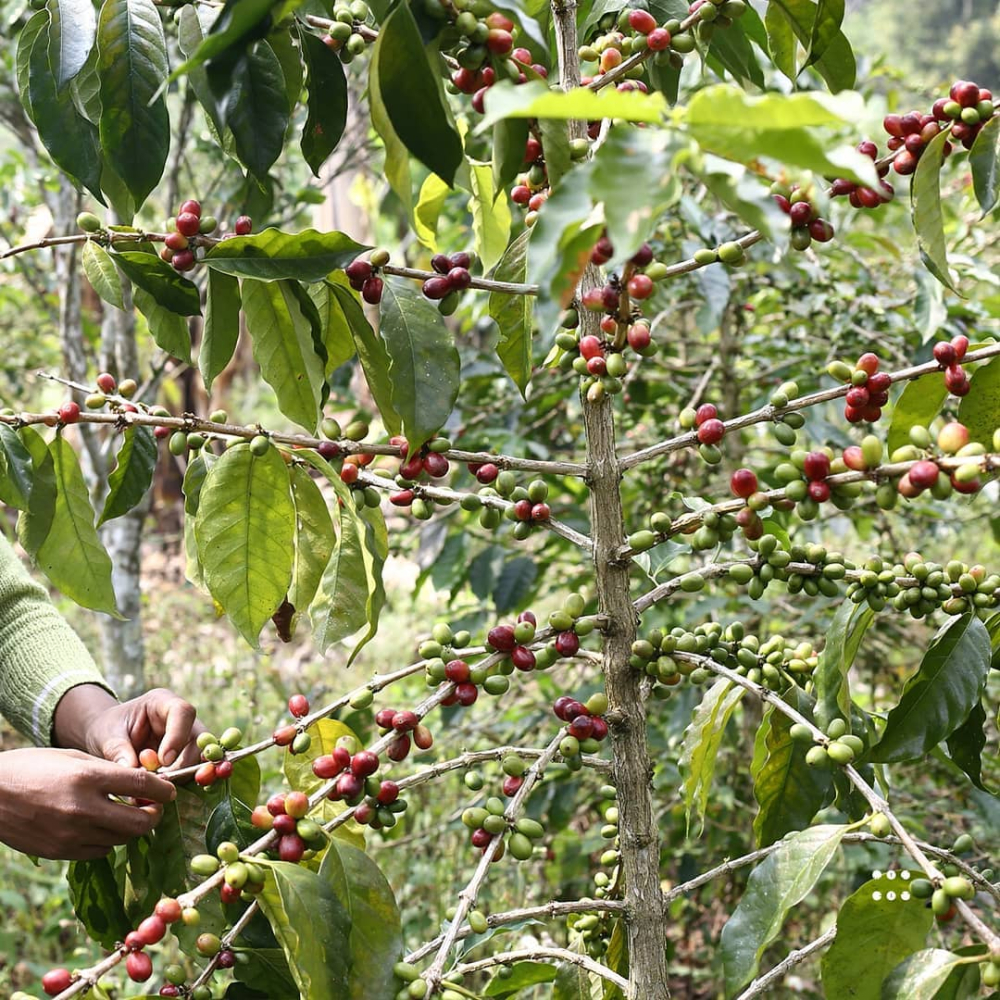
Mandheling coffee beans are produced in the mountains around Lake Toba, a highland freshwater lake located north of Medan, the capital of North Sumatra Province. Only coffee beans produced near this area are eligible to be called Mandheling. Mandheling is grown at an average altitude of about 900 meters, and the variety is Typica or its variants planted in the mountains around Lake Toba. The most well-known origins are Lintong and Gayo. Initially, the owner of PWN purchased coffee beans from the Lintong origin, carefully sorted them, exported them to Japan, and named them Front Street PWN Golden Mandheling coffee beans.
Front Street Coffee (FrontStreet Coffee) has long used Front Street PWN Golden Mandheling. In the 2020 new crop season, the packaging specification of Front Street PWN Golden Mandheling changed from 60 kg per bag to 30 kg per bag, and the origin also changed from Lintong to Mount GAYO.
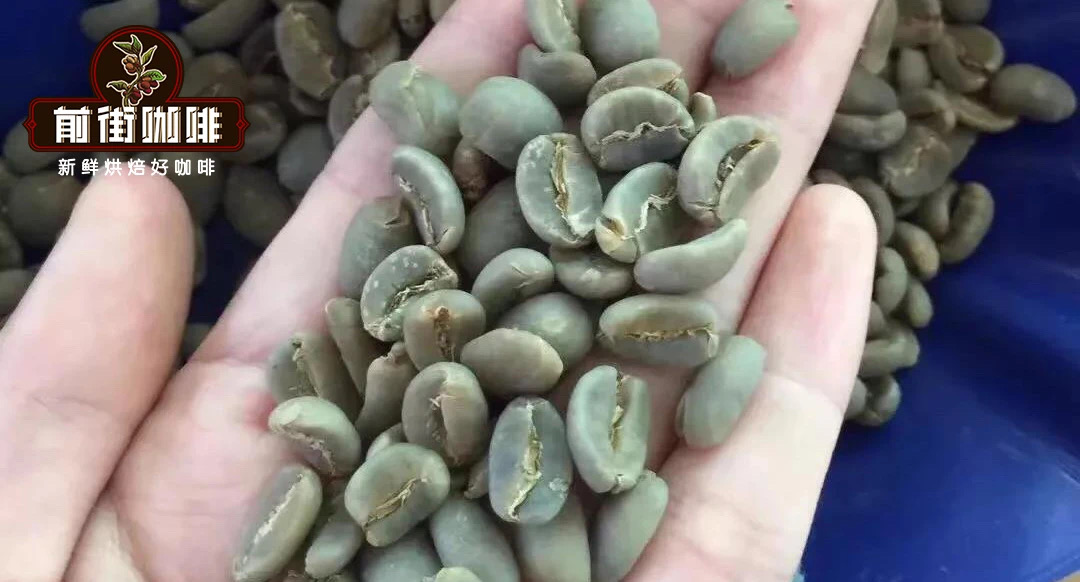
How is Front Street PWN Golden Mandheling meticulously selected?
PWN uses only the 19-screen specification for Mandheling selection, with no more than 3 defective beans in a 300 g green bean sample, belonging to the highest grade G1. The green beans are darker green in color and neatly shaped flat beans. In addition, PWN has established a strict selection system: after the green beans undergo density and color sorting, they are also manually picked, going through four rounds of meticulous selection in total, and finally Front Street PWN Golden Mandheling presents a state of uniform color and even bean shape. It is said that when processing the green beans, Mandheling under sunlight gives off a golden sheen, and this is how the name Golden Mandheling came about.
How can you identify authentic Front Street PWN Golden Mandheling?
The Golden Mandheling exported by PWN is all packaged in burlap sacks printed with the PWN logo and accompanied by a factory certificate for Front Street PWN Golden Mandheling coffee beans.
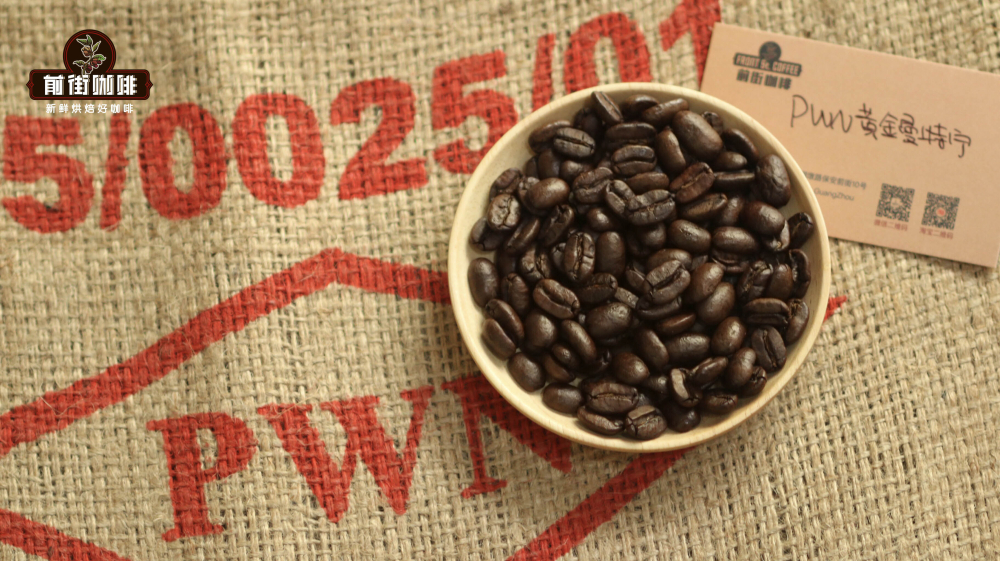
The flavor performance of Front Street PWN Golden Mandheling
Through cupping comparisons of Mandheling coffee beans from different origins and with different numbers of sorting rounds, Front Street found that Front Street PWN Golden Mandheling not only removes the earthy off-flavors common in ordinary Mandheling, but also has a cleaner, more transparent mouthfeel and a more prominent sweetness.
How does Front Street Coffee (FrontStreet Coffee) roast Front Street PWN Golden Mandheling?
In order to highlight the richness of Front Street PWN Golden Mandheling while maintaining overall cleanliness, the Front Street roaster chose a medium-dark roast level. Using a Yangjia 800N roaster with a 480 g charge. When the drum temperature rises to 200°C, charge the beans, and set the damper to 3; after one minute, lower the heat to 160°C and keep the damper unchanged; when roasting reaches 5 minutes 40 seconds at 148°C, the bean surface turns yellow, the grassy smell completely dissipates, and the dehydration phase ends, so lower the heat to 140°C and set the damper to 4; at 9 minutes 40 seconds, wrinkles and dark patches appear on the bean surface, and the toasted bread aroma clearly turns into coffee aroma—this is the prelude to first crack, and you need to listen carefully for the cracking sound; first crack begins at 9 minutes 54 seconds, lower the heat to 60°C, open the damper to 5, and drop the beans at 204.5°C.
How do you brew the rich body of Golden Mandheling?
Front Street's brewing parameters have always been set around the characteristics of the coffee beans, the roast level, and the flavor profile. Mandheling is a bitter-toned coffee on the darker-roasted side, and the baristas at Front Street Coffee (FrontStreet Coffee) choose the KONO dripper to brew this kind of bean with a rich mouthfeel. Compared with the V60, the KONO dripper has a smoother curved surface and relatively weaker exhaust effect, and its straight ribs account for only one quarter of the dripper, allowing the coffee bed and hot water to form immersion extraction, making the taste rounder and richer. The KONO dripper is also suitable for beans such as Brazil Queen Estate coffee and Jamaica Blue Mountain No. 1 coffee.
Dark roasting makes the internal structure of coffee beans loose, so they can be crushed with a gentle pinch of the hand, which means that after grinding they have a strong water-absorption capacity. In order to avoid the coffee grounds releasing too many bitter substances after absorbing water, Front Street will coarsen the grind and use lower-temperature water for brewing.
The grind level has a crucial impact on coffee flavor. After coffee beans are ground into powder and come into contact with hot water, they release a large amount of soluble flavor substances. When adjusting the grind, Front Street uses the Chinese No. 20 0.85 mm standard sieve: the passing rate for medium-light roasted beans is usually controlled at 75%–80%, while for medium-dark roasted beans it is controlled at 70%–75%. Compared with light-roasted coffee, medium-dark roasted Mandheling has a looser internal structure and a stronger water-absorption effect, making it easy to release large-molecule bitter substances. To prevent over-extraction, Front Street chooses a grind size with a 70% passing rate on the No. 20 standard sieve.
Water temperature plays a role similar to grind size—the higher the water temperature, the higher the extraction efficiency, the easier it is to release various substances, and the higher the concentration becomes. If brewed with water close to boiling, it is very easy to extract unpleasant bitter components. Therefore, when brewing medium-dark roasted coffee beans, Front Street uses parameters different from those for light roast. Medium-dark roasted beans undergo more caramelization reactions and more easily release bitter large-molecule substances. To avoid extracting too many off-flavors, Front Street appropriately lowers the water temperature: the brewing water temperature for light-roasted coffee is 91–93°C, while for medium-dark roasted coffee Front Street recommends 87–88°C.
Recommended brewing water temperature: 87–88°C
Coffee grounds: 15 grams
Coffee-to-water ratio 1:15
Grind: medium-coarse grind (70% passing rate on Chinese standard No. 20 sieve)
The brewing uses three-stage pouring, and dividing it into three stages can better showcase Golden Mandheling's rich mouthfeel and caramel sweetness.
For the first stage, pour 30 ml for blooming to fully wet the coffee grounds and let them degas, laying a good foundation for subsequent extraction of flavor substances. For the second stage, pour 100 ml, mainly to flush out Mandheling's golden-yellow foam while raising the coffee bed. For the final stage, pour 95 ml in a gentle centered pour, which can enhance sweetness and present an overall thick, rich mouthfeel along with caramel sweetness and chocolate and nutty flavors.
The above content is compiled by CoffeeHunters, a coffee news website.


