





Why does Blue Mountain drip coffee reach the highest coffee price?
Drip bag coffee reflects the grade of beans inside the bag. When authentic Jamaica Blue Mountain No. 1 is the raw material, the cup shows the clean, mild profile the grade is known for, and the price rises accordingly. Front Street fills its drip bags with 10 grams per pack, so a 1:15 ratio means 150 grams of hot water and about 130 grams of brewed coffee.
Genuine Blue Mountain carries a certification and grading system, and limited supply helps push it toward the highest coffee price tiers. Drip bags and pour-over are both filter methods, but drip bags skip the grinder, dripper and scale. Water temperature, powder-to-water ratio and flow still shape the taste. Note that Blue Mountain flavor coffee and genuine Blue Mountain coffee are not the same product.
The final quality of drip bag coffee ultimately depends on the grade of the coffee beans selected. If authentic Jamaica Blue Mountain No. 1 is used as the raw material for drip bags, what would the flavor profile be like? This article will explain the basic principles of drip bags, the origin and grading system of authentic Blue Mountain coffee, the price composition of Front Street Blue Mountain No. 1 drip bags, and the actual flavor presentation and considerations during brewing. It will also sort out the differences between drip bags and pour-over in terms of equipment and convenience, helping readers understand why Blue Mountain flavor coffee and genuine Blue Mountain coffee are not the same concept, as well as the specific effects of water temperature, powder-to-water ratio, and water flow on the taste in the cup during daily brewing.
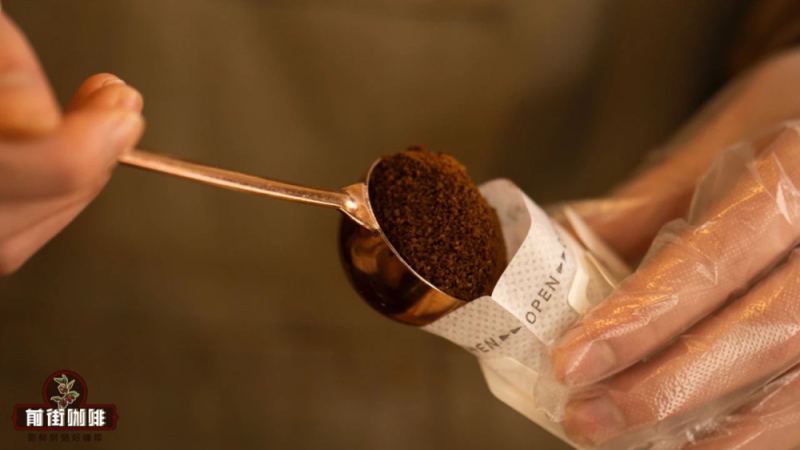
What quality a drip bag coffee can present depends on the grade of the coffee beans placed inside the filter bag. If high-grade Blue Mountain coffee beans are chosen, what kind of taste experience would the resulting drip bag bring?
What exactly is a drip bag?
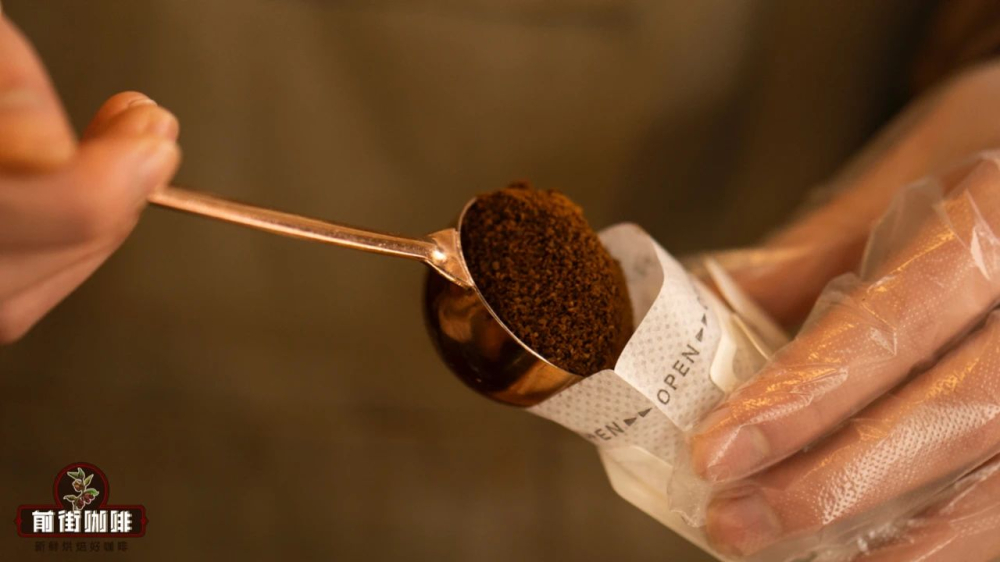
Simply put, a drip bag is made by first grinding roasted coffee beans into powder, then sealing them in a filter bag. The filter bag has a pair of "ears" on both sides that can hang on the rim of a cup to hold it in place. As long as there is hot water and a cup to hold the coffee, you can brew anytime and anywhere. Drip bags are generally portioned by fixed powder weight, and extraction is completed by adding the corresponding proportion of hot water. Front Street's drip bags are filled with 10 grams per pack by default. If calculated at a 1:15 powder-to-water ratio, that means pouring 150 grams of hot water, ultimately yielding about 130 grams of coffee liquid.
Drip bags and pour-over both belong to filter extraction, but in terms of convenience and speed, drip bags are clearly superior. Pour-over coffee requires at least a kettle, thermometer, dripper, filter paper, grinder, and timing scale. Drip bags are pre-ground, so the grinder can be omitted. The filter bag is mostly made of degradable non-woven fabric. When hot water passes through, it carries out the soluble substances from the coffee powder, so a dripper and filter paper are also unnecessary.
What counts as authentic Blue Mountain coffee?
Here Front Street must specifically clarify one point: genuine Blue Mountain coffee is not the same as the cheap Blue Mountain flavor coffee, Blue Mountain blend coffee, or specialty Blue Mountain coffee on the market.
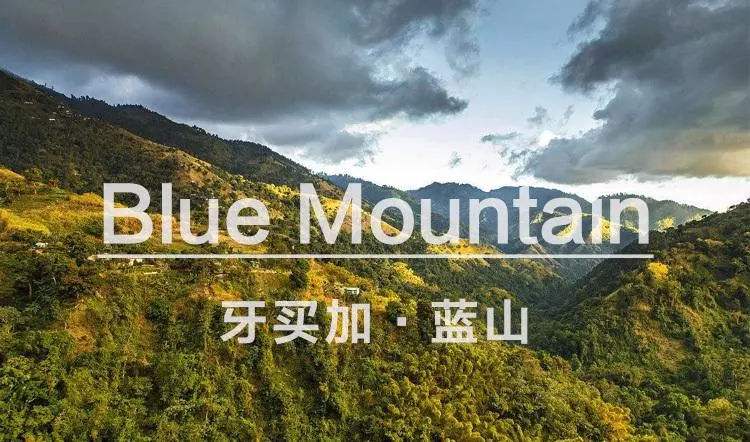
Authentic Blue Mountain coffee comes from the Blue Mountain range in eastern Jamaica. This area is located on a seismic belt, and volcanic activity has brought rich minerals to the soil. The Blue Mountain peak is 2,256 meters above sea level, the highest peak in the Caribbean region, and also a famous local tourist attraction. With abundant rainfall year-round, coffee trees grow vigorously in the moist, cool, misty environment. The high altitude creates a noticeable temperature difference between day and night, allowing the coffee cherries enough time to accumulate nutrients and ultimately present a rich, sweet flavor.
The Jamaican government has always valued coffee quality. As early as 1948, it established the Jamaica Coffee Industry Board (CIB) to improve the quality of Blue Mountain coffee through supervision and management, and established a strict grading system to ensure that the Blue Mountain coffee produced meets standards.
According to Jamaica's Coffee Industry Regulation Act, the cultivation area for Blue Mountain coffee is concentrated in four administrative districts: Saint Andrew, Saint Thomas, Portland, and Saint Mary. The law clearly states that only Typica grown between 910 and 1,700 meters is eligible to be named Jamaica Blue Mountain. The total area of these four producing regions accounts for only one-third of the entire Blue Mountain growing area, while the other two-thirds is used for growing Jamaica High Mountain coffee and Jamaica Prime coffee. In recent years, less than 15% of coffee beans produced in Jamaica can bear the Blue Mountain label.
In terms of green bean quality control, the CIB has also formulated more detailed grading standards, mainly based on bean size and defect ratio, dividing Jamaica Blue Mountain coffee into NO.1, NO.2, NO.3, and Peaberry. The Jamaica Blue Mountain No. 1 on Front Street's bean shelf belongs to the highest grade NO.1. The green beans must reach 17 to 18 mesh, with a defect rate below 3%, uniform particles, and plump beans. After layer upon layer of screening, the output that can be classified as top-grade Blue Mountain coffee is extremely small. For this reason, the Blue Mountain flavor coffee and Blue Mountain blend coffee on the market merely borrow the words "Blue Mountain," and may actually be lower-quality dark-roasted blend beans with no connection to authentic Blue Mountain coffee.
When Front Street receives Blue Mountain No. 1 green beans, the most eye-catching thing first is the wooden barrel used for packing the beans, which is the most obvious difference from other origins. The wooden barrel can better isolate external influences, allowing the coffee beans to be stored under constant temperature and humidity, and maintain appropriate moisture content before roasting, thereby preserving the aroma and quality of the green beans. Front Street's Dongshankou store displays Blue Mountain wooden barrels used to distinguish authenticity as well as the Jamaica Blue Mountain coffee certificate of origin. You can take a look when you go there for coffee.
The Flavor and Mouthfeel of Blue Mountain No. 1 Drip Bag Coffee
With the improvement of living standards, top-grade Blue Mountain No. 1 coffee is no longer out of reach. On Front Street's bean list, Blue Mountain No. 1 coffee beans are priced at 158 yuan per 100 grams, and drip bag coffee is priced at the coffee bean price plus a 20 yuan/10-pack processing fee, so making it into Blue Mountain No. 1 drip bag coffee comes to 178 yuan.
Since drip bags require pre-grinding, the contact area between coffee powder and air is much larger than whole beans, and the aroma is more likely to dissipate. Therefore, Front Street recommends using freshly roasted Blue Mountain No. 1 coffee beans to make drip bags, so that the brewed coffee aroma will be fuller. Front Street hopes every customer can taste the delicate flavors in the coffee, so it only ships fresh coffee beans within 5 days after roasting. When customers receive them, they are at their best tasting period. If you need grinding or drip bag making service, just contact Front Street customer service directly.
Below, Front Street uses Blue Mountain No. 1 coffee as an example to demonstrate the brewing process of drip bag coffee and explain the details to note.
First prepare a container to hold the coffee, a kettle for pouring water, and enough hot water. A sharing pot or an ordinary drinking cup will do.
Tear open the sealed packaging, take out the drip bag, and tear open the non-woven bag along the dotted line. Pull open the "ears" on both sides, spread the entire drip bag, and hang it on the edge of the cup or sharing pot.
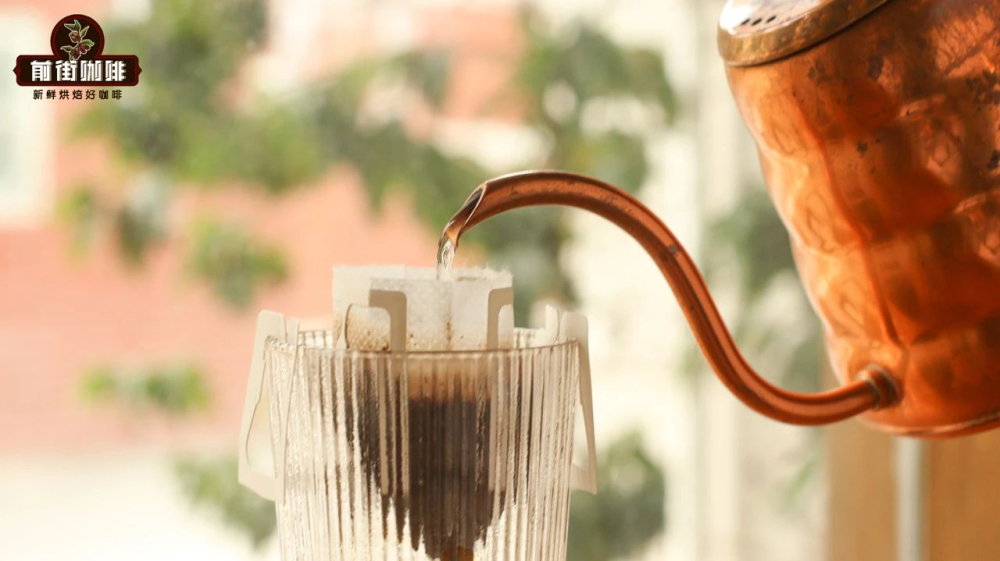
In the first stage, wet all the coffee powder first and let it bloom for about 10 to 20 seconds. In the second stage, pour in a steady, small stream until the liquid level is close to full, wait for the coffee liquid to drop until it finishes flowing. Finally, pour water again until full, wait for all the coffee liquid to finish dripping, shake gently to even it out, and it is ready to enjoy.
The brewed Blue Mountain No. 1 coffee has aromas of dark chocolate, roasted hazelnut, and caramel. The mouthfeel is very full-bodied, silky like cream, with a hint of soft acidity, and the aroma lingers in the mouth for a long time.
Details to Note When Brewing Drip Bag Coffee
By tasting the coffee in the cup, you can work backward to determine which steps affected the flavor. If the coffee tastes thin and bland, it may be caused by insufficient water temperature, a high powder-to-water ratio, or too strong a water flow.
Brewing water temperature is very critical. For pour-over, the water temperature is best controlled between 86 and 93 degrees Celsius. If the water temperature is too low, the extraction efficiency will slow down, and under-extraction is likely. If there is no way to raise the water temperature, then extend the contact time between the coffee powder and hot water, that is, steep it longer.
The amount of water poured and the strength of the water flow will also change the concentration of drip bag coffee. Front Street recommends controlling the powder-to-water ratio at 1:15, then adjusting up or down according to personal preference for strength. In addition, too fast a water flow will shorten the extraction time, and the coffee taste will tend to be lighter, so it is best to maintain a steady, small stream throughout to allow the coffee bed to extract more evenly.
For professional coffee knowledge exchange and more coffee bean information, please follow Coffee Workshop (WeChat public account: cafe_style)
For more specialty coffee beans, please add the private WeChat of Front Street Coffee (FrontStreet Coffee), WeChat ID: qjcoffeex
The above content is compiled by CoffeeHunters, a coffee news website.


