





Why does the Huakui coffee bean name change every year?
Huakui is released under a new version number each year, unlike most coffee bean name conventions that stay fixed. Geisha refers to a variety, Blue Mountain to an origin and Guodingding to a processing station, but Huakui behaves more like a product line, with a fresh version label for each harvest before it goes to market.
The bean began as Hambella, a natural G1 from the Hambela region, with Buku Abel giving traceability. Cherries with at least 30 percent sugar content are picked from December to January, dried about 18 days on African beds until moisture falls to 13 percent, then hulled. Origin shifts and processing details drive the annual flavor differences and the roasting curve adjustments.
The naming approach for Huakui coffee beans is truly unique in the specialty coffee world, as it is released each year with a new version number. Behind this lies not only the evolution of origin and processing methods, but also the impact of climate and processing details on flavor. This article will trace the complete story of Huakui, from the Hambela region's natural G1 to the version-suffixed releases, analyze the flavor differences among batches from different years, and share Front Street Coffee's practical roasting and brewing recommendations, helping coffee enthusiasts gain a more systematic understanding of this bean's origins and development, as well as how to adjust the roasting curve to highlight its signature tropical fruit notes.
For more specialty coffee knowledge, please follow our WeChat public account: FrontStreet Coffee
Generally speaking, coffee bean names are based on clear rationale and rarely change once established. For example, Geisha refers to the variety, Blue Mountain indicates the origin, and Guodingding is the name of a processing station. However, Huakui is an exception—similar to Apple's iPhone, it needs a new "version number" every year before it can be marketed. Why is that?
In fact, before this bean was named "Huakui," it only had the English name "Hambella," which essentially referred to natural G1 coffee beans from the Hambela region, while "Buku Abel" provided more detailed traceability information.
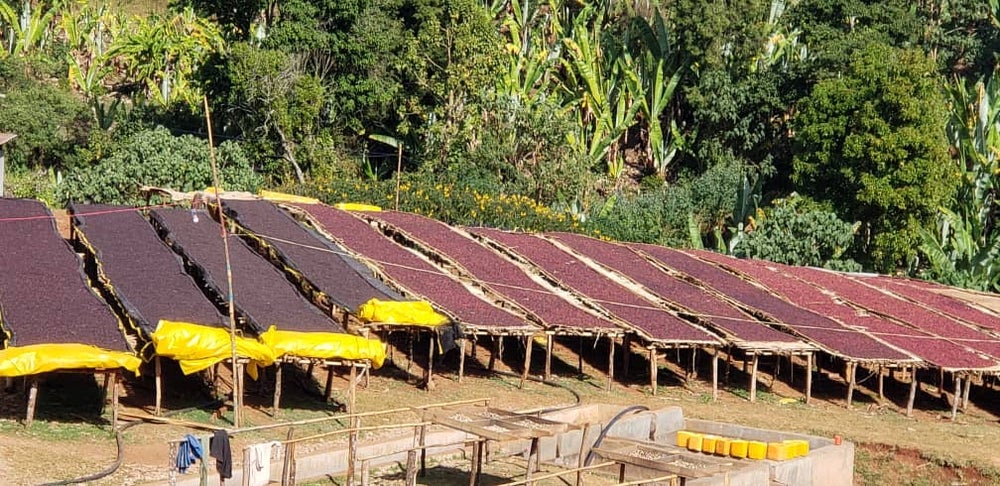
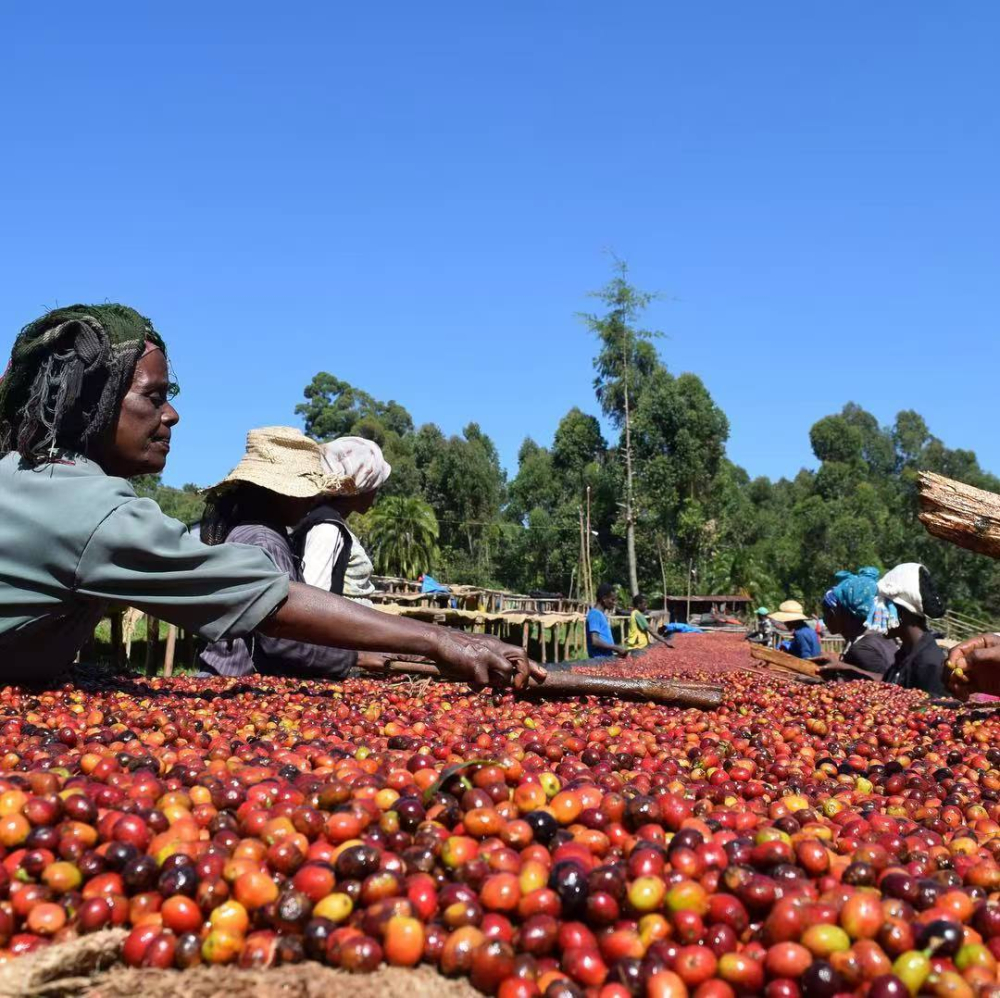
Every year during the coffee harvest season (December to January), the Buku Abel processing station arranges for farmers to pick fully red cherries with a sugar content of at least 30. The sorted coffee cherries are placed on African drying beds to dry. Due to the significant temperature difference between day and night in the area, farmers shade the cherries at noon to prevent excessive fermentation from high temperatures; at night, they cover them with plastic sheeting to protect against sudden rain. The cherries are turned continuously throughout the day, both to ensure even moisture loss and to avoid sun damage or undesirable fermentation flavors. After about 18 days of sun drying, the green beans' moisture content drops to 13% and they can be hulled.
After "Huakui" rose to fame in 2017, market demand surged, and DW Company established 5 additional independent specialty coffee drying stations in Hambella Wamena Wereda, all located within the core production area of Dimtu town. In addition to the original Buku Abel, four other small villages—Buku Saysay, Haro Soresa, Tirtiro Goye, and Seke Bokosa—also joined the production of natural coffee beans. It is said that at this point, DW Company's annual production of "Huakui" had reached tens of millions of tons.
To further increase "Huakui" production, DW Company not only added processing stations but also greatly expanded the coffee cherry collection range. Cherries from some neighboring villages are also sent to these processing stations for processing and then exported under the name "Hambella G1." In other words, as long as it is Hambela natural G1 coffee from these five villages, it can be called "Huakui."
What Is the Huakui Flavor?
If taken literally, one might assume Huakui is a coffee with intense floral notes. That is not the case—Huakui's floral notes are not particularly strong. Instead, its fruit aromas stand out remarkably, such as creamy strawberry, mango, jackfruit, citrus, and blueberry. It carries the ripe tropical fruit flavors characteristic of Sidamo natural beans, leaving a deep impression. What helped it win the TOH green bean competition that year was precisely its rich berry aroma.
However, coffee is fundamentally an economic crop. Its annual yield and quality are first constrained by climate, rainfall, altitude, soil, fertilization, and weeding, and then further shaped by processing details (sun exposure duration, temperature, humidity), leading to different flavor profiles. Huakui is no exception. Therefore, each year's Huakui will differ to some extent in taste compared to the previous year.
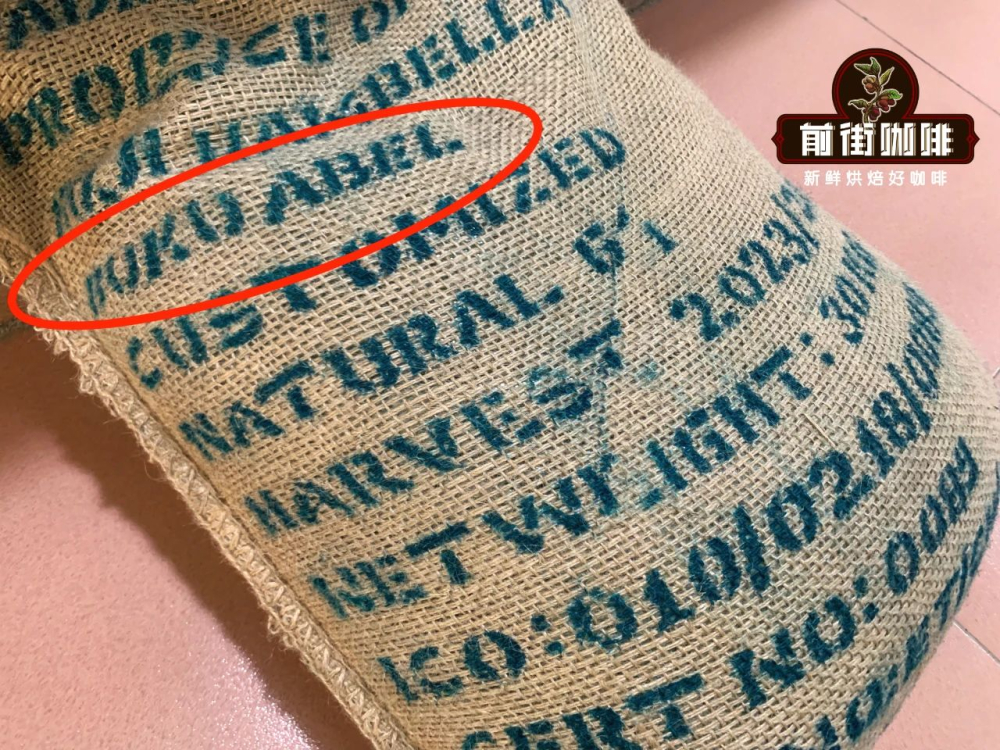
Since the 2018 harvest season, Huakui (natural G1 coffee beans) from the same growing origin and processing station has shown flavor changes. Through cupping at the time, Front Street found that although the 2018 and 2019 Huakui still carried flavors similar to the 2017 Huakui, they fell short of the "first-generation Huakui" in body, aftertaste, and other mouthfeel aspects.
Thus, in order to continue selling this Hambela natural coffee while distinguishing it from the original, domestic green bean trading companies used 2017 as the baseline and added an X.0 suffix to each subsequent year's batch. For example, the 2018 batch was called "Huakui 2.0," the 2019 batch was called "Huakui 3.0 and 3.1"... Last year's release was "Huakui 7.0," and so on. This way, we can identify which year's batch our purchased Huakui belongs to by its suffix.
Flavor: floral, jackfruit, dried fruit, apricot, juicy
FrontStreet Coffee Roasting Recommendations
Front Street roasters first refer to the flavor description provided by the green bean supplier, then test the beans' moisture content. Freshly acquired green beans carry a faint fermented wine aroma, completely different from the grassy scent of ordinary green beans. In addition, Huakui green beans vary in size, with many being pointed at both ends (Ethiopia Heirloom). The moisture content is around 11%, which is decent, but they are not extremely hard SHB beans. Because the beans are dense and hard, the early drying phase is extended so that the temperature rise is completed before first crack, minimizing the loss of floral and other small-molecule aromatic compounds.
Roaster: Yangjia 800N semi-direct fire
After roasting and adjustments, Front Street Coffee's preferred curve is: charge at 190°C, complete dehydration and turn yellow at nearly 6 minutes (yellow point at around 150-153°C), first crack begins at around 9 minutes 50 seconds (Huakui's first crack comes later than most beans, and the cracking sound is very weak). The development time after first crack is recommended to be kept within 1 minute 30 seconds, and no less than 1 minute (it is recommended to open the damper wide and lower the heat to adjust the pace). Using a sampling spoon to smell the aroma, at around 193°C you can detect strawberry jam notes, and it is ready to drop. The total time is best kept within 11 minutes.
FrontStreet Coffee Barista Brewing Recommendations
If you want to taste Huakui's rich aroma, Front Street Coffee recommends brewing with freshly roasted coffee beans, as this preserves the aromatic compounds to a greater extent. All coffee beans sold by Front Street are freshly roasted within 5 days. Combined with shipping time, customers receive the coffee right at its optimal flavor period and can brew and enjoy it directly.
To extract the aroma of high-altitude coffee beans, Front Street chooses a higher water temperature to allow the aromatic compounds in the coffee to be released more fully, but care must be taken to avoid over-extraction. The recommended brewing parameters are as follows:
Dripper: V60
Water temperature: 92-93°C
Grind size: fine granulated sugar (80% passing through a No. 20 standard sieve)
Coffee-to-water ratio: 1:15
Coffee dose: 15 grams
Three-stage pouring: First, wet the coffee bed with twice the coffee's weight in water to form a dome and bloom for 30 seconds. Then, pour in a slow circular motion from the center outward until the scale reads 125 grams, pause, and wait for the coffee bed to drop to half the dripper's height. Continue pouring the third stage with the same slow stream until 225 grams, then let all the coffee liquid filter through before removing the dripper. Total time is about 2 minutes.
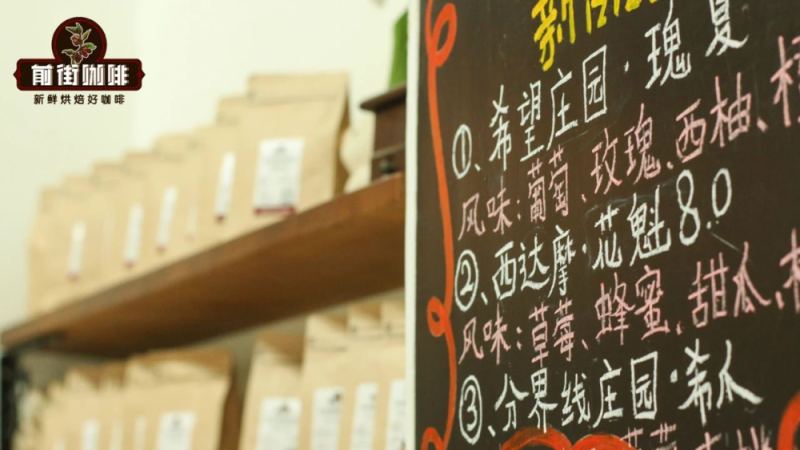
After grinding Huakui 8.0 natural, you can smell rich tropical fruit aromas and honey-like sweetness. On the palate, there is abundant berry sweetness, complex aromas like passion fruit, a black tea mouthfeel, and a long, endlessly memorable aftertaste.
The above content is compiled by CoffeeHunters, a coffee news website.


