







The fame of Kopi Luwak is comparable to that of Jamaican Blue Mountain coffee; even people who seldom encounter specialty coffee have mostly heard of it. Why does this coffee from Indonesia have such a unique flavor and command such a high price? And how can authentic Kopi Luwak be identified? From the perspective of Front Street Coffee, this article will sort out the historical origins of Kopi Luwak, the real impact of the civet's internal fermentation processing method, its flavor characteristics and the reasons for its high price, and will also include detailed information and brewing parameters for this Indonesian Kopi Luwak bean available at Front Street's shop, providing a complete reference for curious coffee lovers.
For more specialty coffee knowledge, please follow the WeChat public account: Front Street Coffee (FrontStreet Coffee)
The fame of Kopi Luwak beans can be said to rival that of Jamaican Blue Mountain coffee. Whether or not they have been exposed to specialty coffee, Front Street believes everyone has heard of Kopi Luwak. At first glance, it doesn't sound like the flavor would be very good—so why is it so famous, and why is it so expensive? Next, Front Street will explain the story behind Indonesian Kopi Luwak.
The Origin of Kopi Luwak Beans
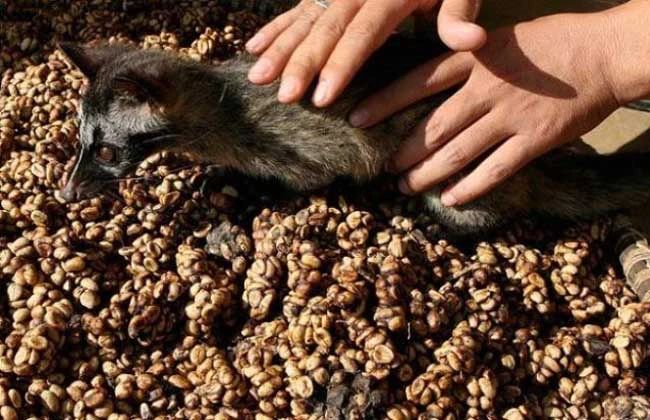
Kopi Luwak comes from Indonesia. In the early 18th century, Dutch colonists introduced coffee trees to Sumatra and Java in Indonesia to develop the coffee trade, and they did not allow local coffee farmers to pick or eat the coffee fruit. It was against this background that local coffee farmers discovered that wild civets would often come and steal the coffee fruit. However, civets cannot digest the coffee fruit itself—they can only digest the ripe coffee pulp, while the hard coffee beans, being partially digested, would eventually be excreted.
The local coffee farmers also wanted to try what the coffee beans they grew tasted like, so they gathered these beans, then washed, roasted, ground, and brewed them so that they too could enjoy coffee. This is how Kopi Luwak came to be.
What Does Kopi Luwak Taste Like?
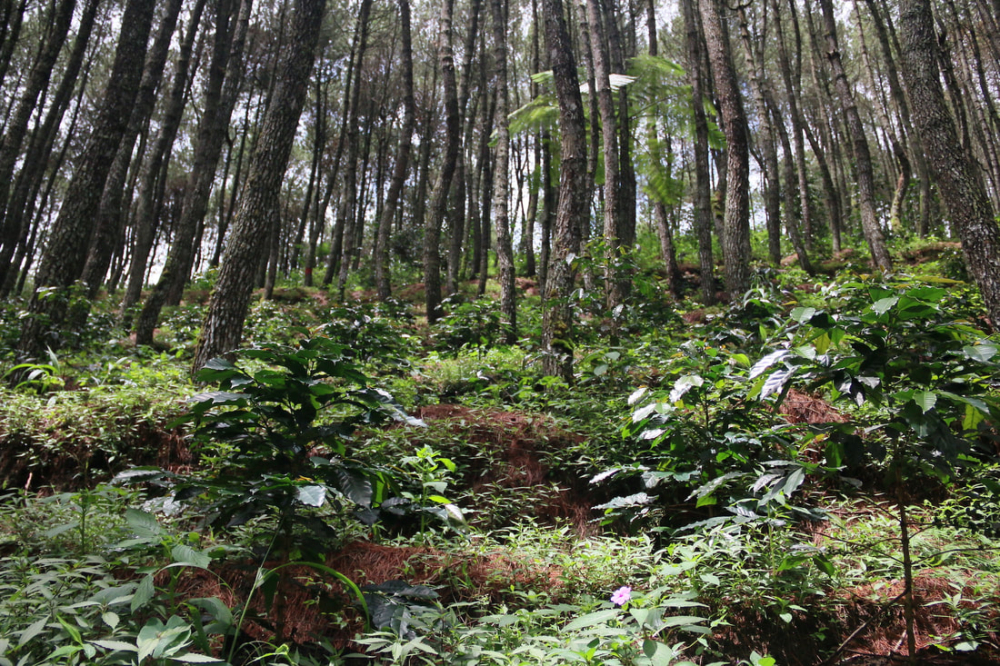
According to Front Street's understanding, civets mainly inhabit the hills below 2,100 meters above sea level in Indonesia, in the country's low-altitude regions. The coffee varieties in these areas are generally dominated by Robusta, so Kopi Luwak contains not only Indonesian Typica coffee beans but also Robusta beans. As a result, Kopi Luwak also carries the earthy and herbal aromas characteristic of Robusta coffee beans. Combined with Indonesia's special coffee processing methods, this also makes the coffee more full-bodied.
As Front Street mentioned above, Indonesian coffee beans are mainly grown on Sumatra and Java, so in terms of coffee flavor, Kopi Luwak is actually very similar to Indonesian Mandheling coffee, which also comes from Sumatra. The difference lies in the fact that Mandheling is harvested manually, so the coffee fruit varies in quality.
Kopi Luwak, on the other hand, involves civets using their keen sense of smell to select the ripest and sweetest coffee fruit. This shares a similar principle with Ethiopia's Red Cherry Project—except one involves manual harvesting of 100% fully ripe coffee fruit, while the other uses animals to select ripe coffee fruit. And this ripe coffee fruit naturally lays the foundation for the superior flavor of Kopi Luwak.
The Civet's Internal Fermentation Processing Method
Front Street's previous articles have often said that the flavor quality of a coffee bean is mainly determined by the coffee-growing region, variety, and processing method. So does the civet's internal fermentation processing method really have such a big impact on coffee bean flavor?
Some merchants believe that although the coffee beans are not digested in the civet's digestive tract, the highly corrosive digestive juices have already corroded their surface. These digestive juices contain a special protease that can break the coffee bean's original protein chains, decomposing long-chain proteins into small particles and forming short-chain peptides and amino acids, thereby improving the coffee bean's flavor.
But in fact, according to Front Street's understanding, civets may excrete the coffee beans only one or two hours after eating them. The coffee beans are in the civet's stomach for only one or two hours, and Front Street believes this short time is not enough to produce the series of changes mentioned above. The bean is still the same bean as when it was eaten; even if the flavor changes, it is only a subtle change.
So in fact, the internal fermentation processing method is merely a gimmick of Kopi Luwak. After collection, coffee farmers still have to process it using Indonesia's unique wet-hulling method, and the civet's contribution is merely selecting ripe cherries.
Why Is Kopi Luwak So Expensive?
Even as Front Street described above, Kopi Luwak is still very expensive. After all, rarity drives up value, and Kopi Luwak does have its merits. Because it is fully ripe coffee fruit, authentic Kopi Luwak looks much thicker than ordinary coffee, like syrup, and smells strongly sweet and fragrant. In terms of taste, it lacks the acidity and bitterness of ordinary coffee but has more astringency and earthy gaminess, with a strange lingering sweetness. Due to its thick consistency, the mouthfeel is quite smooth.
So there are still quite a few consumers with a curious mindset willing to pay for Kopi Luwak, and Kopi Luwak is also the coffee bean with the lowest production yield, which creates a situation where demand exceeds supply, naturally driving up the price.
According to Front Street's understanding, among the many Kopi Luwaks currently available, the most expensive is wild Indonesian original beans, followed by Philippine beans, while Vietnamese ones are cheaper. There are also so-called "A-grade" Kopi Luwaks on the market, where the coffee beans are excreted by captive-fed civets, or may even be excreted by other animals. Wild civets live in nature and freely choose beans. As Front Street mentioned above, because civets are picky eaters and won't eat anything not sweet, only selecting just-ripe fruit, the coffee beans they choose are certainly of the highest quality, without defects; captive-fed ones offer no such guarantee, and the excreted beans vary in quality. So Front Street suggests that coffee fans who are truly curious about Kopi Luwak must avoid buying fakes—the loss would outweigh the gain.
On Front Street's bean list, there is also an Indonesian coffee bean that has likewise undergone multiple rounds of hand sorting to minimize the defect rate, thereby giving the coffee a full-bodied and clean profile. It is Front Street's Golden Mandheling coffee bean, which uses a deep roast and has flavors of dark chocolate, caramel, and spices. It is suitable for various brewing devices such as the moka pot, pour-over, French press, and coffee machine. Everyone can place orders at Front Street's shop and Front Street's Tmall flagship store.
Next, Front Street will share a brief introduction to this Kopi Luwak available at Front Street's shop. Front Street Coffee (FrontStreet Coffee) Indonesian Kopi Luwak Beans
Country: Indonesia
Region: Sumatra
Altitude: 1600-2100
Variety: Arabica
Processing method: Civet internal fermentation
Flavor: Herbal, nutty, dark chocolate, fermented
Front Street Coffee (FrontStreet Coffee) Brewing Suggestions
To better express the herbal flavors and full-bodied mouthfeel of Kopi Luwak, Front Street Coffee (FrontStreet Coffee) uses a medium-deep roast for its Kopi Luwak beans. Medium-deep roasted beans generally have a higher dehydration rate, so they are lighter in weight. During brewing, the grounds do not completely sink to the bottom; as soon as water is poured in, it is immediately absorbed. Due to vigorous degassing, bubbles surround the grounds, creating channels, and the fresher the beans, the longer these channels last, causing the water level to drop quickly. Front Street generally uses a thick stream of water and slowly circles around.
When brewing Kopi Luwak, Front Street uses the KONO dripper, because the only exhaust part of this dripper is that quarter of the ribbing. When the water level passes the ribbed area, the water level in the dripper keeps rising, increasing pressure through the weight of the water. Since the outlet is relatively small, it can extend the contact time between coffee particles and water a little longer. As the water flow drives it, this can more effectively extract soluble substances, generally achieving the high body that guests expect. Brewing parameters: Water temperature: 86-87°C Grind size: BG#6w Coffee-to-water ratio: 1:15 (15g coffee to 225ml water) Brewing method:
Three-stage pouring method.
1. Pour 30 grams of water for the first stage and let it bloom for 25 seconds.
2. After the bloom, pour the second stage of water until the scale reads 125 grams. After pouring, wait for the water level to drop to halfway.
3. When the coffee bed is about to be exposed, pour the third stage of water until the scale reads 225 grams. The total extraction time is about 1'50-2'00 seconds.
Kopi Luwak flavor description: Herbal, nutty, smooth mouthfeel, full-bodied.
For more specialty coffee beans, please add the private WeChat of Front Street Coffee (FrontStreet Coffee), WeChat ID: kaixinguoguo0925
The above content is compiled by CoffeeHunters, a coffee news website.


