





How does the coffee beans process shape Mandheling flavor?
Wet-hulling is the reason Indonesian Mandheling coffee tastes herbal, medicinal, and full-bodied with low acidity. Farmers float the cherries to remove debris and unripe fruit, pulper off the skin and pulp, then remove the parchment while the beans are still soft and wet before finishing the drying, which shortens the overall cycle.
Indonesia adopted this coffee beans process because the high heat and humidity make slow drying risky; incompletely dried beans can mold. Removing parchment first also boosts body, cuts processing time, and lowers labor input. By contrast, the washed method relies on washing coffee machines and tanks to clean mucilage before drying, while Brazil's semi-dry method leaves some mucilage on the bean.
Indonesian Mandheling coffee's signature herbal, medicinal aroma and full-bodied mouthfeel are inseparable from its unique wet-hulling processing method. Why did wet-hulling become the choice for the Indonesian region? What exactly are the differences between it and the washed method and semi-dry method in terms of process and flavor presentation? Drawing on Front Street Coffee's years of experience in listing Mandheling, this article sorts out the specific operational steps of wet-hulling, its flavor characteristics, and the causes of common defects, while also comparing the processing logic of the washed method and Brazil's semi-dry method, to help readers understand how processing methods shape the final appearance of a cup of coffee. At the end, it also includes Front Street's recommended Mandheling bean selection advice and pour-over extraction parameters, for coffee lovers at different stages to reference.
Front Street Coffee has released quite a few Mandheling coffees over the years, each presenting its own unique flavor profile. Mandheling's signature herbal and botanical-medicinal notes are actually closely tied to the way coffee fruit is processed locally in Indonesia—wet-hulling. It is precisely this processing technique that gives Mandheling its highly recognizable mouthfeel among coffees from many origins.
The reason Indonesia adopts wet-hulling is directly related to the local climate conditions of high temperature and high humidity. Under such weather, green coffee beans are difficult to dry smoothly, and if they are not sufficiently dried, they are prone to mold and spoilage. Switching to machines to first remove the parchment and then dry can shorten the drying cycle while enhancing the coffee's body. Front Street also learned that wet-hulling can compress processing time and reduce labor input, providing significant economic benefits for local producers. Mandheling processed by wet-hulling usually carries earthy notes and a smoky sensation, with low acidity, but a very thick mouthfeel.
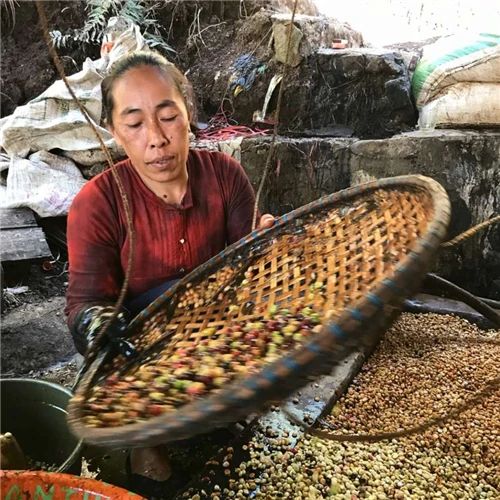
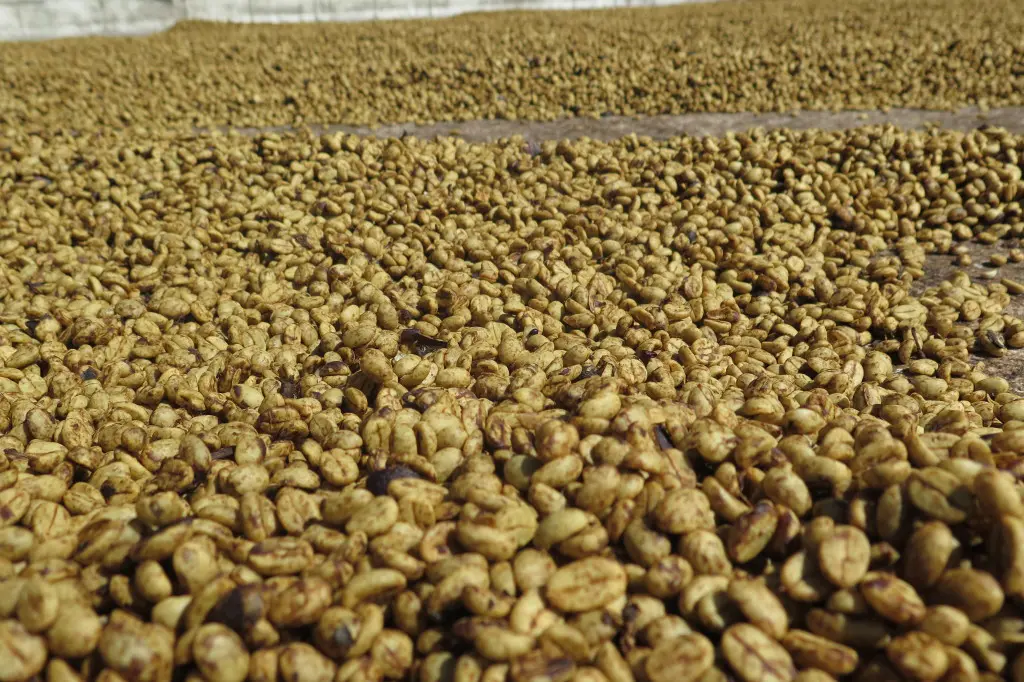
According to Front Street's understanding, Indonesians use wet-hulling to process Mandheling coffee roughly following this process: coffee farmers first pick ripe fruit and put it into a water tank, using flotation to remove debris and unripe cherries. Then a pulper separates the pulp and skin, leaving the parchment and mucilage, which undergoes a short fermentation to let the mucilage break down. After washing, the green beans enter the drying stage, and when the moisture content drops to 20%-24%, the parchment is removed by machine; after hulling, the beans need to be dried once more until the moisture content drops to around 12-13%, and only then is the entire process complete.
Because the beans are still in a semi-dry state when the parchment is removed, the parchment is not easy to strip at this time, and the coffee beans are very easily squeezed, so goat-foot beans often appear, and this is also where the abbreviation wet-hulling comes from. Front Street also learned that it is precisely wet-hulling that gives Indonesian Mandheling its unique flavor, and only when handled properly can the low-acid yet full-bodied Mandheling style be achieved; if the wet-hulling stage is poorly controlled, the coffee can easily take on a moldy, earthy taste.
If you think about it carefully, you will find that when wet-hulling processes green beans, the proportion of moldy beans and defective beans is often higher than in the washed method and natural method. Front Street gives an example: wet-hulling removes the skin during the process, leaving the beans directly exposed to the air, and combined with Indonesia's high-temperature, high-humidity environment, the risk of mildew is naturally higher. In contrast, the Gedeb from the Yirgacheffe region that Front Street lists uses the washed method, and the general process is to first remove the outer skin and part of the pulp of the coffee cherry, dry the berries, and after they are dried, rewet them, then use specialized machinery to grind off the pulp and take out the seeds.
The final step of removing the parchment in the washed processing method can protect the coffee beans well during processing and reduce contamination. Brazil, on the other hand, enjoys a uniquely favorable dry climate, and when water resources are not abundant, it developed the pulped natural method, commonly known as the semi-dry method.
The Brazil Red Bourbon and Queen's Estate that Front Street lists use the semi-dry method. The general process is: coffee fruit is first floated in a water tank to remove defective beans, then a pulper removes the skin, pulp, and part of the mucilage, and the processed coffee beans are placed on well-ventilated raised mesh beds to dry until the moisture content drops to around 11%-13%. With this Brazilian drying method, the green beans are not as prone to mildew as with wet-hulling, but the natural method easily causes uneven drying, and if the drying time is not controlled properly, the coffee beans' moisture content can become too low, causing the bean bodies to crack.
When Indonesia uses wet-hulling to process coffee beans, the fermentation process is extremely short while the drying time is longer, so the acidity is very weak; Front Street usually calls it low-acid, but the mouthfeel is quite full-bodied, and coffee beans processed by wet-hulling also bring earthy, tobacco, and chocolate notes.
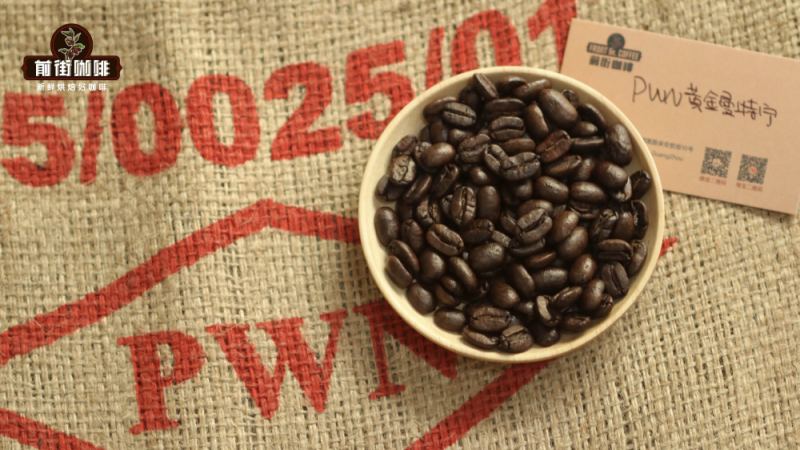
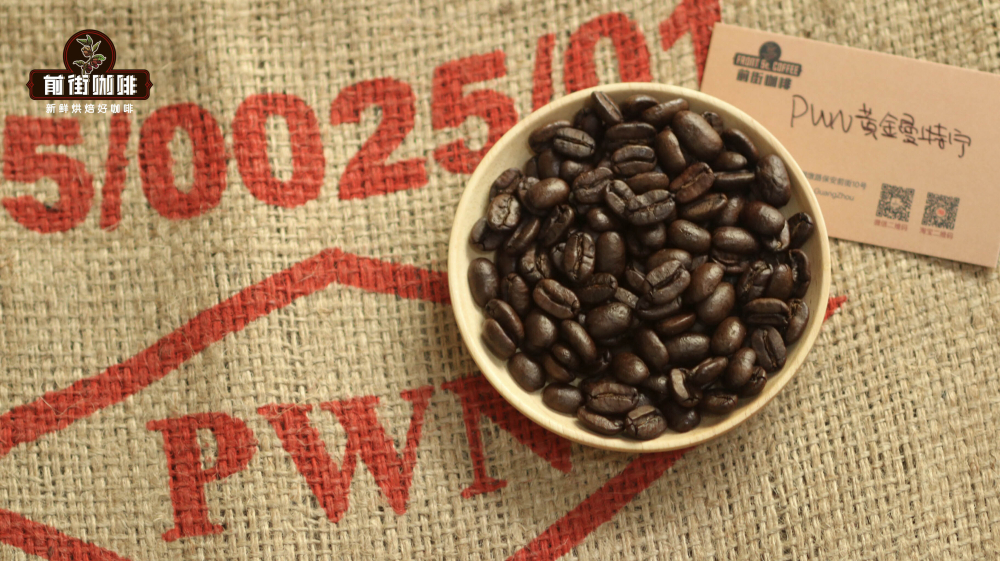
Some customers ask Front Street: which Mandheling is better to choose? If you are a beginner just getting into coffee and want to first understand the flavors of different origins, then Front Street suggests starting with the cost-effective Lintong Mandheling as an everyday bean, so you can understand the flavor characteristics of several major origins and then choose the type you prefer. But if you are already a seasoned coffee enthusiast, then Front Street believes that Front Street PWN Golden Mandheling coffee is a good choice.
Mandheling presents a full roasted coffee aroma and a solid mouthfeel, and is suitable for brewing and extraction by various methods, such as pour-over, siphon, French press, AeroPress, moka pot... Front Street's favorite way is to taste the rich mouthfeel of Golden Mandheling coffee as pour-over black coffee.
When brewing coffee beans that express body, Front Street likes to use the KONO dripper for extraction. The KONO dripper has short ribs only in the lower middle part, while the upper half of the dripper is a smooth curved surface, so when we wet the dripper, it can fit tightly with the filter paper, and the coffee's degassing during extraction is restricted; therefore, the hot water stays in the dripper longer, the coffee extraction rate increases, the concentration rises accordingly, and the coffee taste becomes richer and fuller. The KONO dripper is also suitable for full-bodied flavor type beans such as Brazil Queen's Estate coffee.
Generally, Front Street's brew uses 15g of coffee grounds. The choice of dose is usually based on the size specified by the dripper design, and Front Street's dripper is suitable for a serving of 1-2 people, so it can be between 15-20g; too much dose easily affects extraction. As for the choice of coffee-to-water ratio, 1:15 is the most commonly used, and a ratio range of 1:13 to 1:17 is all acceptable. Front Street believes that everyone's taste is different; 1:13 may be too strong for some people, and 1:17 too weak, so the middle value of 1:15 is chosen.
Brewing parameters: Brewing parameters: KONO dripper, 87°C water temperature, 1:15 coffee-to-water ratio, China No. 20 standard sun-dried and sieved grinding degree with 70% passing, 15g coffee grounds, three-stage extraction.
First wet the dripper so the filter paper fits tightly against it, then pour in the ground coffee and try to level the coffee bed. Pour 87°C hot water from the center, starting with 30g to begin blooming for 30s; at this point you can see that the dark-roasted Mandheling coffee forms a tall dome. Then begin evenly pouring the second stage until the liquid weight is 125g. When the coffee liquid drops to the halfway point, begin pouring the final stage of 100g. Note to pour steadily with a small stream throughout to avoid uneven extraction. After all the coffee liquid has finished dripping, you can remove the dripper, swirl the coffee liquid in the sharing pot to mix it evenly, and begin tasting.
The brewing parameters mentioned by Front Street are all based on fresh coffee beans, so freshly roasted coffee is the primary condition here. The coffee beans shipped by Front Street are all freshly roasted within 5 days, so when you receive the coffee from the logistics provider, it is just within the best flavor period. This is in the hope that every customer can drink the most complete-flavored good coffee.
The freshly brewed Front Street PWN Golden Mandheling coffee clearly has a solid mouthfeel, with richer notes of cedar, spices, dark chocolate, and roasted hazelnut, a clean finish, and an even higher level of flavor, allowing you to feel the sweetness and lingering aftertaste of caramel.
The above content is compiled by CoffeeHunters, a coffee news website.


