







The moka pot is a common simple espresso-style coffee device in Italian households. It is easier to operate than an espresso machine, yet it can deliver a rich, full-bodied taste. From Front Street's perspective, this article systematically explains the invention background of the moka pot, the differences between single-valve and dual-valve models, and the principle of heated extraction, and also details key steps such as grind size, tamping, water temperature, heat adjustment, and cleaning. At the same time, it offers recommendations for coffee bean selection, recommending three beans suited to the moka pot: Front Street Dark Cocoa Blend, Brazil Queen Estate, and Front Street PWN Golden Mandheling, helping enthusiasts consistently make coffee with abundant crema and balanced flavor.
Coffee brewing methods are rich and varied, with the most common being pour-over, espresso, moka, and French press. As interest in coffee deepens, more and more coffee enthusiasts begin trying different brewing methods to experience the fun and variation within them. Compared with brewing tea, coffee brewing often requires attention to more details, such as extraction time and coffee grind size, and different devices also correspond to different methods. Today, Front Street will introduce everyone to the moka pot brewing method and the points that need attention.
People often ask Front Street what the difference is between a moka pot and pour-over in brewing. Front Street's answer is: the two belong to different brewing paths for different devices, and the methods and grind requirements are not the same, so the final flavors naturally differ as well. Pour-over coffee usually has brighter, cleaner layers, while coffee brewed with a moka pot is not as clean or rich as pour-over, nor does it reach the heaviness and crema of espresso.
What kind of brewing device is the moka pot exactly?
The moka pot is a device used to brew coffee. It is a traditional Italian coffee device and also a simple espresso-style coffee tool kept in many households. It was invented by the Italian Alfonso Bialetti in 1933 and named "Moka." To this day, the structure of the moka pot has not undergone major changes, but its appearance has given rise to many designs, combining beauty with practicality and decoration—a clever combination indeed.
Moka pots are divided into single-valve and dual-valve types, and dual-valve models can produce more coffee crema than single-valve ones. Single-valve means the coffee liquid flows out directly from the two small holes at the top of the hollow tube. Dual-valve adds a pressure-collecting valve on the basis of the hollow tube. This pressure-collecting valve normally blocks the small hole where the coffee liquid comes out, and it must reach a certain steam pressure before it is pushed upward to let the coffee liquid spray out. The flavors brewed by single-valve and dual-valve models also differ: single-valve moka pots produce coffee with lower concentration and less crema; dual-valve ones are more concentrated and also richer in crema.
The principle of the moka pot
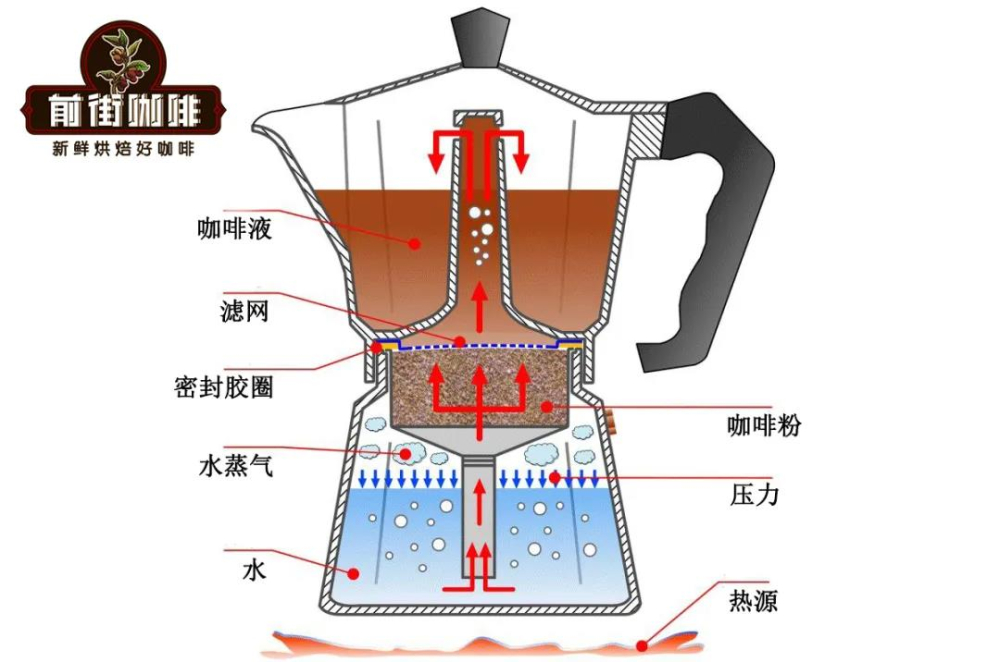
The moka pot can be heated on an induction cooker or an open flame. Whether using an open flame or electric heating, the basic principle is the same: heat the lower chamber, and the water in the lower chamber gradually rises in temperature. At the same time, the air in the sealed space of the lower chamber expands when heated, and the hot water, squeezed by the air, passes through the coffee grounds in the middle filter and pushes the extracted coffee liquid into the upper chamber. The upper chamber is an independent container for coffee liquid that "comes but does not return," and the brewed coffee liquid remains in it. After brewing is complete, simply pour the coffee liquid from the upper chamber into a drinking cup.
The high-temperature, pressure-enhanced extraction form of the moka pot has similarities to the espresso we commonly see. Increased extraction pressure can better gather the coffee's flavors, so coffee made with a moka pot also has a rich, full-bodied taste. When using a dual-valve moka pot, there is an additional pressure-collecting valve on top of the original structure. After the pressure increases, the coffee concentration is further raised, and it carries more coffee crema. Unlike espresso, the extraction pressure and precision of the moka pot are far inferior to those of an espresso machine. Freshly made espresso has a golden, abundant crema floating on top, while the moka pot's extraction pressure is lower and the resulting coffee is relatively thin, so it cannot fully be called espresso. But compared with the complex extraction process of espresso, the moka pot is much simpler to operate.
What should be noted when brewing with a moka pot?
Grind size: The coffee grind size used for a moka pot is recommended to be between pour-over and espresso. If espresso grind size is used, the resulting coffee will be over-extracted and especially bitter.
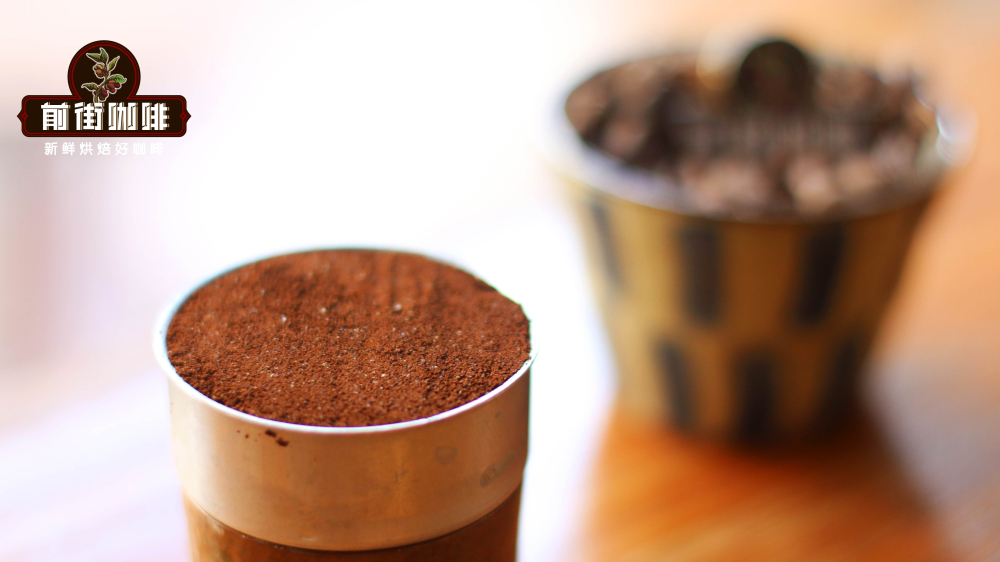
Tamping: For each cup-size moka pot, its coffee basket is completed according to a fixed water-to-coffee ratio, so you only need to fill the basket with coffee grounds. When filling, you can appropriately shake and tap the basket so the coffee grounds are distributed evenly; after filling, gently level the surface, do not tamp. Filling it full helps make the density in the filter basket more consistent, so some grounds will not be over-extracted and some under-extracted, causing uneven flavor or bitterness. The flavor will be more complete and without too many defects.
Water temperature: Filling the lower chamber with hot water will speed up extraction, prevent the coffee from burning, and prevent a metallic taste from developing in the coffee liquid.
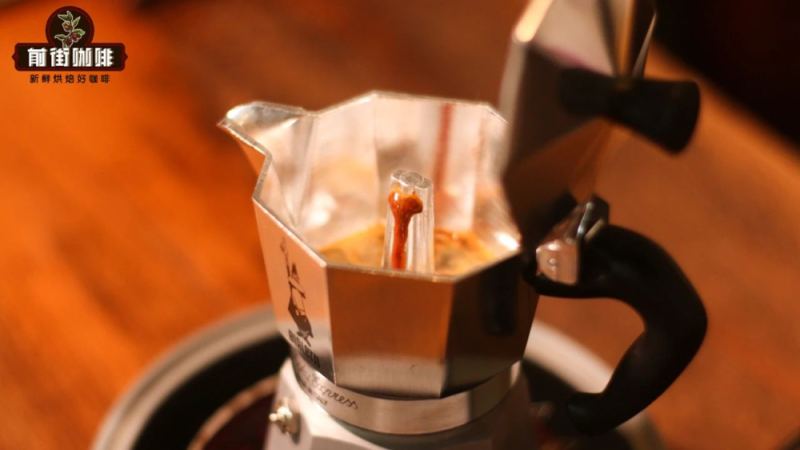
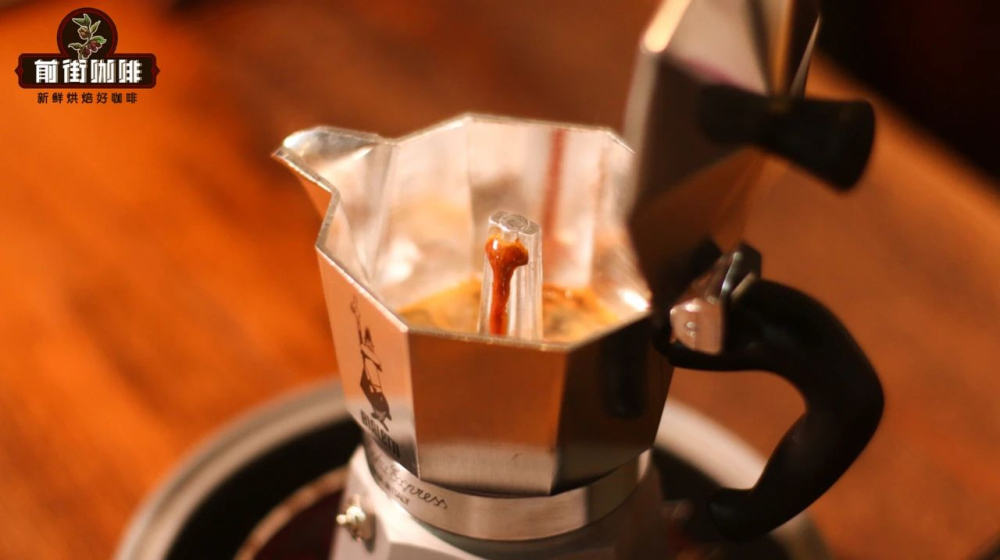
Extraction process: During brewing, place the moka pot on a stove over medium-low heat with the upper chamber lid open so you can observe it. Once the moka pot starts making a bubbling sound, immediately remove it from the heat, close the lid, and then let it sit for about one minute to complete extraction. Try not to open the top lid. If you do not know when to turn off the heat, you need to open the lid to observe the state of the coffee liquid spurting out. Of course, if you keep the lid open all the time, the coffee liquid may splash out and scald your skin.
It should be noted that the moka pot uses metal parts, so try not to touch the body when it is heated at high temperature. You can use a wet towel to avoid burns. If you hear a whirring sound but the upper chamber never overflows with coffee liquid, first turn off the heat source to avoid excessive internal pressure causing an explosion and creating a safety hazard.
Cleaning: If a moka pot is used without being cleaned, the coffee brewed from it easily picks up off-flavors and has a burnt, bitter taste; if old coffee stains remain on the filter screen, gasket, or extraction channel, they may cause blockages and thereby affect coffee extraction. Therefore, after each use, promptly rinse the moka pot with clean water, wipe it dry, and let it air dry, avoiding residual coffee grounds that affect the coffee's taste.
Should a moka pot be used over high heat or low heat?
Someone asked: when brewing coffee with a moka pot, should high heat or low heat be used? Front Street believes this is not necessarily fixed, because our moka pots are not all the same model. Some are one-serving, some are three-serving, and there are even 12-cup and 18-cup moka pots. We need to adjust the heat level according to the size of our own moka pot, the coarseness of the coffee grounds, and the amount of water. So how should it be adjusted?
We can observe the speed at which the coffee liquid flows out from the moka pot valve to adjust the heat level. If the coffee liquid sprays out directly, that proves the heat is too strong and the force of the water is too great, directly breaking through the coffee grounds layer. This will lead to under-extraction, and it will taste very sour, so we can slightly reduce the heat. If the coffee liquid comes out too slowly and intermittently, that may be caused by too low heat. Too long an extraction time will make the taste very bitter. We can increase the heat a little, so the brewed coffee will not be so bitter.
So when is the best time to remove a moka pot from the heat when brewing coffee? After we adjust the heat, observe the flow of the coffee liquid. Once the flow rate is stable, we can remove it from the heat and use the residual heat to push the coffee up.
Front Street suggests that at the beginning you can heat it over high heat to give it a bit more pressure to push the hot water up; after the coffee starts flowing out, you can turn the heat down to reduce the pressure, letting the water rise slowly so the water has full contact and extraction with the grounds.
When using a moka pot to brew coffee, are there any requirements for the coffee beans?
Front Street believes that the moka pot is similar to espresso, only the taste is lighter than espresso, but it still has crema, so Front Street recommends using medium-dark roasted coffee beans for brewing. If the coffee beans are roasted too light, the brewed coffee will be very sour and not comfortable to drink.
If you are trying to make moka pot coffee for the first time and want the coffee to perform consistently, buy Front Street Dark Cocoa Blend, an espresso coffee bean recommended by many baristas and composed of Yunnan Arabica and Brazil Cerrado. It has the aroma of nuts, chocolate, and plum, with an overall soft mouthfeel. It can be used to make regular coffees such as lattes and Americanos, and it is highly adaptable. It absolutely deserves to be called a good item for the home, and it is also the first choice for opening a coffee shop.
If you like nutty aromas, buy Front Street Brazil Queen Estate Coffee: medium-dark roast, with flavors of roasted peanuts, cocoa, chocolate, and cream. The crema extracted by the moka pot has an obvious nutty aroma, a balanced mouthfeel, and soft fruit acidity.
If you like a richer mouthfeel, try Front Street PWN Golden Mandheling Coffee: deep roast, with the sweet fragrance of pine wood, dark cocoa, nuts, herbs, and caramel. When extracted in a moka pot, the crema is delicate, the Americano mouthfeel is full-bodied, and the acidity is low.
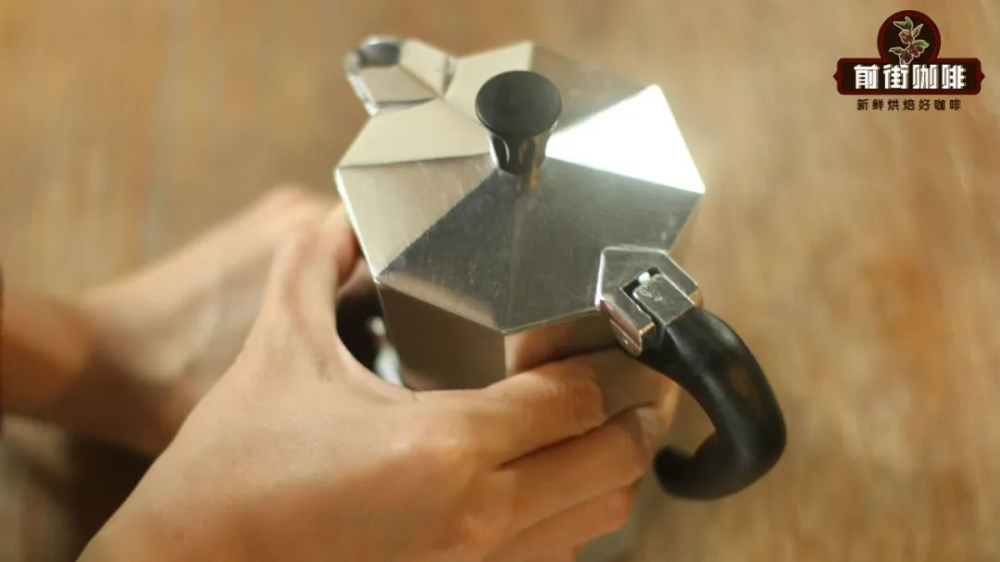
Add water to the lower chamber (hot water can shorten the brewing time and prevent the coffee grounds from heating too quickly, which can easily make the flavor burnt and bitter). Control the water amount below the pressure relief valve line; here Front Street injects 130 ml. Then screw the upper chamber and lower chamber tightly and place it on a gas stove or induction cooker to heat. When using an open flame, be careful to control the flame so it does not exceed the base range of the moka pot. Wait for the moka pot to heat up. When you hear a hissing sound, turn to low heat, and the coffee liquid and crema will slowly flow out. When you see the coffee liquid in the upper chamber is half full, you can turn off the heat source and move the pot to the table, using the residual heat and pressure inside the pot to continue extracting the remaining coffee liquid.
Finally, pour the extracted coffee liquid into a cup. You can add a certain proportion of hot water to bring out the coffee's mellow, sweet aftertaste, and pairing it with milk gives it even more of a chocolate-like sweetness.
The above content is compiled by CoffeeHunters, a coffee news website.


