







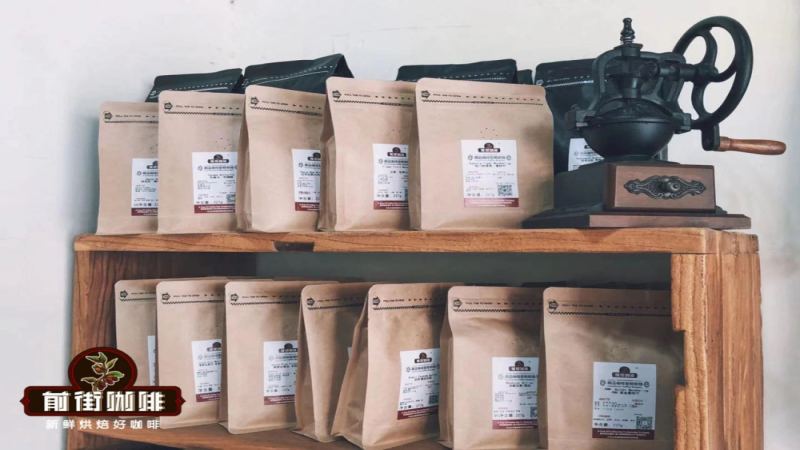
What makes Geisha coffee beans so highly priced?
Geisha coffee beans are a specialty variety from Ethiopia, the recognized birthplace of coffee. Lots trace to the Hambella region, where the Buku Abel processing station sun-dries the cherry, and a 2017 TOH competition win helped push the name into the spotlight. The 'Geisha X.0' naming marks successive harvest versions rather than a formal grade.
Small-bean Geisha lots command higher prices partly because of sorting: smaller screens reduce yield, so more cherry is needed per kilogram of finished beans. Total annual Geisha production exceeds 1,000 tons, yet the domestic market takes only about 8%, which tightens supply for independent roasters. Roast level also changes the cup, with darker roasts trading berry acidity for consistency.
Luckin Coffee's Geisha series sold out immediately upon launch, once again putting this specialty coffee bean from Ethiopia in the spotlight. What exactly is the charm of Geisha coffee beans? Why are they named in the "Geisha X.0" format? And why does the price of small-bean Geisha remain so high? This article will take you through the origin story of Geisha, from the terroir conditions of the Hambella region and the sun-drying process at the Buku Abel processing station, to the legendary experience of winning the 2017 TOH competition, unraveling the path to fame of Geisha coffee beans step by step. At the same time, we will also analyze the bean appearance characteristics of the new Geisha 6.0 harvest, its cupping flavor performance, and share Front Street Coffee's roasting and brewing recommendations for this batch of beans.
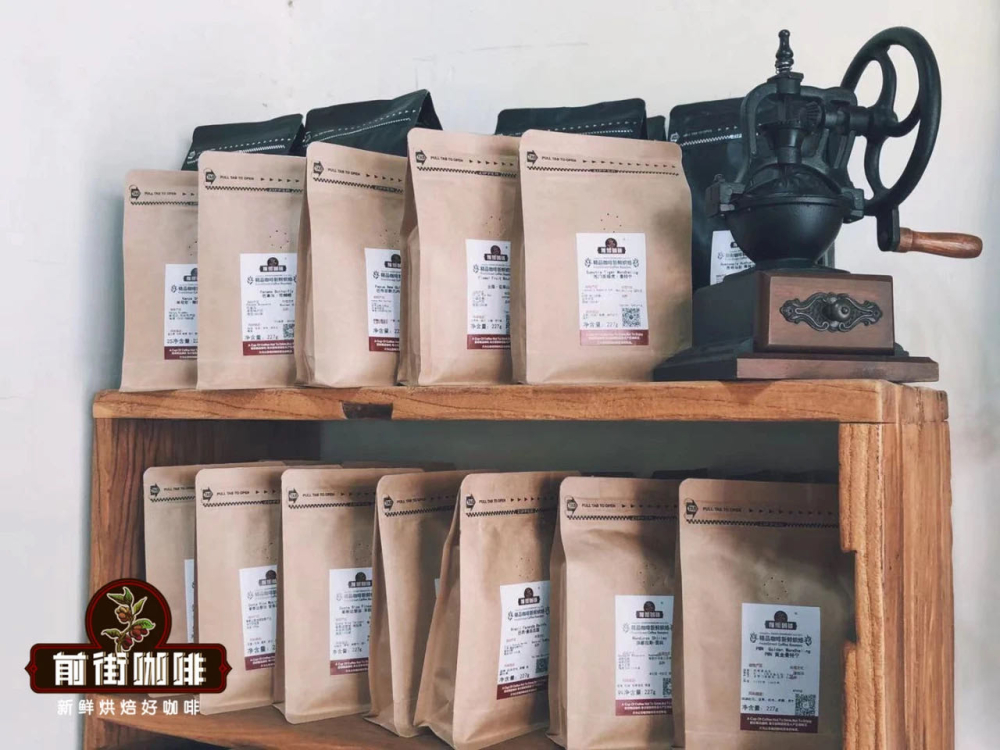
Many friends have probably noticed the Geisha series on Luckin Coffee's menu. This coffee sold out immediately upon launch, going out of stock in just one day, and those wanting to try it could only patiently wait for the next batch. Meanwhile, Dangdang founder Li Guoqing publicly accused Luckin Coffee of monopolizing Geisha coffee beans, sparking considerable discussion.
Interestingly, Luckin announced that it would spend one quarter of 2022 purchasing over 80 tons of Geisha coffee beans directly from the origin. In all of 2021, the total amount of Geisha imported by domestic green bean traders was only 30 to 40 tons. When something is rare, it is precious, and many independent specialty coffee shops worried they would not be able to get Geisha beans. But in reality, the total annual production of Geisha coffee exceeds 1,000 tons, with the domestic market accounting for only about 8%.
Luckin using single-origin coffee beans for SOE output is simply a corporate choice. To maintain flavor consistency, Luckin adopted a darker roast, at the cost of sacrificing some of the berry acidity and juicy, full-bodied mouthfeel. In the eyes of some industry insiders, this is akin to casting pearls before swine. But objectively speaking, Luckin's move did play a role in promoting specialty coffee culture. Moreover, end consumers are willing to pay, so ultimately this is a matter of personal preference.
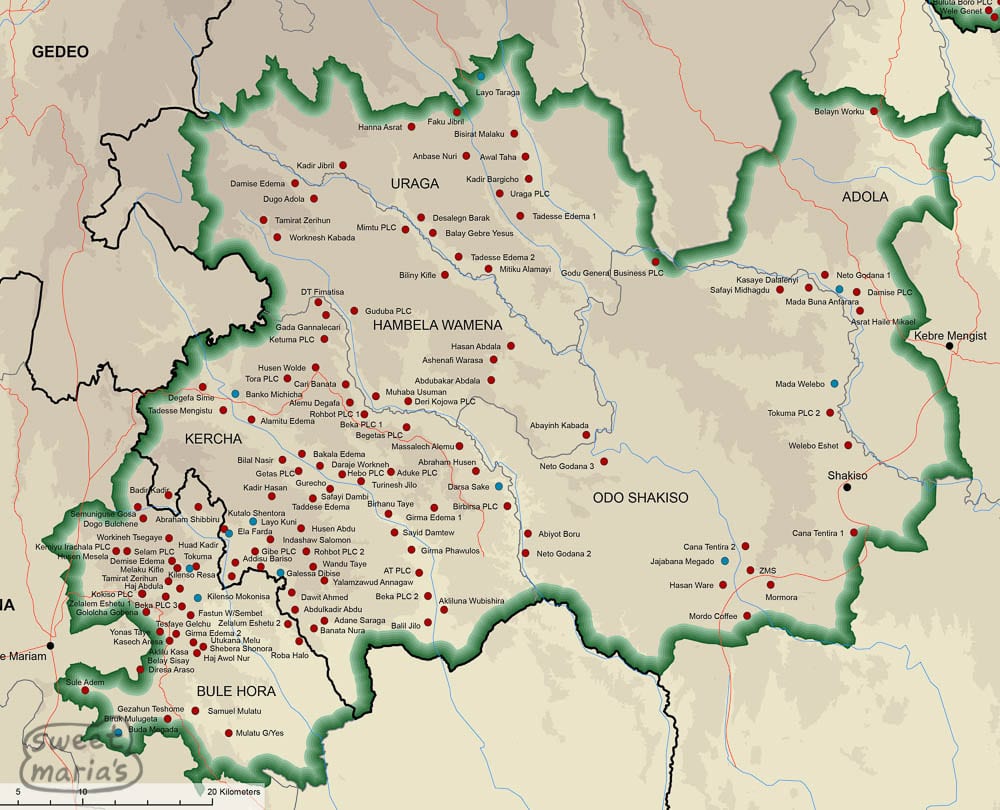
Geisha coffee beans come from Ethiopia, the universally recognized birthplace of coffee. According to traditional coffee bean naming conventions, it should have been called Hambella. Hambella is a sub-region under the Guji production area, administratively belonging to the Oromia Region. To the west, Hambella faces Yirgacheffe's Kochore across the mountains, with a highland of 3,200 meters in elevation and about 30 kilometers wide lying between the two regions. Hambella borders the Guji sub-regions of Shakiso, Uraga, and Kercha on its southeast and north sides respectively, and is the highest-altitude coffee sub-region in Ethiopia (Harrar is the highest-altitude main production region in Ethiopia).
The Hambella region currently has over twenty coffee processing stations of varying scales. DW Company, which produces Geisha coffee beans, owns four processing stations in the core Hambella region: "Buku Abel," "Buku Saysay," "Haro Soresa," and "Tirtiro Goye," with an annual coffee output of about 1,000-plus tons. Among these, only the sun-dried coffee beans from the "Buku Abel" processing station are eligible to be called "Geisha coffee beans."
Buku Abel is a small mountain village surrounded by mountains, with native coffee trees covering the high mountains behind the village. These coffee trees have undergone countless generations of natural selection, varying in form yet lush and flourishing. Starting from the mountainside, the entire 80-hectare mountain area at an elevation of 2,250 to 2,350 meters is all DW Company's own coffee farm.
Every year during harvest season, coffee farmers pick red coffee cherries with sugar content as high as 30 or above. During the first two days of sun-drying, the moisture of the red cherries must be maintained so that the fruit sugars can fully initiate the fermentation reaction. At the same time, the high altitude allows the processing station's nighttime temperature to drop to around 12 degrees Celsius, without producing off-flavors from over-fermentation due to excessively high temperatures. When the midday temperature is higher, workers promptly provide shade to prevent the red cherries from sunburn. At night, thick plastic sheeting is used to wrap them in case of sudden rain. Fermenting and dehydrating in a lower-temperature environment, after 18 days of sun-drying, the green coffee beans' moisture content drops to 13%, then they are bagged and placed in a warehouse at 12 to 22 degrees Celsius with 45% to 55% humidity for 50 days of resting and dehydration, until the green bean moisture content drops to about 11%, only then are they hulled, sorted, and sold.
It is precisely this careful treatment that produced such a champion bean. Why is Geisha coffee called Geisha? There is a story behind it: in 2017, DW Company sent this sun-dried coffee from the Hambella Buku Abel processing station to compete in the TOH competition, and its rich strawberry cream flavor conquered many judges, winning first place in the sun-dried group of that year's TOH Ethiopia region and second place in the African region.
In the same year, Beijing green bean company Hongshun introduced the same batch of coffee beans to China, and after tasting that rich strawberry cream flavor, they too were conquered. With just a slight improvement in the post-processing method of the green beans, this bean had the potential to become the next Geisha, so it was named "Huakui," meaning "chief of all flowers."
Also in that same year, the strength of Geisha coffee was further validated. At the China region competition of the World Brewers Cup, Geisha beans swept all before them, while contestant Li Jianfei won second place with the same batch of Geisha coffee beans, making Geisha coffee famous far and wide.
In the years that followed, the "Geisha" IP was carefully cultivated and won the trust of many coffee enthusiasts. Those who pay attention to the naming of Geisha coffee beans each year will notice that Geisha is named in the "Geisha X.0" format: 2018 was Geisha 2.0, 2021 was Geisha 5.0. Now it is 2022, and barring surprises, the new harvest Geisha coffee beans should be called "Geisha 6.0."
In June of this year, Front Street received the Geisha 6.0 that arrived at port from Hongshun. However, Front Street found that this batch of Geisha 6.0 differed greatly from previous ones in bean appearance, with especially many flat beans and insufficiently plump particles. Hongshun explained that the production region had less rainfall during the rainy season, resulting in coffee cherries that were not sufficiently hydrated and plump, leading to a higher flat-bean rate. After roasting this batch of coffee beans, many popped beans resembling popcorn and fractured beans appeared, with a visibly high defect rate. After a round of manual sorting, Front Street still found quite a few of these defective beans among the roasted beans.
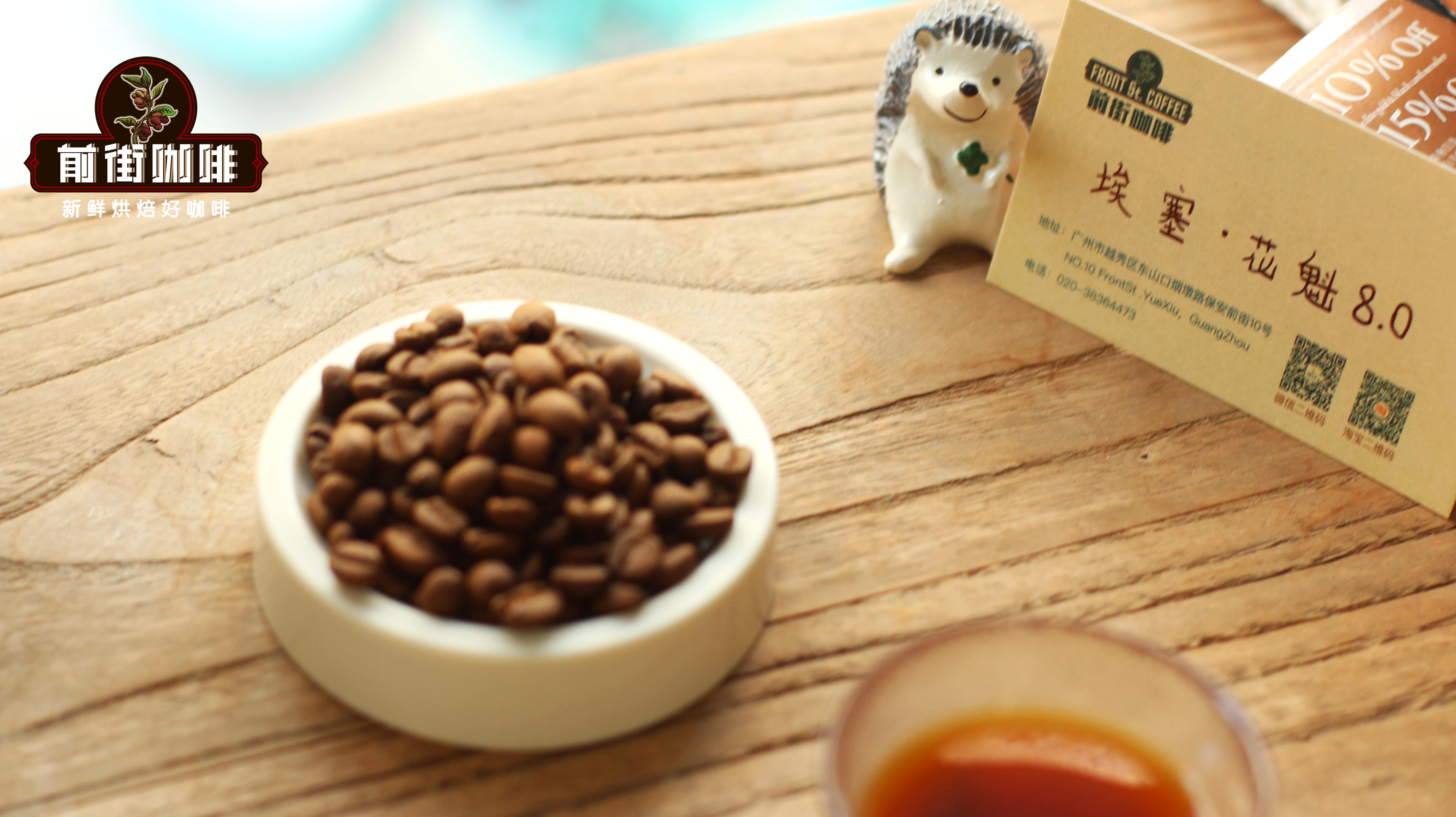
After a round of defect screening before cupping, Geisha 6.0 showed flavors of berries, honey, and passion fruit in the cupping, with very ample sweetness. But considering that this batch of Geisha 6.0 had a defect rate as high as 30%, Front Street did not formally put it on the shelves. Instead, they found the processing station that produced the champion Geisha in 2017 — the Buku Abel processing station — and obtained another batch of 2022 new-harvest Geisha coffee beans.
This batch of Geisha coffee beans also comes from the Hambella region, processed by the Buku Abel processing station, with plump bean appearance and relatively uniform particle size. Through cupping, Front Street determined that this Geisha coffee bean's flavors are orange blossom, citrus, honey, and grapefruit, with a very strong juicy quality.
Since Front Street roasts Geisha coffee beans at a relatively light level to highlight their floral and fruity sweetness, it is recommended to use a V60 dripper, a water temperature of 91 degrees Celsius, and a medium-fine grind size (80% passing through a Chinese No. 20 sieve).
Dripper: Hario V60
Water temperature: 91 degrees Celsius
Coffee dose: 15 grams
Coffee-to-water ratio: 1:15
Grind size: 80% passing through a Chinese standard No. 20 sieve
Front Street commonly uses a three-stage pouring method for brewing, giving the coffee a richer layering. First, pour 30 grams of water in a small stream in a "の" shape to fully wet the coffee grounds and bloom for 30 seconds, then pour from the center point in a small stream while slowly circling out to 125 grams for the first stage, and when the coffee bed is about to be exposed, continue pouring to 225 grams. The total extraction time is about 2 minutes.
For more coffee bean information, please follow Coffee Workshop (WeChat public account: cafe_style) For professional coffee knowledge exchange, please add WeChat ID: kaixinguoguo0925
The above content is compiled by CoffeeHunters, a coffee news website.


