








Indonesian coffee is world-famous, and among it, Kopi Luwak is especially renowned. But did you know? The best coffee in Indonesia is actually not Kopi Luwak. This article will take you through the legendary origin of Kopi Luwak, its unique production process, and the reasons it is so controversial. We will also introduce Front Street Coffee's Indonesian Kopi Luwak, detailing everything from the producing region and variety to the brewing method. At the same time, Front Street also recommends other coffee beans that are more worth trying, such as Panama Geisha, Ethiopia Huakui, Brazilian coffee, and Golden Mandheling. Whether you are a coffee novice or a seasoned enthusiast, you can find a flavor choice that suits you.
To learn more about specialty coffee, welcome to follow: Front Street Coffee (Frontsteet Coffee)
"Kopi Luwak" is produced in the Sumatra Islands of Indonesia, and with its rarity and uniqueness, it has always written a legend of its own.
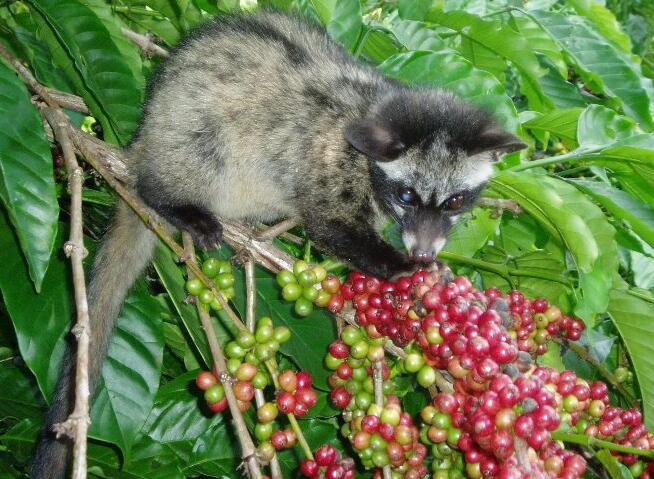
Sumatra is rich in Arabica coffee beans, and the local civet prefers ripe coffee cherries. After the coffee cherries pass through the civet's digestive tract for fermentation, a wonderful transformation takes place, and the flavor becomes mellow and unique, with a long finish and rich, rounded layers. The unique production method and scarce output together created the exceptional and precious Kopi Luwak.
The Road to Fame of Kopi Luwak
In the seventeenth century, Dutch colonists first introduced coffee saplings to Indonesia. With unique geographical conditions and a mild climate, the Sumatra Islands cultivated high-quality coffee beans. However, a unique local wild civet liked to steal and eat ripe, plump coffee cherries. During harvest season, coffee plantations were often visited by them, causing endless headaches for coffee farmers who were already burdened with heavy taxes, so they drove them away and killed them in large numbers.
Until one day, Captain Willemsen was leading his team on duty as usual. Passing by a farmhouse, he smelled a wisp of mellow coffee aroma from afar. He walked into the courtyard and saw a farmer roasting coffee beans in an iron pot. Willemsen, already furious because the harvested coffee beans were insufficient and he feared being blamed by his superior, was about to explode when he was captivated by a cup of black coffee handed to him by the farmer.
As soon as it touched his lips, Willemsen felt an incomparable smoothness and richness, and a sweet fragrance he had never experienced before instantly struck his taste buds! When he saw the raw beans the farmer pointed out to him, he was even more stunned—they were actually the feces excreted by wild civets! It turned out that local farmers could not afford to drink the coffee harvested from the plantation. Seeing that there were many coffee beans on the ground that wild civets had eaten but could not digest, they felt it was a pity, so they collected them, cleaned them, and enjoyed them themselves, calling it "Kopi Luwak."
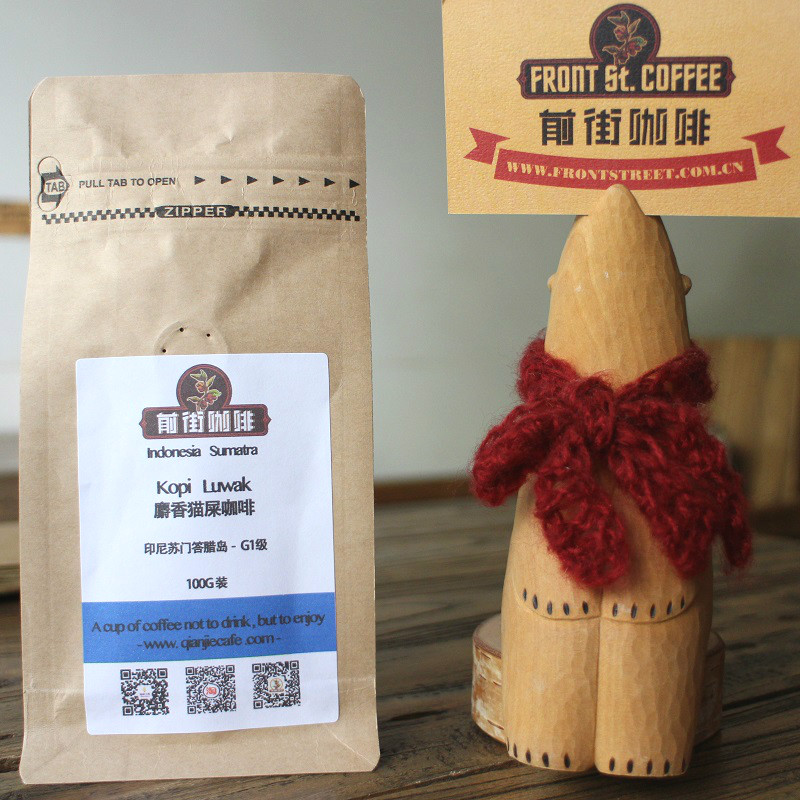
Front Street Coffee (FrontStreet Coffee) Indonesia Kopi Luwak
Producing Region: Indonesia Sumatra Variety: Arabica Processing Method: In-body fermentation by civet Grade: G1
Civets mainly inhabit hills, mountains, and other tropical rainforests below 2,100 meters above sea level, as well as the forest-edge shrublands and grassy areas of subtropical evergreen broad-leaved forests, and choose rock caves, earthen holes, or tree holes as resting sites. This type of coffee bean is generally dominated by Robusta, because civets are mostly active in the middle and low altitudes, so most coffee varieties are Robusta. High-altitude Arabica Kopi Luwak is scarce in production.
Indonesian low-altitude Robusta coffee originally had an earthy flavor and a medicinal herbal taste, and was also high in body, so this kind of civet coffee has the earthy, gamey taste of aged beans, a body almost close to syrup, and a very special aroma. If you prefer the earthy, gamey taste of Indonesian aged beans or Indian monsooned beans, you may fall in love with the uniquely flavored civet coffee.
The civet coffee introduced by Front Street Coffee (FrontStreet Coffee) is pure Arabica, collected by local coffee farmers after the feces are cleaned and classified by variety. This Indonesian Kopi Luwak bean is of the Arabica variety, and Arabica coffee is higher than Robusta in both flavor and body. Generally, Indonesian Kopi Luwak beans are fermented inside the animal's body, and the flavor carries a special herbal aroma, with excellent body as well, so Kopi Luwak became a darling of the wealthy circles, and its price is also very expensive. Although the price is high, relatively speaking, the quality of the beans is very poor.
In-body Fermentation Method
In-body fermentation by civet uses the lactic acid bacteria and digestive juices in the civet's digestive tract to remove the pulp and the pectin attached to the surface of the original beans. The original beans are finally excreted with the feces, and then coffee farmers go up the mountain at dawn to collect the civet's excrement and wash out the precious in-body fermented beans one by one. People believe that civets choose the ripest, flawless coffee cherries to eat, which is like guaranteeing the quality of the coffee beans.
Civets appear at night and rely on eyesight and smell to specifically select the reddest coffee cherries to eat. They are not interested in half-ripe beans, so the beans they excrete are all top-grade, with no astringent unripe beans. After these Kopi Luwak beans are cleaned and then roasted, all bacteria have been killed, so there is no problem of fecal contamination.
In-body fermented coffee beans are not only Kopi Luwak, but also South American wattled guan coffee, Indian monkey coffee, and Sri Lankan elephant coffee.
The Kopi Luwak beans of Front Street Coffee (FrontStreet Coffee) are Arabica coffee beans, and the brewed coffee has a smooth mouthfeel with herbal and nutty flavors.
How should Kopi Luwak be brewed?
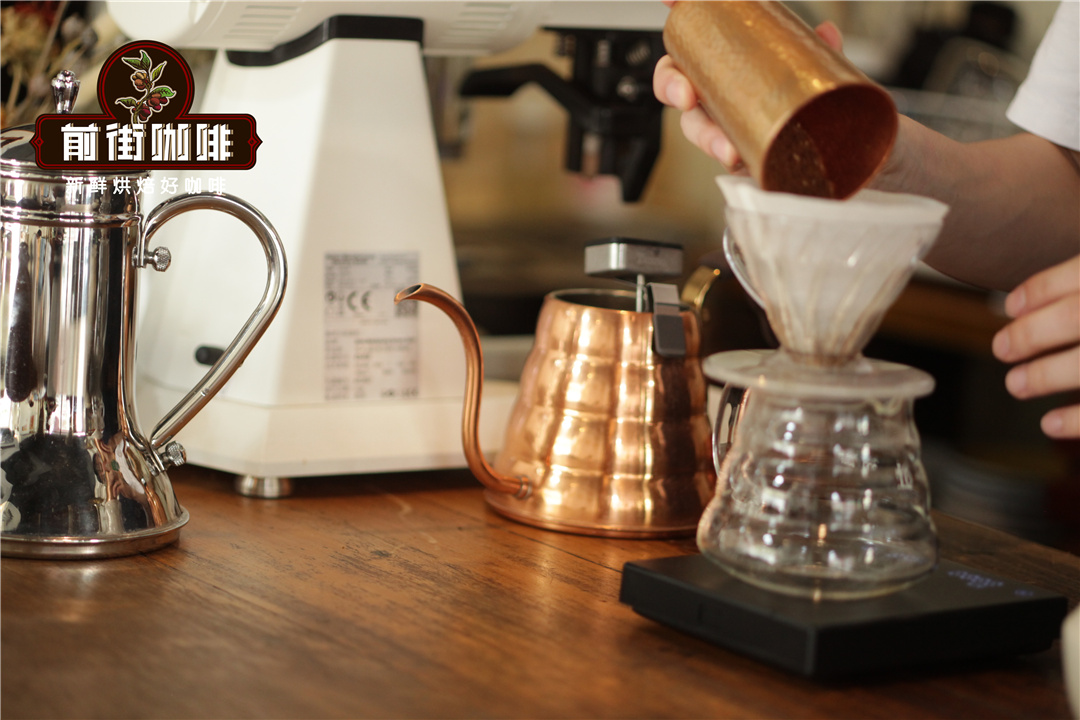
The Kopi Luwak beans of Front Street Coffee (FrontStreet Coffee) use a medium-dark roast. In order to exactly bring out the coffee's herbal flavor, a KONO dripper was used for brewing.
The KONO dripper is used because it can bring out a rounder, richer mouthfeel and a more direct flavor expression. However, the KONO dripper has relatively poor exhaust performance because its ribs are straight and only extend one quarter of the dripper's depth. Except for the area above that quarter, it fits closely against the cup wall to form a sealed state. The KONO dripper was chosen because the only exhaust part of this dripper is that quarter of the ribs. When the water level passes over the rib area, the water volume in the dripper keeps rising, increasing pressure through the weight of the water. Since the outlet is relatively small, it can extend the contact time between coffee particles and water. As the water flow drives it, soluble substances can be extracted more effectively, generally achieving the high-body effect expected by the guest.
Because it is necessary to better express the herbal flavor and rich mouthfeel of Kopi Luwak, Front Street Coffee (FrontStreet Coffee) uses a medium-dark roast for its Kopi Luwak beans. Medium-dark roasted beans generally have a relatively high dehydration rate, so they are lighter in weight. During brewing, the grounds do not completely sink to the bottom. As soon as water is poured in, it is immediately absorbed. Because degassing is vigorous, there are bubbles all around the grounds, thus creating channels. The fresher the beans, the longer these channels last, causing the water level to drop quickly. I generally use a thick stream of water and circle slowly.
Brewing Parameters: Water temperature 86-87°C Grind size: white sugar Coffee-to-water ratio: 1:15 (15 g coffee, 225 ml water)
Brewing Demonstration: 1. Pour 30 g of water in the first stage and bloom for 25 seconds. 2. After the bloom ends, pour the second stage of water until the scale reads 125 g. After pouring, wait for the water level to drop to half. 3. When the coffee bed is about to be exposed, pour the third stage of water until the scale reads 225 g. Stop when the last 5 g of coffee is being extracted. The total time is about 1'50-2'00 seconds.
Flavor Description of Kopi Luwak: herbal, nutty, smooth mouthfeel, rich and full-bodied.
Roasting Suggestions for Front Street Kopi Luwak Beans
Roaster: Yangjia 800N: Preheat the drum temperature to 200°C, lower the facility to charge at 160°C, set the damper to 3, adjust the heat to 130, turning point at 1'28'', maintain the heat, yellowing at 5'40'', the grassy smell disappears, entering the dehydration stage, raise the heat to 140, open the damper to 4, wrinkles appear on the surface, the toast aroma turns into coffee aroma, as the prelude to first crack, lower the heat to 100, open the damper to 5, and listen carefully for the sound of first crack. First crack begins at 9'15'', fully open the damper to 5. After first crack, develop for 4'25" minutes, and drop at 203°C.
After reading about the brewing, some people may wonder why Front Street Coffee (FrontStreet Coffee) would still choose to buy coffee beans made in such a cruel way.
Front Street Coffee (FrontStreet Coffee) believes that there is nothing wrong with the formation of Kopi Luwak itself. The civet uses its nose to identify ripe coffee cherries, and Ethiopian red cherries are also harvested when fully ripe. The two are different in method but similar in principle.
The origin of Kopi Luwak has been exploited as a gimmick, and now most of it comes from civets kept in cages. Those who lock up civets force them to eat coffee berries regardless of whether they are ripe or unripe, only to increase the production of Kopi Luwak, which has led to those cruel practices. This no longer belongs to the category of coffee we are discussing.
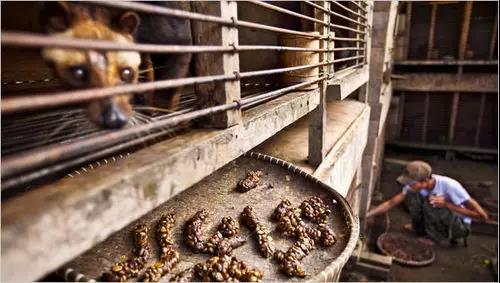
Considering its scarcity and expensive price, Front Street does not recommend everyone to drink Kopi Luwak. Although real Kopi Luwak has a very good flavor, coffee from other producing countries is also excellent. For those who like floral flavors, Front Street Panama Geisha coffee is recommended, which is one of the most expensive coffees in the world; for those who like fresh coffee with acidity, Front Street Ethiopia Huakui coffee beans are recommended, with notes like black tea and berries; for those who like a balanced flavor of nuts and caramel, that is, coffee that is neither sour nor bitter, Front Street Brazilian coffee beans are recommended; if you still love the solid, rich mouthfeel of Indonesian coffee, it is recommended to buy the highest-grade Front Street Golden Mandheling coffee, which undergoes multiple rounds of hand sorting to minimize the defect rate of the coffee beans, thereby making the coffee aroma clearer and the sweetness in the finish better. All the above coffee beans can be purchased and ordered at Front Street stores and the Front Street Tmall flagship store.
The above content is compiled by CoffeeHunters, a coffee news website.


